

What Scents Are Safe for a Baby's Room? A Parent's Guide
Your baby's nursery smells like stale milk, a diaper pail that's two hours past its prime, and whatever off gassing the new crib is doing. You want to light something, spray something, plug something in. But every time you search for answers, you get a wall of conflicting advice: essential oils are fine, essential oils are dangerous, candles are toxic, candles are natural, nothing is safe, everything is safe.
The confusion is real, and the stakes feel high because they are. Babies breathe faster than adults, their airways are smaller, and their bodies are still figuring out how to process airborne compounds. A scent choice that would be perfectly fine in your living room can become a genuine irritant in a closed nursery with a sleeping infant.
This guide breaks down what's actually safe, what to avoid entirely, and how to keep a nursery smelling good without compromising your baby's air quality. If you decide a candle belongs in the mix, we'll cover exactly what to look for, including options from our full beeswax candle collection that check the boxes pediatric guidance points toward.
Why Babies React to Scents Differently Than Adults
A newborn takes 40 to 60 breaths per minute. An adult takes 12 to 20. That alone means an infant is cycling air through their lungs at roughly three times your rate, pulling in a proportionally larger volume of whatever is floating in the room.
Their skin is also more permeable. Their liver and immune system are still developing, which means they're less equipped to metabolize volatile organic compounds (VOCs) that adults process without noticing. According to Children's Hospital of Philadelphia, there simply isn't enough clinical research to confirm the safety of most aromatherapy products for children under three.
This doesn't mean your nursery has to smell like nothing forever. It means the bar for what you put in the air should be higher in that room than anywhere else in your home.

What to Avoid Completely
Plug in Air Fresheners and Aerosol Sprays
Most commercial air fresheners contain phthalates (endocrine disruptors) and a cocktail of VOCs that release continuously into the air. Poison Control notes that these products can irritate airways even in adults, and the risk compounds in a small, enclosed nursery with a baby who can't move away from the source.
The word "natural" on the label doesn't change this. Many products marketed as natural still use toxic fragrance blends that fall under the catch all term "fragrance" on the ingredient list, which can represent dozens of undisclosed chemicals.
Paraffin Candles
Paraffin is a petroleum byproduct. When it burns, it releases benzene, toluene, and formaldehyde into the air, along with black soot that settles on surfaces and gets inhaled. In an adult's office, the exposure level from one candle might be minimal. In a nursery where a baby sleeps eight, ten, fourteen hours a day, the cumulative exposure picture changes.
Essential Oils Used Incorrectly
Essential oils are concentrated plant extracts, and concentration is the key word. Peppermint and eucalyptus, two of the most popular "calming" oils parents reach for, can actually cause respiratory distress in infants. Johns Hopkins All Children's Hospital recommends extreme caution with inhalation for young children and notes that many experts advise against any essential oil use for babies under three months.
"Natural" and "safe for babies" are two completely different categories. A substance being plant derived tells you nothing about whether a newborn's lungs can handle it.
What Actually Works: Safe Ways to Scent a Nursery
1. Start with Ventilation, Not Fragrance
The single most effective thing you can do is open a window. Most nursery odors come from identifiable sources: the diaper pail, spit up on fabric, off gassing from new furniture or paint. Masking those smells with fragrance just layers chemicals on top of chemicals. Fresh air removes them.
Open windows for 15 to 20 minutes daily, even in cooler weather. If your nursery doesn't have good airflow, a small HEPA air purifier handles particulates and VOCs without adding anything to the air.
2. Clean the Source
Wash crib sheets and blankets weekly with fragrance free detergent. Empty the diaper pail daily. Wipe down surfaces with unscented cleaners. This sounds obvious, but many parents skip straight to scenting solutions when the real fix is removing the odor at its origin.
3. If You Want Ambient Scent, Choose the Right Candle
A candle can work in a nursery context, but only if every component passes scrutiny. The wax, the wick, and the fragrance all matter independently.
Beeswax is the cleanest burning candle wax available. It produces virtually no soot, contains no petroleum derivatives, and is naturally hypoallergenic. Wooden wicks burn more evenly and at a lower temperature than cotton wicks with metal cores, which means fewer airborne particulates.
The fragrance is where most candles fail the nursery test. Toxic fragrance oils contain phthalates and parabens that release into the air as the candle burns. A non toxic, phthalate free fragrance oil is a fundamentally different product, and the distinction matters enormously in a baby's room.

What to Look for in a Nursery Safe Candle
If you're going to burn a candle anywhere near a baby's space, here's your checklist:
- 100% beeswax. Not a "beeswax blend," which typically means mostly paraffin with a small percentage of beeswax added for marketing. Single ingredient wax.
- Wooden wick or pure cotton wick. Avoid any wick with a metal core. Metal core wicks can release trace amounts of heavy metals when burned.
- Phthalate free, non toxic fragrance. The label should explicitly state this. If the ingredient list just says "fragrance" with no further detail, assume the worst.
- No chemical dyes. Dyes add another layer of combustion byproducts to the air.
- Burn it outside the nursery, not inside. Even the cleanest candle should be burned in an adjacent room or hallway with the nursery door open, so the scent drifts gently rather than concentrating in a closed space where the baby sleeps.
MBur's Do Not Disturb candle checks every item on that list: 100% beeswax, wooden wick, phthalate free fragrance, no chemical dyes, handmade in Queens, New York. Its notes of bergamot, pear, and sandalwood are soft and warm without being overpowering, which is exactly what you want when the goal is a barely there ambient scent rather than filling a room.
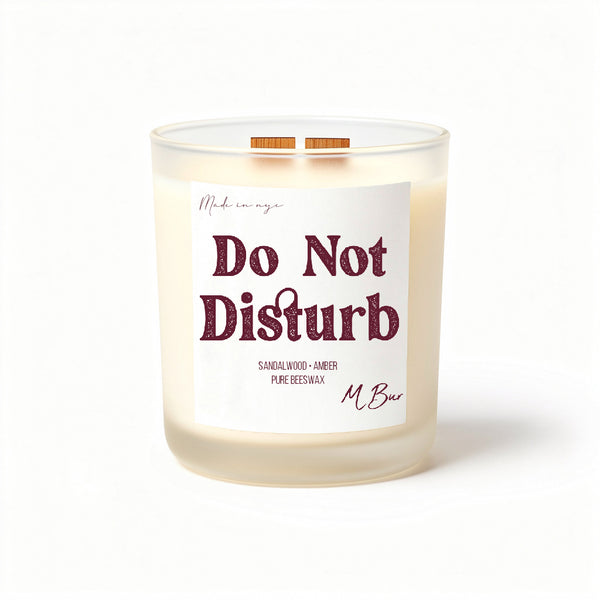
"I love the scent of this candle. It is lovely not overpowering. It's soothing fragrance more than covers my bedroom and bathroom. It is aromatherapy at its best." Dawne Forrest, Do Not Disturb review
That "not overpowering" quality is precisely what makes a candle nursery adjacent appropriate. You want something that reads as clean and calm at low intensity, with no sharp chemical edge.
The Burn Rules for Parents
Even with a clean candle, how you use it matters as much as what you buy.
Never burn a candle in the same room as a sleeping baby. Burn it in the hallway, the living room, or the adjacent bathroom with the door cracked. The scent will carry.
Keep sessions short. One to two hours is plenty. Beeswax candles have a naturally subtle throw, so you don't need extended burn times to notice the scent.
Trim the wick before every burn. A trimmed wick (about 1/4 inch) produces a smaller, cleaner flame with less particulate matter. This applies to wooden wicks too.
Ventilate. Crack a window or keep a door open in whatever room you're burning the candle. Good airflow prevents any compounds from concentrating.
Extinguish before bringing baby into the room. Let the air clear for 10 to 15 minutes after blowing out the candle before carrying your baby through that space.

A Note on Essential Oil Diffusers
If you prefer a diffuser over a candle, the same principles apply with additional caution. For babies under three months, most pediatric sources recommend no essential oils at all. For babies over six months, lavender and chamomile are generally considered the gentlest options, but only at very low concentrations (one to three drops per session) and only in a well ventilated room.
Run the diffuser for 30 to 60 minutes maximum, then turn it off. Continuous diffusion in a closed nursery is one of the most common mistakes parents make, because the brain habituates to the scent and you stop noticing it, so you add more. Meanwhile the concentration in the room keeps climbing.
Avoid peppermint, eucalyptus, rosemary, and any oil you can't verify is 100% pure. "Fragrance oils" sold as essential oils are an entirely different product with different (and often undisclosed) chemical compositions.
Frequently Asked Questions
Can I burn a candle while my baby is in the room?
Pediatric guidance consistently recommends against it. Even a clean burning beeswax candle should be used in an adjacent space, with the scent allowed to drift naturally. The safest nursery air is the air with the fewest added compounds. If you want a gentle ambient scent, try burning a candle like Do Not Disturb in the hallway outside the nursery with the door cracked open.
Are soy candles safe for a baby's room?
Soy is a step up from paraffin, but many soy candles are actually soy and paraffin blends (the label only needs to say "soy" if soy is the primary wax). Soy candles also frequently use toxic fragrance oils and chemical dyes. The wax type alone doesn't determine safety. You need to evaluate the wick, the fragrance, and the dyes as a complete package. Browse MBur's beeswax candle collection to see what a fully clean ingredient list looks like.
What scents are considered safest for babies over six months?
Lavender and chamomile are the two most commonly cited as gentle enough for older infants, whether in candle or diffuser form. Citrus scents at low intensity are also generally well tolerated. The critical factor is the delivery method: a phthalate free candle burned in an adjacent room is a very different exposure profile than a concentrated essential oil diffused in a closed nursery for hours.
How long do beeswax candles actually burn?
Beeswax has the highest melting point of any candle wax, which translates directly to longer burn times. MBur's candles range from 20 hours (the $20 size) up to 80 hours (the $65 size). That extended burn time also means the scent release is gradual and gentle rather than an intense burst, which is exactly the profile you want near a nursery.
My baby seems to react to every scented product. What should I do?
Some babies are more sensitive than others, and if yours reacts to scented products, the right move is to follow your pediatrician's guidance and default to fragrance free everything for the time being. Sensitivity often decreases as babies grow and their respiratory and immune systems mature. When you're ready to reintroduce scent, start with a clean burning candle in a distant room and see how it goes.
The Bottom Line
The safest nursery scent strategy starts with clean air: ventilate, clean odor sources, and skip the plug ins and aerosol sprays entirely. When you're ready to add a subtle ambient scent, a 100% beeswax candle with a wooden wick and phthalate free fragrance, burned in an adjacent room with good airflow, is the cleanest option available.
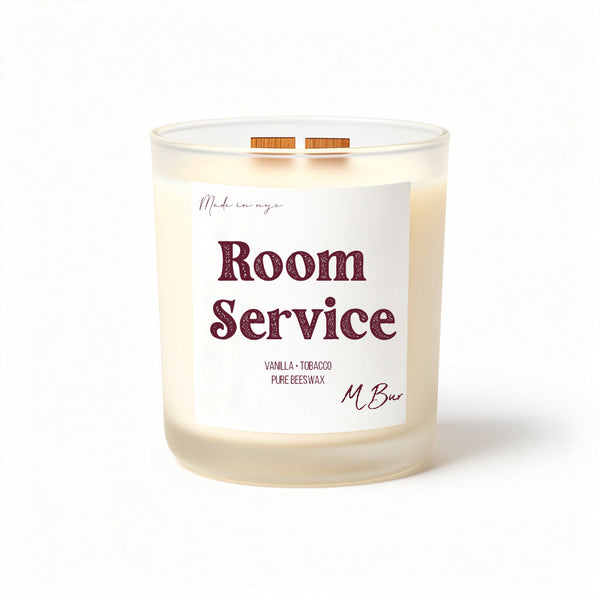
MBur's candles are pure beeswax, wooden wick, non toxic fragrance, no chemical dyes, handmade in Queens. They start at $20 for the 20 hour size. If you want a starting point, the Do Not Disturb is the one parents reach for most often for exactly this use case.
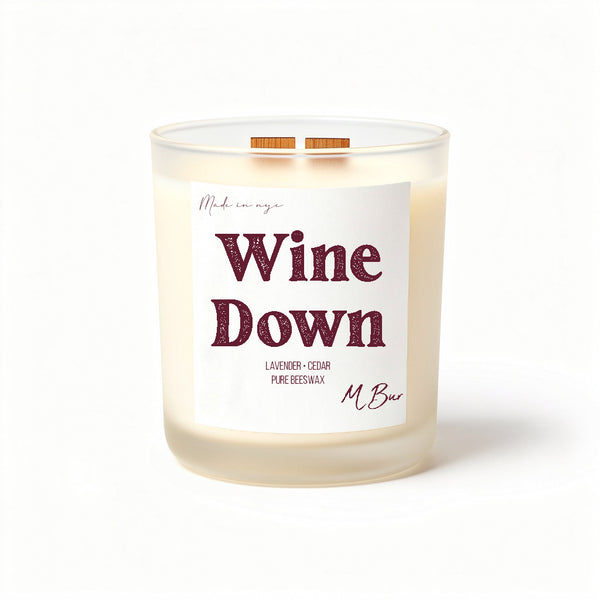
"Absolutely loved the Wine Down candle! The scent is so light and clean, not overpowering at all, which is exactly what I look for. A lot of other candles tend to give me headaches, but this one was a total game changer." Nicole D.
Explore MBur's full beeswax candle collection and find the right scent for your home.
Related reading

