

What Does 'Clean Burning' Actually Mean in Candles? A No-Fluff Breakdown
What Does 'Clean Burning' Actually Mean in Candles? A No Fluff Breakdown
Paraffin wax, the stuff inside the majority of candles sold in the United States, is a byproduct of petroleum refining. That sentence alone should give you pause. A 2009 study from South Carolina State University found that burning paraffin candles releases compounds like benzene, toluene, and formaldehyde, all of which are classified as volatile organic compounds (VOCs) and known human carcinogens at sufficient exposure levels. And yet, for decades, the candle industry has sold this product without so much as a footnote.
So when a candle brand slaps the words "clean burning" on their label, what does that actually mean? Is it regulated? Is it scientific? Is it just marketing? The honest answer is: it depends entirely on who is saying it and what is inside the candle. This post is going to break that down for you, clearly and completely.
"Clean Burning" Is Not a Regulated Term
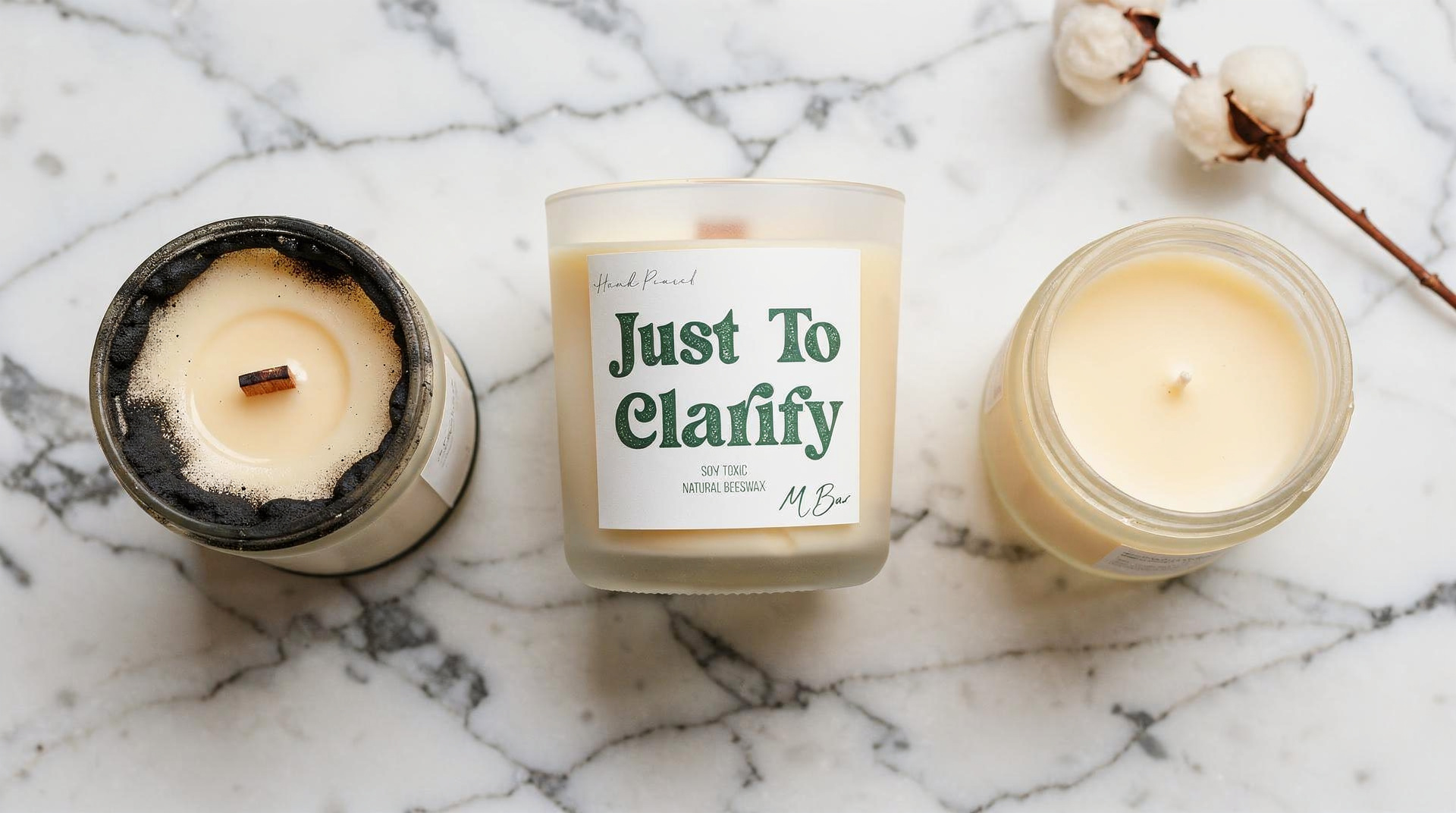
Here is the first thing to understand. In the United States, there is no federal standard, certification body, or legal definition for the phrase "clean burning" as it applies to candles. The U.S. Consumer Product Safety Commission (CPSC) regulates candle safety in terms of fire hazards, not air quality or chemical emissions. The fragrance industry operates under a largely self regulated body called the International Fragrance Association (IFRA), which publishes safety guidelines but does not have the force of law.
What this means practically: any candle brand can call their product "clean burning" without proving anything. A paraffin candle with a cotton wick and a mountain of toxic fragrance chemicals can legally carry that label. This is not a hypothetical. It happens constantly.
So "clean burning" as a marketing claim is essentially meaningless on its own. What matters is the specific ingredients, and whether those ingredients have a documented track record of low emissions combustion.
What Actually Happens When a Candle Burns
Combustion chemistry is more interesting than it sounds. When you light a candle, the heat from the flame melts the wax near the wick. That liquid wax is then drawn up through the wick via capillary action, vaporized by the flame's heat, and burned as fuel. The quality of that combustion, and what it releases into your air, depends on three variables: the wax composition, the wick material, and the fragrance compounds being volatilized.
A complete combustion reaction produces only carbon dioxide and water vapor. Incomplete combustion, which happens when a fuel does not burn cleanly, produces carbon monoxide, soot particulates, and a range of volatile organic compounds. Paraffin is particularly prone to incomplete combustion because of its complex hydrocarbon chains inherited from crude oil processing.
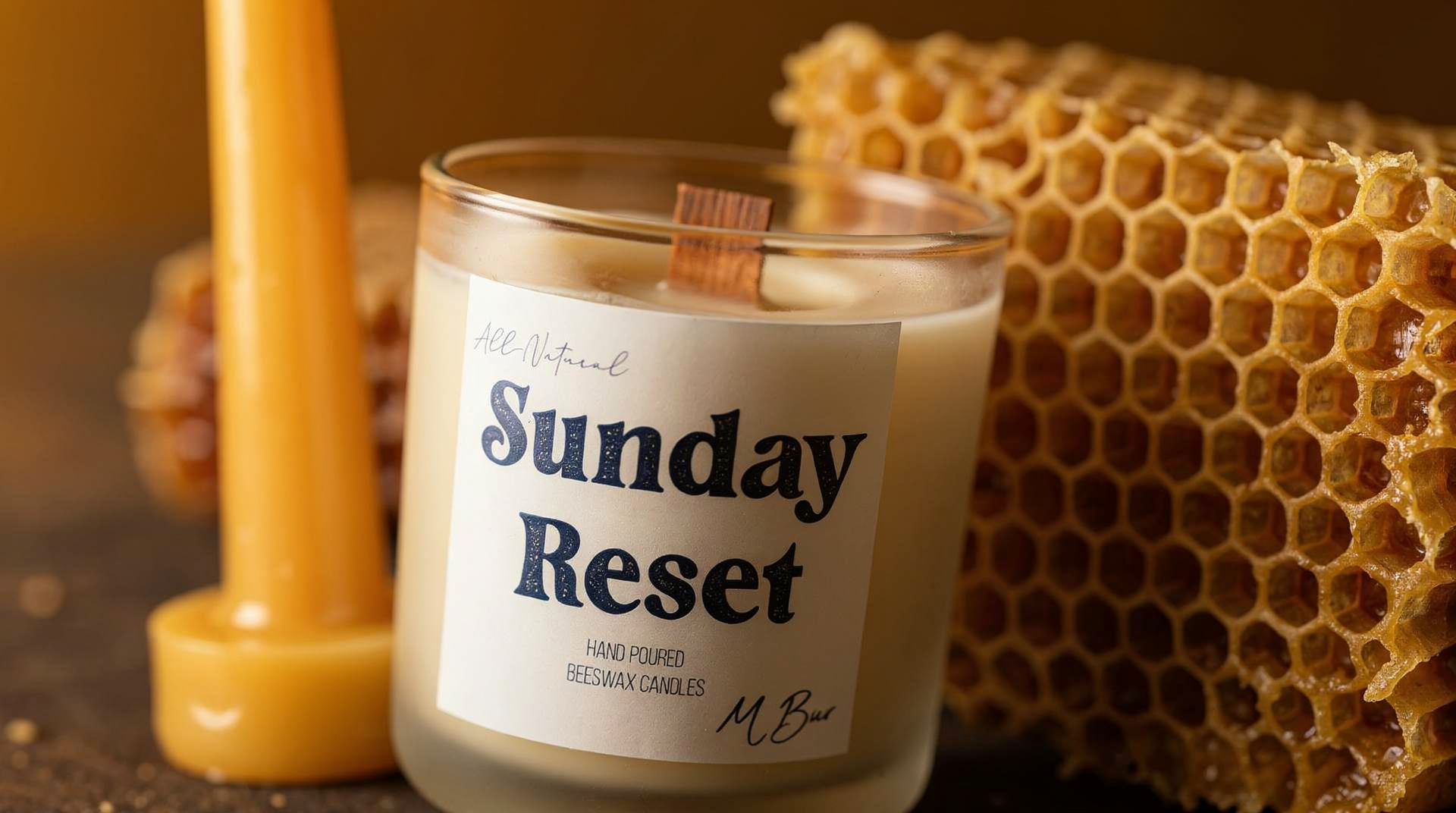
Beeswax, by contrast, has a simpler, more uniform molecular structure. It burns at a higher temperature and more completely than paraffin, producing significantly less soot and fewer combustion byproducts. This is not marketing language. It is organic chemistry.
The Three Ingredients That Define a Truly Clean Burn
1. The Wax
The wax is the fuel. Everything else is secondary. Here is a quick breakdown of the three most common options:
| Wax Type | Source | VOC Risk | Soot Level | Notes |
|---|---|---|---|---|
| Paraffin | Petroleum refining byproduct | High | High | Releases benzene, toluene, formaldehyde |
| Soy | Hydrogenated soybean oil | Low to moderate | Low to moderate | Often blended with paraffin. "Soy blend" is a red flag. |
| Beeswax | Honeycomb secreted by bees | Very low | Very low | Oldest candle material known (~5,000 BCE). Burns completely. |
Soy candles are a genuine step up from paraffin. But the soy candle industry has a labeling problem: a candle only needs to contain a small percentage of soy wax to be marketed as a "soy candle." Many brands use soy paraffin blends and call them natural. Read the full ingredient list before you trust the front of the label.
Beeswax is the cleanest burning wax with the longest documented history of human use. If you want to go deeper on how these waxes actually compare, our guide to non toxic candles covers the full picture.
2. The Wick
The wick is the delivery system. A bad wick can ruin an otherwise clean candle.
Until the late 1970s, many candle manufacturers used lead core wicks, particularly in cheaper imported candles, because lead kept the wick rigid during burning. The U.S. Consumer Product Safety Commission banned lead wicks in 2003, but that does not mean all wicks are created equal. Some wicks use zinc or tin cores, which release trace metal particulates during combustion.
Cotton wicks are the most common clean alternative. They burn evenly, do not introduce metal compounds, and work well with most wax types. Wooden wicks go a step further. They burn at a slightly lower temperature, which means slower wax consumption, a more stable flame, and that distinctive crackling sound that most people find genuinely calming. Wooden wicks also tend to produce less carbon mushrooming (that black buildup at the wick tip) than cotton wicks.
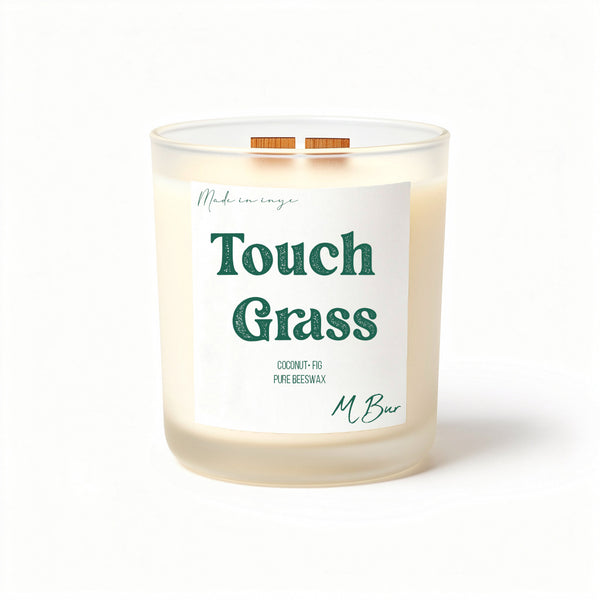
All MBur candles use wooden wicks across every scent in the collection, which contributes directly to the even, low soot burn that customers consistently notice.
3. The Fragrance
This is where most candle brands quietly cut corners, and where the "clean burning" claim most often falls apart.
Fragrance is a legal term of art in the United States. Under federal law, manufacturers are not required to disclose the individual components of a fragrance formula because it is considered a trade secret. A single fragrance entry on an ingredient list can contain dozens of chemical compounds, including phthalates (endocrine disruptors linked to hormonal disruption), acetaldehyde, and various VOCs.
The Cleveland Clinic notes that people with asthma, allergies, or chemical sensitivities are particularly vulnerable to toxic fragrance compounds in scented products, including candles. The fix is straightforward: phthalate free, non toxic fragrance oils, or no added fragrance at all.
MBur uses only phthalate free, non toxic fragrance. No hidden compounds, no endocrine disruptors. The scent is the scent, nothing else riding along with it.
What About "Natural" and "Non Toxic"? Are Those Different?
Yes, and the distinction matters.
"Natural" usually refers to the source of an ingredient. Beeswax is natural. Essential oils are natural. But natural does not automatically mean safe or low emission. Some natural essential oils, when burned at high temperatures, can break down into irritating compounds. The concentration and delivery method matter as much as the source.
"Non toxic" is a more functional claim. It means the product, as used under normal conditions, does not release substances at levels known to cause harm. A truly non toxic candle uses wax with no synthetic additives, fragrance with no phthalates or harmful VOC precursors, and a wick with no metal core.
"Clean burning" should be the operational result of all of the above: a candle that combusts completely, releases minimal soot and VOCs, and does not introduce toxic fragrance compounds into your breathing air. When a brand uses the term precisely, it means something real. When it is slapped on a paraffin product with "fragrance" in the ingredient list, it means nothing.
The Beeswax Difference, Specifically
Beeswax has been used as a light source for over 5,000 years. Egyptian archaeologists have found beeswax candle remnants in tombs dating back to the early dynastic period. Medieval churches burned beeswax candles specifically because they burned cleanly, without the smoky residue of tallow (animal fat) candles that would blacken walls and irritate lungs.
Modern chemistry has confirmed what centuries of observation established: beeswax burns more completely than any other candle wax. Its natural esters and fatty acids produce a stable, consistent flame. Its melting point is higher than paraffin or soy, which means the wax pool stays controlled and the burn time is longer. MBur's 12oz beeswax candles are rated for up to 80 hours of burn time because of this property.
There is also a frequently cited claim that beeswax candles emit negative ions during combustion, which some argue may help neutralize airborne particulates. Research on this specific mechanism is limited and the evidence is largely anecdotal, so we are not going to overstate it. What the evidence does support clearly is that beeswax produces significantly less soot and fewer combustion byproducts than paraffin, and that matters for everyday air quality in your home.
"I absolutely love these candles! I instantly notice the difference in the air quality, in comparison to the Bath and Body scented candles. I love Bath and Body's candles but I acknowledge that it caused a slight headache and other minor respiratory discomfort. Awesome products. Totally addicted." Jason H., Sunday Reset Candle
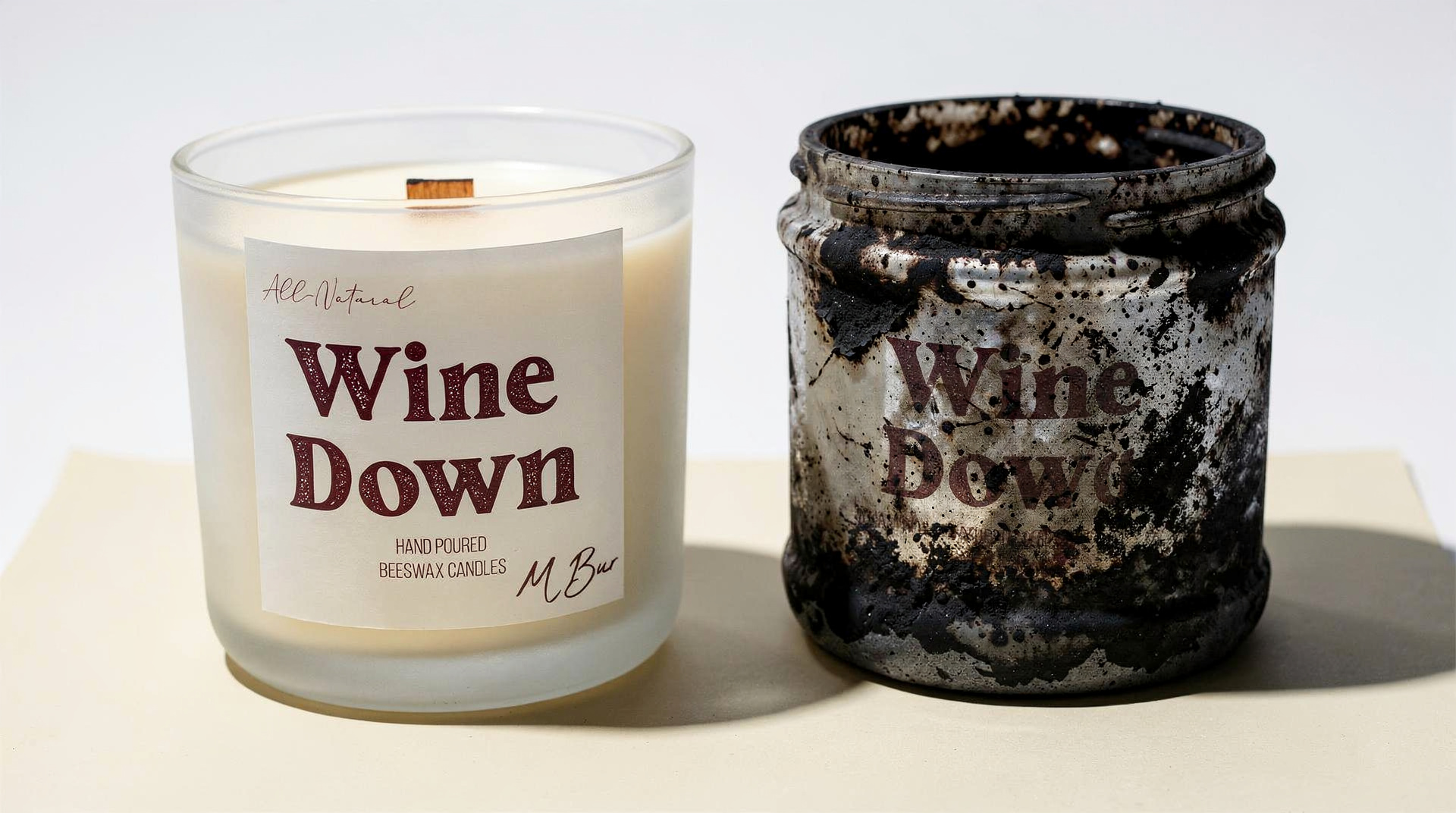
That kind of response is not unusual. Once people burn a well made beeswax candle in a properly ventilated room, the difference is perceptible. No black ring around the jar. No residue on nearby surfaces. No headache two hours in.
A Practical Checklist: How to Evaluate Any "Clean Burning" Claim
Before buying any candle that calls itself clean burning, ask these five questions:
- What is the wax? If the label says "paraffin blend," "wax blend," or does not specify, be skeptical. Look for 100% beeswax, 100% soy, or coconut wax with no paraffin added.
- What is the wick made of? Cotton or wood is good. Any mention of a metal core is a reason to walk away.
- What fragrance ingredients are disclosed? Phthalate free is a minimum standard. Non toxic fragrance is better. "Fragrance" as a blanket term with no further detail is a flag.
- Are there dyes? Chemical dyes add another layer of compounds to the combustion mix. Undyed candles burn cleaner.
- Is the brand transparent? Legitimate clean burning brands can tell you exactly what is in their candles. If the ingredient list is vague, the product probably is too.
Frequently Asked Questions
Does clean burning mean no scent?
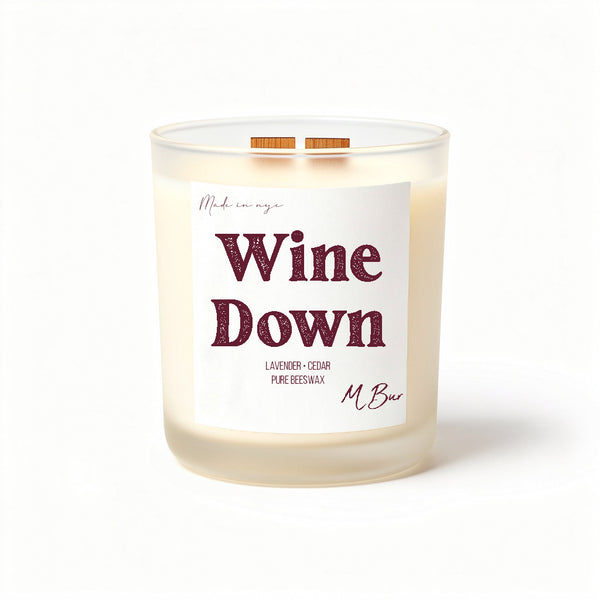
Not at all. Clean burning refers to the combustion quality, not the presence or absence of fragrance. A candle can have a strong, beautiful scent and still burn cleanly if it uses non toxic fragrance and a low emissions wax. The Wine Down beeswax candle (lavender, chamomile, sage, cedar, and sandalwood) is a good example: it fills a room with scent without the soot or toxic fragrance compounds you get from most mainstream alternatives.
Are soy candles actually cleaner than paraffin?
Generally yes, but with a major caveat. Pure soy candles do burn with less soot than pure paraffin. The problem is that most candles marketed as "soy" contain a paraffin blend. If the label says "soy blend" rather than "100% soy," you are likely burning paraffin too.
How long do beeswax candles actually burn?
Longer than any other wax type, because beeswax has the highest melting point of all candle waxes. MBur's 12oz size is rated for 80 hours. The 7oz is rated for 55 hours, and the 5oz burns for 40 hours.
Does wick trimming actually matter for a clean burn?
Yes, and significantly. A wick that is too long produces a larger, less controlled flame that accelerates incomplete combustion and generates more soot. Trimming your wick to about a quarter inch before each burn is one of the simplest things you can do to improve air quality during candle use. Our complete candle care guide covers wick trimming and everything else you need for a cleaner burn.
Can ventilation really make a difference?
It can reduce your exposure to whatever a candle does emit, but it is not a substitute for a genuinely clean burning candle. Good airflow helps any candle burn better and dilutes any combustion byproducts in the room. That said, if your candle is producing significant soot or you notice a chemical smell, ventilation is managing a symptom, not solving the problem. The wax and fragrance are the source.
The Bottom Line
"Clean burning" is a meaningful claim when it reflects verifiable ingredient choices: a low emissions wax, a metal free wick, and non toxic fragrance with full transparency about what is actually in the formula. It is a meaningless marketing phrase when applied to paraffin candles with vague ingredient lists.
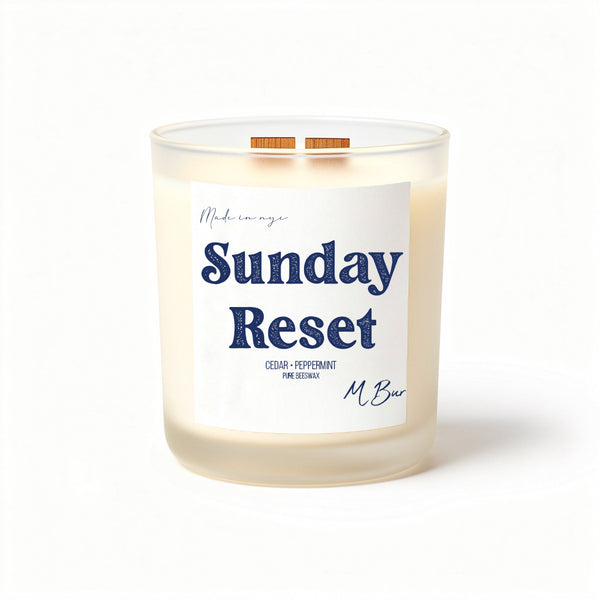
If you want to skip the research and just get something you know is clean, the Sunday Reset beeswax candle (eucalyptus, peppermint, cedar, starting at $20 for the 20 hour size) is made from 100% beeswax with a wooden wick and phthalate free non toxic fragrance. It is what clean burning actually looks like in practice.
Shop the full MBur beeswax candle collection
What buyers say:
Related reading:

