

What Happens to Your Air When You Burn a Candle: A Visual Explainer
What Happens to Your Air When You Burn a Candle: A Visual Explainer
Paraffin wax is literally a petroleum byproduct. It is the same class of material refined from crude oil to make gasoline, diesel, and jet fuel. And for most of candle history, that is what people have been burning inside their homes. Not because it was the best option. Because it was cheap.
Beeswax, by contrast, has been used as a light source for over 5,000 years, predating the Roman Empire and outlasting every candle trend since. People kept coming back to it not out of nostalgia, but because it behaved differently when it burned. Cleaner smoke. Longer flame. A quality that was observable even before anyone had the vocabulary to explain combustion chemistry.
Today we do have that vocabulary. And once you understand what actually happens to your air when a candle burns, the differences between wax types stop feeling like marketing and start feeling like basic chemistry. This post breaks it all down, section by section, with as little jargon as possible.
If you have ever wondered whether burning candles indoors is actually affecting your air quality, this is the explainer you have been looking for.
First: What Is Combustion, Actually?
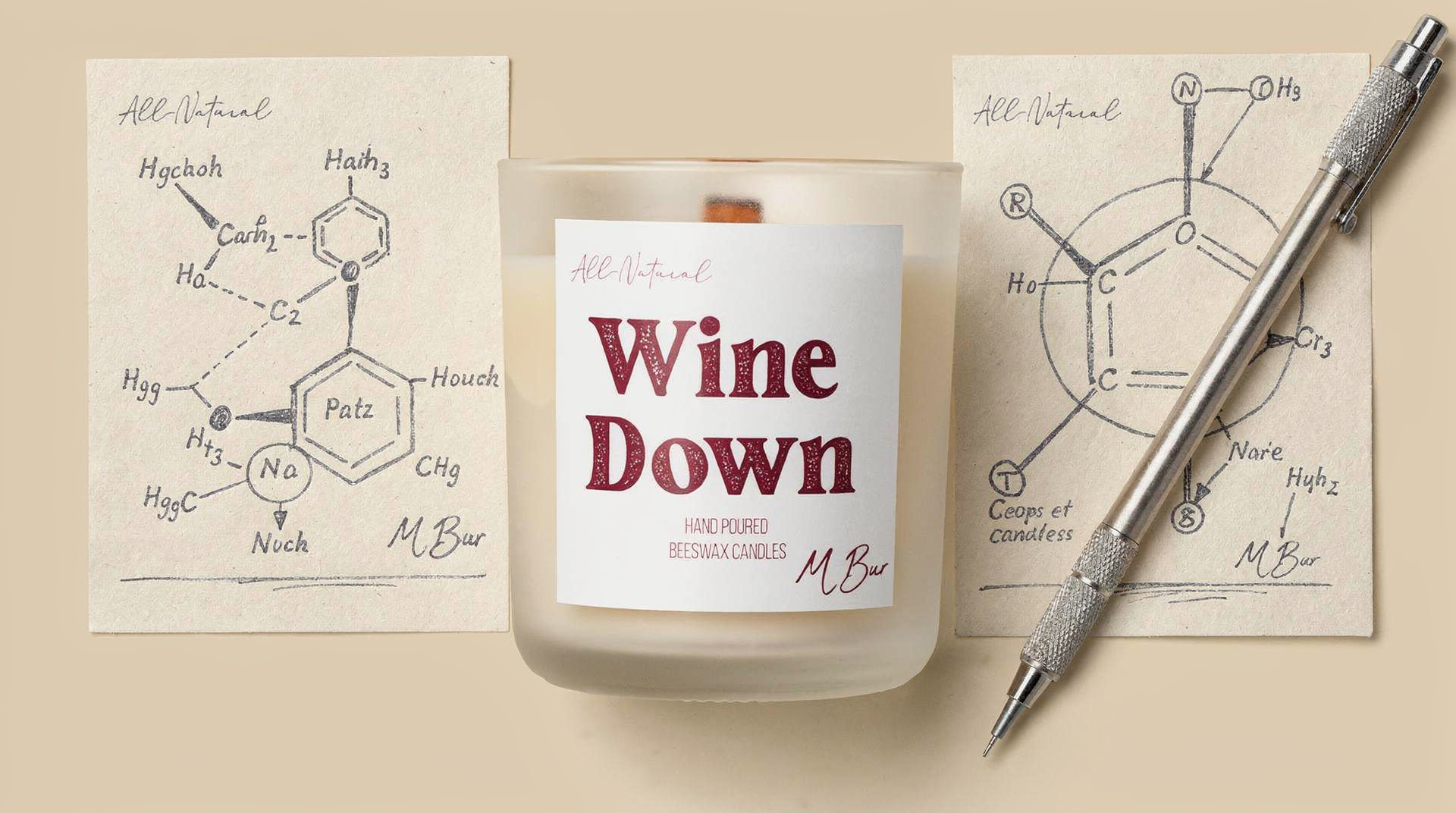
Combustion is an oxidation reaction. Fuel meets oxygen, heat triggers a chemical chain reaction, and the result is light, heat, carbon dioxide, and water vapor. In a perfect combustion scenario, that is genuinely all you get. CO2 and H2O. The same outputs as human respiration.
The problem is that candle combustion is almost never perfect. And the degree to which it deviates from perfect depends almost entirely on two things: what the wax is made of, and what else has been added to it.
A candle flame has distinct zones. The innermost zone is where the wax vapor is richest and combustion is least complete. The middle zone is where the brightest burning happens. The outer blue zone is where oxygen is most abundant and combustion is most efficient. What escapes as soot or vapor comes from the inner zone, where unburned fuel particles get pushed outward before they fully combust.
This is why wax composition matters so much. The molecular structure of your wax determines how cleanly those inner zone vapors burn off, and what gets left behind when they do not.
What Paraffin Wax Releases Into Your Air
Paraffin is a mixture of saturated hydrocarbons derived from petroleum. When it burns, the combustion process releases a range of compounds that have no business being in your living room.
A study published in the journal Chemosphere found that burning paraffin candles releases detectable levels of toluene, benzene, and formaldehyde indoors. The American Lung Association and the EPA have both classified benzene and formaldehyde as known human carcinogens. Toluene is a volatile organic compound (VOC) associated with respiratory irritation and neurological effects at sustained exposure levels.
To be clear: a single candle burned briefly in a ventilated room is unlikely to cause acute harm. The risk compounds with frequency, duration, poor ventilation, and the addition of toxic fragrance oils that carry their own chemical payloads into the mix.
The black soot that paraffin candles deposit on walls and jar rims is not just cosmetically annoying. It is particulate matter, the same class of airborne pollution that the EPA monitors outdoors. Fine particulate matter (PM2.5) is small enough to penetrate deep into lung tissue. Burning paraffin candles in a closed room without ventilation is a measurable source of indoor PM2.5.
What Soy Wax Releases (It Is Complicated)
Soy wax entered the market as a clean alternative to paraffin, and in isolation it does burn more cleanly. Soy is a plant based fat, so its combustion products are closer to organic combustion than petroleum combustion.
Here is the complication: most commercially available soy candles are not 100% soy. Many are blended with paraffin to improve scent throw or lower cost. Regulations do not require manufacturers to disclose the blend ratio, so a candle labeled as soy may contain 30% paraffin without any obligation to say so.
Beyond blending, the bigger issue with mass market soy candles is the fragrance. Toxic fragrance oils can contain hundreds of undisclosed chemical compounds. Phthalates are among the most common, used as fragrance stabilizers and classified as endocrine disruptors by the National Institutes of Health. A soy candle with toxic fragrance is not a clean candle. It is a cleaner wax delivering a dirtier payload.
This is a distinction we pay close attention to at MBur. Our candles use phthalate free, non toxic fragrance across every scent in the collection, including the Wine Down beeswax candle and the Sunday Reset beeswax candle. The wax matters. So does what goes into it.
What Beeswax Releases (And Why It Is Different)
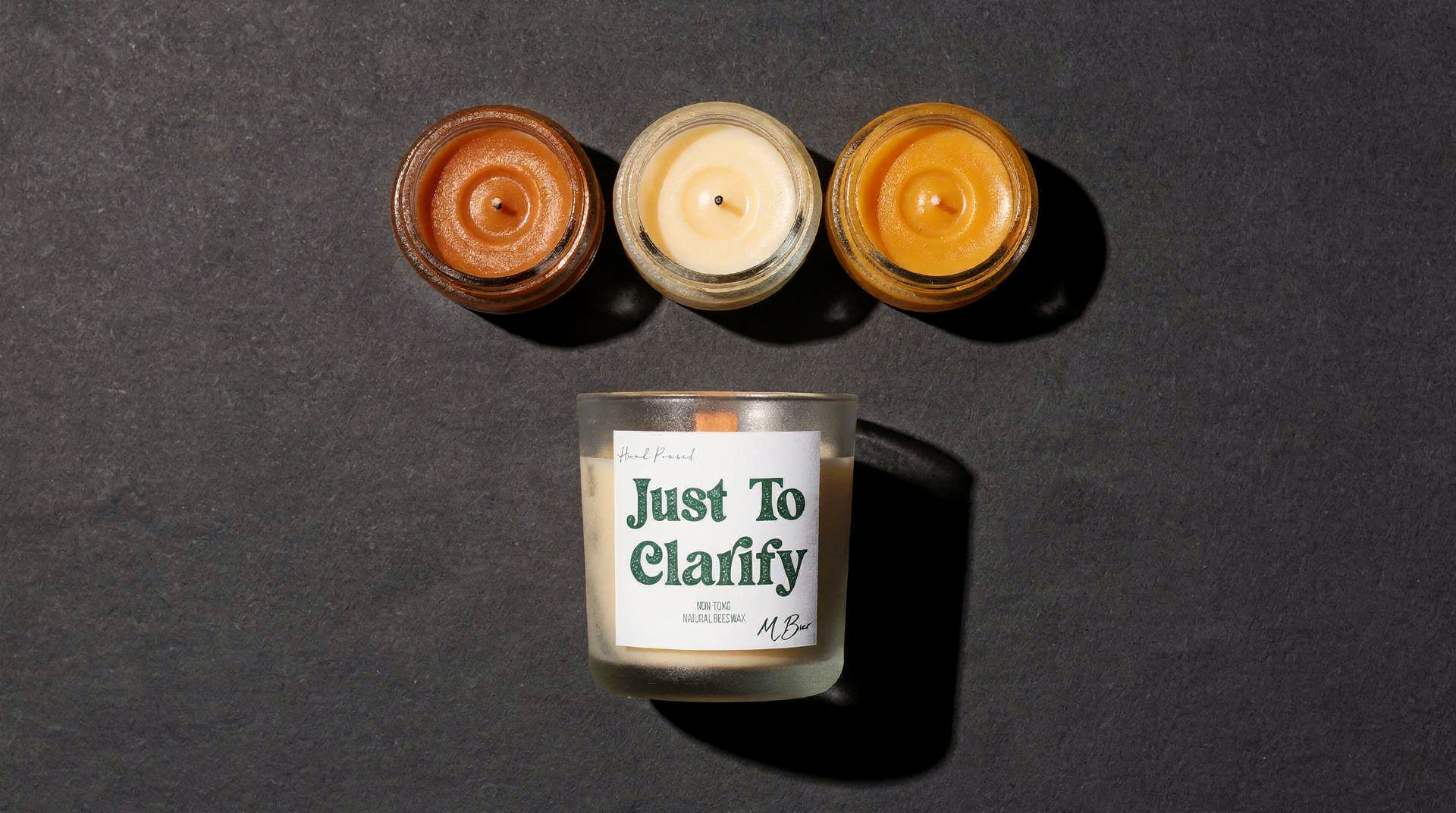
Beeswax is not a manufactured material. It is secreted by honeybees to build comb, and its chemical composition reflects that biological origin. It is primarily a complex ester of fatty acids and long chain alcohols, with a melting point around 145 degrees Fahrenheit, higher than any other candle wax.
That high melting point is the key to understanding why beeswax burns so differently. Because it requires more heat to transition from solid to vapor, beeswax combustion is slower and more complete. Less unburned fuel escapes from the inner flame zone. Less soot is produced. The combustion is closer to that ideal reaction where the outputs are primarily CO2 and water vapor.
There is also a widely cited claim that beeswax releases negative ions when it burns, which some proponents argue can help neutralize airborne pollutants like dust, mold, and pollen. The science here is worth being honest about. Ionization does occur during combustion, and some studies suggest negative ions may have air purifying effects. However, the specific claim that beeswax candles meaningfully ionize a room has not been definitively proven in peer reviewed literature. What is not an open question is the soot output. Beeswax produces dramatically less soot than paraffin. Its natural golden color comes from honey and pollen compounds in the wax, not from chemical dyes.
The Wick Variable Nobody Talks About
The wax gets most of the attention in candle chemistry conversations, but the wick is doing significant work too. Cotton wicks are the standard in most candles, and they are generally inert when burned. Metal core wicks, which were historically used for rigidity, are a different story. Lead core wicks were officially banned in the U.S. in 2003, but zinc core wicks are still used and have been associated with elevated metal particulate emissions.
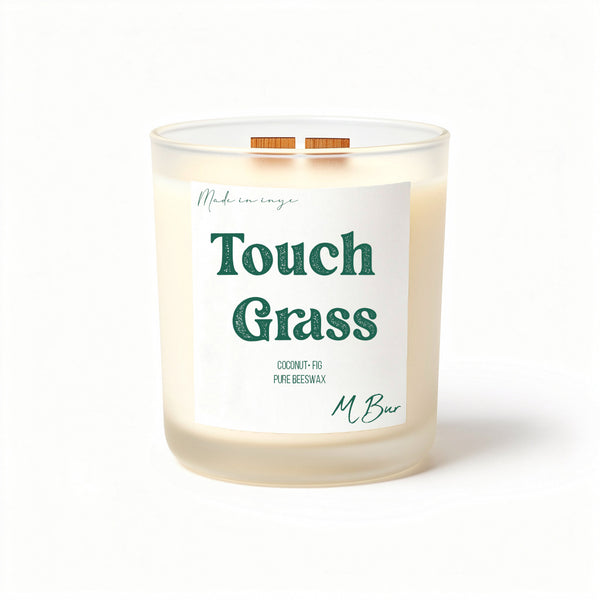
Wooden wicks burn differently from cotton. The combustion surface area is wider, which produces a lower, steadier flame with better wax to heat efficiency. They also produce the distinctive crackling sound that comes from the cellular structure of the wood responding to heat. When the wood is untreated and the wax is beeswax, the combined output is significantly cleaner than paraffin with a cotton wick.
Every candle in the MBur collection uses a wooden wick. The wider combustion surface pairs well with beeswax's higher melting point, helping the wax pool evenly without tunneling.
How Room Conditions Change Everything
Ventilation
Air exchange rate is the single biggest factor in whether candle emissions accumulate to meaningful concentrations. A candle burned in a small bathroom with the door closed will produce different air quality outcomes than the same candle burned in an open plan living space with windows cracked. Ventilation is the primary mitigation strategy, regardless of wax type.
Burn Time and Duration
Short burns in well ventilated spaces are low risk by any reasonable assessment. Extended burns of multiple candles in a closed room are where air quality impacts start to become measurable. The EPA recommends limiting simultaneous burning of multiple candles and maintaining air flow, particularly for people with asthma or respiratory sensitivities.
Wick Maintenance
A wick that is too long produces a larger, less efficient flame. That larger flame has more incomplete combustion happening in the inner zone, which means more soot and more unburned fuel vapor. Trimming your wick to about a quarter inch before each burn is the single most effective thing you can do to reduce emissions from any candle. Our full candle care guide breaks down exactly how to maintain a clean burn from first light to last.
A Simple Comparison: What Each Wax Type Puts Into Your Air
| Factor | Paraffin | Soy | Beeswax |
|---|---|---|---|
| Wax origin | Petroleum refinery byproduct | Hydrogenated soybean oil | Secreted by honeybees |
| Soot output | High | Low to moderate | Very low |
| VOC risk | Benzene, toluene, formaldehyde documented | Low from wax, variable from fragrance | Minimal from wax itself |
| Fragrance risk | Often contains phthalates | Often contains phthalates | Depends on fragrance sourcing |
| Burn time per ounce | Shortest | Moderate | Longest (highest melting point) |
| Chemical dyes | Common | Common | Not used at MBur |
The Light Spectrum Detail Most People Miss
Beeswax burns at a color temperature that is the closest of any wax to natural sunlight, sitting roughly in the 1500 to 2700 Kelvin range depending on flame size. This is not a health claim. It is a physics observation. The warm, golden quality of a beeswax flame is a function of its combustion temperature and the natural pigments in the wax, not an additive.
This matters for the same reason that the type of light in your environment matters generally. Warmer, lower intensity light sources in the evening are less disruptive to circadian rhythms than cooler, brighter sources. A beeswax candle is not a sleep intervention. But it is a genuinely warm light source that behaves differently than the LED overhead light you turn off when you want to wind down.
Frequently Asked Questions
How long do beeswax candles actually burn compared to paraffin?
Beeswax has the highest melting point of any candle wax, around 145 degrees Fahrenheit, compared to roughly 99 to 145 degrees for soy and 99 to 130 for paraffin. That higher melting point means it consumes more slowly. MBur's 12oz beeswax candles are rated for up to 80 hours of burn time, which is significantly longer than most comparable size paraffin or soy candles.
Is the soot from beeswax candles the same as paraffin soot?
No. Paraffin soot contains petroleum derived carbon particles and is chemically similar to diesel exhaust particulate. Beeswax soot, when it occurs at all, is organic carbon from plant based combustion. Keeping your wick trimmed to a quarter inch minimizes soot from any candle, but beeswax produces significantly less to begin with.
Do scented candles release more emissions than unscented?
It depends entirely on the fragrance. Non toxic, phthalate free fragrance adds minimal emissions to a clean burning wax. Toxic fragrance with undisclosed chemical compounds can significantly increase VOC output, regardless of what the underlying wax is. This is why fragrance transparency matters as much as wax type when choosing a non toxic candle.
Does burning a candle in a small room actually affect air quality?
Yes, measurably so if the room is not ventilated. A 2014 study in Environmental Science and Technology found that burning multiple candles in a closed room can raise indoor particulate concentrations to levels comparable to light outdoor pollution events. Single candle, ventilated room: the effect is minimal. Multiple candles, closed space, long duration: worth paying attention to, especially if anyone in the household has asthma or allergies.
Is it safe to burn candles around people with respiratory sensitivities?
This is where wax type, fragrance type, and ventilation all converge. Beeswax with phthalate free fragrance in a ventilated space is the lowest risk option. Paraffin with toxic fragrance in a closed room is the highest. For a deeper look, see our guide for asthma sufferers.
The Practical Takeaway
Candle combustion is not inherently harmful. What makes it harmful is the combination of petroleum derived wax, toxic fragrance compounds, metal core wicks, and inadequate ventilation. Remove those variables, and a candle is roughly what it was for five thousand years: a clean burning, warm light source with a scent profile that comes from the materials themselves.
The chemistry of what your candle puts into your air is knowable. And once you know it, the choice between a petroleum based candle and a beeswax candle with non toxic fragrance is not really a close call.
"I absolutely love these candles! I instantly notice the difference in the air quality, in comparison to the Bath and Body scented candles. I love Bath and Body's candles but I acknowledge that it caused a slight headache and other minor respiratory discomfort. Awesome products. Totally addicted." Jason H., Sunday Reset Candle
Shop the full MBur beeswax candle collection
What buyers say:
Related reading:

