

What Chemicals Are in Yankee Candles? A Complete Ingredient Breakdown
Pick up a Yankee Candle jar and read the label. Scent name, burn-time estimate, safety warnings, and almost nothing about what is inside it. That is not an oversight. Candles sold in the United States are regulated as consumer products rather than as anything you put on or in your body, and no federal rule requires a candle to list its ingredients at all. A jar of pasta sauce is held to a stricter standard than the thing you burn in a closed bedroom for four hours.
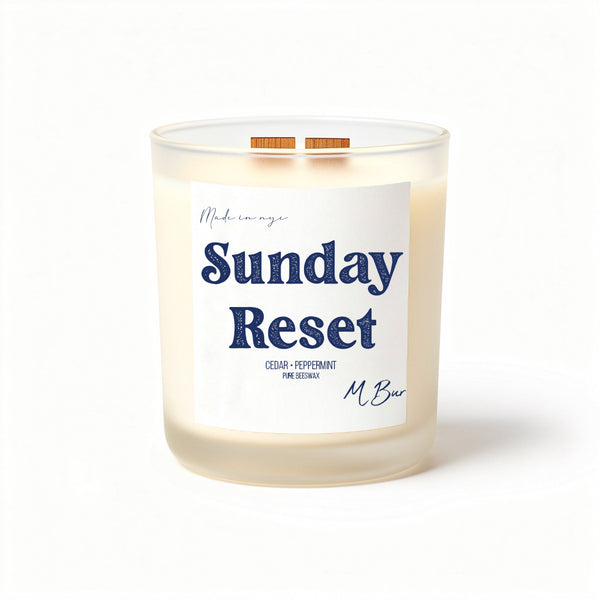
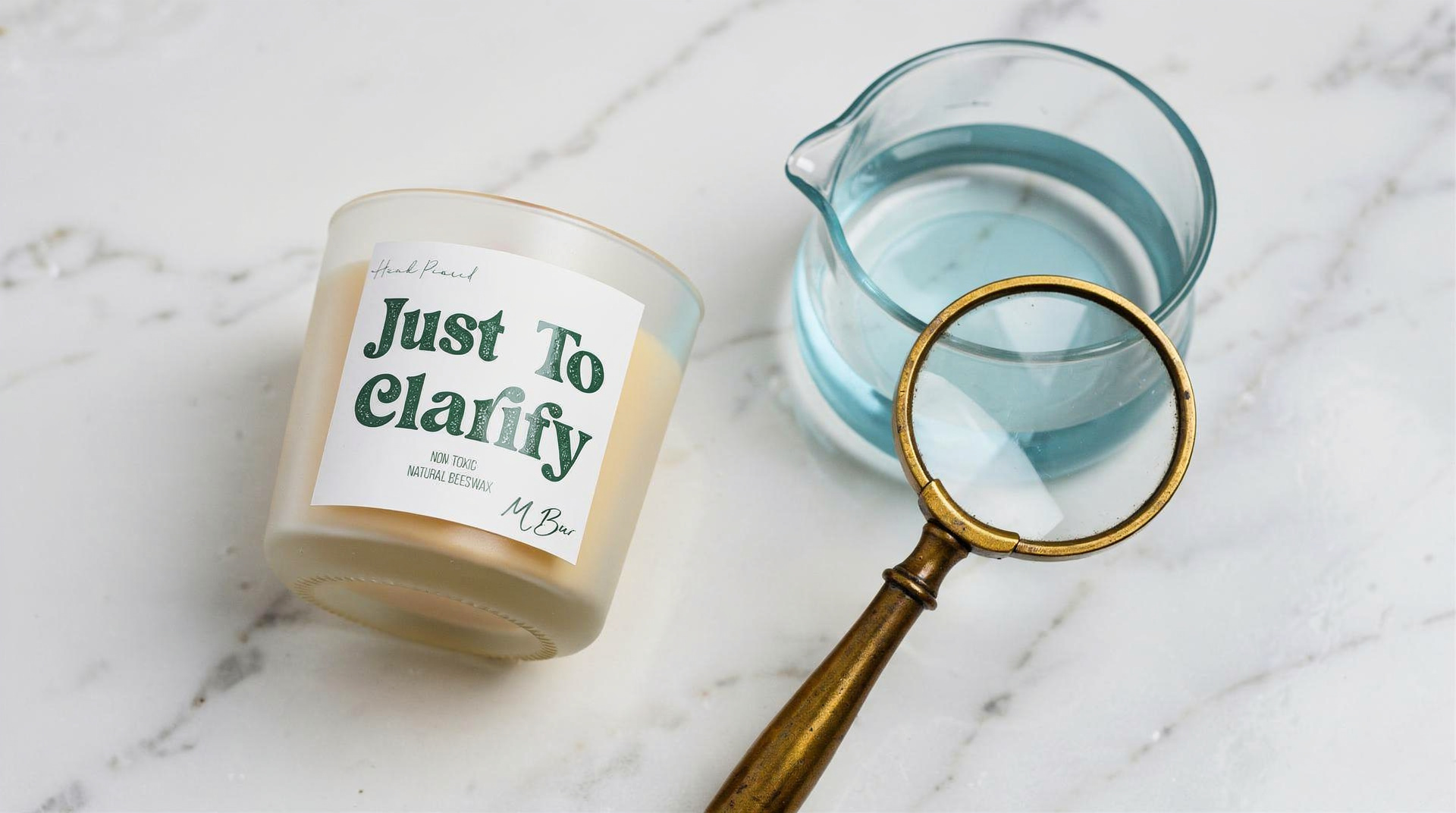
Which means nobody outside the company can hand you a certified list, and anyone claiming otherwise is selling something. What you can do is work it out from what the company states, what the category runs on, and what the wax does once you light it. That is close enough to decide on. For comparison as you read, the MBur beeswax candle collection states the wax, the wick, and that the fragrance is phthalate-free, which is four things you can hold us to.
Why the label tells you so little
Candles fall under the Consumer Product Safety Commission rather than the FDA. The CPSC regulates physical hazards, which is why it banned lead-core wicks in 2003 after research linked them to airborne lead in homes. What it has never required is ingredient disclosure, because a candle is treated as a household object rather than something with a formulation you are entitled to read.
Layer on top of that the way fragrance works, where blends are held as trade secrets and sold to brands as finished products. So when a label reads "fragrance," that one word stands in for dozens of compounds, and the gap is industry-wide rather than the fault of any single company.
That sounds like a dead end and it is not. When you cannot verify what is in something you burn indoors, the move is to pick the version with fewer things in it to wonder about. One wax, a stated fragrance, no dye, no metal. Hold that rule, because the rest of this applies it to the four parts of a candle, starting with the one everything else sits on.
The wax, which sets the floor for everything else
Yankee's classic jar candles are paraffin-based, which the company has never hidden and which is standard across the mass market. Paraffin is a byproduct of crude oil refining, separated out during the process that turns petroleum into gasoline and diesel. It is cheap, holds fragrance and color well, and pours consistently at scale, so it became the default long before anyone was asking questions about it.
The health argument against it traces mostly to a 2009 South Carolina State University study, presented at an American Chemical Society meeting, which reported paraffin candles emitting benzene and toluene at levels the researchers found concerning with repeated use in unventilated rooms. It was never peer reviewed and the National Candle Association disputes the methodology, so treat it as a reason for caution rather than a verdict.
Soot is the part nobody argues about. Paraffin produces more visible particulate than harder waxes and it settles on walls and vents over months. Beeswax sits at the other end, with the highest melting point of the common candle waxes, so it burns slower, soots less, and yields more hours per ounce. It also costs several times more per pound, since supply is capped by how much beekeeping exists. At Yankee's volume that math has never worked, which is the real reason the category runs on petroleum. Our paraffin vs beeswax vs soy breakdown has the full comparison.
The word doing the most work on the label
If the wax is the part you can reason about, fragrance is the part you cannot. Yankee lists it as "fragrance" with no breakdown, the same as nearly every scented-product brand. The concern people raise most is phthalates, plasticizers used to help fragrance bind to wax and slow how fast a scent fades. They are documented endocrine disruptors, which is why several have been restricted in children's products and why the industry has been quietly moving away from them.
Whether any specific Yankee scent contains them today is something we cannot verify and will not assert. They do not publish it and no independent testing is public, so anyone claiming certainty either way is guessing. Our post on candles without endocrine disruptors covers what the research actually shows.
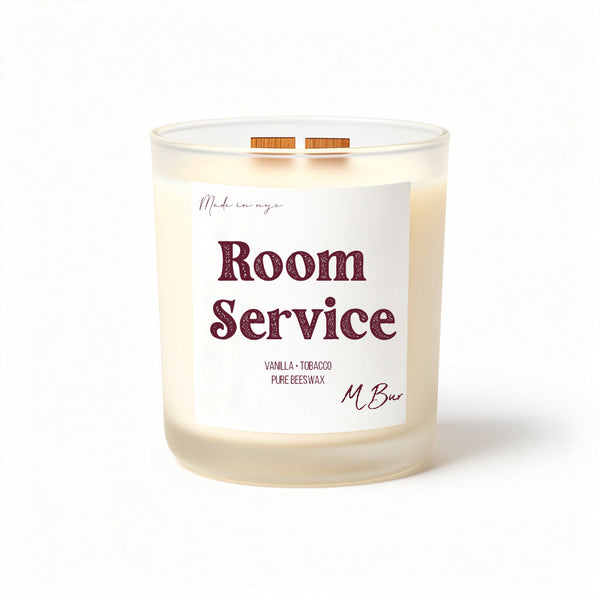
What you are left with is verifiability, which turns out to be the useful thing anyway. A brand that states "phthalate-free" has made a claim you can hold them to. A brand that says nothing has made no claim at all. We state it and stand behind it, and the full breakdown from our supplier is going onto the product pages, because a claim you can read line by line beats one you take on faith.
The vaguer words carry no weight here. There is no enforced definition of "natural," "clean," or "non-toxic" for candles, so a jar can be mostly paraffin, contain a trace of botanical oil, and market itself on the trace. The terms that mean something are specific, and two of them you can check without reading anything at all.
The two you can see with your own eyes
Start with color, the fastest tell in a shop. Yankee jars come in the color of the scent, which means added colorant, typically petroleum-derived. Dye has the weakest justification of anything in a candle, contributing nothing to burn quality, scent throw, or safety. It exists so the jar photographs well and reads correctly on a shelf. An uncolored candle is the natural shade of its wax, golden for beeswax, so a vivid jar tells you something before you have read a word.
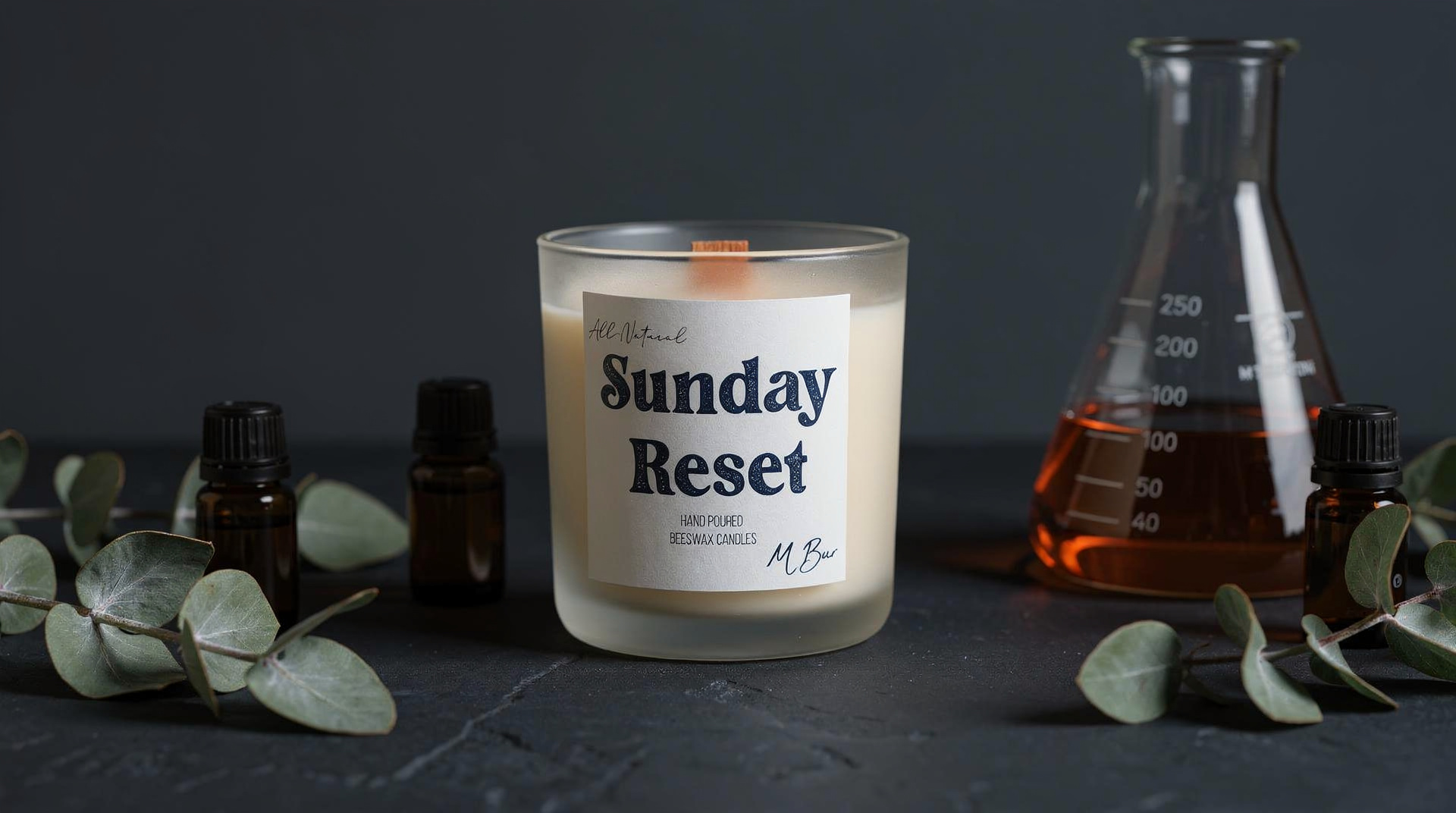
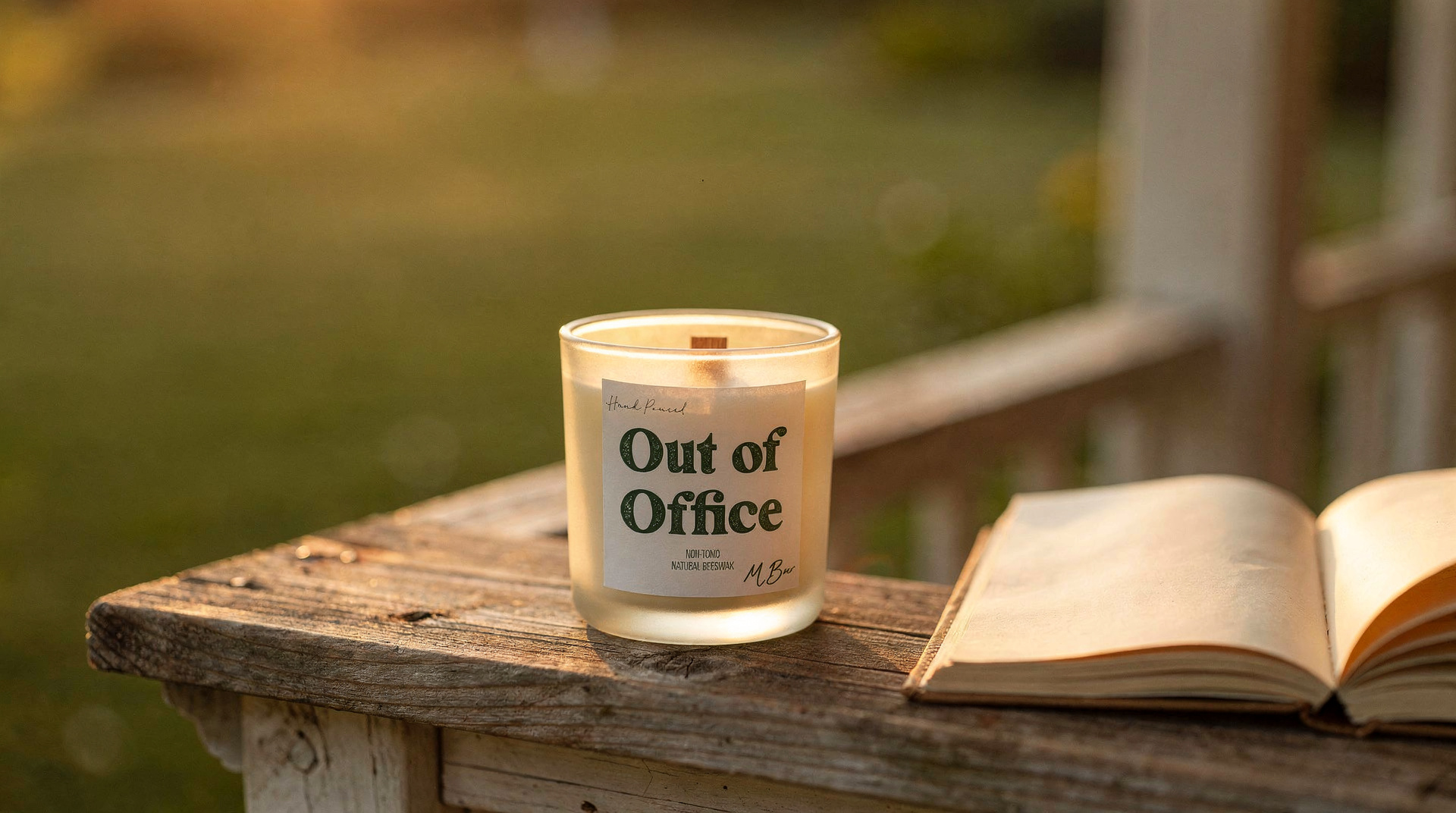
Then look at the wick. Lead cores have been illegal since 2003, and what replaced them across much of the industry is zinc or tin, which hold the wick upright in a deep melt pool. Zinc is not considered acutely hazardous, though some research has found trace metal particulate from metal-core wicks over long burns. A wooden wick sidesteps the question because there is no core to burn, which is why every candle in the MBur line uses one.
What all four add up to once you light it
Every candle emits something, and any brand telling you theirs releases nothing is overselling. What varies is quantity and composition, and both trace back to the four parts above. Soot comes from incomplete combustion and paraffin produces more of it, though an untrimmed wick and a draft will make any candle soot regardless of wax, which is why the quarter-inch trim rule is worth following. Our guide to candle soot covers the mechanics.
Volatile organic compounds come off both the wax and the fragrance load, which is the genuinely contested category and the one the 2009 study concerned itself with. Beyond the jar, room size, ventilation, and hours burned matter as much as anything in the formula. The same candle in an open living room and in a bedroom with the door shut are two different situations, which is usually where the question comes from.
So, are Yankee candles toxic?
Burned occasionally in a ventilated room, a Yankee Candle is unlikely to cause anyone measurable harm, and calling it poison is not supportable.
Almost nobody asking this question is an occasional user. People ask because they burn something most evenings, or in a bedroom with the door shut, or around a kid who is on the floor all day, or because they get a headache every single time and want to know what is causing it. At that frequency you are stacking four unknowns at once: a petroleum-derived wax, an undisclosed fragrance load, a dye that does nothing but sell the jar, and a metal-core wick, all of it burning indoors, none of it checkable by you.
You do not need proof of harm to prefer fewer unknowns. That is the whole case, and for most people it is enough. If headaches are what brought you here, our post on why candles give you headaches covers the mechanisms.
Side by side
| Factor | Typical mass-market jar | 100% beeswax (MBur) |
|---|---|---|
| Wax base | Paraffin, a petroleum refining byproduct | 100% beeswax, single ingredient |
| Fragrance | Proprietary blend, composition undisclosed | Phthalate-free, stated |
| Dye | Added colorant | None, natural golden wax |
| Wick | Commonly metal core | Untreated wood, no core |
| Soot | Higher, lower melting point | Lower, highest melt point of common waxes |
| Burn time per ounce | Shorter | Longer |
Ours come in two sizes. The 5oz is $32 and is where most people start, and the 12oz is $65 and includes a lid.
What to check on any jar
Everything above collapses into four questions you can answer in thirty seconds, in a shop or on a product page, and they filter out most of the category on their own.
- Wax: 100% beeswax or 100% soy, stated as a percentage. "Natural wax blend" with no composition given usually means paraffin is in there.
- Fragrance: phthalate-free, stated explicitly. The word natural on its own confirms nothing.
- Dye: none. The candle should be the color of its wax.
- Wick: wood or uncoated cotton, with no metal core.
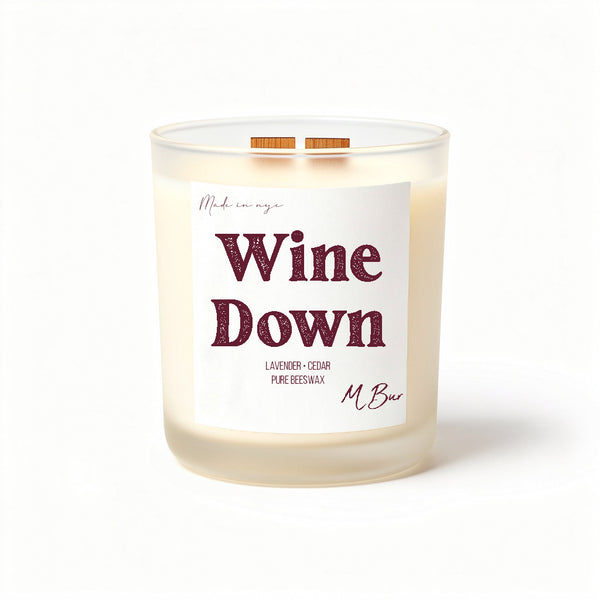
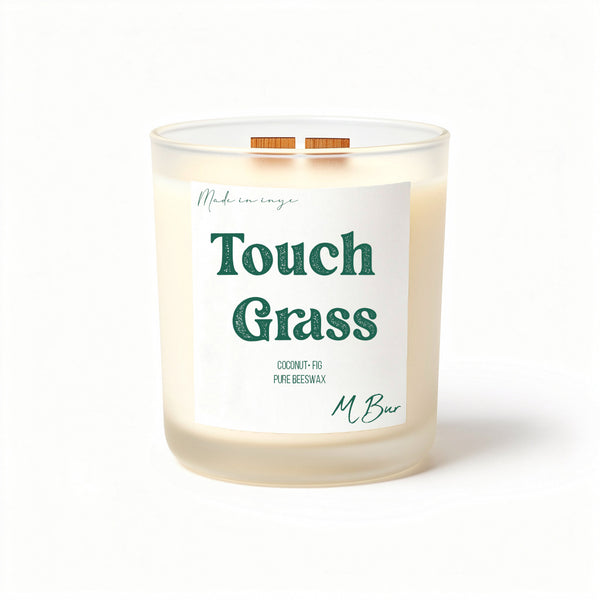
If you are switching over from a mass-market jar, Room Service is where most people land first, warm vanilla with saffron, white tea, and tonka bean. Wine Down is the evening one, lavender and chamomile over sage, cedar, and sandalwood.
What people tend to notice first is the air rather than the scent.
"I absolutely love these candles! I instantly notice the difference in the air quality, in comparison to the Bath & Body scented candles. I love Bath & Body's candles but I acknowledge that it caused a slight headache and other minor respiratory discomfort. Awesome products. Totally addicted." Jason H., verified buyer, on Retail Therapy
Frequently asked questions
Do Yankee Candles contain phthalates?
Nobody outside the company can confirm this either way. Yankee does not publish fragrance composition and no independent testing of their current formulations is public. Any brand telling you definitively that a competitor's product contains phthalates is going beyond the evidence.
Is it safe to burn a paraffin candle in a small bedroom?
Ventilation is the variable that matters most, since a closed room concentrates whatever a candle emits. Crack a window, trim the wick to a quarter inch, and keep burns to a few hours. Do Not Disturb is the one people keep in bedrooms, vanilla and sandalwood with soft pear and peach blossom.
Are beeswax candles completely emission-free?
No, and be wary of anyone claiming otherwise. Anything burning produces something. What changes is how much of it there is and how many of the inputs you can name. Beeswax burns hotter and cleaner than the alternatives, which means less particulate in the room and fewer variables you are guessing at.
What is the safest candle to burn?
The one where you can account for every input: single-ingredient wax, disclosed phthalate-free fragrance, no dye, no metal core, burned with a trimmed wick in a room with some air moving through it. For allergy and asthma considerations specifically, see our guide to the best beeswax candles for allergy sufferers.
Shop the full MBur beeswax candle collection and check it against the four criteria yourself.
Related reading:

