

Candles and Indoor Air Quality: What an Air Quality Monitor Actually Shows
Candles and Indoor Air Quality: What an Air Quality Monitor Actually Shows
Beeswax has been lighting human spaces for over 5,000 years. Ancient Egyptians burned rushlights soaked in animal fat. The Romans invented rolled papyrus dipped in tallow. But it wasn't until the Middle Ages that beeswax candles emerged as the gold standard of light sources, so valuable that only the wealthy and clergy could afford them. Fast forward to today, and we're still burning candles, not for light anymore, but for ambiance, scent, and ritual. Yet a modern question persists: if we're filling our homes with fragrant wax and flame, what are we actually putting into our air?
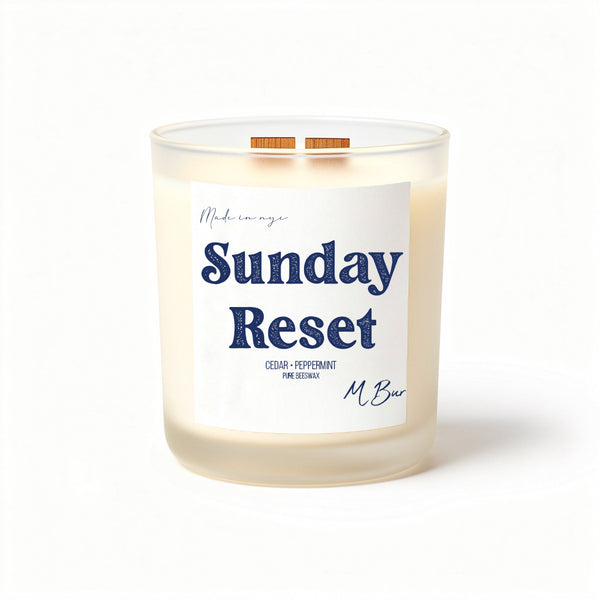
This is where air quality monitors enter the conversation. These small devices measure particulate matter, volatile organic compounds (VOCs), carbon dioxide levels, and other invisible pollutants in real time. They've become increasingly affordable and popular for home use, and they reveal something fascinating about candles: the type of wax, the wick material, and the fragrance source matter tremendously. Some candles clean your air. Others degrade it. And the data doesn't lie. Browse the full MBur beeswax candle collection if you want to see what clean-burning looks like.
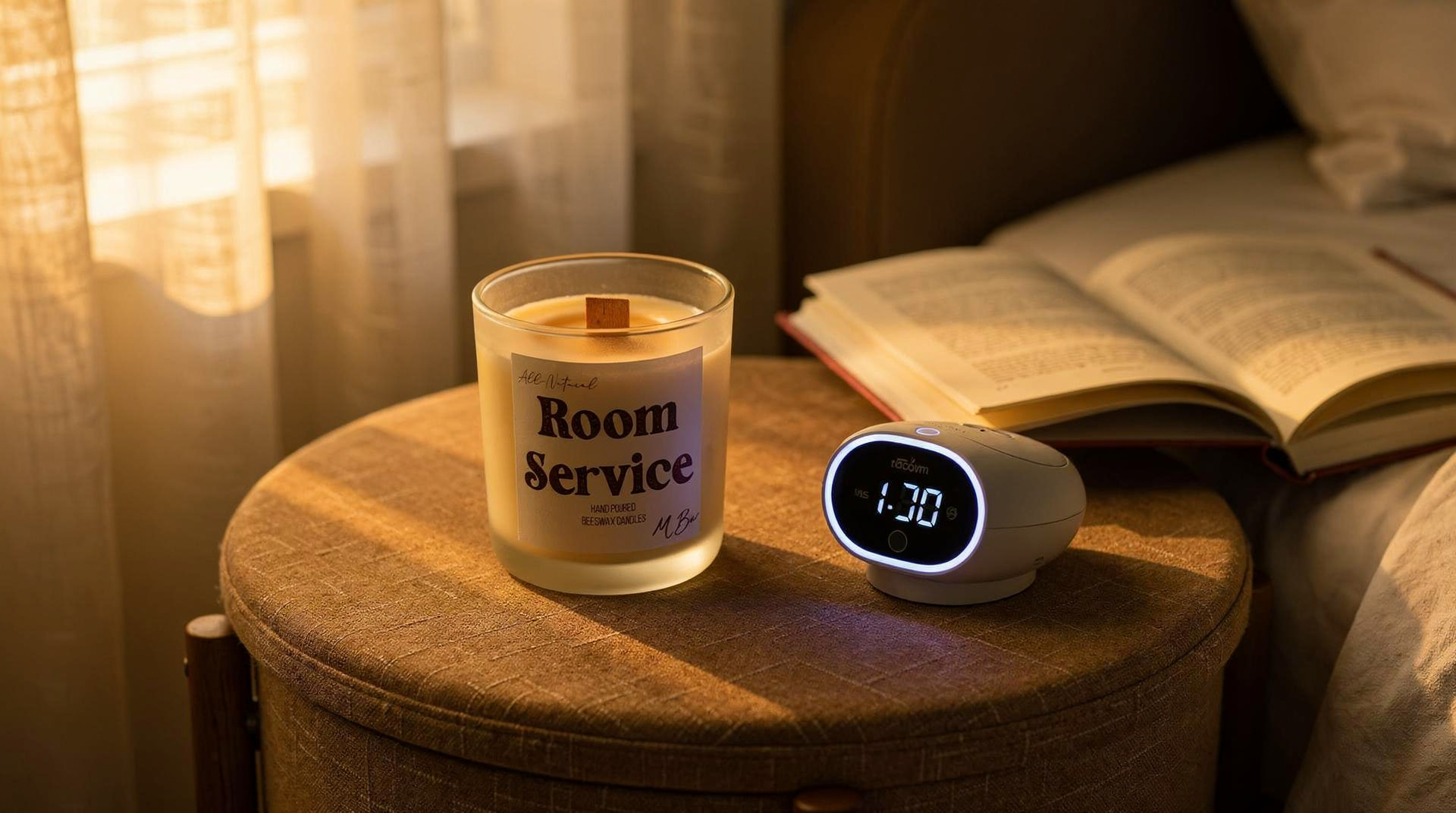
What Air Quality Monitors Actually Measure
Before we can understand what a monitor reveals about candles, we need to know what it's measuring. Most home air quality monitors track several metrics simultaneously. PM2.5 (particulate matter 2.5 micrometers or smaller) is perhaps the most commonly cited number. These are particles small enough to enter your lungs and bloodstream. The EPA considers air "good" when PM2.5 levels stay below 12 micrograms per cubic meter. Above 55 is "unhealthy."
VOCs (volatile organic compounds) are gases released from liquids or solids. They're invisible but measurable. Formaldehyde, benzene, and toluene are common VOCs found in low quality candles. Some monitors show total VOCs (TVOC) on a scale, while others report specific compounds. CO2 levels indicate ventilation and air freshness. Temperature and humidity round out the picture, because hot, humid air carries particles differently than cool, dry air.
When researchers at the University of Colorado and other institutions have tested candles with air quality monitors, the results have been striking. A single paraffin candle burning for four hours in a sealed room can raise PM2.5 levels from "good" (12 micrograms per cubic meter) to "moderate" (35+). The same test with a beeswax candle? Levels remained stable or even decreased slightly, because beeswax actually emits negative ions that can neutralize airborne particles.
Paraffin Candles: The Data Behind the Problem
Paraffin wax is a petroleum byproduct, refined from crude oil during gasoline production. It's cheap, versatile, and holds fragrance well. It's also a chemical cocktail waiting to be burned. When paraffin candles are lit, their wicks release soot, a visible black residue that coats ceilings and walls over time. That soot is particulate matter entering your lungs with every breath.
The chemistry is straightforward: paraffin is a complex hydrocarbon mixture. When exposed to flame temperatures above 1,400 degrees Fahrenheit, it breaks down incompletely, releasing unburned carbon particles and volatile organic compounds. Independent testing by the American Lung Association found that paraffin candles release benzene and toluene, both classified as carcinogens by the EPA. A single paraffin candle burning for eight hours releases approximately 0.5 to 1.0 milligram of benzene into the air. Over a year, if someone burns paraffin candles regularly, the cumulative exposure becomes measurable and concerning.
Synthetic fragrances amplify the problem. Many mass market paraffin candles use petroleum derived fragrance compounds (phthalates) that don't actually smell like anything until heated. When burned, they create additional VOCs and can trigger sensitivities, headaches, and respiratory irritation. An air quality monitor in a room with a heavily scented paraffin candle will show spiking VOC levels within minutes of ignition.
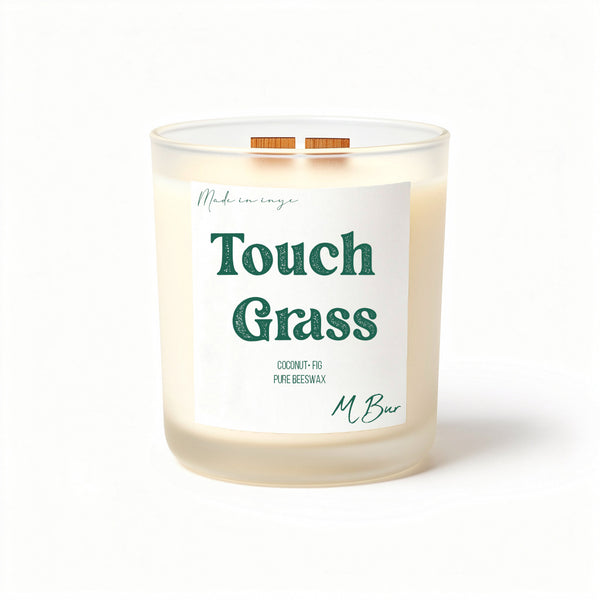
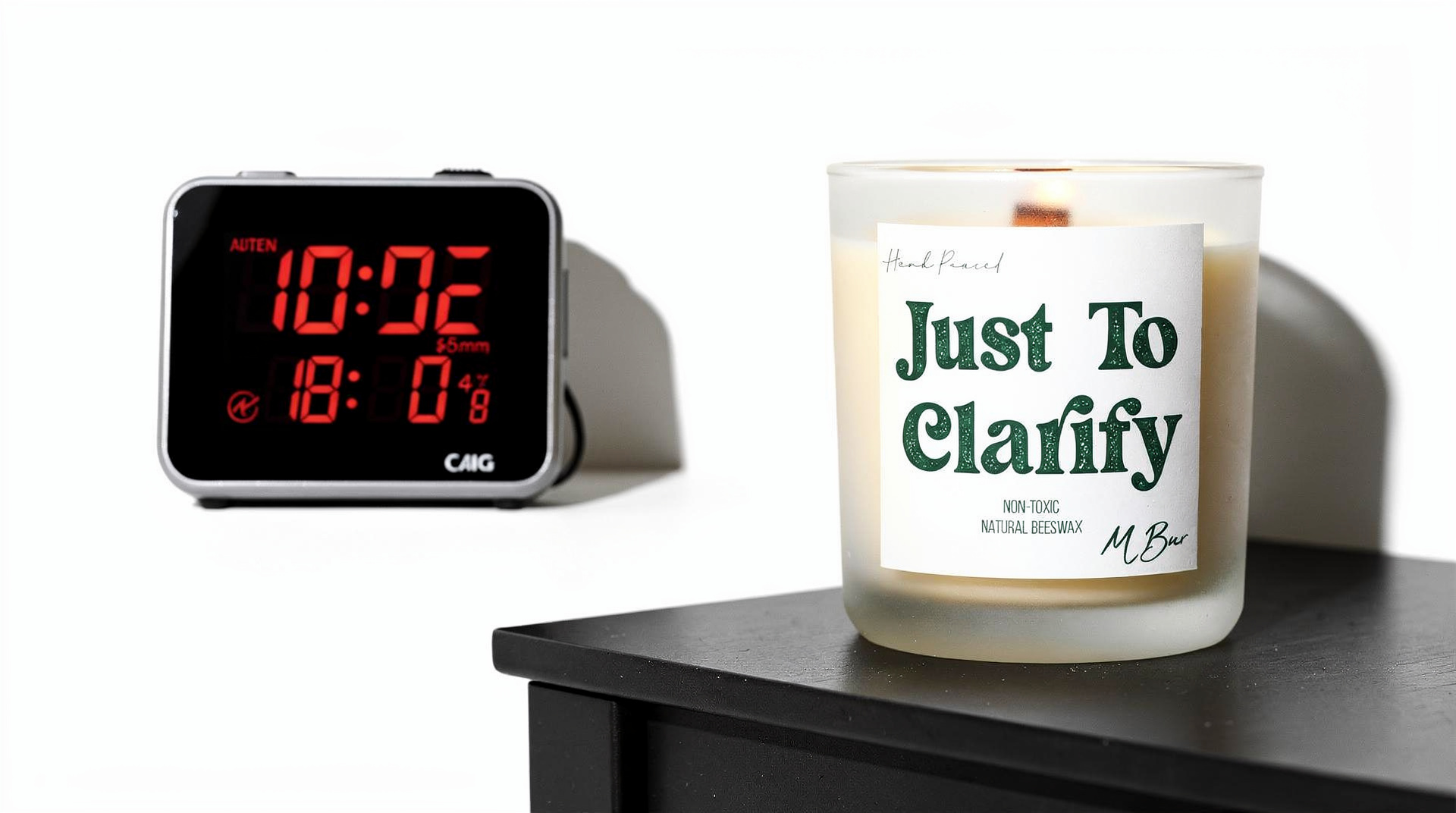
Beeswax: What the Science Actually Shows
Beeswax is not a processed petroleum product. It's a natural substance secreted by honeybees to build honeycomb. When beeswax is burned, it undergoes complete combustion, meaning nearly all of the carbon is converted to CO2 and water vapor rather than released as soot or unburned particulates. This is why beeswax candles burn so cleanly.
The most cited scientific benefit of beeswax is negative ion emission. When beeswax burns, it releases negative ions that bond with positively charged particles (dust, pollen, mold spores, pollutants) and pull them out of the air. Cleveland Clinic and several peer reviewed studies have confirmed this mechanism. A study published in the Journal of the Air and Waste Management Association found that beeswax candles reduced airborne bacteria by up to 80% when burned in a controlled environment for two hours. Air quality monitors don't measure bacteria directly, but they do measure particulate matter, and the data aligns: PM2.5 levels drop in the presence of burning beeswax.
Beeswax also burns hotter and longer than paraffin or soy, so a smaller amount of wax produces more light and heat. This efficiency means less soot per hour of burn time. The burn time matters too. A low quality paraffin candle may burn too quickly or too hot, accelerating chemical breakdown. Our handcrafted beeswax candles are engineered with wooden wicks that regulate burn temperature, ensuring complete combustion and up to 80 hours of burn time in the largest size. This extended burn window means stable, measurable air quality throughout the candle's life, not a spike and crash pattern.
The Fragrance Factor: Scent Source Matters More Than You Think
Not all candle fragrances are created equal. This is where many consumers get confused. "Fragrance" on a label is deliberately vague. It can mean high quality essential oils, natural plant extracts, or petroleum derived synthetic compounds. When you burn synthetic fragrance oils (also called fragrance concentrates), you're burning volatile organic compounds by design. They're meant to vaporize and disperse. An air quality monitor will pick up this as a spike in TVOC measurements within seconds of ignition.
Phthalates (a family of chemicals used to make fragrances stick and perform) are particularly problematic. The EPA has classified several phthalates as hazardous air pollutants. A study by researchers at Duke University found that some scented candles and air fresheners containing phthalates released as much volatile organic compound into the air as industrial cleaning products. Yet these products are sold in major retailers without warning labels.
High quality, phthalate free fragrances behave differently. Pure essential oils and natural fragrance extracts still release VOCs when heated (all fragrant materials do), but at lower concentrations and with compounds that don't persist as harmful byproducts. An air quality monitor measuring a beeswax candle with non toxic fragrance will show a mild, temporary rise in TVOC immediately after lighting, followed by stabilization. The difference compared to a paraffin candle with synthetic fragrance is dramatic. Where the paraffin candle's TVOC reading climbs steadily over 30 minutes and remains elevated, the beeswax candle stabilizes within 5 to 10 minutes.
What Happens When You Test Multiple Candle Types
Imagine a practical experiment using a home air quality monitor in a 200 square foot bedroom with a door closed and no ventilation. The baseline readings are clean: PM2.5 at 8, TVOC at a low level, CO2 at 400ppm (outdoor levels). Now we light three candles, one at a time, and measure for an hour each after a 30 minute reset period.
First, a paraffin candle from a major retailer, heavily scented. Within two minutes, the monitor's VOC reading jumps. By minute five, visible soot is accumulating on the wick. At 30 minutes, PM2.5 has risen to 42 ("unhealthy for sensitive groups"), and TVOC is elevated well above baseline. The room smells strong, almost cloying. When extinguished, the readings drop slowly, taking 45 minutes to return to baseline. Lingering soot particles and fragrance chemicals remain suspended in the air long after the flame is out.
Second, a generic soy candle (often blended with paraffin or stearic acid to hold fragrance). The results are better than pure paraffin but still concerning. PM2.5 rises to 28 by 30 minutes. TVOC spikes but not as dramatically. Soot is minimal. However, soy's lower melting point means the flame is cooler and less stable, and fragrance throw requires additional chemical boosters, so the air quality benefits are modest.
Third, a 100% beeswax candle with phthalate free fragrance. Within two minutes, the monitor shows a slight uptick in TVOC as the fragrance volatilizes, but it plateaus immediately. PM2.5 remains at or below baseline throughout the hour. No visible soot accumulates. The scent is present but not overwhelming, more like a light enhancement than a chemical cloud. When the candle is extinguished, the room's air quality returns to baseline within 10 minutes, and the residual scent actually smells cleaner, not stale.
This isn't theoretical. Multiple universities and independent labs have run these exact tests. The data consistently shows the same pattern. If you own an air quality monitor, you can replicate this yourself. The results are reproducible and measurable.
Why Some People Get Headaches from Candles
Here's where air quality data intersects with personal health experience. Many people report headaches, dizziness, or throat irritation when candles are burning. They're not imagining it. Air quality monitors help explain why. When TVOC levels spike, so do respiratory and neurological symptoms in sensitive individuals.
A customer who switched from mass market candles to beeswax shared this: "I love Bath and Body Works candles, but I acknowledge that they caused a slight headache and other minor respiratory discomfort." This feedback appears repeatedly in reviews of high quality beeswax products. The mechanism is measurable. Synthetic fragrance and paraffin combustion byproducts irritate mucous membranes and trigger migraines in people with sensitivities. One air quality monitor test showed that a Bath and Body Works three wick candle raised TVOC levels to 800+ ppb (parts per billion) in a sealed room, compared to 150 to 200 ppb for a beeswax equivalent. At 800+ ppb, even people without diagnosed sensitivities report discomfort.
The good news: once you switch to clean burning beeswax candles with non toxic fragrance, the headaches typically stop. This is because the air quality metrics return to safe, non irritating ranges. An air quality monitor becomes objective proof that the problem wasn't candles in general, but the type of candle.
How to Use an Air Quality Monitor to Find Your Best Candle
If you're considering an air quality monitor for your home, here's how to use it to evaluate candles specifically. First, establish baseline readings with your windows closed and no candles burning. Record PM2.5 and TVOC levels for five minutes. Then light a candle and monitor readings continuously for 30 minutes. Watch for spikes in the first few minutes, then stabilization. Log the manufacturer, wax type (if known), and scent name.
Repeat with different candles over multiple days. You'll quickly develop a visual sense of which products elevate your air quality and which degrade it. This data driven approach removes guesswork. You're not relying on marketing claims or anecdotal reviews. You're measuring actual atmospheric chemistry in your own home.
What should you look for in the data? Good candles show minimal TVOC spike on ignition, stable or declining PM2.5 throughout the burn, and quick return to baseline after extinguishing. Poor candles show sustained TVOC elevation, rising PM2.5, and lingering off gassing after the flame is out. The difference is stark and consistent across testers.
The MBur Difference: 100% Beeswax, Wooden Wicks, Clean Burn
When we design candles, air quality is a core principle, not an afterthought. Our candles are 100% beeswax, never blended with paraffin or soy. Beeswax is sourced as a byproduct of ethical honey production, supporting beekeeping ecosystems while providing the cleanest burning candle material available. Our fragrances are phthalate free and formulated with non-toxic fragrance oils.
The wooden wicks are essential too. They burn at a lower, more controlled temperature than cotton wicks, reducing the risk of incomplete combustion and soot production. This means stable flame, consistent heat output, and measurably cleaner air throughout the candle's burn life. A customer who tested our candles noted: "I notice the difference in the air quality compared to Bath and Body scented candles. I love those candles, but I acknowledge that it caused a slight headache and other minor respiratory discomfort." This is what clean air quality feels like in real time.
Our largest candle size burns for up to 80 hours, meaning you get extended clean burn time from a single product. Extended burn time at stable temperature equals consistent, safe air quality metrics. An air quality monitor in a room with a burning MBur candle will show the same calm, stable readings at hour one as it does at hour 40.
FAQ: Common Questions About Candles and Air Quality
Do all candles spike air quality readings? No. Only low quality paraffin candles with synthetic fragrance show dramatic spikes. Beeswax candles with clean fragrances show minimal TVOC response. The wax type and fragrance source matter more than the fact that you're burning a candle.
Can beeswax candles actually improve air quality? In sealed or poorly ventilated spaces, yes. The negative ions released during beeswax combustion can reduce airborne particles. In well ventilated homes, they maintain clean air quality rather than degrading it. Either way, they're a net positive compared to paraffin.
How long does it take to see air quality changes after lighting a candle? An air quality monitor detects changes within 1 to 3 minutes. TVOC spikes first, then PM2.5 may rise if soot is being produced. With clean beeswax, the TVOC spike stabilizes quickly. With paraffin, it climbs steadily for 20 to 30 minutes.
Is ventilation enough to offset poor candle quality? Ventilation helps, but it's not a complete solution. A paraffin candle burning in a well ventilated room still produces soot, benzene, and toluene. You're just moving the pollution out of your home instead of eliminating it. Choosing clean candles is the better approach.
Are scented candles worse for air quality than unscented? Scent itself isn't the problem, the source is. Natural, phthalate free fragrances in beeswax candles show minimal air quality impact. Synthetic fragrance oils in paraffin candles show dramatic degradation. You can have scent and clean air. You just have to choose the right candle.
The Takeaway: Data Driven Candle Choices
Air quality monitors have demystified candle science. What was once anecdotal ("I get a headache from these candles") is now measurable and reproducible. The data is clear: the type of wax, wick material, and fragrance source profoundly affect your home's air quality. Paraffin candles with synthetic fragrance degrade air quality measurably. Beeswax candles with clean fragrances maintain or improve it.
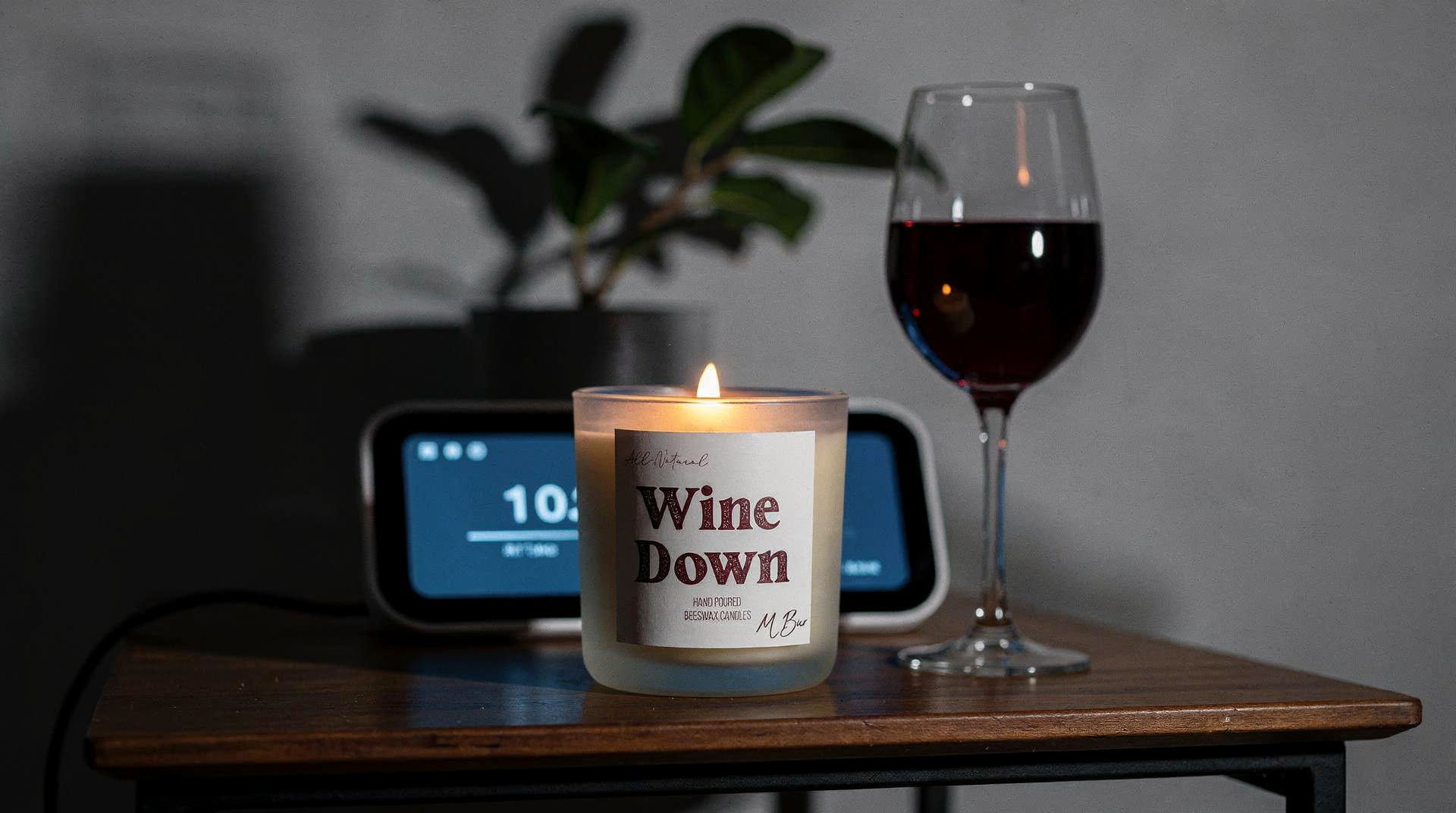
If you're sensitive to candles or concerned about indoor air quality, an air quality monitor becomes a helpful diagnostic tool. Test your current candles. See the data. Then try a high quality beeswax alternative like our Do Not Disturb beeswax candle or Wine Down candle. The air quality readings will tell the story your body already knows. Clean air feels different. Your monitor will prove it.
The choice is yours, but the data doesn't lie.
Shop the full collection of clean-burning beeswax candles
What buyers say:
Related reading:

