

What Are Scent Families? A Fragrance Wheel Guide to Finding Yours
If you have ever struggled to explain why you love one candle and cannot stand another, scent families are the missing vocabulary. Perfumers group fragrances into a handful of broad families, often arranged on a wheel, and once you know which families you gravitate toward, choosing a candle gets a lot easier. You stop guessing and start recognizing. Here is a plain guide to the main families and how to find yours. We make 100% beeswax candles, and the full collection is here as you read.
What the fragrance wheel is
The fragrance wheel is a simple way of organizing scents into related families, placed so that neighboring families share character and opposite ones contrast. It exists because scents are easier to understand in groups than one by one. You do not need to memorize it. The useful part is recognizing that most fragrances belong to a family, and that the family tells you a lot about whether you will like it.
The main scent families
There are a few broad families worth knowing. Fresh covers citrus, green, and aquatic scents, the bright and clean ones. Floral is built around flowers, soft and pretty to sharp and heady. Woody includes cedar, sandalwood, and other warm dry notes that feel grounded. Amber, sometimes called oriental, brings warm, rich, spicy and resinous scents. And gourmand covers the edible smelling ones, vanilla, caramel, and the like. Most candles sit in one of these or blend two.
Where MBur scents fall
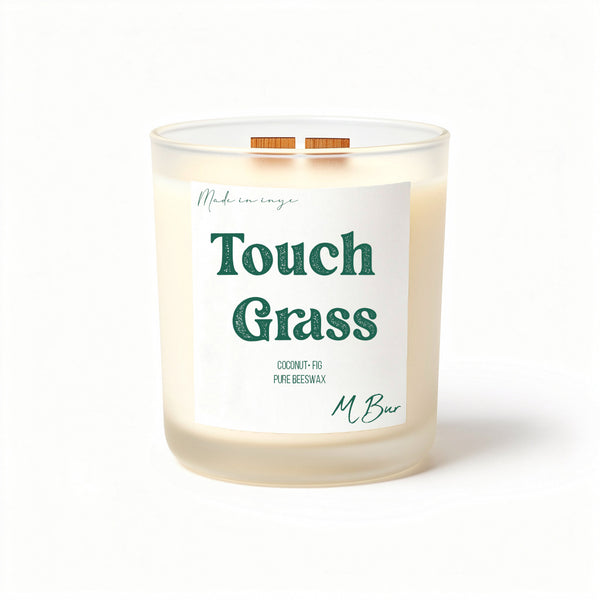
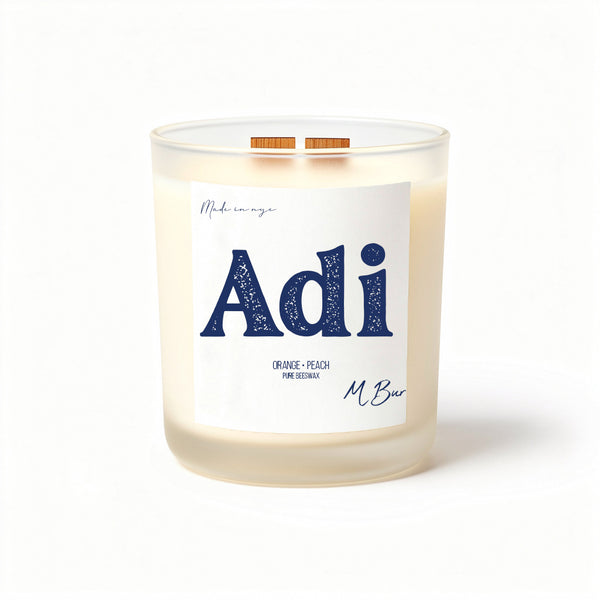
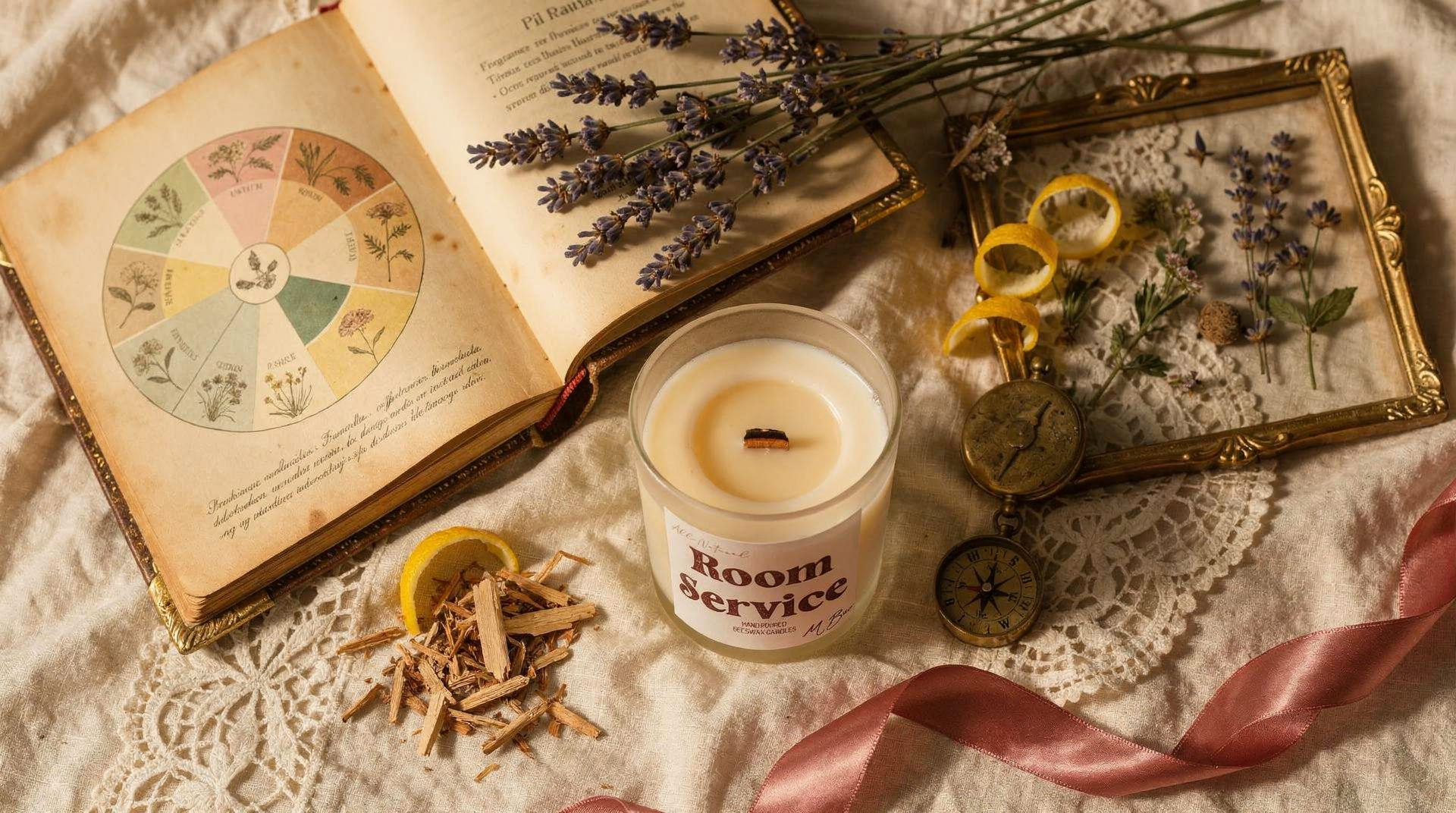
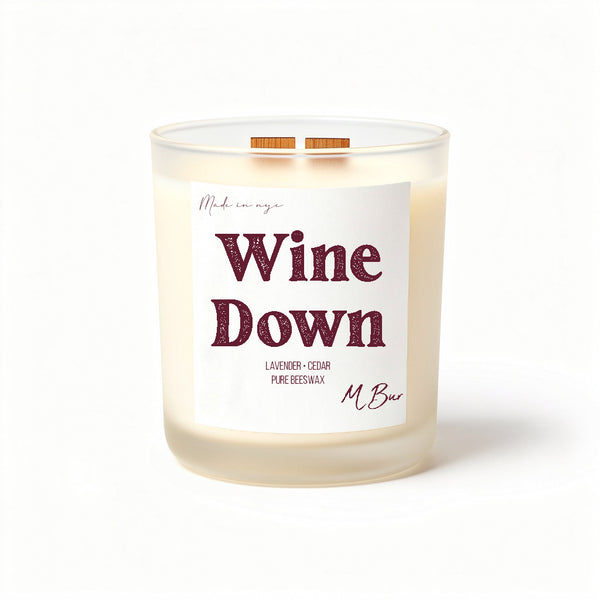
It helps to see real examples. Adi, all lemon, orange, and grapefruit, sits squarely in the fresh family. Wine Down, with lavender, sage, and cedar, leans fresh and woody in an herbal, aromatic way. Room Service, rich with vanilla, almond milk, and tonka, lives in the gourmand and amber territory. Touch Grass, green and woody with fig, galbanum, and cedarwood, sits in the woody family. Once you notice which of these appeals, the others in the same family are a safe bet.
How to find your family
The easy way in is to think about scents you already love, in candles or anywhere else. If you reach for citrus and clean laundry smells, you lean fresh. If you love warm bakery and vanilla, you lean gourmand. If cozy, woody, fireside smells pull you in, you lean woody or amber. Once you spot the pattern, you can shop by family instead of taking a chance on each candle, and you will be right far more often.
| Family | Character | An MBur example |
|---|---|---|
| Fresh | Bright, clean, citrus and green | Adi |
| Woody | Warm, dry, grounded | Touch Grass |
| Amber | Rich, warm, spicy | Retail Therapy |
| Gourmand | Sweet, edible, cozy | Room Service |
People often find a whole family clicks for them at once:
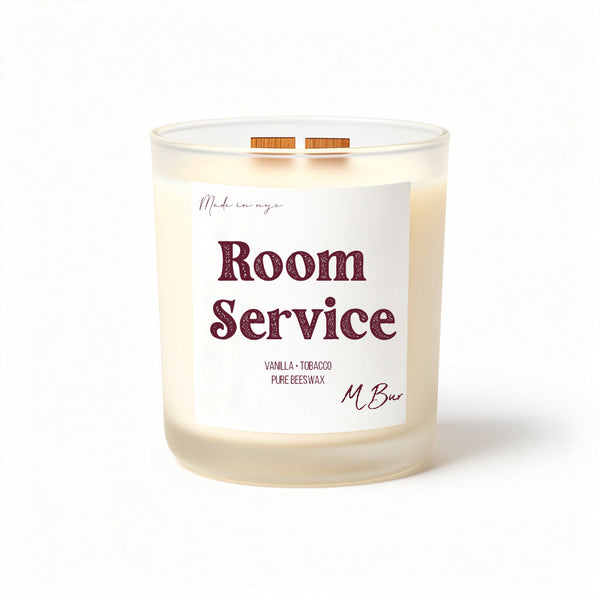
Everything from this company is amazing, so this candle matching that energy is no surprise. - Eboni E., Adi Candle

Why families make gifting easier
Scent families are not just for choosing your own candles, they are a quiet superpower for buying gifts. You rarely know the exact scents someone loves, but you can usually remember the general character of what they wear or what their home smells like. If a friend always smells fresh and clean, a candle from the fresh family is a safe bet even if you cannot name a single note. If someone loves cozy, warm spaces, reach for gourmand or amber. Shopping by family lets you buy a thoughtful, well aimed gift without needing inside knowledge of their perfume shelf.
Blends and crossovers
Real candles rarely sit perfectly inside one family. Most blend two, which is exactly what gives them character. A scent might be mostly fresh with a woody base, or floral with a gourmand sweetness underneath. That is a feature, not a complication. When a candle straddles two families, it usually means it will appeal to people who like either one, which is why blended scents are often the most widely loved. Reading a candle as a blend of families, rather than forcing it into a single box, gives you the truest picture of how it will smell in your home.
Building a small collection by family
If you want more than one candle without ending up with a drawer of scents that clash, families help here too. A simple approach is to pick two or three families you return to and keep one good candle in each. Maybe a fresh citrus for daytime and cleaning, a warm gourmand for cozy evenings, and a woody scent for something in between. With one candle covering each mood, you always have the right scent for the moment, and because each belongs to a clear family, they layer together nicely when you want to combine them. A small, deliberate collection beats a big random one every time.
Common questions
What are the main fragrance families?
The broad ones are fresh, which covers citrus and green scents, floral, woody, amber or oriental, and gourmand, the edible smelling ones. Most candles belong to one of these or blend two together. Knowing which family a scent is in tells you a lot about whether you will enjoy it. The collection lists the notes so you can place each one.
How do I know which scents I will like?
Think about smells you already love and find the family they belong to. If you like citrus and clean scents you lean fresh, if you like vanilla and bakery smells you lean gourmand, and so on. Then shop within that family, since scents in the same group tend to please the same noses.
What is the fragrance wheel?
It is a way of arranging scent families in a circle so related families sit together and contrasting ones sit apart. It is a tool for understanding how scents relate, not something you need to memorize. The takeaway is simply that scents come in families, and the family is a good guide.
The bottom line
Scent families give you the vocabulary to know what you like and find more of it. Spot the family behind your favorite smells, whether fresh, woody, amber, or gourmand, and choosing a candle becomes far less of a gamble.
What buyers say:

