

The Right Candle for Every Room in Your House (Most People Get This Wrong)
The Right Candle for Every Room in Your House (Most People Get This Wrong)
That "beeswax" candle you bought at the mall? There is a real chance it is 51% beeswax and 49% paraffin, and the brand is legally allowed to call it a beeswax candle. Same goes for candles labeled "natural" that still use toxic fragrance loaded with phthalates. The candle industry has a labeling problem, and most buying guides skip right past it.
This one does not. Before we get into which scents belong in which rooms, we need to cover what actually makes a candle worth buying in the first place. Because putting the wrong candle in the right room is just expensive disappointment.
If you want to go deeper on how to style candles once you have chosen them, the full MBur candle collection pairs well with our interior design and candle styling guide, but the buying decisions come first. Let us start there.
Decision Criteria 1: Wax Type
Wax is the single most important variable in candle quality. Everything else, scent throw, burn time, soot output, depends on what the wax actually is.
Paraffin
Paraffin is a petroleum byproduct, full stop. It releases benzene, toluene, and formaldehyde when burned. It is the cheapest wax on the market, which is why it is in most mass market candles. If a candle does not tell you what the wax is, assume paraffin.
Soy
Better than paraffin, but often blended with paraffin anyway. Soy wax is also almost exclusively from genetically modified crops, and many soy candles still use toxic fragrance. It burns cleaner than paraffin but has a lower melting point, which limits burn time.
Beeswax
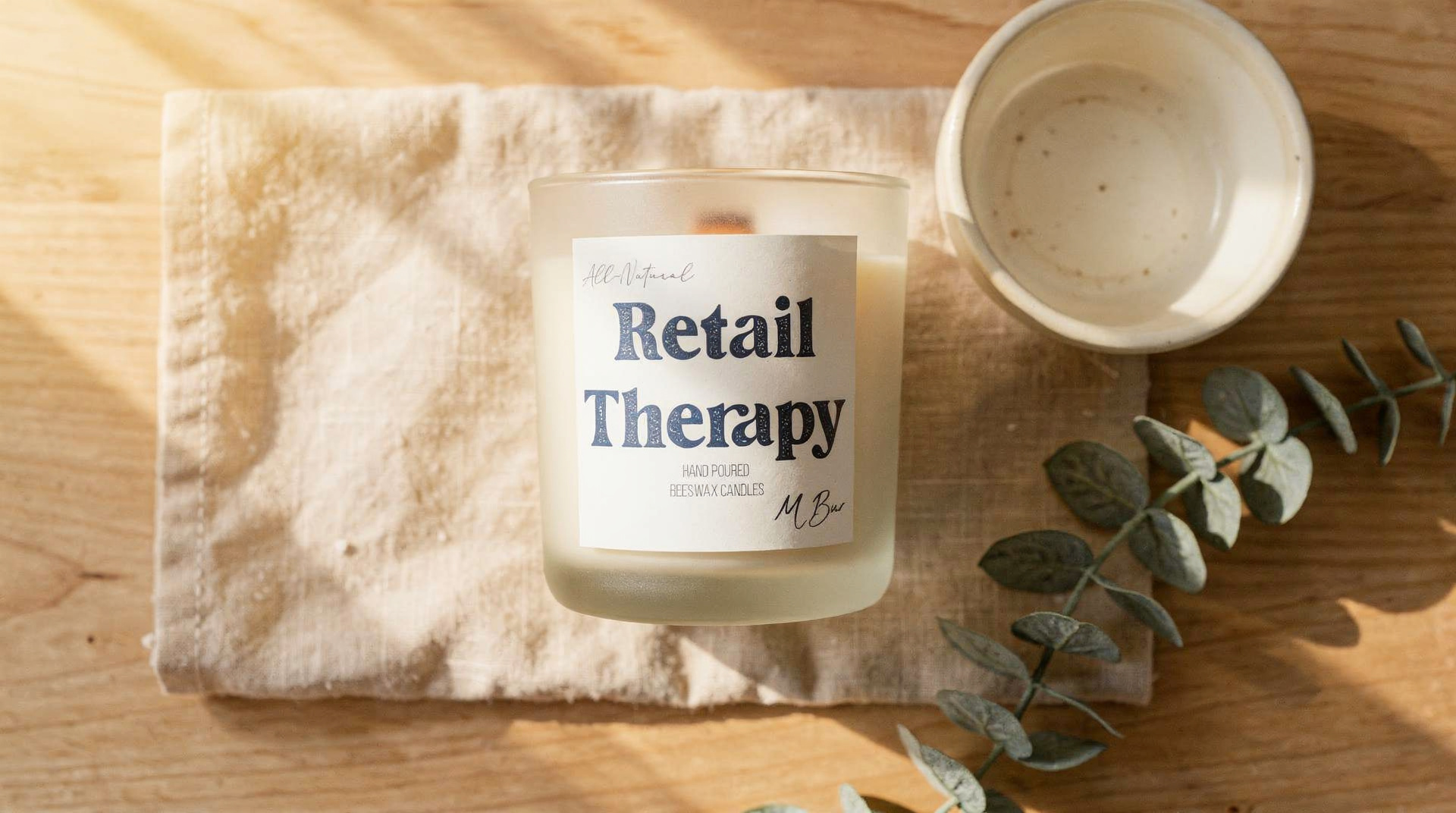
The oldest candle material on the planet, used since roughly 3000 BCE. Beeswax has the highest melting point of any candle wax, which gives it the longest burn time. It burns cleaner than both paraffin and soy. It is naturally hypoallergenic. And it emits light on a spectrum closer to natural sunlight than any other wax, which matters more than most people realize when you are thinking about ambiance.
One hundred percent beeswax, no blends, is the standard you are looking for.
Decision Criteria 2: Wick Type
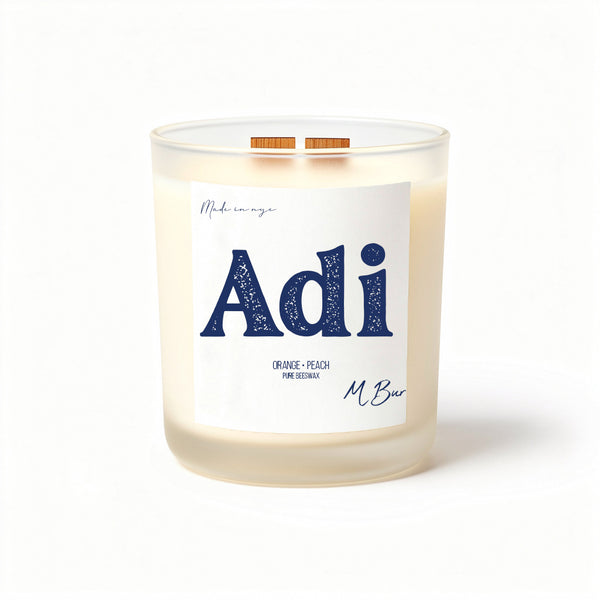
Cotton wicks are standard and generally fine. But wooden wicks burn more evenly, throw scent better, and produce that low crackling sound that cotton simply cannot replicate. If you have ever had a candle tunnel (where the wax melts straight down the center and leaves a thick ring of wasted wax on the sides), a poorly chosen wick is usually the culprit.
Avoid any candle with a metal core wick. Those are the ones that leave black soot rings on your walls and release metallic particles into the air.
Decision Criteria 3: Scent Sourcing
Fragrance is where a lot of otherwise decent candles fall apart. The word "fragrance" on an ingredient list can legally represent dozens of undisclosed chemicals, including phthalates, which are endocrine disruptors. The candle does not have to list them individually.
What you want: phthalate free fragrance, clearly stated. What you want to avoid: anything that just says "fragrance" with no further detail, and anything with synthetic dyes, which add zero value and extra chemicals.
This is also why customers who switched from big box brands often report the difference immediately.
"I absolutely love these candles! I instantly notice the difference in the air quality, in comparison to the Bath and Body scented candles. I love Bath and Body's candles but I acknowledge that it caused a slight headache and other minor respiratory discomfort. Awesome products. Totally addicted." Jason H., Sunday Reset Candle
Decision Criteria 4: Size and Burn Time
Most candles are priced by ounce. The better metric is price per burn hour. A cheap 8oz paraffin candle at 40 hours and a quality 5oz beeswax candle at 40 hours are not the same value, but they cost out differently than you might expect.
Here is a quick reference for MBur sizing across all scents:
- 2.5oz, 20 hours: $20. Best for sampling or a small bathroom.
- 5oz, 40 hours: $23. Best for a bedroom or home office.
- 7oz, 55 hours: $37. Best for a living room or kitchen.
- 12oz, 80 hours: $65. Best for open plan spaces or regular daily use.
The 12oz option works out to $0.75 per burn hour. For a candle with no paraffin, no toxic fragrance, and a wooden wick, that is a genuinely strong value.
Quick Reference Checklist Before You Buy Any Candle
- Does the label specify 100% beeswax, or just "beeswax blend"?
- Is the fragrance phthalate free?
- Does the wick contain metal?
- Are there synthetic dyes listed in the ingredients?
- What is the actual burn time, and what does that work out to per hour?
- Is the brand transparent about what is in the candle?
If a brand cannot answer most of those questions on their product page, that tells you something.
Room by Room: Which Scent Goes Where
Scent is personal, but there are real patterns in how different fragrance profiles perform in different spaces. After mapping 12 scents across real customer usage, some clear patterns emerge.
Bedroom
The bedroom needs a scent that signals "slow down." Heavy or complex fragrance profiles can actually keep you more alert, which defeats the purpose. Soft florals, clean greens, and light herbal notes tend to perform best here.
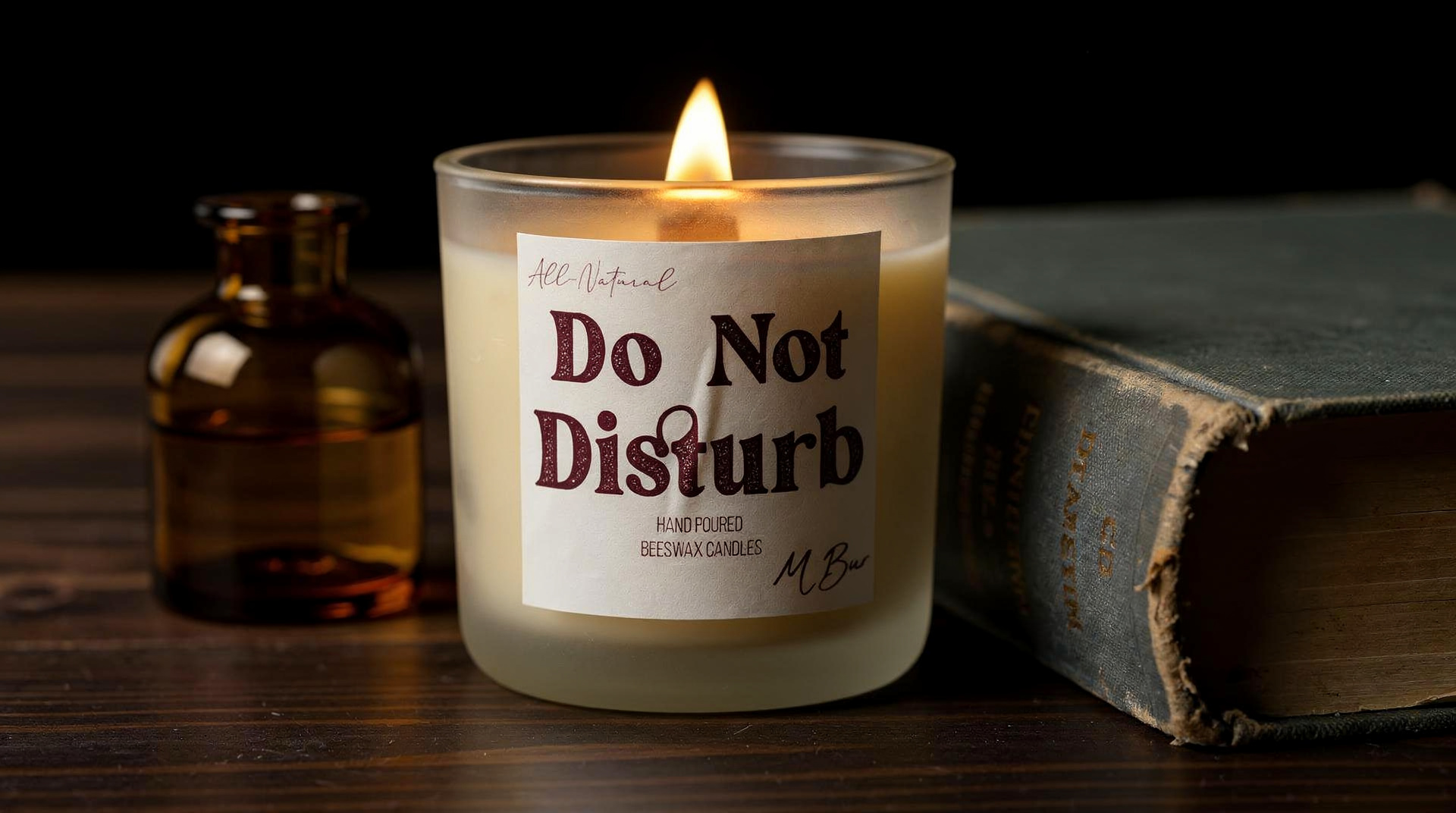
The Do Not Disturb candle is the clear bedroom pick. Vanilla, sandalwood, pear, and peach blossom in a warm, calming blend that fades slowly as the night goes on.
"I love the scent of this candle. It is lovely not overpowering. It is soothing fragrance more than covers my bedroom and bathroom. It is aromatherapy at its best." Dawne Forrest, Sunday Reset Candle
Bathroom and Spa Spaces
The bathroom benefits from scents that feel clean without smelling like cleaning products. Lavender, eucalyptus, chamomile, and sage work well here because they read as fresh rather than sharp.
The Wine Down candle was built for exactly this room. Lavender, chamomile, sage, cedar, and sandalwood. It turns an average bathroom into something closer to a spa, without trying too hard.
Living Room
The living room is the hardest room to scent well because it has to work for multiple moods and multiple people. Something with presence and complexity, but not so loud it takes over a conversation.
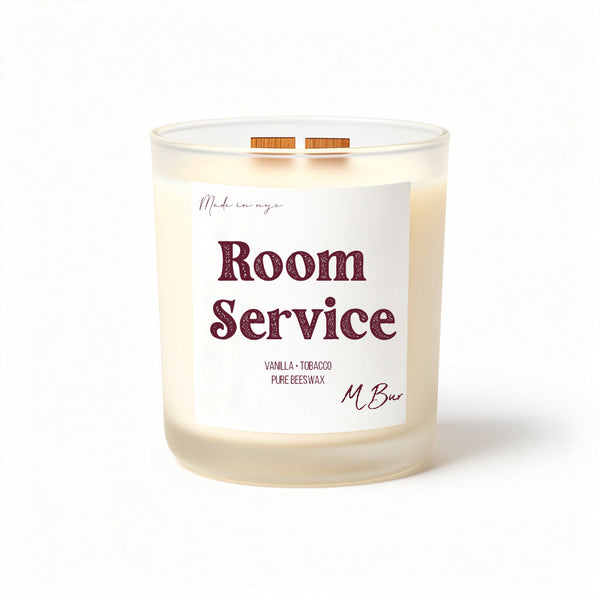
Room Service is our bestseller for a reason. Vanilla, tobacco, saffron, orchid, and tonka bean. It fills a room without announcing itself, which is exactly what a living room candle should do. Available starting at $20 for the 20 hour size.
Kitchen
The kitchen already has competing smells. You need something citrus forward, something bright enough to cut through cooking residue without smelling like a cleaning spray.
Adi is built for this. Lemon, orange, grapefruit, mandarin, and lime. It is basically the smell of a farmers market happening inside your kitchen, and it works.
Home Office
Focus requires a scent that is stimulating but not distracting. Peppermint, eucalyptus, cedar, and clean herbal notes tend to keep the brain in gear without pulling attention away from the screen.
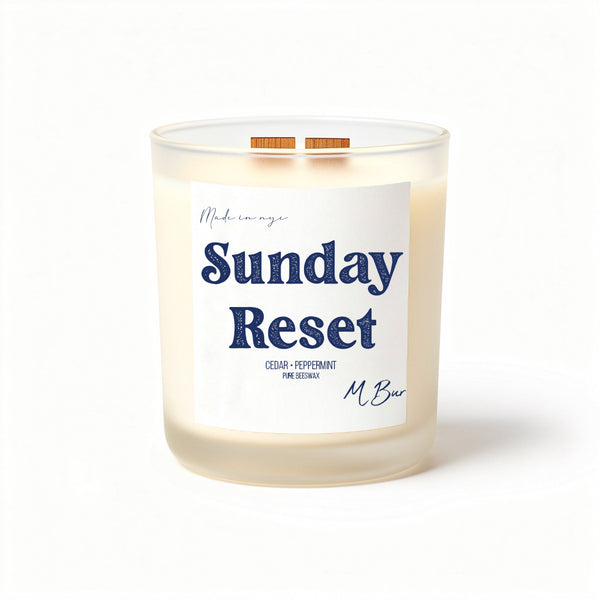
The Sunday Reset candle opens with eucalyptus and peppermint, moves through cedar, and is the candle equivalent of having a clean desk. Customers use it specifically on days when they need to get things done.
Entryway
The entryway scent is the first impression your home makes. It should be warm, welcoming, and complex enough to be memorable without being heavy. Something with spice and warmth works well here.
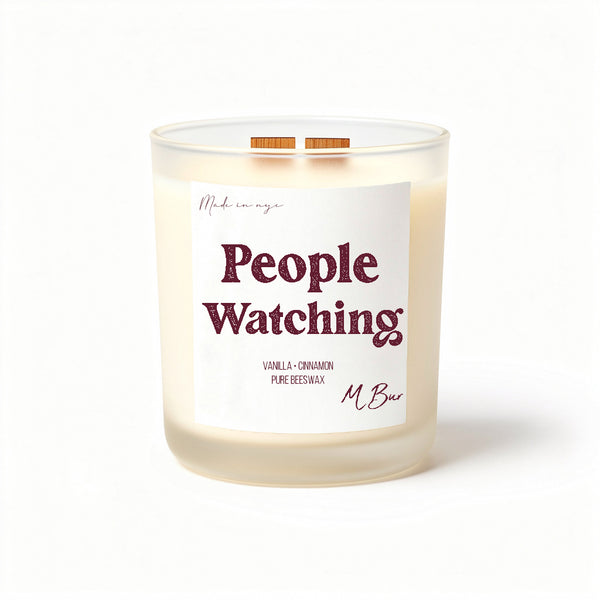
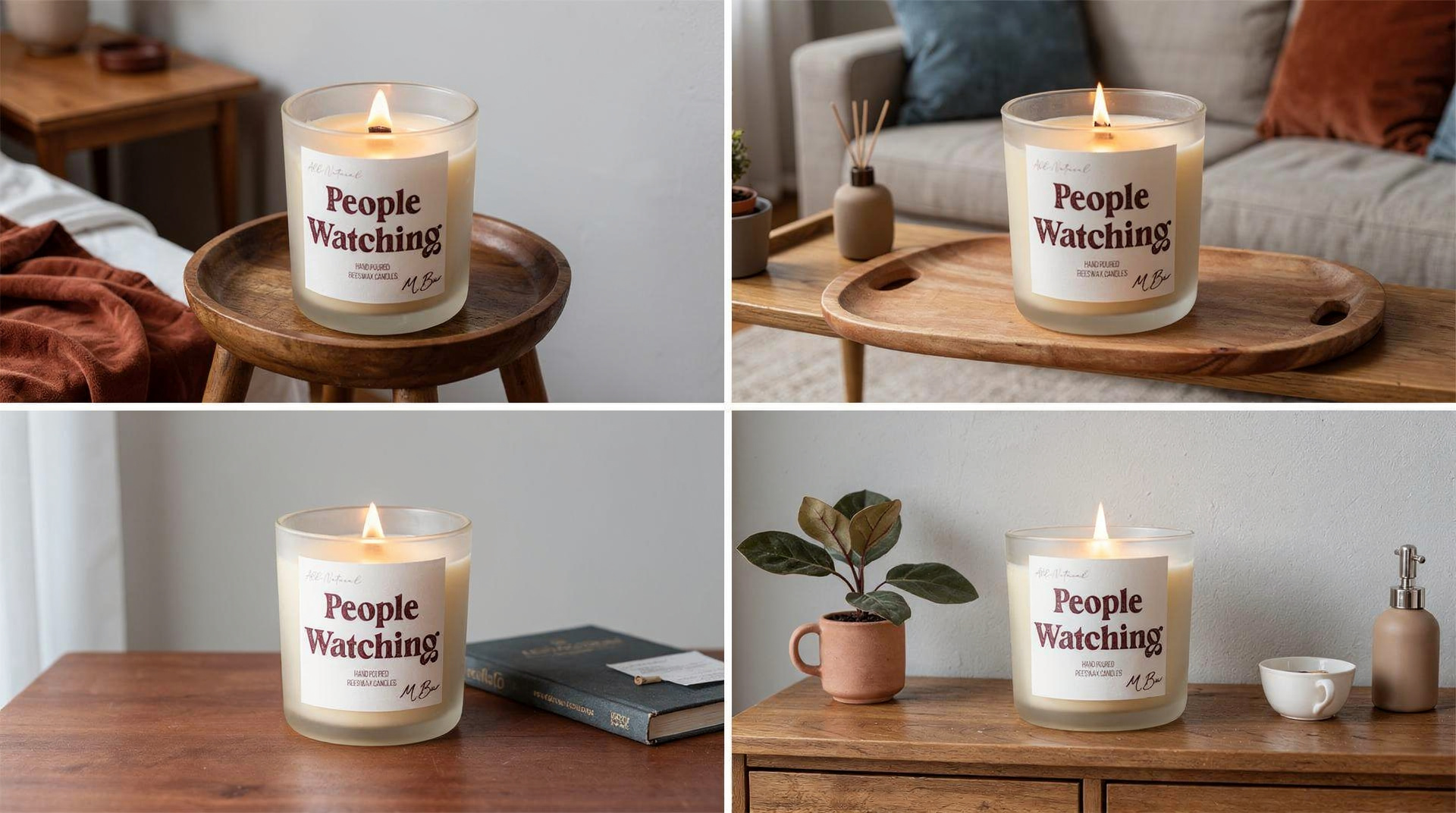
People Watching hits this perfectly. Vanilla, cinnamon, orange, clove, and nutmeg. It is the smell of a home that is clearly lived in and loved. Starting at $20 for 20 hours.
Frequently Asked Questions
How long do beeswax candles actually burn compared to paraffin?
Beeswax has the highest melting point of any candle wax, which means it burns slower and longer. MBur beeswax candles burn up to 80 hours in the 12oz size. Most paraffin candles of a similar size burn for 45 to 55 hours. Longer burn time means lower cost per hour, and cleaner air the whole time.
Can I use the same candle in every room?
You can, but you will get better results matching scent profiles to what each room is used for. A bedroom candle that relaxes you will not help much in a home office where you need to stay focused. The room by room guide above uses real customer usage patterns to make that easier.
What size candle do I actually need?
For small rooms like bathrooms and home offices, the 2.5oz or 5oz size is enough. For living rooms, open kitchens, or lofts, you want the 7oz or 12oz. A candle that is too small for a space will burn without ever really filling the room.
Is the fragrance in these candles actually non toxic?
All MBur candles use phthalate free fragrance. There are no toxic fragrance compounds, no synthetic dyes, and no paraffin blended into the wax. The candles are also made without metal core wicks.
What is the easiest way to try multiple scents before committing to a full size?
The 20-hour size at $20 is the lowest-commitment way to try any scent in your actual space before sizing up. All 12 scents are available in that size.
The Bottom Line
Most people buy candles by smell at checkout, which makes sense in person but goes sideways fast online. The better approach is to know what you are buying before you check the scent. Start with 100% beeswax, phthalate free fragrance, and a wooden wick. Then match the scent to the room it is going into.
"My roommate and I own 6 of the 8 scents! They smell up a WHOLE room during the burn and even a while after blowing them out. I will not buy other candles anymore, they are just that good." Paige, Sunday Reset Candle
Shop the full MBur collection and find the right candle for every room
What buyers say:
Related reading:

