

Best Candles for Bathrooms: What Most People Get Wrong (And How to Fix It)
Best Candles for Bathrooms: Small Space, Big Scent
That "beeswax" candle you bought at the big box store? It might be 51% paraffin. That is technically all a brand needs to call it beeswax. The other 49% is petroleum byproduct, synthetic dye, and synthetic fragrance. In a 40 square foot bathroom with the door closed, you are basically hot boxing yourself with VOCs. Not ideal.
Bathrooms are the most misunderstood room in the house when it comes to candles. They are small, humid, often poorly ventilated, and people tend to burn candles in them for longer than anywhere else. That combination means the stakes are higher, the wrong candle hits harder, and the right one makes the whole room feel like a different place entirely.
This guide breaks down exactly what to look for before you spend a dollar. Wax type, wick construction, scent sourcing, size, and price per hour. All of it. If you want to skip straight to the picks, browse the full MBur candle collection and come back for the breakdown.
Mistake 1: Buying Wax Without Reading the Label
The wax is everything. It determines what goes into your air, how long the candle burns, and how well the scent carries in a small space.
Here is the breakdown:
Paraffin
Paraffin is a petroleum byproduct. Full stop. It releases benzene and toluene when burned, both of which are classified as hazardous air pollutants by the EPA. In a bathroom, where ventilation is limited, those compounds concentrate fast. If your candle is leaving black soot rings on your walls or ceiling, paraffin is almost certainly the culprit.
Soy
Better than paraffin, but the word "soy" does a lot of heavy lifting in candle marketing. Most soy candles on the market are soy blends, meaning they are cut with paraffin to improve scent throw or reduce cost. Unless the label says 100% soy, assume it is a blend. Also worth noting: soy has a lower melting point, which means it burns faster and tends to pool unevenly in small containers.
Beeswax
Beeswax is the only wax that is naturally occurring. It requires zero chemical processing. It has the highest melting point of any candle wax, which means it burns slower and longer. It emits negative ions when burned, and many users report that it makes the air feel cleaner, particularly noticeable in small enclosed spaces like bathrooms. It is also naturally hypoallergenic, which matters when you are breathing recycled bathroom air.
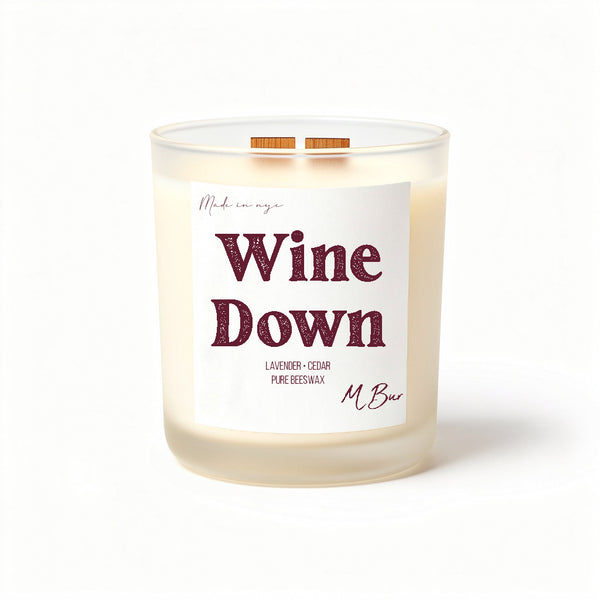
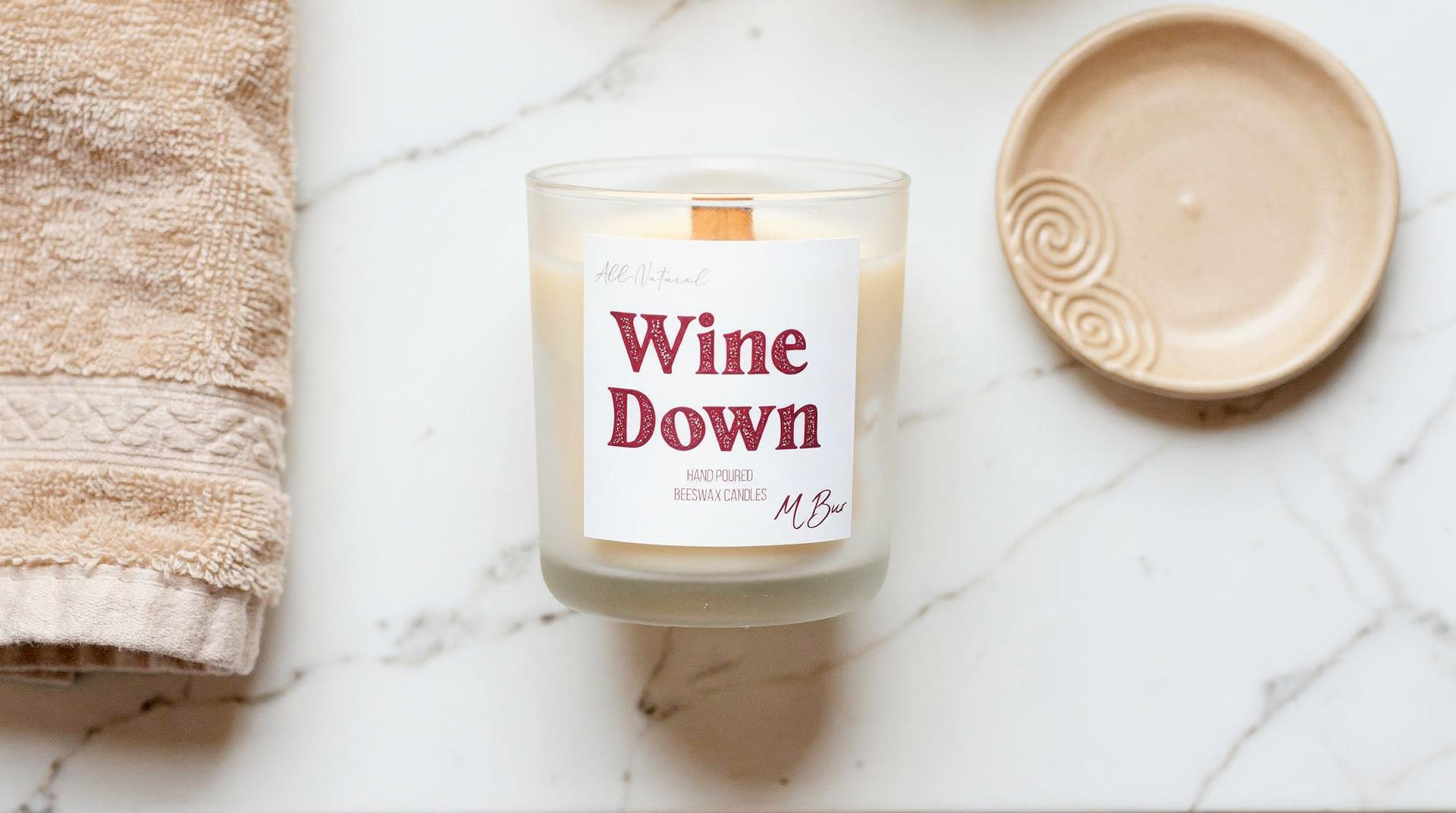
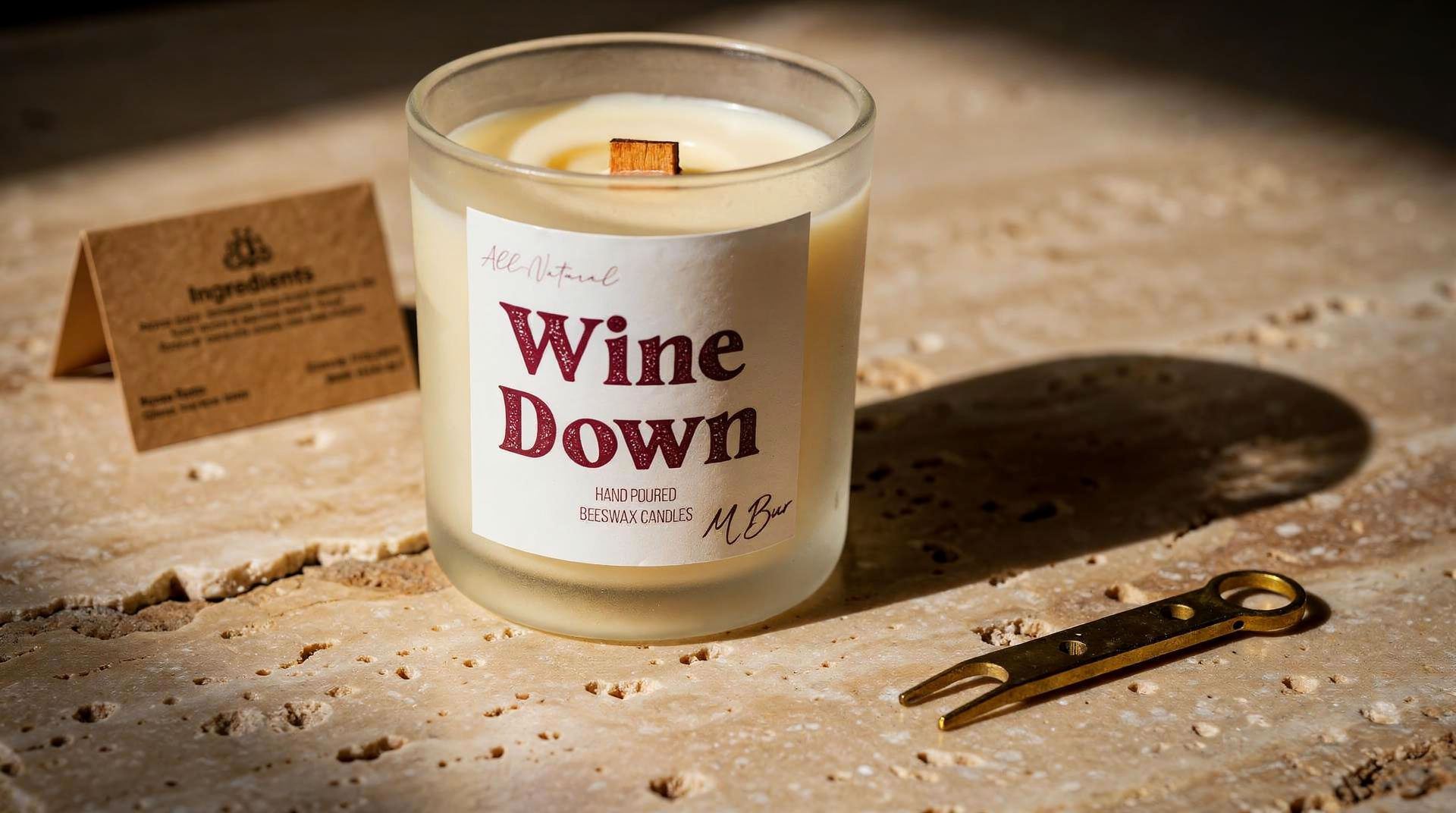
MBur uses 100% beeswax. Not a blend. Not a marketing claim with an asterisk. Single ingredient wax, full stop. If you are looking at a Wine Down beeswax candle for your bathroom, you are getting pure beeswax, a wooden wick, and phthalate free fragrance. Nothing else.
Mistake 2: Ignoring the Wick
Cotton wicks work. But they also have a habit of going off center, drowning in their own wax pool, and producing more soot than necessary. In a white tiled bathroom, soot shows up fast.
Wooden wicks burn cleaner and more evenly. They create a wider melt pool, which means better scent throw in a small room without cranking the flame. They also produce that low, soft crackling sound, which in a bathroom setting is genuinely nice rather than just a novelty.
One practical note: wooden wicks need to be trimmed to about 3 to 5 millimeters before each burn. A wick that is too long will flame too high and speed up your burn rate significantly. Keep a small pair of scissors near your bathroom candle. It takes two seconds and extends the life of every candle you own.
Mistake 3: Choosing Scent Based on Smell at a Store
Cold throw (how a candle smells unlit in a store or a jar) and hot throw (how it actually smells when burning) are completely different experiences. A candle that smells overwhelming in a shop display might be subtle and lovely when lit. A candle that smells faint in the jar might fill a bathroom in under ten minutes when burning.
For bathrooms specifically, you want scents in the fresh, clean, or lightly floral range. Heavy gourmands (vanilla, bakery, warm sugar) can feel suffocating in a humid enclosed space. Citrus, eucalyptus, mint, and green notes tend to read as cleaner and work better with moisture in the air.
Two standouts from the MBur line for bathroom use:
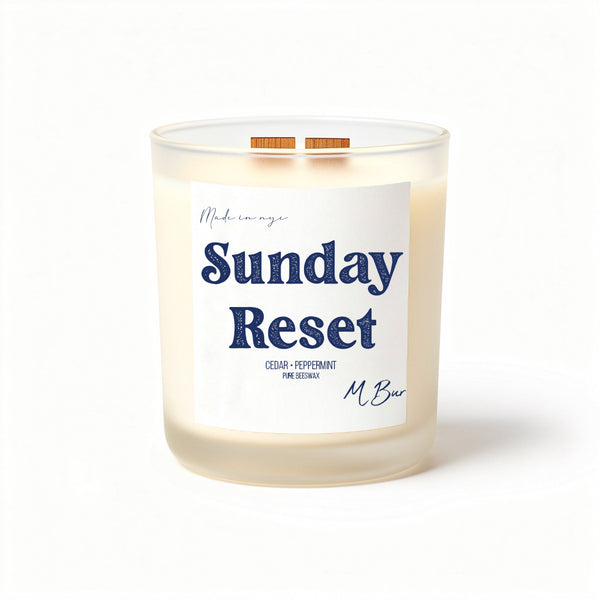
- Sunday Reset: Eucalyptus, peppermint, and cedar. This one was basically built for bathrooms. It genuinely makes a small space smell freshly cleaned without smelling like a cleaning product.
- Wine Down: Lavender, chamomile, sage, cedar, and sandalwood. Softer and more spa adjacent. Good for longer baths or winding down at the end of the day.
Both use phthalate free fragrance. Phthalates are endocrine disruptors commonly used in synthetic fragrance formulas across the candle industry. In a small room, you do not want them in your air.
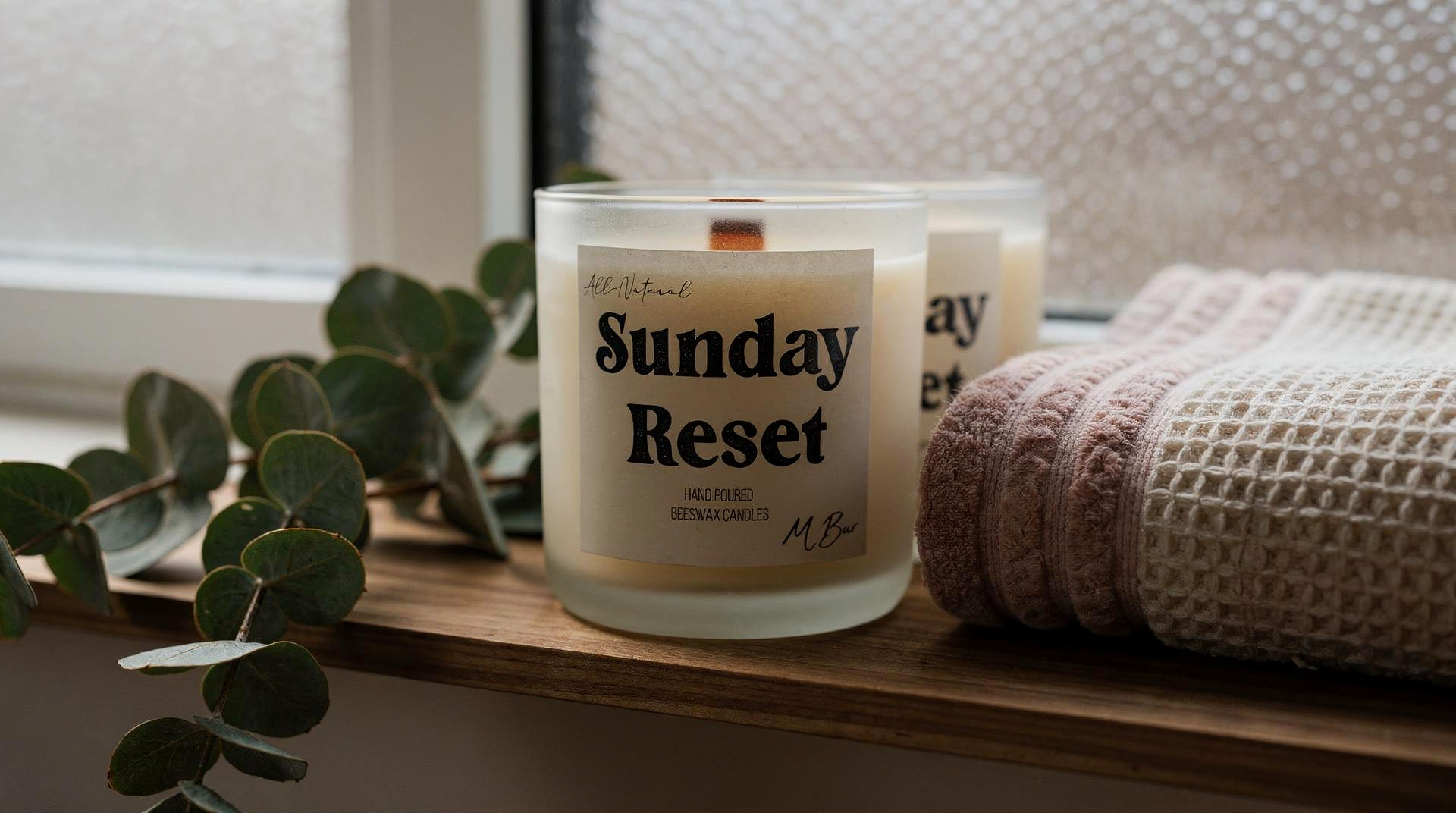
"A lot of other candles tend to give me headaches, but this one was a total game changer. I was able to enjoy the calming aroma without any discomfort." Nicole D., Sunday Reset Candle
Mistake 4: Buying the Wrong Size for the Space
Most bathrooms fall between 35 and 100 square feet. In that range, you do not need a 12 oz candle to fill the room. A 2.5 oz or 5 oz candle will do the job without becoming overwhelming.
Here is how MBur sizes map to bathroom use:
| Size | Burn Time | Price | Best For |
|---|---|---|---|
| 2.5 oz | 20 hours | $20 | Small bathrooms, trying a new scent |
| 5 oz | 40 hours | $23 | Standard bathrooms, everyday use |
| 7 oz | 55 hours | $37 | Larger bathrooms, primary bath |
| 12 oz | 80 hours | $65 | Open plan bathrooms, frequent burners |
For most bathrooms, the 5 oz at $23 is the sweet spot. 40 hours of clean burn at $0.58 per hour. Compare that to a Bath and Body Works candle that burns for roughly 25 to 45 hours using paraffin wax with synthetic fragrance, and the math shifts considerably.
Mistake 5: Ignoring Price Per Hour
Sticker price is almost meaningless for candles. What matters is cost per burn hour. A $65 candle that burns for 80 hours costs $0.75 per hour. A $15 candle that burns for 20 hours costs $0.75 per hour too. Same cost, but one of those is filling your bathroom with beeswax and phthalate free fragrance, and the other probably is not.
Beeswax burns slower than any other wax because it has the highest melting point. That is not a marketing claim, it is chemistry. The longer burn means more hours of clean scent, less frequent repurchasing, and less waste overall.
The 20-hour size at $20 is the lowest-commitment way to test how a scent performs in your specific bathroom before sizing up.
Quick Reference Checklist: Bathroom Candle Buying Guide
- Wax: 100% beeswax, 100% soy, or verified non blend only. Avoid anything labeled simply "natural wax" without specifics.
- Wick: Wooden wick or lead free cotton. Avoid metal core wicks entirely.
- Fragrance: Phthalate free. Avoid any candle using undisclosed "fragrance" in the ingredients list.
- Dyes: None. Dyes add zero value and can release additional compounds when burned.
- Size: 2.5 oz to 5 oz for most bathrooms. Scale up only if you have a large primary bath.
- Price per hour: Calculate before buying. Divide price by burn hours. Anything above $1.50 per hour needs a very good reason.
- Soot test: If a candle leaves black residue on the container or walls, stop using it.
Frequently Asked Questions
How long should I burn a candle in a small bathroom?
For a bathroom under 60 square feet, 30 to 60 minutes is usually enough to fully scent the space. Burning longer than two hours in a small enclosed room is unnecessary and accelerates wax consumption. Let the candle cool completely before relighting, and always keep a window cracked or the exhaust fan running if you are burning for more than an hour.
Are scented candles safe to burn in a bathroom with no window?
It depends entirely on the wax and fragrance. Paraffin candles with synthetic fragrance in a windowless bathroom are genuinely not a great idea. The VOCs build up with no ventilation. Beeswax candles with phthalate free fragrance are significantly cleaner, but even then, running an exhaust fan is smart practice.
What scents work best in bathrooms?
Fresh, clean, and lightly herbal scents perform best in bathrooms because they work with humidity rather than fighting it. Eucalyptus, mint, citrus, lavender, and green notes all translate well in moist air. Heavy sweet or gourmand scents can feel cloying in a small humid space.
How do I keep my bathroom candle burning evenly?
Trim the wick to 3 to 5 millimeters before every burn. On the very first burn, let the wax melt all the way to the edges of the container before extinguishing. This prevents tunneling, which is when the candle burns straight down the middle and wastes a ring of wax around the edges. For more on getting the most out of your candle, read the guide to candle care.
The Bottom Line
Bathrooms punish bad candles fast. Limited airflow, humidity, and close quarters mean every ingredient decision is amplified. The wax matters more here than anywhere else in your home.
Start with the Sunday Reset beeswax candle in the 5 oz size ($23) if you want something crisp, clean, and genuinely functional in a small bathroom. Or try the Wine Down 5 oz ($23) if you want something softer and more spa like for longer soaks.
Shop the full collection of bathroom-friendly beeswax candles
What buyers say:
Related reading:

