

Is Secondhand Candle Scent Bad for a Baby's Lungs? What the Science Says
The concern is real, and your instincts are right to flag it.
Your baby is sleeping in the next room. You want to light a candle in the living room, but something stops you. Will the scent drift? Will the fumes reach the nursery? Is secondhand candle scent bad for a baby's lungs?
The short answer: it depends entirely on what your candle is made of. The long answer is more useful, so keep reading.
Candle smoke and babies is a topic that generates a lot of fear online and not nearly enough clarity. Some sources will tell you all candles are basically poison. Others will wave the whole thing away. The truth sits between those poles, and the details matter more than either extreme. What your candle is made from, how you burn it, and where you burn it determine whether secondhand candle scent poses a real risk to your infant or a negligible one.
We will break down the science, name the actual risk factors, and give you a practical framework for making a decision you feel good about. If you want to skip ahead to what clean candles actually look like, our full beeswax candle collection is a good starting point.

Why babies are more vulnerable than adults
Infant lungs are still developing. Their airways are narrower. And pound for pound, babies breathe faster than adults, which means they inhale a higher concentration of whatever is floating in the air around them.
According to the American Academy of Pediatrics, children are more susceptible to respiratory irritants than adults, and reducing indoor air pollution sources is a key part of protecting them. Their immune systems are still learning what to react to. Compounds that barely register in an adult nose can trigger inflammation, congestion, or respiratory distress in a baby.
Indoor air can be two to five times more polluted than outdoor air. Every combustion source in your home adds to that load. Candles are one of those sources. The question is how much they contribute and whether the specific compounds they release are the kind that cause problems.
What candles actually release when they burn
All burning candles produce some level of particulate matter and volatile organic compounds (VOCs). That is true of paraffin, soy, coconut, and beeswax. Combustion is combustion. But the type and volume of emissions vary dramatically depending on three things: the wax, the wick, and the fragrance.
The wax
Paraffin is a petroleum byproduct. When burned, it releases higher levels of VOCs including benzene, toluene, and formaldehyde. These are known respiratory irritants, and in a small nursery with the door closed, they accumulate fast.
Soy burns cleaner than paraffin, but many "soy" candles on the market are actually soy and paraffin blends. Unless the label says 100% soy, you may be getting a dose of petroleum byproducts anyway.
Beeswax produces the least soot and the fewest VOCs of any candle wax. It has the highest melting point, which means it burns at a lower temperature relative to its flash point, producing fewer combustion byproducts. It is a single ingredient wax that requires no chemical processing, bleaching, or hydrogenation.
The wick
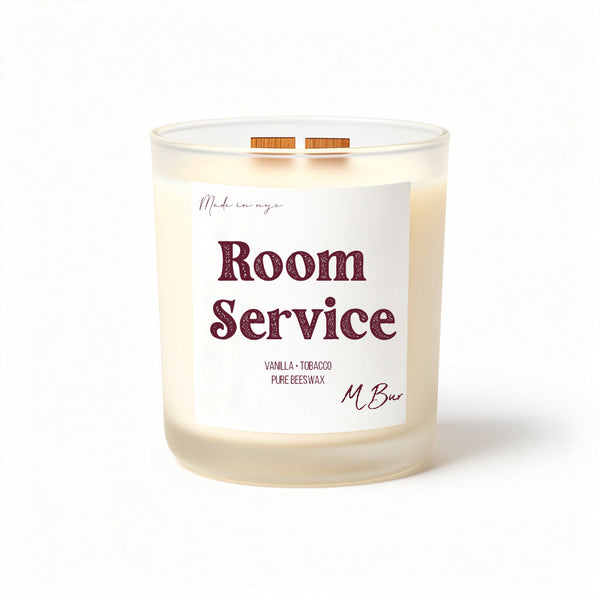
Metal core wicks (still found in some imported candles) can release trace heavy metals when burned. Cotton wicks are better. Wooden wicks burn at a lower, more even temperature, which reduces soot production and keeps the flame controlled.
The fragrance
This is where the biggest risk hides. The word "fragrance" on a candle label is a catch all term that can represent hundreds of undisclosed chemical compounds. Many conventional candle fragrances contain phthalates, parabens, and other compounds that act as endocrine disruptors or respiratory irritants.
Recent research from Purdue University found that fragranced products react with indoor ozone to create nanoscale particles small enough to penetrate deep into the lungs and potentially spread to other organs. For an infant whose lungs are still forming, that is a meaningful concern.
Phthalate free, non toxic fragrance oils exist. They cost more, which is why most mass market candles do not use them. But they dramatically reduce the chemical load a candle adds to your indoor air.

The comparison that matters: what is actually in your candle
| Factor | Paraffin Candles | Soy Candles | Beeswax Candles |
|---|---|---|---|
| Wax source | Petroleum byproduct | Soybean oil (often blended with paraffin) | Byproduct of honey production |
| VOC emissions | Higher (benzene, toluene, formaldehyde) | Moderate (lower if 100% soy) | Lowest of any candle wax |
| Soot production | Significant black soot | Moderate | Minimal to none |
| Chemical processing | Bleached, deodorized, hydrogenated | Varies by brand | None required |
| Common fragrance type | Often toxic fragrance with phthalates | Varies widely | Naturally faint honey scent; added fragrance varies |
| Burn time per ounce | Shortest | Moderate | Longest (highest melting point) |
The difference between a paraffin candle loaded with toxic fragrance and a pure beeswax candle with phthalate free fragrance oil is enormous. Grouping all candles together and calling them dangerous misses the point entirely.
A real review from a parent who made the switch
"I absolutely love these candles! I instantly notice the difference in the air quality, in comparison to the Bath & Body scented candles. I love Bath & Body's candles but I acknowledge that it caused a slight headache and other minor respiratory discomfort. Awesome products. Totally addicted." Jason H.
Jason's experience is common. Many people do not realize their candles are the source of their headaches or irritation until they try something cleaner. If a candle is causing discomfort in an adult, imagine what it is doing in a room with a baby whose airways are a fraction of the size.
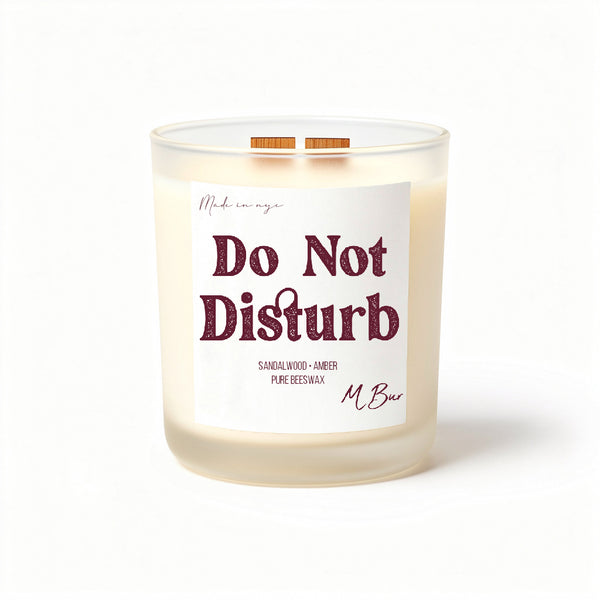
MBur's Do Not Disturb candle, with its bergamot, pear, and vanilla notes, is one option parents reach for when they want something gentle enough for evening use. It is 100% beeswax, wooden wick, phthalate free fragrance, no chemical dyes. The 20 hour size starts at $20.
Your clean candle checklist for a home with a baby
If you want to keep burning candles, here is what to look for. Every box matters.
1. 100% single ingredient wax. Beeswax or 100% soy. If the label says "wax blend" or does not specify, assume paraffin is in there. Beeswax is the cleanest burning option available.
2. Phthalate free, non toxic fragrance. The fragrance is where most of the harmful compounds live. Look for brands that explicitly state phthalate free on the label or product page. If they do not mention it, they probably are not.
3. No metal core wicks. Cotton or wooden wicks only. Wooden wicks burn cooler and produce less soot.
4. No chemical dyes. Dyes can release additional compounds when burned. A naturally colored candle (beeswax is naturally golden) removes one more variable.
5. Transparent ingredient list. If a company will not tell you exactly what is in their candle, that tells you something.
MBur candles check every item on that list. 100% beeswax, wooden wicks, phthalate free fragrance, no dyes, handmade in Queens, New York. You can see the full ingredient breakdown on any product page in the collection.

Practical safety rules for burning candles around infants
Even with the cleanest candle on the market, how you burn it matters as much as what you burn.
Never burn a candle in the nursery or the room where your baby sleeps. Pediatricians are clear on this. Open flames and sleeping babies do not belong in the same space, and even clean candles produce some particulate matter that should not accumulate near a crib.
Ventilate. Crack a window or run a fan in the room where you burn. Good airflow disperses combustion byproducts before they build up.
Trim the wick to 1/4 inch before every light. A longer wick produces a larger flame, more soot, and more particulate matter. Keeping it trimmed is the single easiest thing you can do to reduce emissions.
Limit burn sessions to four hours. After four hours, the wax pool gets deep enough to overheat, which increases soot and changes the combustion profile.
Use a snuffer instead of blowing out the flame. Blowing out a candle creates a burst of smoke and particulate matter. A snuffer cuts the oxygen supply cleanly.
Avoid drafts. A candle near a vent or open window burns unevenly, produces more soot, and flickers in ways that increase emissions.
Stop burning when 1 inch of wax remains. Below that level, the container can overheat and the burn becomes unpredictable.
Frequently asked questions
Is it safe to burn candles in the same room as a newborn?
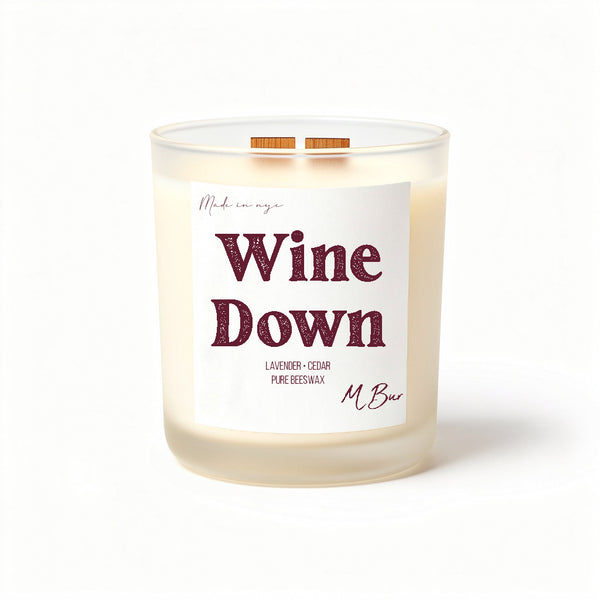
Pediatricians recommend keeping nurseries and sleeping areas free of all fragrances and open flames. If you want to burn a candle, do it in a separate, well ventilated room and let the air clear before bringing the baby in. Choose a candle made from 100% beeswax with non toxic fragrance to minimize what enters the air. The Wine Down candle, with its lavender, chamomile, and sage notes, is a popular choice for parents who burn in the living room during the evening.
Are "non toxic" candles actually safe for babies?
There is no regulated definition of "non toxic" in the candle industry, so the label alone means little. What matters is the specific ingredient list: 100% plant based wax (beeswax is the cleanest), phthalate free fragrance, no chemical dyes, and a cotton or wooden wick. A candle that meets all four criteria produces dramatically fewer irritants than one that does not. Browse MBur's full collection to see what transparent labeling looks like.
Can candle smoke trigger asthma in children?
Yes. The particulate matter and chemical compounds released by burning candles, especially paraffin candles with toxic fragrance, can irritate airways and trigger symptoms in children with existing asthma or allergies. If your child has a respiratory condition, talk to your pediatrician before using any scented product in the home.
How long do beeswax candles actually burn?
Beeswax has the highest melting point of any candle wax, which means it burns slower and lasts longer. MBur's 80 hour size ($65) is the longest burning option. The 20 hour size ($20) is a good starting point if you want to try one before committing to the larger size.
Do beeswax candles really produce less soot?
Significantly less. Paraffin candles are the primary culprit behind the black residue you see on walls and ceilings near candles. Beeswax burns much cleaner, and pairing it with a wooden wick (which burns at a lower, more even temperature) reduces soot production even further.
The bottom line for parents
Secondhand candle scent can be a problem for a baby's developing lungs, but the risk is almost entirely determined by what your candle is made of and how you use it. A paraffin candle with toxic fragrance in a closed nursery is a genuinely bad idea. A pure beeswax candle with phthalate free fragrance burned in a ventilated living room while the baby naps in another room is a completely different scenario.
You do not have to give up candles to be a careful parent. You just have to be selective about what you bring into your home.
"Absolutely loved the Wine Down candle! The scent is so light and clean, not overpowering at all, which is exactly what I look for. A lot of other candles tend to give me headaches, but this one was a total game changer." Nicole D.
If you are ready to see what a genuinely clean candle looks like, start with MBur's full beeswax candle collection. Every candle is 100% beeswax, wooden wick, phthalate free fragrance, no dyes, handmade in Queens, New York. The 20 hour size starts at $20.
Related reading

