

How to Get Rid of the Chemical Smell From a New Mattress
That acrid, plasticky wave that hits you the second you unbox a new mattress is volatile organic compounds, or VOCs, escaping from polyurethane foam, adhesives, and flame retardants that have been sealed inside the packaging for weeks. The smell is strongest in the first 24 to 48 hours, and for most people it fades within a week. But if you are sensitive to chemicals, prone to headaches, or just deeply annoyed by the idea of breathing in industrial byproducts while you sleep, "wait it out" is not a satisfying answer.
This guide covers exactly why your mattress smells, what the compounds actually are, and a step by step plan to speed up off gassing so your bedroom stops smelling like a factory floor. We will also talk about what most people get wrong during this process, including the air fresheners and scented products that make the problem worse instead of better.
Why Your New Mattress Smells Like Chemicals
Modern mattresses, especially the "bed in a box" kind, are made from layers of memory foam or polyurethane foam. During manufacturing, these foams are produced using chemical reactions that leave behind residual VOCs: compounds like formaldehyde, benzene, and toluene that evaporate at room temperature.
When the mattress gets vacuum sealed and rolled into a box for shipping, those gases have nowhere to go. They build up inside the plastic wrap. The moment you slice the packaging open, everything releases at once. That is why the first few hours smell the worst.

A 2022 chamber study confirmed that while VOC concentrations are measurable for weeks after unboxing, they generally stay below World Health Organization guidelines in well ventilated rooms. So the smell is more of a nuisance than a danger for most healthy adults. But for people with asthma, chemical sensitivities, or respiratory conditions, even low level exposure can trigger headaches, dizziness, or irritation. And "below WHO guidelines" is a low bar when you are talking about the room where you spend eight hours unconscious every night.
Step 1: Unwrap It Immediately and Let It Breathe
The single biggest mistake people make is leaving the mattress partially wrapped while it expands. Every minute it stays sealed, VOCs concentrate further. Cut the plastic off completely the moment it arrives. If possible, set it up in a spare room or a space you do not need to sleep in for 24 to 48 hours.
Open every window in the room. If you only have one window, place a fan facing outward to push contaminated air outside, and crack a door on the opposite side of the room to create cross ventilation. Experts recommend keeping windows open for at least four to six hours per day during the first three days.
Temperature matters. Warmer air speeds up VOC release, so keeping the room between 68 and 75 degrees Fahrenheit with humidity below 60% will help the mattress off gas faster. In winter, this is harder, but even running the heat a few degrees higher during the day while windows are cracked makes a difference.
Step 2: Baking Soda, the Right Way
Baking soda is genuinely effective at absorbing VOCs, but most people do not leave it on long enough. Sprinkle a generous, even layer across the entire mattress surface and leave it for a minimum of four hours. Overnight is better. Then vacuum it up with a clean upholstery attachment.
You can also place open bowls of baking soda around the room to absorb ambient odor from the air itself. Swap them out every 24 hours for the first few days.
Step 3: Activated Charcoal for Stubborn Off Gassing
Activated charcoal bags or pads are more effective than baking soda for ongoing, low level VOC absorption. Place two or three bags directly on or near the mattress and leave them for several days. Unlike baking soda, charcoal does not need to be vacuumed, and a single bag can absorb compounds for weeks before it needs to be "recharged" in sunlight.
If you have a HEPA air purifier with a carbon pre filter, run it on high and position it two to three feet from the bed. The carbon filter targets VOCs specifically, while the HEPA filter catches particulate matter. Replace the carbon pre filter after the first week of heavy use, since it saturates quickly under high VOC loads.

Step 4: What NOT to Do
This is where most advice articles fail you, because the instinct to "cover up" the smell with something pleasant actually makes indoor air quality worse.
Skip the Chemical Air Fresheners
Plug in air fresheners and aerosol sprays contain their own VOCs. You are adding a second layer of chemical compounds to a room that already has too many. The EPA's guidance on indoor air quality is clear: volatile organic compounds from household products are a significant contributor to poor indoor air, and masking one source with another does nothing to reduce total exposure.
Skip Most Scented Candles, Too
Paraffin candles, the kind that make up the majority of what you will find at big box stores, are made from petroleum byproducts. When they burn, they release benzene, toluene, and formaldehyde into the air. The same compounds your mattress is already off gassing. Lighting a paraffin candle in a room with a new mattress is genuinely counterproductive.
Candles that use toxic fragrance oils (containing phthalates and parabens) add another layer of airborne chemicals. The label will just say "fragrance," which is a catch all term that can include hundreds of undisclosed compounds. If you are trying to reduce VOCs in your bedroom, a paraffin candle with toxic fragrance is the worst possible choice.
Avoid Direct Sunlight on the Mattress
Short bursts of indirect sunlight (20 to 30 minutes) can help dry residual moisture. But leaving a foam mattress in direct sun for hours will degrade the material and shorten its lifespan. Stick to indirect light in a well ventilated space.
Step 5: Once the Worst Is Over, Choose Your Scent Wisely
After the first three to seven days, the heavy chemical smell should be gone or close to it. But trace emissions can linger at levels below what your nose detects, and your bedroom might still feel a little "off." This is when people reach for something to make the room smell good again. The key is choosing something that does not reintroduce the same compounds you just spent a week flushing out.
Beeswax candles are the cleanest burning option. Beeswax has the highest melting point of any candle wax, which means it burns slower and produces virtually no soot. Some research suggests beeswax may release negative ions when burned, which could help neutralize airborne pollutants, though that is not settled science. What is settled: beeswax produces none of the petrochemical byproducts that paraffin does.
If you are shopping for a candle specifically because your bedroom needs help after a mattress off gassing situation, look for one that checks every box: pure beeswax (not a "beeswax blend," which is mostly paraffin), a wooden or cotton wick (no metal cores), and phthalate free fragrance. MBur's Do Not Disturb candle was designed for the bedroom. Its notes are bergamot, pear, violet, vanilla, and sandalwood, and it burns for up to 80 hours in the largest size. The wooden wick crackles softly, which is a surprisingly effective white noise alternative if your sleep has been disrupted by the whole mattress ordeal.
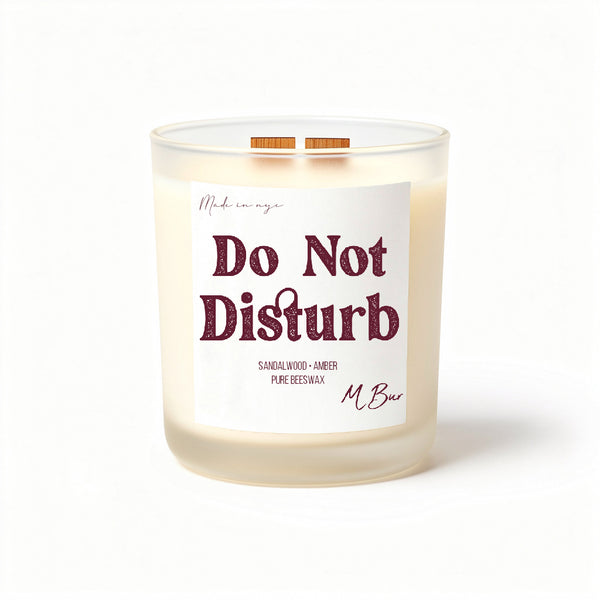

"I love the scent of this candle. It is lovely not overpowering. It's soothing fragrance more than covers my bedroom and bathroom. It is aromatherapy at its best." Dawne Forrest, Do Not Disturb customer
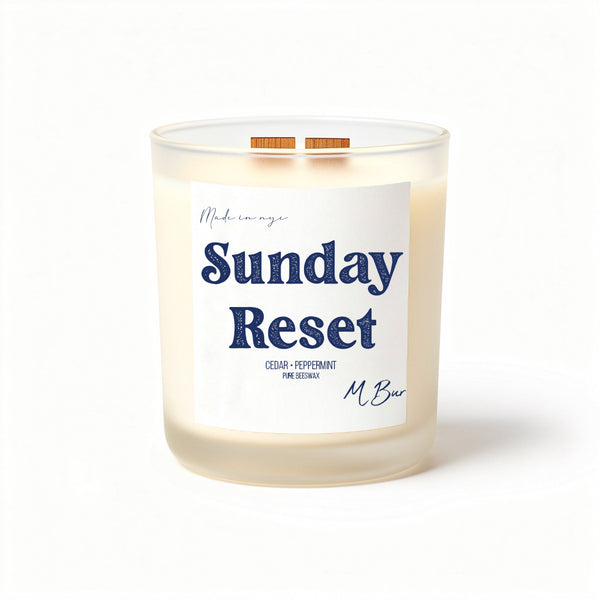
For a fresher, more energizing option during the daytime airing out phase, Sunday Reset has eucalyptus, clove, cedar, patchouli, and vanilla. Eucalyptus in particular has a sharp, clean quality that pairs well with the "deep clean" energy of flushing chemicals out of a room.
The Realistic Timeline
With aggressive ventilation and the steps above, expect the following:
Hours 0 to 48: The strongest chemical smell. Keep the room ventilated and avoid sleeping on the mattress if possible. Baking soda on the surface, charcoal bags nearby, fan running.
Days 3 to 7: The smell should drop significantly. Most people can sleep on the mattress comfortably by day three or four. Continue opening windows during the day.
Weeks 2 to 4: Trace VOC emissions continue at very low levels. Your nose will not detect them. Running an air purifier and burning a clean candle in the evening will keep the air quality high.
Dense memory foam mattresses take longer than hybrid or innerspring models. If the smell is still strong after two weeks with consistent ventilation, contact the manufacturer. A mattress that still reeks after 14 days of airing out may have a defect or may not meet low emission standards like CertiPUR US certification.
A Quick Checklist for Mattress Off Gassing
Do:
- Unwrap immediately and remove all plastic
- Open windows and create cross ventilation with fans
- Keep the room warm (68 to 75°F) and dry (under 60% humidity)
- Apply baking soda for four or more hours, then vacuum
- Use activated charcoal bags near the mattress
- Run a HEPA purifier with a carbon pre filter
- Once the worst is over, burn only pure beeswax candles with non toxic fragrance
Do not:
- Leave the mattress wrapped or partially sealed
- Use aerosol air fresheners or plug in scent devices
- Burn paraffin candles or candles with toxic fragrance
- Place the mattress in direct sunlight for extended periods
- Seal the bedroom and hope the smell goes away on its own
Frequently Asked Questions
Is the new mattress smell actually dangerous?
For most healthy adults, the off gassing compounds are at levels considered safe for indoor air, and the smell is temporary. People with asthma, chemical sensitivities, or respiratory conditions may experience headaches or irritation. If you have a medical condition, follow your doctor's guidance on managing exposure. Keeping the room ventilated and avoiding additional chemical sources (like paraffin candles) reduces your total VOC load significantly.
How long do beeswax candles actually burn?
Beeswax has the highest melting point of any candle wax, so it burns significantly longer than soy or paraffin. MBur's candles range from 20 hours in the smallest size ($20) to 80 hours in the largest ($65). You can browse all twelve scents in the full beeswax candle collection.
Will a mattress protector block off gassing?
Even breathable waterproof protectors do not significantly block VOC gas emissions. The molecules are small enough to pass through fabric barriers. A protector is great for spills and allergens, but it will not solve the chemical smell. Ventilation is the only reliable method.
Can I speed up off gassing by turning up the heat?
Yes, moderately. Warmer temperatures accelerate VOC release, so keeping the room between 68 and 75°F during the airing out period helps. Combine warmth with open windows so the released compounds actually leave the room rather than accumulating in warm, stagnant air.
The Bottom Line
Mattress off gassing is a real, measurable chemical process, and the fastest fix is aggressive ventilation for the first 72 hours combined with baking soda and activated charcoal. What you add back to the air after that matters just as much. Paraffin candles and toxic fragrance products undo the work you just did. A pure beeswax candle with a wooden wick and phthalate free fragrance is the only type that improves the room instead of compromising it.
"I absolutely love these candles! I instantly notice the difference in the air quality, in comparison to the Bath & Body scented candles. I love Bath & Body's candles but I acknowledge that it caused a slight headache and other minor respiratory discomfort. Awesome products. Totally addicted." Jason H.
Browse MBur's full beeswax candle collection to find the right scent for your bedroom, starting at $20 for the 20 hour size.
Related reading

