

Is Candle Soot Dangerous? What's Actually in That Black Residue
Is Candle Soot Dangerous? What's Actually in That Black Residue
The black smudge above your candle jar is not just an aesthetic problem. It is a chemical one. Candle soot is classified by the EPA as a particulate matter, the same category of airborne pollutant linked to respiratory disease, cardiovascular stress, and long term lung damage when exposure is chronic and concentrated. Most people wipe the jar rim, shrug, and move on. But the soot is not just sitting on your glass. A significant portion of it is already in the air you are breathing.
That said, not all candles produce the same soot. Not even close. The type of wax, the wick material, and the fragrance ingredients all determine whether your candle is leaving behind a light trace of combustion byproduct or releasing a small cocktail of petrochemicals into your living room. This post breaks down exactly what candle soot is made of, which candles produce the most of it, and what actually determines whether the black residue in your jar is a minor nuisance or a legitimate concern.
What Is Candle Soot, Exactly?
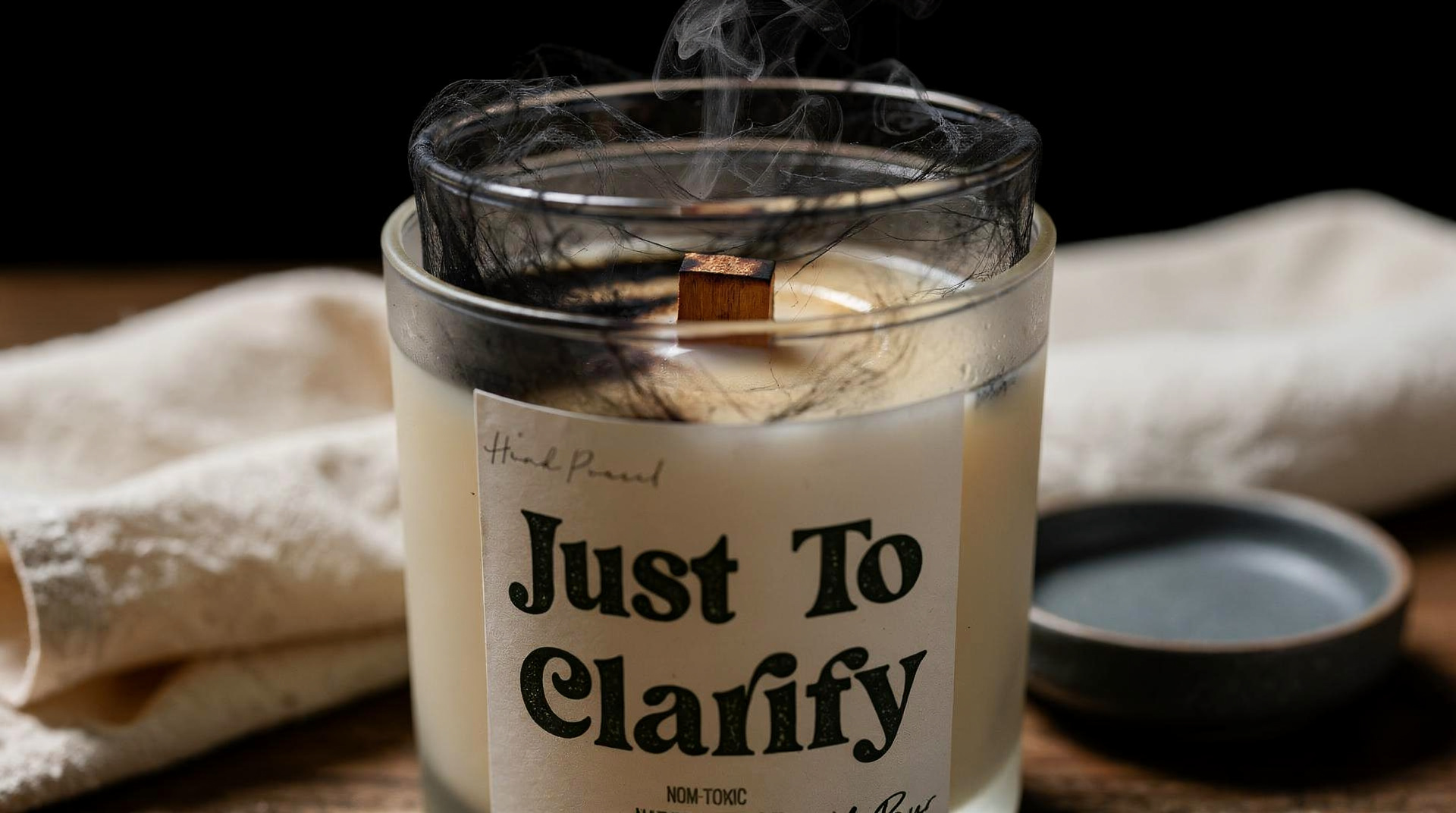
Soot is the product of incomplete combustion. When a fuel source burns cleanly, it converts almost entirely to carbon dioxide and water vapor. When it burns incompletely, it releases fine carbon particles instead. Those particles are what you see as black residue.
In candles, the fuel source is the wax. Different waxes have very different molecular structures, and those structures determine how completely the wax burns. Paraffin wax, which is derived from petroleum refining, has a particularly complex hydrocarbon structure that is difficult to combust cleanly. Soy wax is a step better, but it has its own complications. Beeswax is in a different category entirely, and we will get to that shortly.
The soot particles themselves are ultrafine, typically less than 2.5 microns in diameter. That measurement matters because particles under 2.5 microns (known as PM2.5) can bypass the nose and throat entirely and penetrate deep into the lungs. The American Lung Association identifies PM2.5 as one of the most dangerous forms of air pollution because the body has limited defenses against particles that small.
What Is Actually Inside the Black Residue?
This is where it gets specific, and a little uncomfortable.
A 2001 study published by the South Carolina State University Department of Chemistry analyzed the chemical composition of paraffin candle emissions and identified several compounds of concern, including:
- Benzene: A known human carcinogen classified by the International Agency for Research on Cancer (IARC) as a Group 1 carcinogen. No safe level of exposure has been established.
- Toluene: A solvent associated with neurological effects including dizziness, headaches, and in high concentrations, cognitive impairment.
- Formaldehyde: Also classified as a Group 1 carcinogen by the IARC. Commonly associated with off gassing from building materials but also present in paraffin combustion.
- Acetaldehyde: A probable human carcinogen associated with respiratory irritation.
- Acrolein: A highly irritating compound that affects mucous membranes and is associated with respiratory distress.
To be direct about context: the levels of these compounds produced by a single candle burning in a ventilated space are typically far below acute toxicity thresholds. The concern is cumulative and chronic, particularly for people who burn candles daily, in enclosed spaces, without ventilation. It is also a meaningfully higher concern for children, pregnant people, and anyone with asthma or existing respiratory conditions.
The Cleveland Clinic notes that people with asthma or chemical sensitivities may experience symptoms from scented candle emissions even at low exposure levels. The particulate matter and volatile organic compounds (VOCs) released can irritate airways regardless of whether the individual has a diagnosed condition.
Why Paraffin Wax Produces the Most Soot
Paraffin is a byproduct of petroleum refining. It is what is left over after crude oil has been processed into gasoline, diesel, and lubricating oils. That origin is not incidental to the soot question. Petroleum derived compounds carry complex hydrocarbon chains that simply do not combust as cleanly as plant based or naturally occurring waxes.
When paraffin burns, its molecular structure releases a broader range of compounds during combustion. The South Carolina State University research found that paraffin candles release VOCs including alkanes, alkenes, and toluene. These are not compounds you typically find coming off a beeswax flame.
Additionally, paraffin has a lower melting point than beeswax, which means it tends to produce a less stable flame. An unstable flame flickers more, burns less completely, and generates more soot per hour of burning. A tall, wavering flame on a paraffin candle is not ambiance. It is inefficient combustion happening in real time.
What About Soy Wax?
Soy wax is genuinely cleaner than paraffin, and the candle industry marketing around it is not entirely wrong. Soy produces less soot than paraffin and does not carry the same petroleum derived VOC profile. If your only two options are paraffin and soy, soy is the better choice.
The problem is what often gets left out of the soy candle conversation. A significant portion of soy candles on the market are not 100% soy. Many use soy blend waxes that include paraffin to improve appearance, fragrance throw, or structural stability. Unless the label explicitly states 100% soy, you may be burning a soy paraffin hybrid and not know it.
There is also the fragrance question. Many soy candles use toxic fragrance oils loaded with phthalates, synthetic musks, and other compounds that burn off as VOCs regardless of how clean the base wax is. A soy candle with a phthalate heavy fragrance load is not necessarily a clean candle. The wax is only part of the equation.
Why Beeswax Produces Essentially No Soot
Here is the chemistry. Beeswax is composed primarily of long chain fatty acid esters and hydrocarbons produced biologically by honeybees. Unlike petroleum derived paraffin, these compounds are already highly refined by a biological process. The molecular structure of beeswax is remarkably uniform and stable, which is why it has the highest melting point of any common candle wax at around 145 to 147 degrees Fahrenheit.
That high melting point is directly connected to combustion quality. A higher melting point wax requires more energy to vaporize, which means the flame burns hotter and more completely. More complete combustion means fewer unburned carbon particles released into the air. The result is a dramatically cleaner burn with minimal to no visible soot.
Beeswax is also the only candle wax that is not chemically processed into its final form. It is filtered and cleaned but not chemically altered. That distinction matters when you are thinking about what gets released during combustion because chemically modified or petroleum derived compounds introduce foreign molecules into the combustion equation that beeswax simply does not have.
For the full picture of how wax type, soot, and health outcomes intersect, see our paraffin vs beeswax vs soy comparison.
The Other Soot Culprits: Wicks and Fragrance
Wax type gets most of the attention, but it is not the only factor in soot production. Two other variables matter significantly: the wick material and the fragrance formulation.
Wick Material
Cotton wicks are the most common and generally considered safe. The real concern is metal core wicks, particularly those with zinc cores. These were far more common before 2003, when the Consumer Product Safety Commission banned lead core wicks in the United States. However, imported candles still occasionally contain them. Metal core wicks produce combustion byproducts that are considerably more harmful than plain carbon soot.
Wooden wicks, which MBur uses across its entire candle line, burn with a wide, low flame that tends to be more stable than cotton wicks. A more stable flame means more complete combustion, which means less soot. The characteristic crackling sound of a wooden wick is not just pleasant. It is a sign of an even, controlled burn.
Fragrance Formulation
This is the variable that candle marketing most reliably glosses over. Even a technically clean wax burns differently depending on what fragrance has been added to it. Toxic fragrance oils that contain phthalates, synthetic musks, and other petrochemical compounds introduce those compounds into the combustion process. They vaporize, partially combust, and release their own VOC profile into the air, independent of what the wax itself is doing.
Phthalate free fragrance, like what MBur uses, does not carry the same VOC risk. The fragrance molecules are still releasing during combustion, but without the phthalate backbone that produces endocrine disrupting compounds as a byproduct.
If you are shopping for a genuinely low soot candle, the checklist is: 100% beeswax or clean soy base, no paraffin blending, non toxic fragrance, no metal core wicks, and no chemical dyes.
How to Reduce Soot Exposure Regardless of What Candle You Burn
Even the cleanest candle is a combustion product. Here are the practical steps that actually make a difference:
- Trim the wick before every burn. A wick longer than about a quarter inch will produce a larger, less stable flame. Larger flames generate more soot. This is the single highest impact habit for soot reduction.
- Ventilate the space. Burning candles in a room with at least a small amount of airflow prevents particulate accumulation. A slightly cracked window is enough. A sealed room concentrates everything the candle releases.
- Do not burn for more than 4 hours at a stretch. The longer a candle burns continuously, the more heat builds in the wax pool and the more volatile the fragrance compounds become. Four hours is the standard maximum recommended by the National Candle Association.
- Extinguish properly. Blowing out a candle releases a spike of smoke and unburned carbon particles. A candle snuffer or a wick dipper that folds the wick into the wax pool eliminates that final soot burst entirely.
- Avoid placing candles near vents or drafts. Air movement disrupts the flame, causes more incomplete combustion, and dramatically increases soot output.
What the Black Marks on Your Wall Actually Mean
If you have black staining on your ceiling or wall near where you burn candles, that is called ghosting, and it is a real indicator of chronic soot exposure in that space. It is essentially the same process by which cigarette smoke stains walls over time. The particles are small enough to travel through the air and then deposit on cooler surfaces.
Ghosting from candles is most commonly associated with paraffin candles burned frequently in enclosed spaces. It is rarely reported with pure beeswax candles. If you have noticed it in your home, it is worth reconsidering what you are burning and how often, not just aesthetically but for air quality reasons.
Frequently Asked Questions
How do I know if my candle is producing soot?
The most obvious sign is black residue inside the jar rim or on the surface around the flame. A flickering, tall, or mushrooming flame (where the wick tip forms a small ball of carbon) is also a reliable indicator of incomplete combustion and active soot production. If your wick is trimmed correctly and the flame is still unstable, the wax formulation itself is likely the issue.
Are soy candles really soot free?
Not exactly. Soy candles produce less soot than paraffin, but they are not zero soot unless they are burning with a very stable flame and a clean fragrance load. Many commercial soy candles are blended with paraffin, which negates much of the benefit. If soot reduction is your goal, 100% beeswax is the only wax that consistently produces a near zero soot burn.
Can candle soot trigger asthma or allergies?
Yes, this is well documented. The Cleveland Clinic specifically identifies scented candles as a potential asthma trigger due to both particulate matter and VOC emissions. People with asthma, chemical sensitivities, or chronic respiratory conditions are disproportionately affected even at low exposure levels. Switching to a beeswax candle with non toxic fragrance significantly reduces the trigger load.
How long does it take for candle soot to affect air quality?
In a well ventilated space, the impact on air quality from a single candle burn is relatively transient. In an enclosed room with poor ventilation, particulate levels can measurably elevate within 30 to 60 minutes of burning. The cumulative effect from daily burning in the same space over weeks and months is the more meaningful health concern, not any single session.
Do beeswax candles really not produce soot?
Pure beeswax candles with properly trimmed wicks produce minimal to no visible soot under normal burning conditions. The chemistry supports this: beeswax burns more completely due to its high melting point and uniform molecular structure. This is one of the reasons beeswax has been the preferred candle material for sacred and archival use (museums store beeswax candles near valuable documents because they do not produce the acid particulates that paraffin does).
The Bottom Line
Candle soot is not a harmless aesthetic quirk. At minimum, it is an indicator of incomplete combustion releasing fine particulates into your breathing air. At worst, particularly with paraffin wax and toxic fragrance formulations, it is a regular delivery mechanism for benzene, toluene, and formaldehyde into your home.
The solution is not to stop burning candles. It is to burn the right ones. Pure beeswax, non toxic fragrance, wooden or clean cotton wicks, no chemical dyes, trimmed before every use. That combination produces a burn that is genuinely different, not just marginally better.
"I absolutely love these candles! I instantly notice the difference in the air quality, in comparison to the Bath and Body scented candles. I love Bath and Body's candles but I acknowledge that it caused a slight headache and other minor respiratory discomfort. Awesome products. Totally addicted." Jason H., Sunday Reset Candle
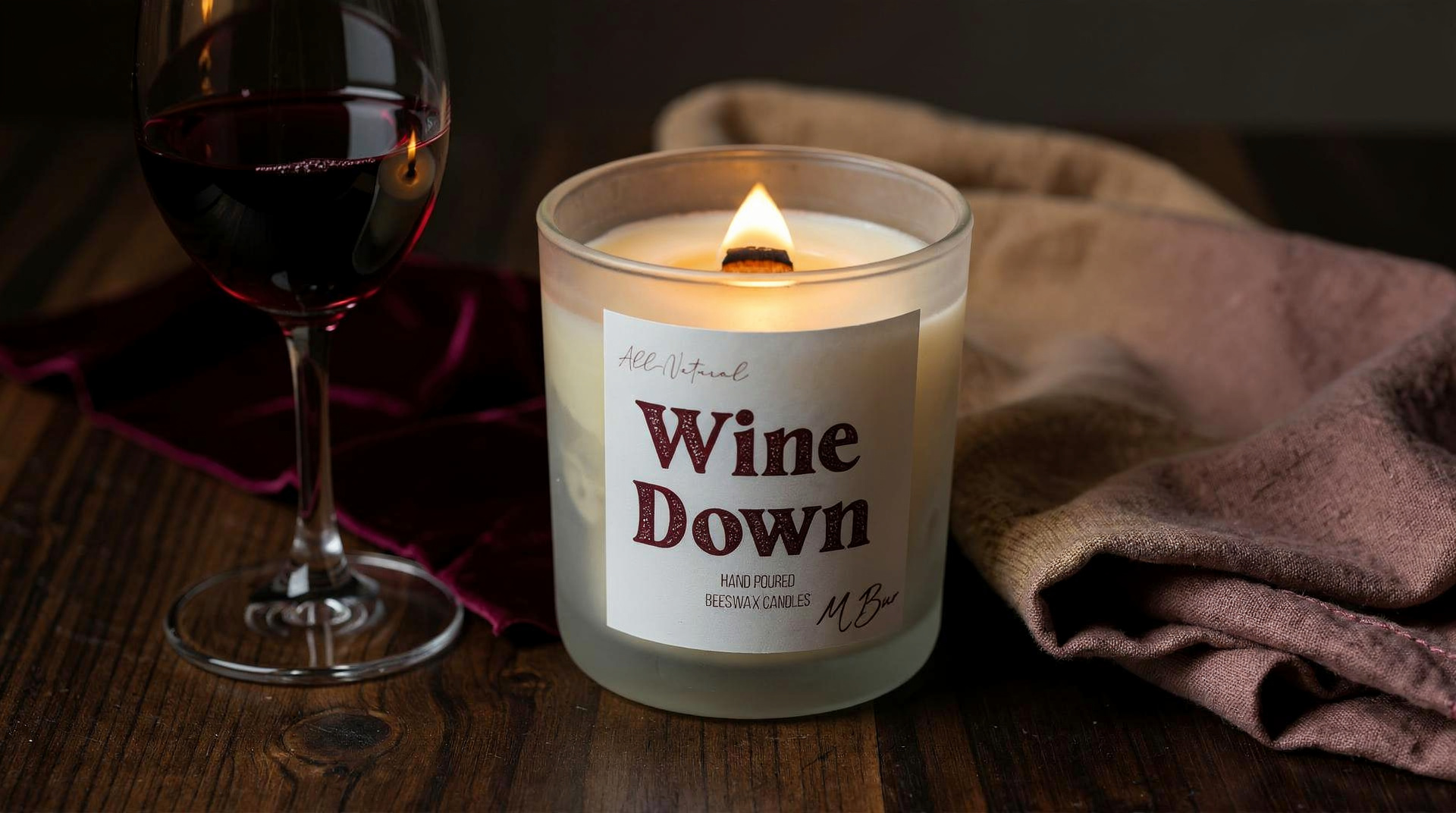
If you want to start somewhere, the Wine Down beeswax candle (starting at $20 for the 20 hour size) is a clean, calming option built for exactly the kind of daily home burning that makes wax quality matter most.
Shop the full MBur beeswax candle collection
What buyers say:
Related reading:

