

Are Candles Bad for Birds? What Pet Bird Owners Need to Know
Are Candles Bad for Birds? What Pet Bird Owners Need to Know
Your bird is not being dramatic. If your pet bird is showing signs of respiratory distress, lethargy, or unusual behavior after you burn a candle, the candle is almost certainly the problem. Not the bird.
Birds have one of the most sensitive respiratory systems of any animal kept as a pet. What barely registers as a mild irritant to you can be genuinely dangerous to a parrot, cockatiel, or canary sharing your airspace. And the candles most people keep in their homes, the ones from big box stores and mall kiosks, are among the worst offenders.
This post breaks down exactly what makes most candles risky for birds, which specific ingredients to avoid, and what a bird safe candle actually looks like. If you have already been curious about how candles affect other pets like cats, a lot of the same logic applies here, but birds require an even higher level of caution.
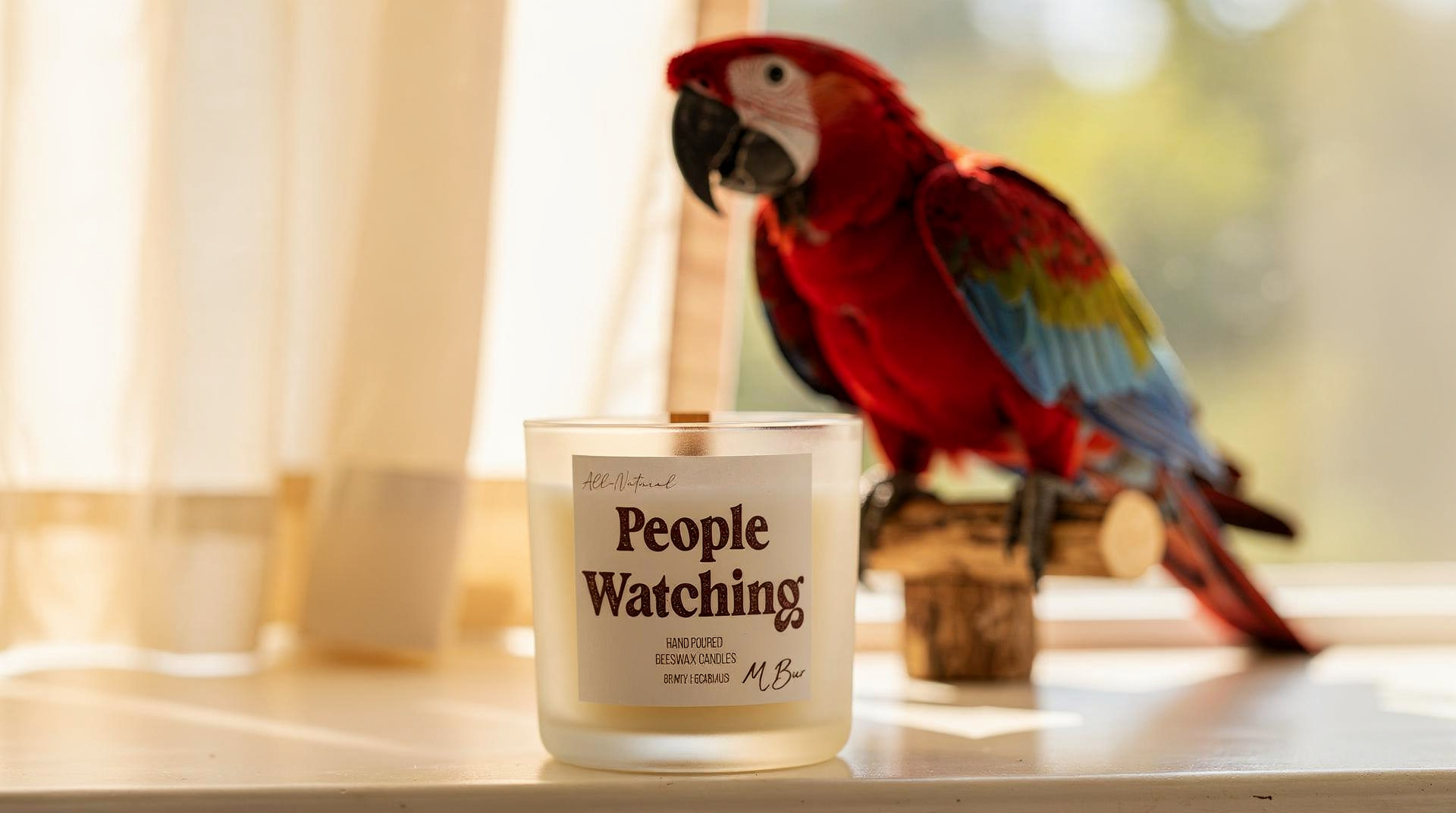
Why Birds Are So Much More Vulnerable Than Other Pets
Birds breathe differently than mammals. Their respiratory system is built for efficiency, not filtration. Air flows through a bird's lungs in one continuous direction, passing through a series of air sacs rather than in and out like human lungs. This design is brilliant for flight. It is terrible for dealing with airborne toxins.
The result is that birds absorb airborne chemicals faster, more completely, and with less ability to process or expel them. A concentration of fumes that a dog might shake off can overwhelm a bird's system in minutes.
This is not a new discovery. The phrase "canary in a coal mine" exists because miners used actual canaries as an early warning system for toxic gas leaks. The birds would show signs of distress, or die, before the gas reached dangerous concentrations for humans. That biological reality has not changed. Your bird is still more sensitive to airborne toxins than you are, by a significant margin.
The Specific Ingredients That Put Birds at Risk
Not every candle carries the same level of risk. The danger is almost entirely ingredient specific. Here is what you need to watch for.
Paraffin Wax
Paraffin is petroleum waste, full stop. It is a byproduct of crude oil refining, and when it burns, it releases volatile organic compounds including benzene, toluene, and formaldehyde. These are known carcinogens and respiratory irritants in humans. In birds, exposure to these compounds can cause acute respiratory distress, damage to the air sacs, and in severe cases, death.
The majority of candles sold in grocery stores, department stores, and major candle chains are made with paraffin. If the candle does not clearly state its wax source, assume it is paraffin.
Toxic Fragrance Oils
This is the one most bird owners do not know about. Fragrance is not a single ingredient. The word "fragrance" or "parfum" on a label can legally represent a blend of hundreds of individual chemicals, many of which are never disclosed to the consumer. Some of the most commonly used toxic fragrance compounds release volatile organic compounds when heated, adding another layer of airborne toxins to the paraffin problem.
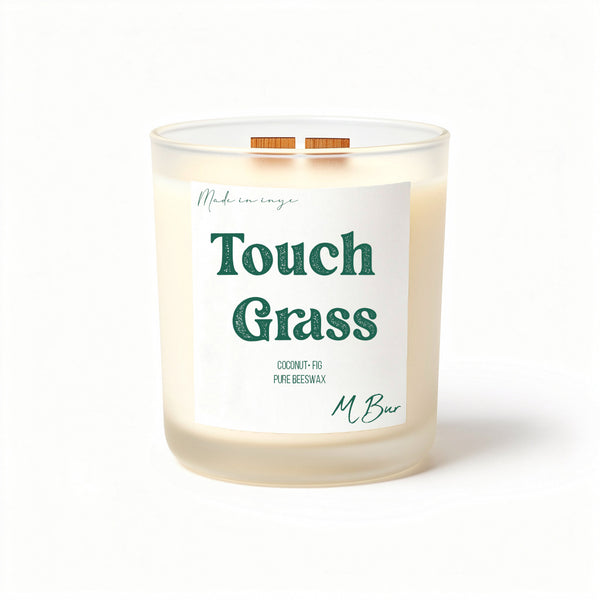
Even candles made with a cleaner wax base can be problematic if they use toxic fragrance. The wax is only half the equation.
Metal Core Wicks
Older candles and some cheap imported candles still use wicks with metal cores, typically zinc, to help them stand upright. When these burn, they release heavy metal particulates directly into the air. For a bird, this is extremely dangerous. Always check that a candle uses a cotton or wood wick with no metal core.
Chemical Dyes
Brightly colored candles look appealing. But those colors come from chemical dyes that also vaporize when the candle burns. Dye free candles are not just an aesthetic choice. They are a cleaner burn.
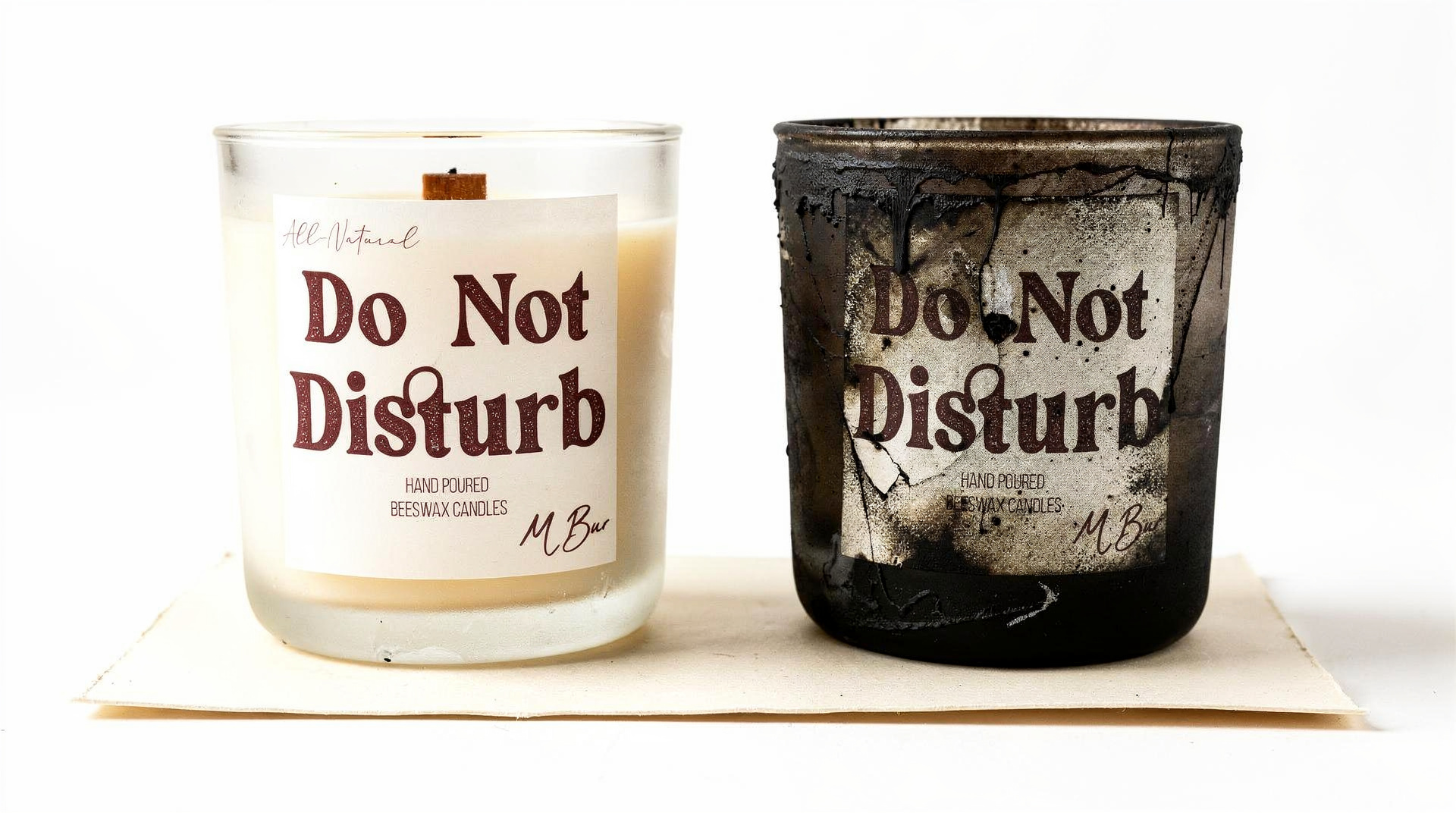
Signs Your Bird Is Reacting to a Candle
Birds do not always show obvious signs of distress until things are fairly serious. Watch for any of the following after burning candles in your home:
- Labored or rapid breathing
- Open mouth breathing or tail bobbing (both indicate respiratory effort)
- Lethargy or loss of balance
- Watery eyes or discharge from the nares
- Loss of appetite
- Unusual quietness from a normally vocal bird
If you observe any of these symptoms after burning a candle, extinguish the candle immediately, move your bird to a well ventilated area with fresh air, and contact an avian veterinarian. Do not wait to see if it improves on its own.
What Makes a Candle Actually Safe for Birds
The short version: you want a candle made with a clean, single ingredient wax, a non toxic fragrance or no fragrance at all, and a metal free wick. That combination eliminates the main vectors of harm.
Why Beeswax Is the Safest Wax for Homes with Birds
Beeswax is the oldest candle material in recorded history, with evidence of its use going back roughly 5,000 years. It is also the only candle wax that is naturally occurring and requires no chemical processing to become a wax. It is simply harvested, filtered, and poured.
Beeswax burns with the highest melting point of any candle wax, which means it burns slower and cleaner. It produces no petroleum based byproducts because it is not petroleum. Some studies suggest it may even release negative ions as it burns, which can help neutralize airborne particles. The evidence on that specific claim is still developing, but the clean burn profile of beeswax is well established.
Beeswax is also naturally hypoallergenic. It does not require bleaching, hydrogenation, or chemical additives to perform. That matters a lot when you are thinking about what is going into your bird's air sacs with every breath.
MBur's candles are made with 100% beeswax, not a blend. Single ingredient wax. They also use phthalate free, non toxic fragrance oils and wooden wicks with no metal core. No chemical dyes either. Every ingredient decision addresses one of the specific risk factors listed above.
The 20-hour size at $20 is the lowest-commitment way to test how a scent works in your space and observe how your bird responds before sizing up.
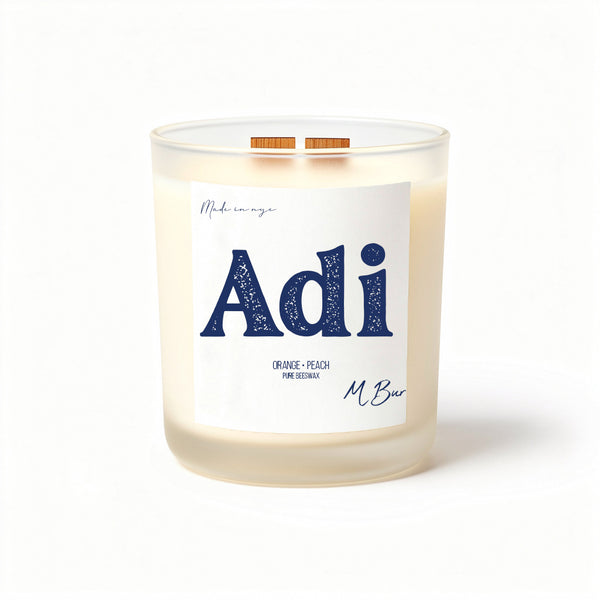
"I love these candles. No headache or feeling nauseous like the Bath and Body candles with all the extra chemicals. In addition, I love the package and how carefully everything was wrapped." Jason H., Sunday Reset Candle
If a human is noticing that difference in air quality, a bird is registering it even more acutely. The chemistry does not lie.
Fragrance Choices Matter Too
Even with beeswax, the fragrance load matters for birds. Heavily scented candles in small, unventilated spaces can overwhelm any bird regardless of wax type. The goal is clean ingredients plus sensible use.
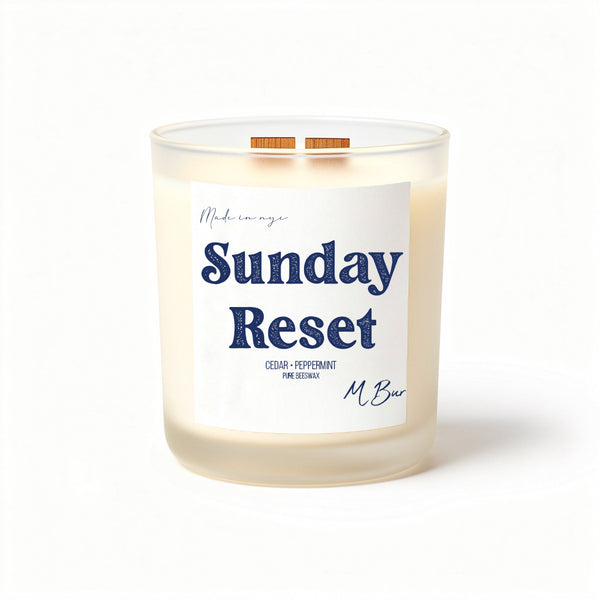
For a bird safe option with a lighter, cleaner scent profile, the Sunday Reset beeswax candle (starting at $20 for the 20 hour size) has a fresh, clean character with eucalyptus, peppermint, and cedar that works well in open living spaces. The Do Not Disturb candle (starting at $20 for the 20 hour size) is another option with vanilla, sandalwood, pear, and peach blossom that burns without the dense, heavy character of some warmly spiced candles.
Practical Safety Rules for Burning Candles Around Birds
Even with the cleanest candle, there are common sense precautions that matter when birds are in the home.
Ventilation Is Non Negotiable
Never burn candles in the same room as your bird without ventilation. A window cracked open, a ceiling fan on low, or burning candles in an adjacent room with the door open are all better options than burning in a closed room where your bird is perched. Airflow dilutes concentration. That applies to every candle, including clean burning ones.
Keep Candles Out of the Bird Room
The safest rule is the simplest one. Do not burn candles in the room where your bird spends most of its time. Burn them in nearby spaces and let the scent carry naturally. Your bird will get the ambient benefit without the concentrated exposure.
Trim the Wick Before Every Burn
A wick longer than about a quarter inch will produce a larger, less controlled flame that generates more soot and combustion byproducts. Trim it before every single burn. This applies to every candle type, but it is especially important in a home with birds.
Stick to Short Burn Sessions
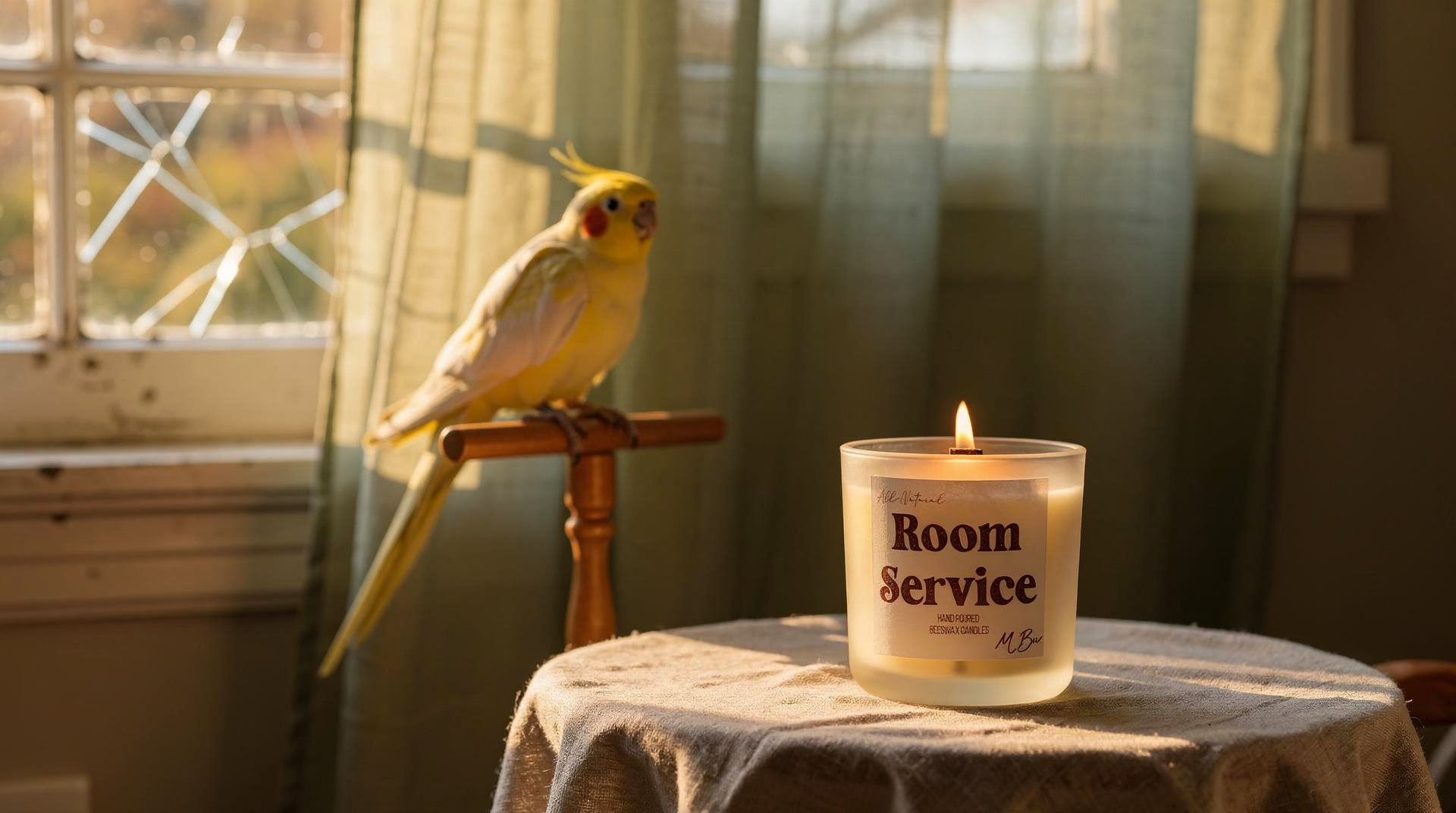
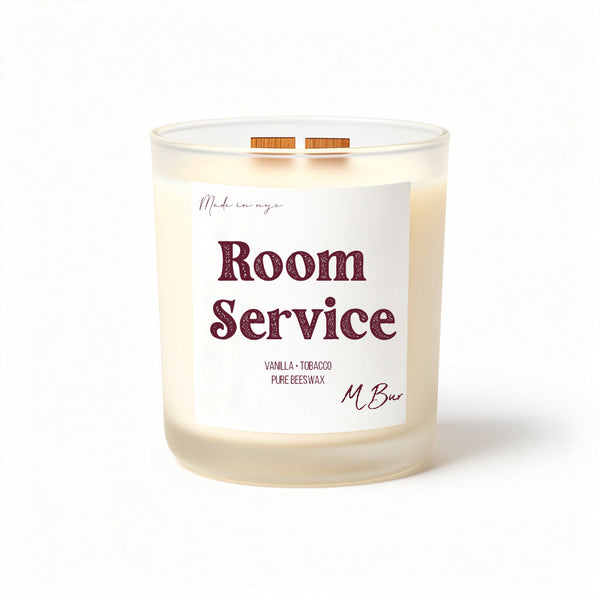
An hour or two at a time is a reasonable limit in a home with birds. Let the candle cool, extinguish it, and allow the air to refresh before lighting again. MBur's beeswax candles are designed for burn times of 20 to 80 hours depending on size, so you are not rushing through them. The Room Service candle in the 40 hour size ($23) is a good middle ground, long enough to enjoy without pressure to burn it all at once.
Never Burn Near the Cage
Even a pet safe candle should never be burned directly next to a bird's cage. Keep at least ten to fifteen feet of distance, and make sure no drafts are blowing combustion air directly toward the cage. Heat and airflow can both concentrate exposure in ways that defeat the purpose of using a cleaner candle.
Frequently Asked Questions
Are essential oil diffusers safer than candles for birds?
Not necessarily. Some essential oils are outright toxic to birds, including eucalyptus, tea tree, and many citrus derived oils. Diffusers also put concentrated aromatic compounds directly into the air without combustion to burn off the volatile components. A clean burning beeswax candle with non toxic fragrance in a ventilated space may actually be a safer choice than an essential oil diffuser near a bird. Always research specific oils before diffusing in a bird occupied home, and consult an avian vet when in doubt.
What about soy candles? Are those safe for birds?
Soy is cleaner than paraffin, but most commercially sold soy candles are blended with paraffin rather than being pure soy. Even pure soy candles often use toxic fragrance and chemical dyes that reintroduce the same risks. Beeswax remains the cleanest and most naturally sourced option.
My candle says it is natural. Does that mean it is bird safe?
No. "Natural" is not a regulated term on candle labels. A candle can market itself as natural while using paraffin blended wax, toxic fragrance compounds, and chemical dyes. Look specifically for: 100% beeswax (not a blend), phthalate free fragrance, no chemical dyes, and a cotton or wooden wick with no metal core. Those are the actual criteria that matter.
How do I know if my bird had a reaction to a candle?
Watch for labored breathing, tail bobbing, open mouth breathing, sudden lethargy, or loss of balance within minutes to hours of burning a candle. These are signs of respiratory distress. Extinguish the candle immediately, move the bird to fresh air, and call an avian veterinarian. Do not try to manage a respiratory reaction at home without professional guidance.
Can I ever burn a candle in my bird room?
The safest answer is no. Even a clean burning candle is best kept in a different room from where your bird spends most of its time. If your home is small and that is not practical, maximize ventilation, keep the burn time short, and place the candle as far from the bird's cage as possible. Never burn anything directly next to a cage.
The Bottom Line
Birds are not fragile for no reason. Their respiratory systems are genuinely extraordinary, optimized for one of the most physically demanding activities in nature. That same design makes them acutely sensitive to airborne toxins that humans barely register. Most candles on the market were never designed with that sensitivity in mind.
The solution is not to stop burning candles. It is to be specific about which candles you burn. Clean wax, non toxic fragrance, no metal wicks, no chemical dyes, and sensible ventilation practices reduce the risk dramatically.
What buyers say:
Related reading:

