

Do Candles Cause Cancer? Separating Fact from Fear
Do Candles Cause Cancer? Separating Fact from Fear
Paraffin wax is a byproduct of petroleum refining. Not a cousin of petroleum. Not inspired by petroleum. Literally the stuff left over after crude oil gets processed into fuel. That single fact is what sits at the center of every serious conversation about candles and cancer risk, and most candle brands would rather you never think about it.
So let's think about it. Carefully, honestly, and without the catastrophizing that makes health content exhausting to read. The question "do candles cause cancer" deserves a straight answer, not a sales pitch dressed up as science. Here is what the research actually says, what specifically in certain candles raises flags, and how to make a genuinely informed choice.
If you want the full breakdown of how different wax types compare on every dimension, our paraffin vs beeswax vs soy comparison goes deep on ingredient sourcing, VOC emissions, and what cleaner alternatives actually look like.
The Compound That Started the Conversation
In 2009, a researcher named Ruhullah Massoudi presented findings at the American Chemical Society annual meeting that paraffin candles release potentially harmful chemicals when burned, including benzene and toluene. Both are classified as known or probable human carcinogens by the International Agency for Research on Cancer (IARC).
That study got a lot of headlines. It also got a lot of pushback. Critics noted the testing was done in a very small, poorly ventilated space and that the concentrations detected were far below what you would encounter from, say, sitting in traffic or painting a room. Fair point. But the core chemistry was not disputed. Paraffin does release volatile organic compounds (VOCs) when burned. The debate is about dosage and exposure duration, not about whether the emissions exist.
Benzene and toluene do not appear because of some rare defect. They show up because paraffin is a petroleum product, and when you burn petroleum derivatives, combustion produces VOCs. That is basic organic chemistry, not a conspiracy theory.
What VOCs Actually Are and Why They Matter
Volatile organic compounds are carbon containing chemicals that evaporate at room temperature or through heat. Your nose knows VOCs well, they are responsible for the smell of paint, gasoline, and the inside of a new car.
Some VOCs are relatively harmless in small amounts. Others are on the EPA and IARC watchlists because repeated or prolonged exposure is linked to serious health outcomes including liver damage, nervous system effects, and yes, increased cancer risk. The specific VOCs associated with paraffin candle combustion include:
- Benzene - classified as a Group 1 carcinogen by IARC, meaning there is sufficient evidence of cancer causation in humans. It is the same compound found in cigarette smoke and vehicle exhaust.
- Toluene - classified as possibly carcinogenic, with documented effects on the central nervous system at high exposure levels.
- Formaldehyde - also a Group 1 carcinogen per IARC, associated with leukemia and nasopharyngeal cancer in occupational exposure studies.
- Acetaldehyde - a probable carcinogen linked to respiratory tract cancers in long term studies.
To be clear: burning one paraffin candle once in a well ventilated room is not going to give you cancer. The risk calculus changes with frequency, ventilation, candle quantity, and burn duration. But the idea that these compounds are present at all, in something millions of people burn in their bedrooms every evening, is worth knowing.
The Soot Problem Nobody Talks About
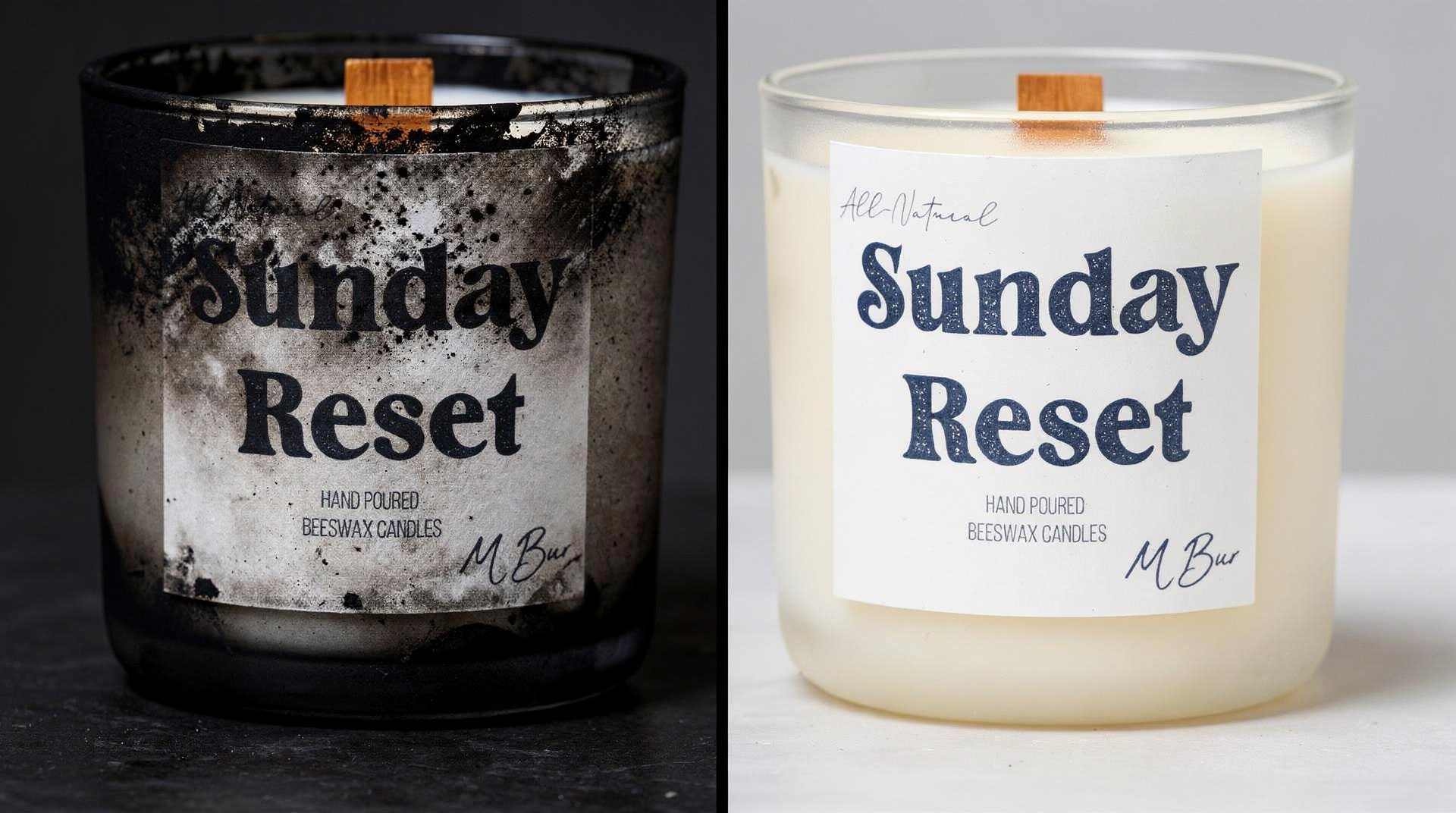
Even before we get to chemical composition, there is a visible problem with certain candles: black soot. If you have ever noticed dark marks above a candle jar or on the wall behind a candle holder, that is not aesthetic damage. That is particulate matter.
Paraffin candles are among the heaviest soot producers in the candle category. The soot is primarily composed of fine carbon particles, and research from the Environmental Protection Agency has identified fine particulate matter as a significant contributor to respiratory disease and, with chronic exposure, an associated risk factor for lung cancer.
The problem gets worse with certain wick types. Cotton wicks are generally clean burning. But cotton wicks with metal cores, which were common before the early 2000s and still appear in cheaper imported candles, can release trace amounts of heavy metals into the air during combustion. The Consumer Product Safety Commission banned lead core wicks in the United States in 2003, but not all candles on the market, particularly those manufactured internationally, comply with that standard.
Toxic Fragrance: The Hidden Variable
Here is the part of the candle cancer conversation that rarely gets airtime. Even if you switch to a cleaner wax, the fragrance can undermine the whole thing.
Toxic fragrance oils are complex chemical formulas. A single fragrance can contain dozens of individual compounds, and manufacturers are not required to disclose them individually because fragrance formulas are protected as trade secrets. Some of those compounds include phthalates, which are plasticizing chemicals used to help scent adhere to surfaces. Several phthalates, particularly DEHP and DBP, are classified as probable human carcinogens by the EPA and are restricted in cosmetics in the European Union.
Phthalates are endocrine disruptors. They interfere with hormone signaling and have been studied in connection with reproductive cancers, though research is ongoing and causation in humans at typical consumer exposure levels has not been definitively established. What is established is that they are present in many candles, they volatilize when candles are burned, and you are breathing them in.
The fix is not complicated. Look for candles that specifically state phthalate free fragrance. Every MBur candle uses non toxic fragrance that is completely phthalate free. That is a non negotiable for us because there is no version of a clean candle that includes a fragrance system full of endocrine disrupting compounds.
Where Beeswax Fits Into This Conversation
Beeswax is not a petroleum product. It is not a soy derivative. It is not a synthetic blend. It is a biological wax secreted by honeybees during honey production, and it has been used as a fuel source for light for over 5,000 years, making it the oldest candle material on the planet.
When beeswax burns, it does not produce the VOC profile associated with paraffin. It burns at a higher temperature than any other candle wax, which means a more complete combustion and dramatically less soot. Some sources reference negative ion emission from burning beeswax, and while some studies suggest this may have air purifying effects, the research is preliminary and we are not going to overstate it here. What is well established is the absence of the compounds you want to avoid.
No benzene. No toluene. No formaldehyde as a combustion byproduct. No petroleum derived soot coating your walls and your lungs.
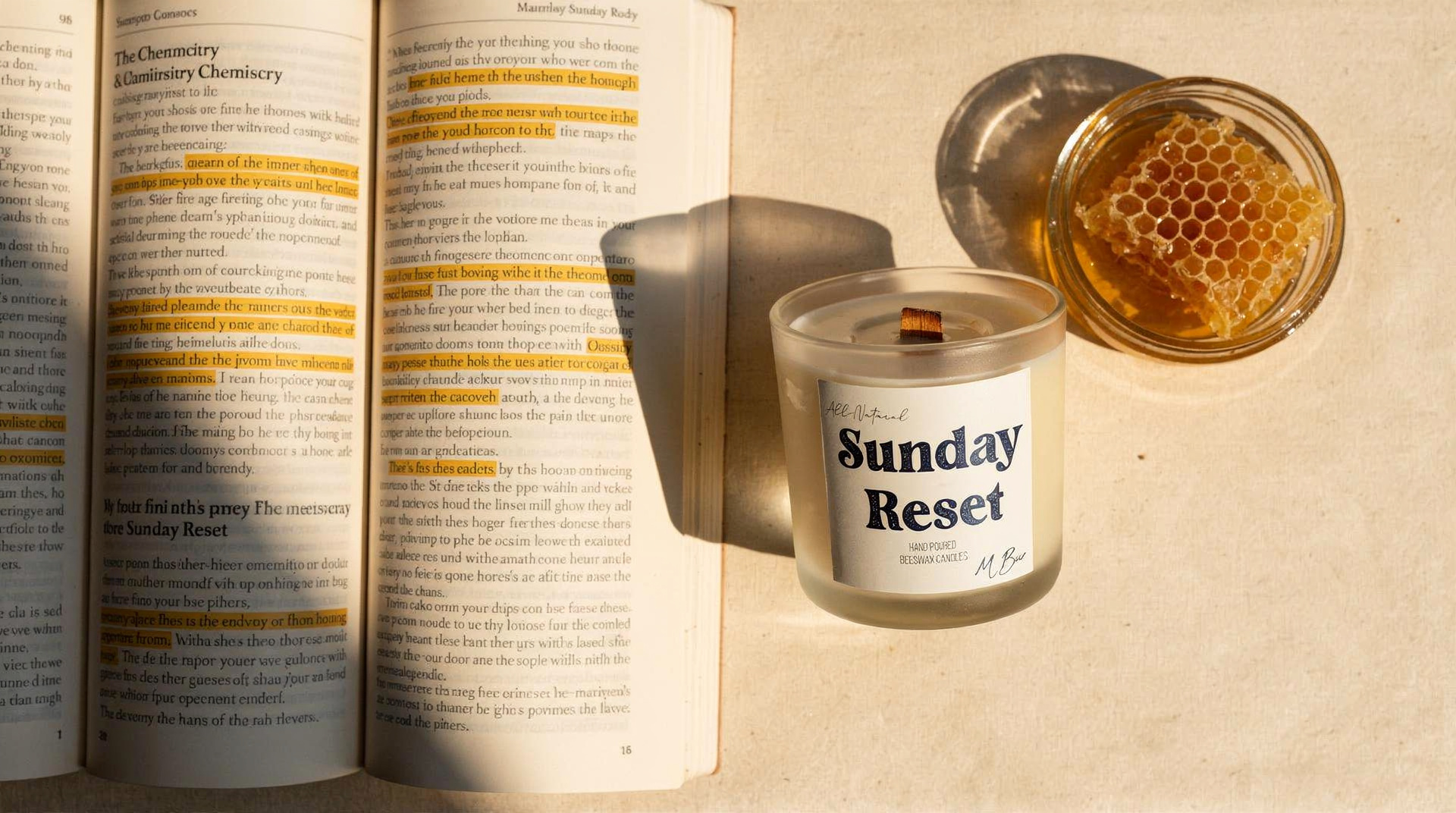
The Sunday Reset beeswax candle is a good example of what a genuinely clean burn looks like in practice. Single ingredient 100% beeswax, a wooden wick with no metal core, phthalate free fragrance, no synthetic dyes. It burns up to 80 hours in the 12oz size and produces the kind of warm, steady flame that beeswax has been known for since ancient Egypt.
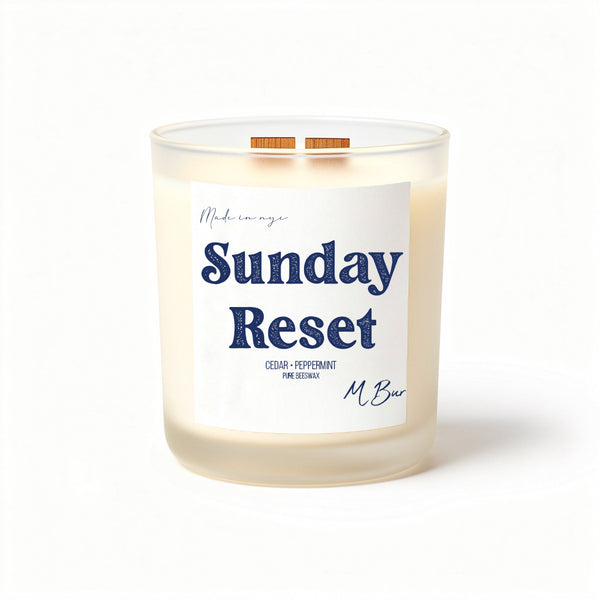
"I absolutely love these candles! I instantly notice the difference in the air quality, in comparison to the Bath and Body scented candles. I love Bath and Body's candles but I acknowledge that it caused a slight headache and other minor respiratory discomfort. Awesome products. Totally addicted." Jason H., Sunday Reset Candle
Jason is describing something that a lot of people experience but do not always connect to the candle itself. Headaches and respiratory irritation from conventional candles are often dismissed as individual sensitivity. But when the same person switches to a cleaner wax with non toxic fragrance and the symptoms go away, the ingredient list is worth revisiting.
The Honest Risk Assessment
Does burning a paraffin candle once cause cancer? No. The science does not support that conclusion.
Does burning paraffin candles regularly, in a closed room, for years, with toxic fragrance and a metal core wick, represent a meaningful cumulative exposure to known and probable carcinogens? Yes. That is what the research indicates.
The National Candle Association, which represents many large candle manufacturers, maintains that candles are safe when used as directed. That is technically true. But their safety studies are typically conducted under controlled conditions with adequate ventilation, and they do not account for how people actually use candles: in closed bathrooms, on nightstands next to sleeping people, throughout holidays when multiple candles burn simultaneously in small spaces.
Context matters. And context is exactly what most candle marketing leaves out.
What to Actually Look For on a Candle Label
Here is a practical checklist for evaluating any candle you are considering:
- Wax type declared - if it says "premium wax blend" without specifying what is in the blend, assume paraffin is involved.
- Fragrance disclosure - look for "phthalate free" stated explicitly. "Natural fragrance" and "clean fragrance" are not regulated terms and mean nothing without specifics.
- Wick material - cotton or wood is fine. Metal core wicks are a red flag. If the wick is not described, email the brand and ask.
- Dye disclosure - synthetic dyes add another layer of combustion byproducts. A candle that does not need dye is a candle that has nothing to hide about its wax color.
- Country of manufacture - not a dealbreaker but relevant. Candles manufactured outside the US may not comply with the CPSC lead core wick ban from 2003.
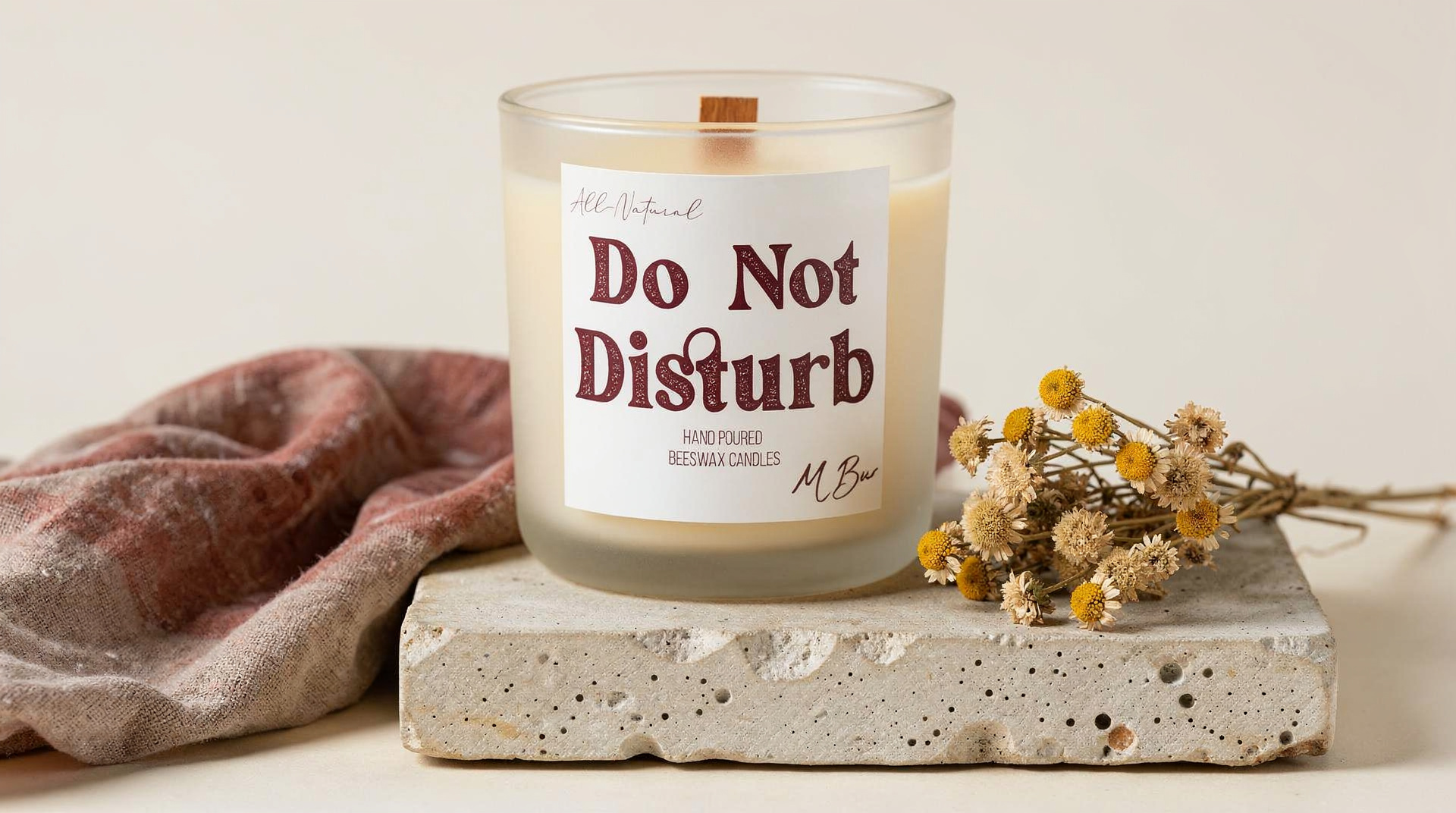
MBur candles hit every point on that list. 100% beeswax stated clearly, phthalate free fragrance, wooden wicks with no metal core, no chemical dyes, made by hand in Queens, NY. For anyone who wants to see the full comparison across wax types with data, the guide to what makes a candle non toxic lays it all out in detail.
Frequently Asked Questions
Are all candles carcinogenic?
No. The concern about cancer linked compounds is specific to paraffin wax candles, metal core wicks, and toxic fragrance systems. Candles made from 100% beeswax with non toxic fragrance and clean wicks do not carry the same chemical profile. The word "candle" covers an enormous range of products with very different ingredient lists.
How long would I need to burn paraffin candles before it becomes a real health risk?
There is no established threshold in the published research, because human exposure studies are difficult to conduct with precision. What the data suggests is that cumulative, repeated exposure in poorly ventilated spaces increases risk meaningfully over time. Occasional use in a well ventilated room is a much lower concern than nightly use in a sealed bedroom.
Is soy wax safe?
Soy is significantly cleaner than paraffin, but soy candles are often blended with paraffin to improve performance, and many use the same toxic fragrance systems as conventional candles. Pure soy with non toxic fragrance is a reasonable choice. Beeswax remains the cleanest option because it requires no chemical processing at all to become a candle ready wax.
Do wooden wicks affect the safety of a candle?
Wooden wicks are one of the cleaner wick options available. They have no metal core, they burn evenly, and they produce less soot than many cotton alternatives. Every MBur beeswax candle uses a wooden wick specifically because of the cleaner burn profile.
What about candles that say "natural" on the label?
"Natural" is not a regulated claim for candles. A brand can call a candle natural while using a paraffin blend, synthetic dyes, and toxic fragrance. The only way to evaluate a candle's safety is to look at the specific ingredients declared, not the marketing language on the front of the jar.
The Bottom Line
The evidence does not support the claim that candles, as a category, cause cancer. The evidence does support being selective about which candles you bring into your home, specifically because paraffin, toxic fragrance, and metal core wicks introduce compounds that are classified as carcinogens or probable carcinogens by major health agencies.
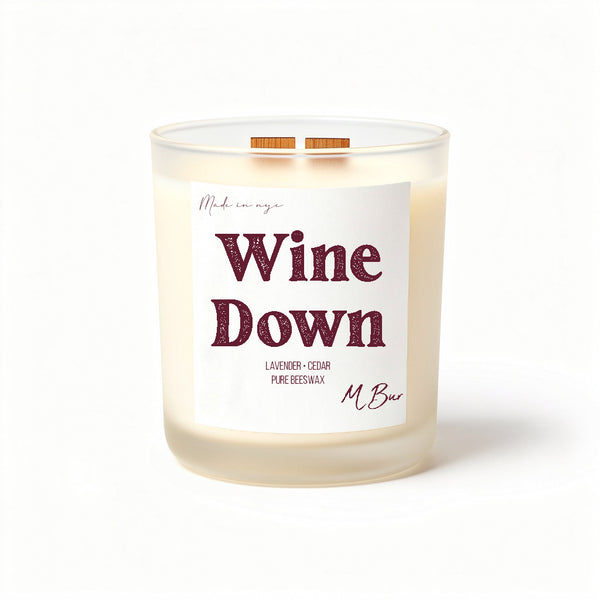
The good news is that the cleaner option also happens to burn longer, smell better, and produce less soot. If you want to start somewhere, the Do Not Disturb beeswax candle is a clean, low commitment entry point. The 20 hour size is $20 and gives you a real sense of what a properly formulated beeswax candle burns like compared to whatever is on your shelf right now.
Your air quality is worth a second look at your candle label. That is not fear. That is just paying attention.
Shop the full MBur beeswax candle collection
What buyers say:
Related reading:

