

Are Candles Bad for Eczema? What Dermatologists Want You to Know
Are Candles Bad for Eczema? What Dermatologists Want You to Know
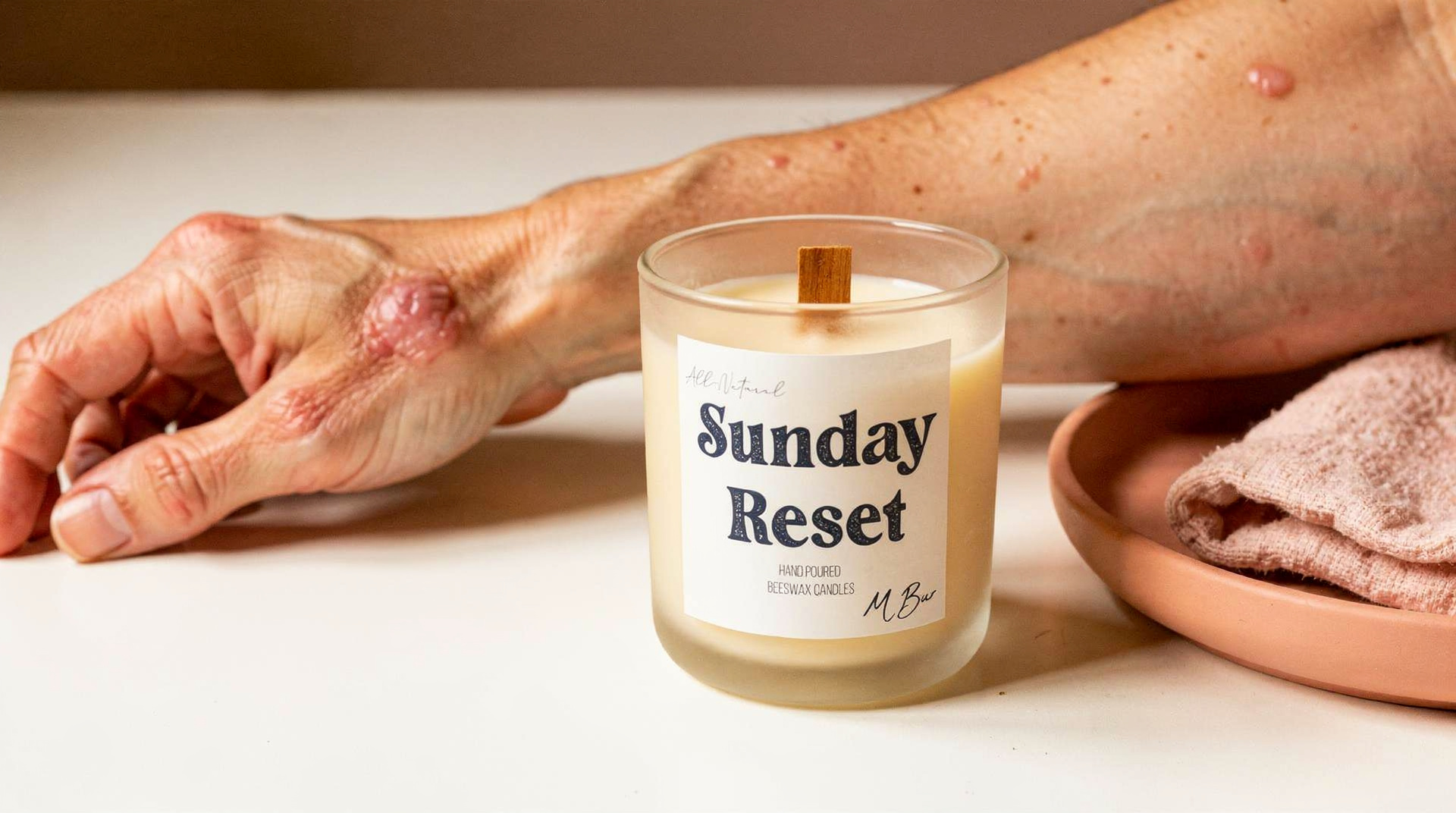
If your eczema flares after burning candles, the problem probably is not the candle itself. It is what the candle is made of.
Paraffin wax, toxic fragrance compounds, synthetic dyes, and metal core wicks are the real culprits. They release volatile organic compounds (VOCs) and known chemical irritants into the air you breathe and onto the skin that absorbs everything around it. For people with eczema, that chemical exposure is not a minor annoyance. It is a direct trigger.
This post breaks down exactly what is happening at the ingredient level, what to avoid, and how to keep candles in your life without sacrificing your skin. Because candles are not the enemy. The wrong candles are.
If you have ever wondered whether there is a truly hypoallergenic candle option for sensitivity sufferers, the answer is yes. But you need to know what to look for first.
Why Candles Can Trigger Eczema Flares
Eczema, or atopic dermatitis, is a condition where the skin barrier is compromised. That barrier, which in healthy skin keeps moisture in and irritants out, does not function properly for people with eczema. According to the National Eczema Association, this means environmental triggers like airborne chemicals, smoke, and toxic fragrance compounds can penetrate the skin more easily and set off an immune response.
Candles introduce those exact triggers into your immediate environment. Here is the science.
Paraffin Wax and VOC Emissions
Paraffin is petroleum waste, full stop. It is a byproduct of crude oil refining, and when it burns, it releases a measurable cocktail of VOCs including benzene, toluene, and formaldehyde. A widely cited study published in the journal Chemosphere confirmed that paraffin candles emit significantly higher levels of these compounds than plant or animal based waxes.
For eczema sufferers, benzene and formaldehyde are particularly problematic. Both are classified as known irritants by the Environmental Protection Agency and have been linked to skin sensitization, meaning repeated exposure can make your skin increasingly reactive over time, not less.
Toxic Fragrance and Phthalates
The phrase "fragrance" on a candle label can legally represent a blend of hundreds of undisclosed chemicals. Many of these include phthalates, a class of compounds used to make toxic scents last longer. Phthalates are endocrine disruptors and known skin sensitizers. The European Union has restricted several phthalates in consumer products for this reason.
For someone with eczema, burning a phthalate loaded candle for two hours is not relaxing. It is two hours of exposure to an aerosolized irritant that lands on your skin, gets into your airway, and can activate exactly the kind of inflammatory cascade your skin is already struggling to contain.
Synthetic Dyes and Chemical Colorants
Colored candles look great on a shelf. They are also frequently made with chemical dyes that, when burned, release additional compounds into the air. For sensitive skin, this is an unnecessary variable. There is no functional reason a candle needs to be bright red or blue. The color does nothing for the scent throw or burn quality. It only adds more chemistry to your air.
Soot Particles and Skin Contact
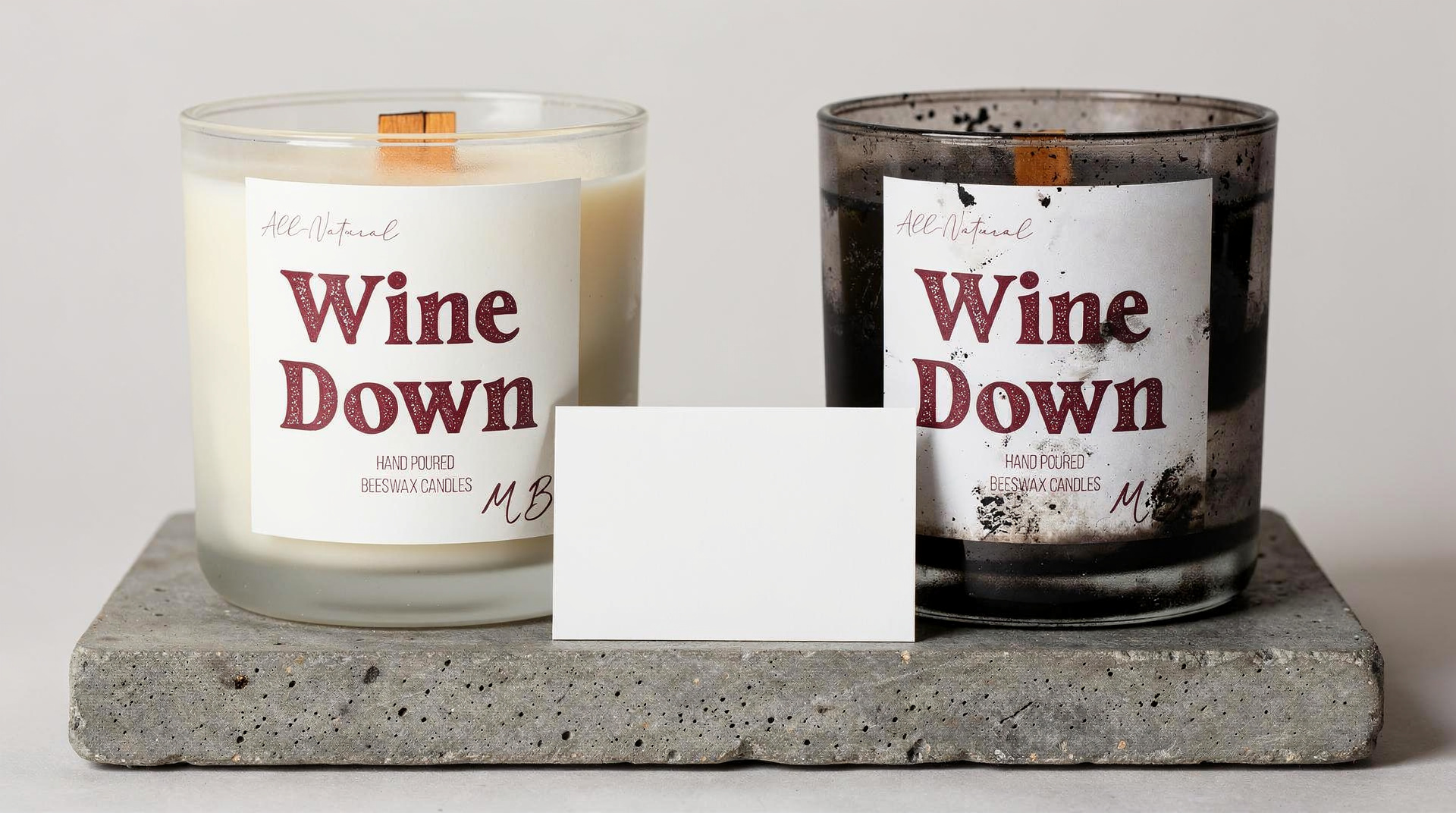
Paraffin candles produce visible black soot. Those fine particulate matter particles do not just stain your walls. They circulate in the air, settle on surfaces, and land on your skin. For compromised skin barriers, fine particulate exposure has been associated with increased inflammatory markers, according to research published in the Journal of Investigative Dermatology.
The short version: if your candle is leaving soot on the glass or the wall, it is also leaving it on you.
What Dermatologists Actually Recommend
Dermatologists who address environmental eczema triggers consistently point to the same categories of concern: airborne irritants, toxic fragrance compounds, and combustion byproducts. The American Academy of Dermatology lists "strong fragrances and chemical irritants" as common environmental eczema triggers, and several dermatologists have specifically called out paraffin candles as a source of airborne skin irritants.
The recommendation is not to eliminate candles entirely. It is to choose candles made from cleaner base materials with non toxic fragrance compounds and no unnecessary additives.
That means looking for three things:
- A single ingredient wax with no petroleum content
- Phthalate free fragrance (or no fragrance at all)
- No synthetic dyes or chemical colorants
The Beeswax Difference for Sensitive Skin
Beeswax is the oldest candle material in human history, documented in use as far back as 5,000 BCE. It is also the only candle wax that is naturally hypoallergenic and free of chemical processing. It is not extracted from petroleum. It is not hydrogenated like some soy waxes. It is a byproduct of honey production, secreted by bees, filtered, and used as is.
When beeswax burns, it does not release benzene or formaldehyde. Some studies suggest it may emit negative ions that help neutralize airborne particulates, though this should be understood as preliminary rather than clinically established. What is established is the absence of the harmful compounds that paraffin produces. For eczema sufferers, that absence matters enormously.
Beeswax also has the highest melting point of any candle wax, which means it burns slower and at a higher temperature, releasing less unburned particulate matter into the air.
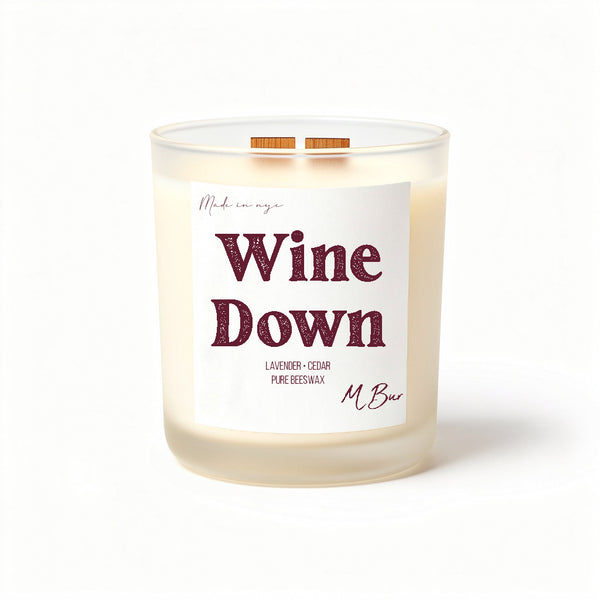
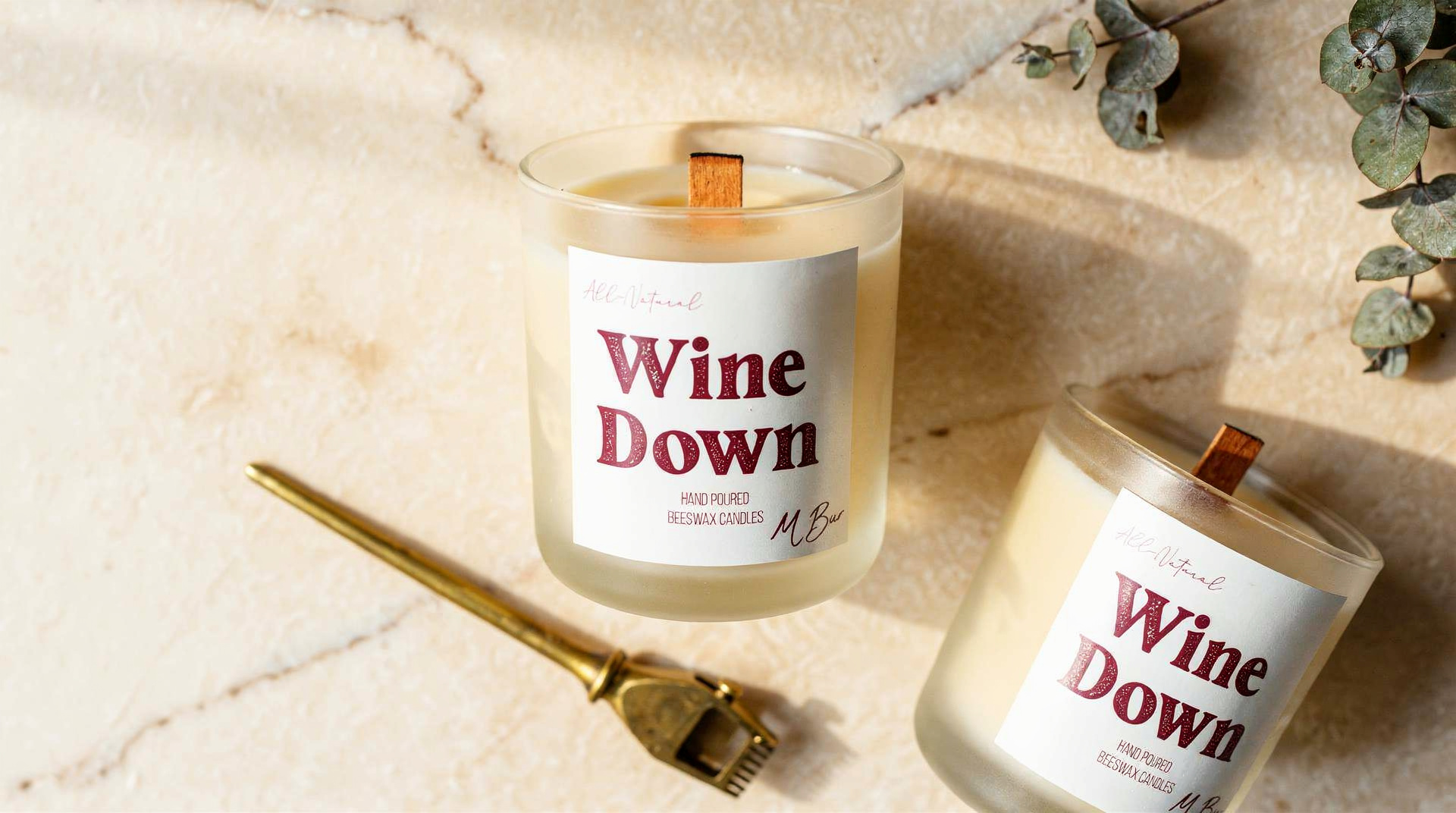
The Wine Down beeswax candle is a good example of what this looks like in practice: 100% beeswax, no chemical dyes, and phthalate free fragrance. Lavender, chamomile, sage, cedar, and sandalwood. It is made for exactly the kind of low irritant environment that sensitive skin needs.
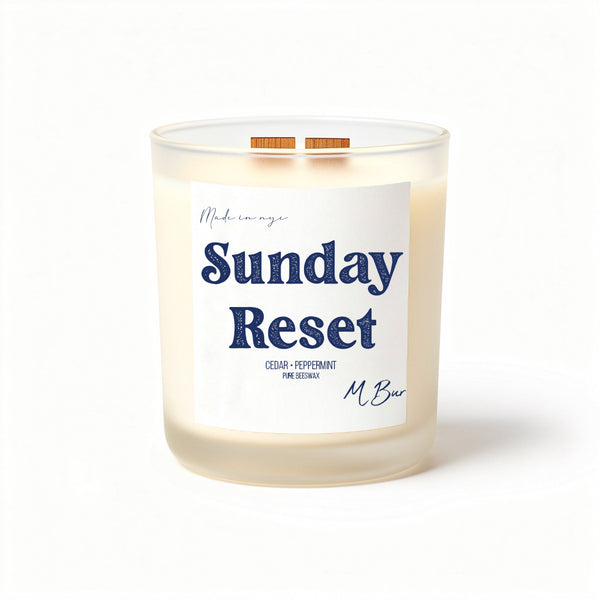
"A lot of other candles tend to give me headaches, but this one was a total game changer. I was able to enjoy the calming aroma without any discomfort. Highly recommend if you are sensitive to strong scents but still want something that smells amazing." Nicole D., Sunday Reset Candle
How to Choose a Candle That Will Not Trigger Your Eczema
Here is a practical checklist. Use it when buying any candle, not just from MBur.
Checklist: Eczema Safe Candle Criteria
- Wax base: 100% beeswax, or high purity coconut wax. Avoid paraffin entirely. Be cautious with soy, as it is frequently blended with paraffin and may use synthetic additives.
- Fragrance: Phthalate free, clearly labeled. If the label just says "fragrance" with no qualifier, that is a red flag.
- Dyes: None. A clean candle does not need to be purple or teal.
- Wick: Cotton or wood. Avoid metal core wicks, which can release trace heavy metals when burned.
- Burn test: No black soot on the glass after the first burn. Soot means incomplete combustion and airborne particulates.
- Burn environment: Ventilated room. Even the cleanest candle benefits from a cracked window.
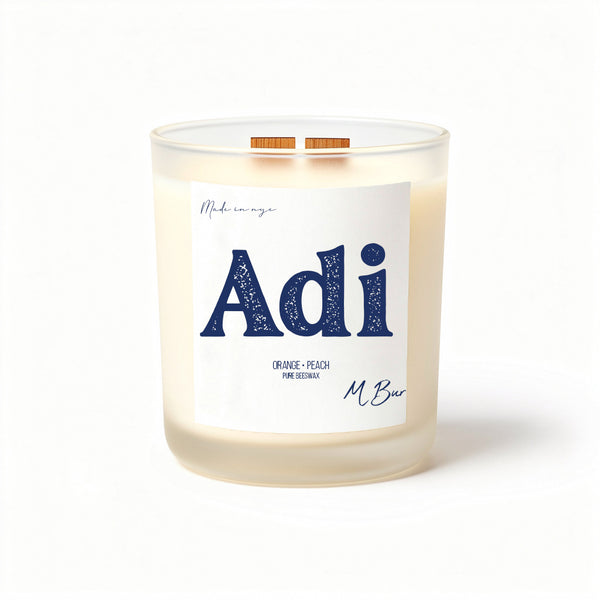
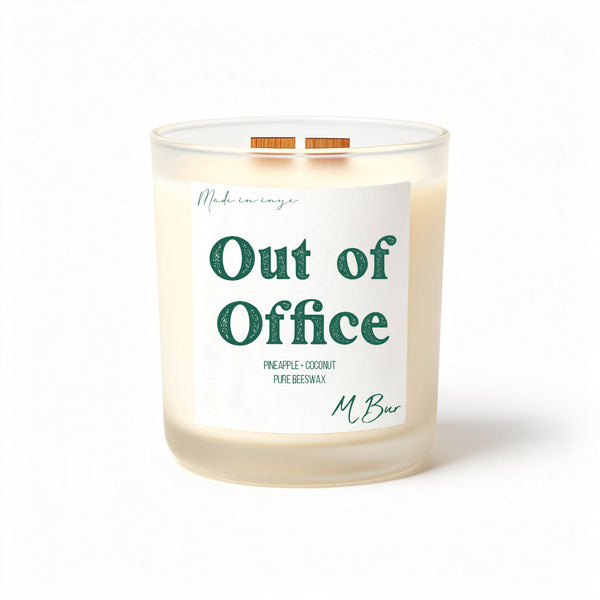
MBur candles check every one of these boxes. The wax is single ingredient 100% beeswax. The fragrance is phthalate free. There are no chemical dyes. The wicks are wooden, which produce the gentle crackling burn sound and the clean, even melt pool that prevents soot buildup.
The 20-hour size at $20 is the lowest-commitment way to test how a scent works for your sensitivity level before sizing up.
Practical Tips for Burning Candles Safely With Eczema
Even with the right candle, your environment and habits matter. Here is what to do.
Trim the Wick Before Every Burn
A wick longer than about a quarter inch produces a larger, less controlled flame that generates more heat and particulate output. Trim it every time. A small pair of scissors works fine.
Burn in a Ventilated Space
Air circulation is your friend. A slightly open window keeps combustion byproducts moving out of the room rather than accumulating. This is true even for the cleanest beeswax candles.
Limit Continuous Burn Time
Three to four hours maximum per session is a reasonable guideline. Longer burns overheat the wax pool, which can degrade fragrance compounds and increase the concentration of anything being released into the air.
Keep the Candle Away From Skin Directly
This sounds obvious, but people with eczema sometimes use candles near their face or in small bathrooms while bathing. Keep a reasonable distance. The goal is ambient scent and ambiance, not direct exposure.
Patch Test Your Environment
Burn a new candle for thirty minutes in a room you occupy, then pay attention to your skin over the next few hours. If you notice increased itching, redness, or dryness, that is useful information. Different fragrance notes affect different people differently, even within phthalate free formulations.
Frequently Asked Questions
Can any scented candle be safe for eczema?
Yes, but only if it meets the right criteria. Phthalate free fragrance, a clean wax base like 100% beeswax, no synthetic dyes, and a cotton or wood wick are the baseline requirements. Generic "scented candles" from mass market retailers typically fail on at least one of these. For a deeper breakdown, see our guide to what makes a candle non toxic.
Is beeswax actually hypoallergenic?
Beeswax is naturally hypoallergenic and free of the chemical processing that makes paraffin and some soy candles problematic. True beeswax allergies are extremely rare. The more common sensitivity reactions people attribute to "candles" are actually reactions to paraffin combustion byproducts or phthalate containing fragrance compounds, not the wax itself.
Do candles release chemicals that land on skin?
Yes. Airborne VOCs and soot particles from paraffin candles do settle on surfaces including skin. For people with a compromised skin barrier like eczema, this matters more than it would for someone with unaffected skin. The solution is switching to a lower emission wax and burning in a ventilated space.
What about unscented candles for eczema?
Unscented candles eliminate the fragrance variable, but if the base wax is paraffin, you are still getting VOC emissions from combustion. An unscented paraffin candle is cleaner than a scented one, but it is not actually clean. Unscented beeswax is the lowest irritant option available.
How long should I burn a candle if I have eczema?
Keep individual burn sessions to three or four hours maximum. Always burn in a ventilated room. Trim the wick before each use. These steps apply to any candle but matter most when your skin is already dealing with inflammation.
The Takeaway
Candles are not inherently bad for eczema. Paraffin candles loaded with phthalate based fragrance and synthetic dyes are bad for eczema. The distinction matters because it means you do not have to choose between having a nice smelling home and taking care of your skin.
The move is straightforward: switch to 100% beeswax, phthalate free fragrance, no dye, wood wick candles. MBur makes exactly that, handmade in Queens, NY, in scents that actually fill a room without the chemical payload that causes flares.
Start with the Wine Down beeswax candle at $20 for the 20 hour size and see how your skin responds. Your skin deserves better than petroleum byproducts. Give it beeswax.
Shop the full MBur beeswax candle collection
What buyers say:
Related reading:

