

How to Choose Candles That Won't Crack or Shatter: A Safety Guide
A cracked candle jar is almost never the glass being cheap. It is the glass losing a fight with its own heat. The flame heats one small spot fast. The rest of the jar stays cool. That gap in temperature is what splits it open.
This is called thermal shock, and it is the single biggest reason a jar cracks or shatters mid-burn. The good news is that most of it is preventable once you know what to look for. Clean-burning options like our pure beeswax candles sit at the safer end of this problem because the wax and wick are built to burn steady, not hot and wild.
Throwing out a cracked jar is the easy part. Stopping the next one from cracking is where most people go wrong, because they blame the wrong thing.

What thermal shock actually is
Glass expands when it heats up. It shrinks when it cools. That sounds harmless. It is not always.
When you light a candle, the flame throws heat straight at the top of the jar. The base and outer walls stay cool for a while. So the hot part wants to grow. The cool part refuses to move. The stress builds between them.
The flame near the wick can reach roughly 800 to 1,200°F. Standard soda-lime glass, the kind most jars are made of, only tolerates a temperature swing of about 40 to 50°C before it starts to stress. Push past that, and the glass gives.
You will hear a small tick or pop first. That is the warning. A hairline crack often follows. In a bad case, the base drops out or the wall splits while the flame is still lit.
Why thick glass does not save you
Most people reach for the heaviest jar they can find. Thick glass feels safe. It feels like a tank.
Thickness is not what protects the glass. What matters is the glass chemistry and how it was annealed. Annealing is a slow, controlled cooling step during manufacturing. It settles the internal stress so the glass can take heat cycles without failing.
A thick jar that was cooled too fast still cracks. A well-annealed jar handles the same flame with no drama. So the tank feeling is a bit of a trap.
"I absolutely love these candles! I instantly notice the difference in the air quality, in comparison to the Bath & Body scented candles... Awesome products. Totally addicted." Jason H.
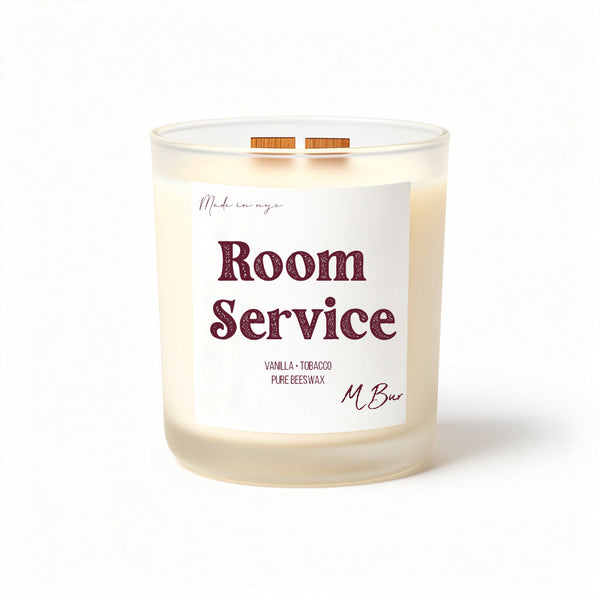
That kind of steady, clean burn is what you want in a jar. A candle that burns even and cool is far kinder to its glass. Our Room Service candle pairs a wooden wick with 100% beeswax, so the flame stays controlled instead of flaring. Room Service carries notes of Saffron, White tea leaves, Purple Peonies, Orchid, Tobacco, Vanilla, Almond milk, and Tonka Bean.

The real reason your jar keeps cracking
Here is the part people miss. The jar is often the victim, not the cause.
The number one cause of jar failure is a wick that is too big or off-center. An oversized wick makes a bigger flame. A bigger flame makes more heat. Too much heat, and even good glass gives up.
An off-center wick is just as bad. It pushes heat into one side of the jar. That one side gets dangerously hot while the rest stays cool. You just recreated thermal shock inside a jar that was fine to begin with.
This is why the candle itself matters more than the glass alone. A well-made candle has a wick sized to the vessel and set dead center. A cheap one guesses.
Wooden wicks burn cooler and steadier
Wooden wicks put out a wide, low, even flame. They do not tunnel or flare the way a badly cut cotton wick can. That steady flame spreads heat across the wax pool instead of blasting one hot point.
Beeswax helps too. It has the highest melting point of any candle wax. That means a slower, more controlled burn and less sudden heat against the glass.
How to choose crack-free candles
Now for the part that actually keeps your jars intact. Use this before you buy.
- Buy candles sold as candles. Never a repurposed mason jar, jam jar, or drinking glass. That glass was not made for direct, sustained flame heat.
- Check the wick placement. It should sit centered, not leaning toward a wall.
- Match wick size to jar size. A tiny jar with a huge wick is a crack waiting to happen.
- Pick a clean wax. Beeswax and quality blends burn cooler and more evenly than harsh, fast-burning options.
- Skip reused jars. Glass heated and cooled many times gets weak in ways you cannot see.
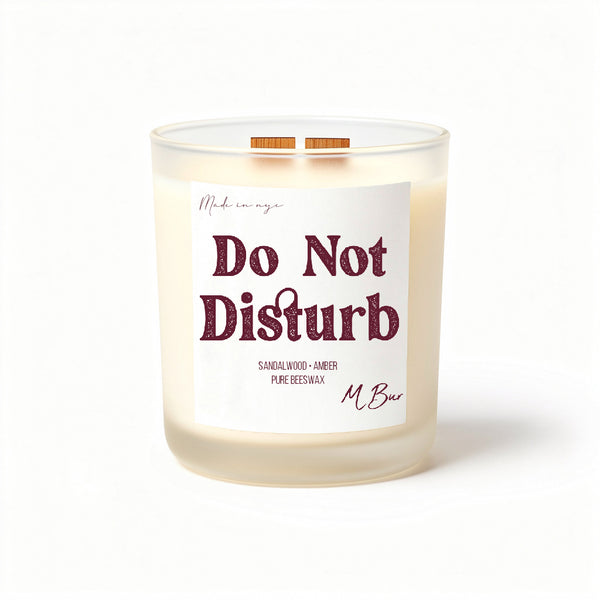
A candle built with these in mind will burn the way it should. Our Do Not Disturb candle is a good example, with a centered wooden wick in beeswax so the burn stays even from top to bottom. It carries bergamot and pear over a soft, quiet base.
Safe burn habits that protect the glass
Even the best jar needs help from you. Small habits stop most cracks.
Never burn a candle longer than four hours at a time. Past that, the whole jar heats up and the base gets risky. Let it cool, then relight later.
Stop burning when about a half inch of wax is left. That last layer of wax acts as a buffer between the flame and the glass base. Burn it dry, and heat hits the glass directly.
Keep candles on a flat, even surface so they stay upright. Space lit jars at least 10 inches apart so they do not heat each other. And keep them away from drafts, which make a flame flare and dance.
Never cool a hot jar fast. No cold water, no freezer. A sharp temperature drop cracks glass just as easily as a sharp rise. Let it come down to room temperature on its own.
But mine is in a heavy jar
You might be sure your jar is safe because it feels solid. Weight is not the test. A heavy jar cooled too fast at the factory still cracks under a hot, off-center flame.
And maybe you have burned candles for years with no problem. That is luck plus decent wicks, not proof the risk is gone. The moment a wick shifts or you burn past that half-inch buffer, the odds change fast.
The fix is boring but it works. Trim the wick to about a quarter inch before each burn. That keeps the flame small and steady, which keeps the glass calm.
Frequently asked questions
Why do candle jars crack while burning?
Thermal shock. The flame heats the top of the jar fast while the base stays cool, so the glass expands unevenly and stresses until it cracks. An oversized or off-center wick makes it far more likely. A clean, evenly burning candle like our Room Service candle lowers that risk with a centered wooden wick.
What glass is safest for candles?
Glass made and sold for candles, which is annealed to handle heat cycles. Skip drinking glasses and food jars entirely. Any candle from our beeswax candle collection comes in vessels meant for the job.
How long can I safely burn a candle in a glass jar?
Four hours at most, then let it cool fully before relighting. Longer burns heat the whole jar and raise the crack risk. Our Do Not Disturb candle is easy to burn in shorter evening sessions.
Can I reuse old jam jars or drinking glasses for candles?
No. That glass was never rated for direct flame heat, and reused glass weakens with each heat cycle in ways you cannot see. Buy a candle in a vessel built for burning from the candle collection instead.
What should I do if my jar cracks mid-burn?
Stop burning right away. Extinguish it safely, let it cool, and dispose of it. Do not relight a cracked jar.
The takeaway
A jar cracks because heat hits it unevenly, and the usual culprit is a bad wick, not weak glass. Buy candles made in real candle vessels, keep the wick centered and trimmed, and follow the four-hour and half-inch rules. Do that, and cracked jars mostly stop happening.
For a steady, cool burn in a jar built for it, start with our Room Service candle, our bestseller, loved by reviewers who say a single MBur candle fills a whole room and burns for exactly the hours promised. The 40-hour size is $32 and the 80-hour size is $65.
Shop the Room Service beeswax candle
Related reading

