

How to Avoid Wet Spots on Candles: A Clean Burn Guide
Those cloudy patches where the wax pulls away from the glass are not moisture, and they are not water damage. They are called wet spots, and almost every candle owner has stared at one wondering if they got a dud. The frustrating part is that the candle underneath usually burns just fine.
So the real question is not whether your candle is broken. It is why the wax keeps peeling off the glass in the first place, and whether the wax inside the jar is doing your air any favors while it does. Pure beeswax sits at the good end of both of those questions, which is why our 100% beeswax candle collection tends to keep a room smelling clean instead of masking it.

What a wet spot actually is
Wax is a shapeshifter. It expands when you heat it and shrinks as it cools. Candle making is that exact cycle. You melt the wax, pour it hot into a jar, then let it cool and set.
As the wax cools, it contracts. Tiny air bubbles rise, and some of the wax pulls back from the glass. Where it lets go, light bounces differently. That silvery, cloudy patch is what you are seeing.
Nothing in there is wet. There is no leak, no water, no mold. The name is a bit of a lie.
Why the obvious fix does not fix it
Most people assume a wet spot means a cheap candle. So they buy a pricier one and get wet spots anyway. Expensive candle lines show them too.
Here is the part that gets skipped. Wet spots are not a one-time event at the factory. Wax pulls away from glass any time the temperature changes. That means during curing, during shipping, and while the candle sits on your shelf.
A survey of candle owners in 2025 found that most complaints were about burn quality, with tunneling and soot at the top of the list. Wet spots barely register as a real problem in comparison. They are cosmetic. Tunneling and soot are the issues worth your attention.
The wax you choose sets the floor
Not all waxes cling to glass the same way. Some grip tight and hold. Some let go at the first cold snap.
Paraffin, the petroleum wax in most cheap candles, is prone to wet spots. Soy is worse in one specific way. Soy expands and contracts a lot with temperature swings, so it pulls off the glass often. It also gets a white, frosty surface that people mistake for damage.
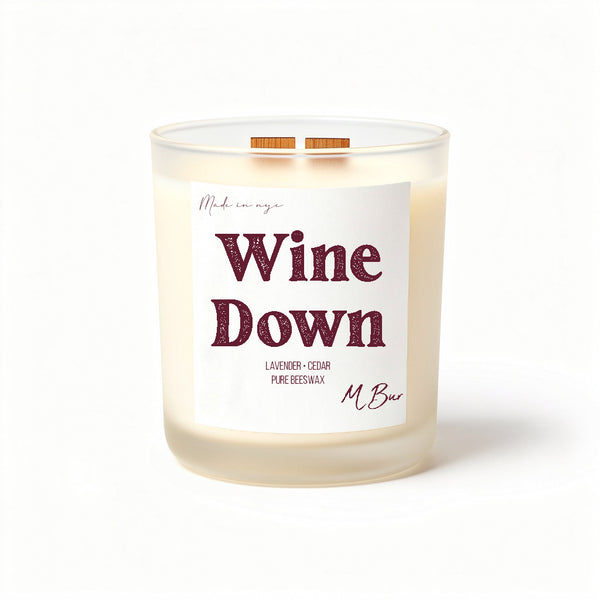
Beeswax behaves better. It has the highest melting point of any candle wax, so it is more stable when the room warms and cools. That stability is one reason our beeswax candles hold up so well. It is also why they burn the longest, up to 80 hours in the largest size.
The wax matters for more than looks. Paraffin releases benzene, toluene, and formaldehyde as it burns. Those are compounds you do not want floating around a closed room. Beeswax is a single natural ingredient with no petroleum in it at all.

How the three waxes stack up
| Wax | Glass adhesion | Burn quality | Clean burn |
|---|---|---|---|
| Paraffin | Prone to wet spots | More soot | Releases benzene, toluene, formaldehyde |
| Soy | Very prone, plus frosting | Better than paraffin | Cleaner, but often blended and scented with toxic fragrance |
| Beeswax (MBur) | More stable, holds well | Even, up to 80-hour burn | Single ingredient, no petroleum, phthalate-free fragrance |
How the pros stop wet spots
If you make candles yourself, most of the fix happens before the wax ever cools. The trick is slowing the cooling down so the wax settles evenly against the glass.
Keep the cooling room around 70 to 72 degrees. Colder rooms and drafts make wax shrink fast and pull away. Warm the empty jars first, to about 100 to 110 degrees, so the hot wax does not hit cold glass.
Give the jars room to breathe. Space them about 4 inches apart while they set. Touching jars trap heat on one side and cool unevenly.
Set them on a wire rack, not a solid counter. A solid surface pulls heat out the bottom too fast. Wash and fully dry each jar before you pour, since a damp jar makes the problem worse.
If a wet spot shows up on a candle you already own
You did not do anything wrong. A candle that traveled through a cold delivery truck or sat by a drafty window can develop wet spots weeks after it was made. Temperature is the trigger, and shipping is full of temperature swings.
The good news is you can often coax the wax back. Warm the outside of the jar gently. A hair dryer on low, held a few inches away, adds enough heat for the wax to soften and rebind to the glass.
"From the packaging to the burn of the candle, everything was top-notch! Candle burned slowly and was exactly the amount of hours the company said it would burn. I was able to enjoy it for days even though it was the smaller size." Portia Darby
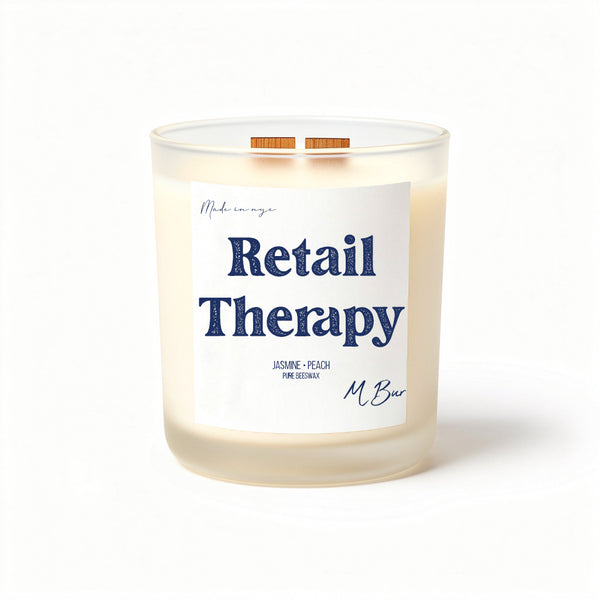
That kind of even, slow burn is what you actually want to chase. A cloudy patch on the glass does nothing to the flame. Our Retail Therapy beeswax candle carries notes of red currant, black currant, jasmine, peach, black tea, amber, anise, and tonka bean, and it burns clean whether or not the wax hugs every inch of the glass.

Burn quality is the thing worth fixing
Trim your wick to about a quarter inch before every burn. A trimmed wick can extend a candle's life by up to 25 percent and cut soot by about half. That single habit does more for your candle than any wet spot fix.
On the first burn, let the melt pool reach the glass wall. That usually takes 2 to 4 hours. Skip this and you get tunneling, where the flame sinks a hole down the middle and wastes the outer wax.
Keep the candle out of drafts while it burns. A steady flame burns even. A flickering, dancing flame throws soot and burns unevenly.
Why beeswax wins on both fronts
Wet spots come from unstable wax reacting to temperature. Beeswax is the most stable candle wax there is. Its high melting point means it shrugs off the swings that make cheaper waxes peel off the glass.
MBur candles are 100% beeswax, made by hand in New York City. No paraffin, no petroleum, no chemical dyes. The wooden wick gives a soft crackle and a steady, even flame.
Beeswax also burns cleaner than anything else you can put in a jar. Reviewers who get headaches from paraffin candles keep telling us they can burn ours all day with no discomfort. That is the payoff of a single natural ingredient.
Frequently asked questions
Do wet spots mean my candle is bad or expired?
No. Wet spots are cosmetic and do not affect how the candle burns. They come from wax contracting and pulling off the glass as the temperature changes. Every wax type shows them at some point, even pricey ones. A stable, high-melting-point wax like the beeswax in our candle collection holds to the glass better than most.
Do soy candles get wet spots more than beeswax?
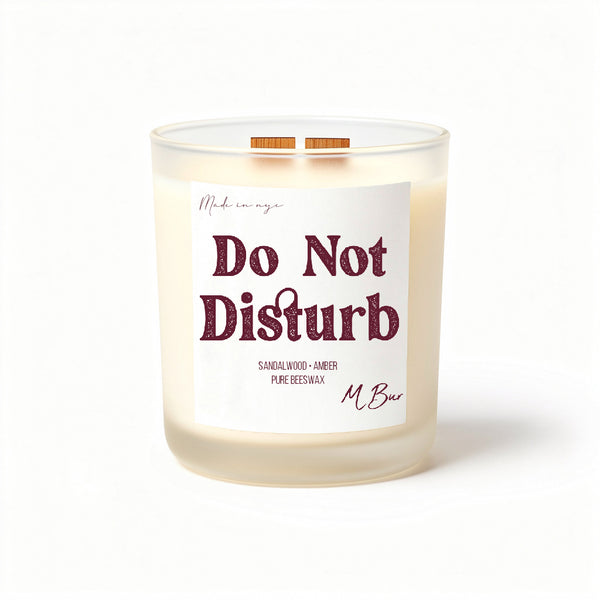
Yes. Soy expands and contracts a lot with temperature, so it pulls away from glass often and can frost on the surface. Beeswax is far more stable and clings better. That stability is one reason our Do Not Disturb candle keeps a clean look while it burns, with its notes of bergamot and pear.
Can I fix a wet spot after it appears?
Often, yes. Warm the outside of the glass gently with a hair dryer on low. The softened wax can rebind to the glass. It will not change how the candle burns either way, so treat it as a purely visual touch-up.
How long do beeswax candles burn?
It depends on size. Our smallest runs about 20 hours and the largest 80 hours, the longest of any candle wax thanks to beeswax's high melting point. You can see the full size and burn range across the beeswax candle collection.
The takeaway
Wet spots look like a flaw but rarely are one. They come from wax reacting to temperature, and the more stable your wax, the fewer you get. Beeswax is the most stable, longest-burning, and cleanest wax you can buy.
If you want a candle that clings to the glass and keeps your air clean, start with the Retail Therapy beeswax candle, loved by reviewers who say it fills a room without giving them a headache. Browse the full range and pick your scent.

