

Candles With No Lead or Zinc Wick Concerns: How to Choose Safe Wicks
The wick worry is real, and it is not paranoia. Metal-cored wicks were the reason your parents warned you about cheap candles. Lead wicks were the old villain, and they left a fine dust in the air as they burned. That dust settled on surfaces where children played.
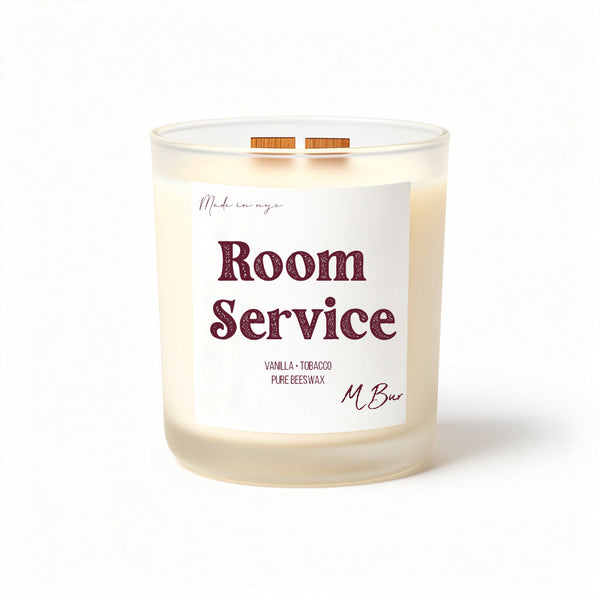
Here is the part most people miss. The lead problem got fixed years ago, so the thing you should actually check for is different now. A clean burn starts with the wick, which is exactly why our wooden-wick beeswax candles skip metal cores entirely and let the wax and wick do the work.
So if lead is mostly gone, why do so many people still sniff the wick before they buy? Because the obvious fix left a quieter problem behind, and almost nobody talks about it.

Your worry about lead wicks is dated, but not wrong
Let us give you credit first. You are right to care about what your wick is made of. For decades, some candles used a thin metal core to keep the wick standing straight in soft wax. That core was often lead.
Burning a lead wick released fine lead particles into the room. That matters most for kids. Lead exposure has been linked to real harm in young children, and that is not something to shrug off.
Then the rules changed. In 2003, the U.S. Consumer Product Safety Commission voted to ban the manufacture and sale of candles with lead-cored wicks. You can read the actual rule on the Federal Register. The industry had already been phasing lead out since the 1970s.
So the scary version of the wick problem is largely behind us in the U.S. market. Lead wicks are banned and mostly gone. If you buy from an established brand, you are very unlikely to get one.
That is the easy part. The lead ban solved the loudest danger. It did not solve the thing that replaced it.
The metal that quietly took lead's place
When lead left, wick makers still needed something to keep the wick rigid. Many switched to zinc. Zinc-cored wicks account for roughly 15 to 20 percent of U.S. candle production.
Zinc is far less toxic than lead at normal candle temperatures. It does not carry the same acute poisoning risk. That is genuinely good news.
But zinc wicks still release fine metal particles into your indoor air as they burn. Tin, another common core, has come under scrutiny in some research for adding to indoor particle load too. So the metal did not disappear. It just got quieter.
And here is the frustrating part. Most brands do not print the metal content on the label. A candle can look clean and still hide a metal core inside the wick.
This is why the old sniff test does not cut it anymore. The problem you are checking for changed, and the label rarely tells you.
How to actually tell what is inside a wick
You do not need a lab. You need two quick checks and a little skepticism about vague claims.
First, the bend test. Gently bend an unburned wick. If it springs back stiff and holds its shape, there is likely a metal core inside. A pure cotton wick flops over soft.
Second, the paper test for lead specifically. Rub the unburned wick on white paper. A light grey pencil-like mark points to a lead core. No mark means lead-free.
Watch out for soft marketing too. A "metal-free" tag is great, but many brands stay silent on the metal question entirely. Silence is not the same as safe.

What the safest wicks are actually made of
The cleanest wicks are simple. Non-cored cotton or hemp lead the pack. They burn cleanly, make little soot, and hold no metal at all.
Wooden wicks are the other strong choice. They give a wider, lower flame that builds a full melt pool faster. That helps stop tunneling, where wax gets left stuck to the sides.
The gold standard formulation is short and specific. A 100% beeswax candle with a wooden wick and non-toxic fragrance is about as clean as consumer candles get. That is the whole recipe worth chasing.
This is where our Do Not Disturb candle fits the checklist without asterisks. It uses a wooden wick, single-ingredient beeswax, and phthalate-free fragrance. Its notes run soft and calming, built around bergamot and pear, which is why people reach for it at night.
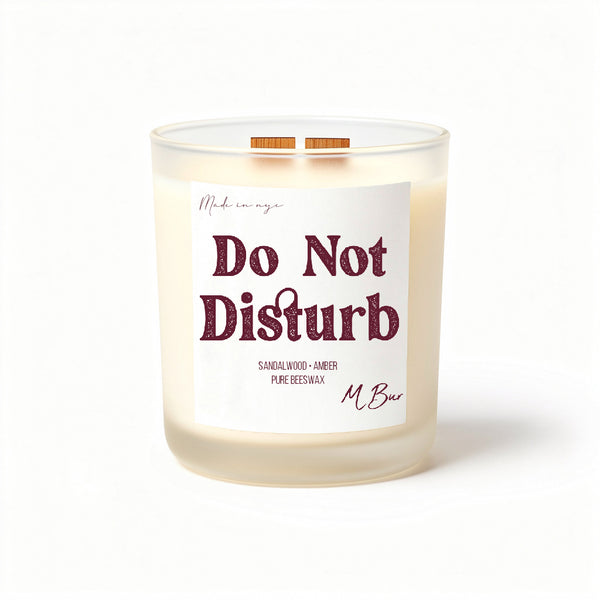
"I love the scent of this candle. It is lovely not overpowering. It's soothing fragrance more than covers my bedroom and bathroom. It is aromatherapy at its best. I also love getting fragrance samples with my order." Dawne Forrest
The 55-hour Do Not Disturb runs $37, and the 80-hour size is $65. That 80-hour burn is the longest of any candle wax, thanks to beeswax having the highest melting point.
A quick way to judge any candle in the store
A safe candle is honest about four things. The wax, the wick, the fragrance, and where it was made. If a brand answers all four without dodging, you are ahead of most shelves.
Run the label through this checklist:
- Wax: Look for 100% beeswax or a clearly stated single wax. Vague "wax blend" often hides paraffin.
- Wick: Look for "lead-free cotton wick," a wooden wick, or hemp. No metal core.
- Fragrance: Look for phthalate-free and paraben-free. Skip anything that will not say.
- Origin: Look for hand-poured and a real location. Ours are handmade in New York City.
MBur checks every box on that list. Single-ingredient beeswax, a wooden wick, phthalate-free fragrance, no chemical dyes, and a real address. That transparency is the point.
How you burn it matters too
Even a perfect wick needs a little care. Trim the wick to about a quarter inch before each burn. That controls carbon buildup and keeps the flame steady.
Keep single burns under about four hours. Past that, carbon collects and the wick starts to "mushroom," which pushes soot into the air. Let the first burn reach a full melt pool at the edge, which takes two to four hours.
Keep the candle away from curtains, bedding, and furniture. Stop using it when only about a quarter inch of wax is left. Good habits protect a good candle.
Frequently asked questions
Were lead wicks in candles actually banned in the US?
Yes. The U.S. Consumer Product Safety Commission voted to ban the sale and manufacture of candles with lead wicks in 2003, and the industry had been phasing lead out since the 1970s. Buying from a brand that states its wick material, like our beeswax candle collection, removes the guesswork.
Are zinc wicks safe to burn indoors?
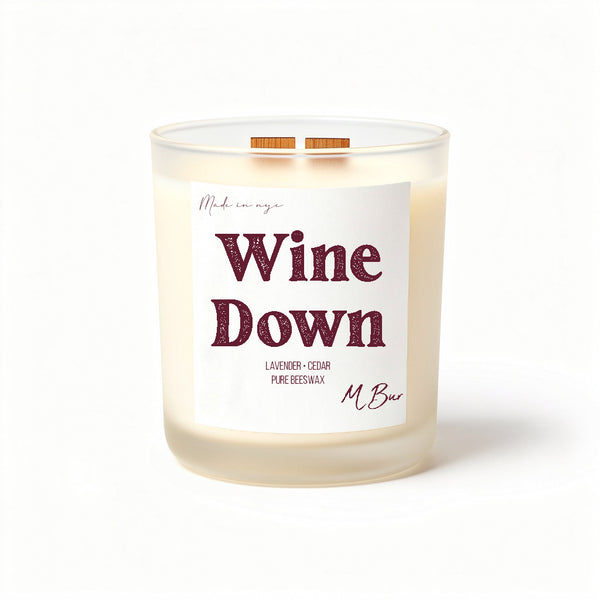
Zinc is far less toxic than lead at normal candle temperatures, but zinc-cored wicks still release fine metal particles into the air. If you want to skip metal cores entirely, a wooden wick like the one in our Wine Down candle avoids the question completely.
How can I tell if a candle has a metal core?
Gently bend the unburned wick. If it springs back rigid, it likely has a metal core, while a soft cotton or wooden wick will not. Every candle in our candle lineup uses a wooden wick with no metal core.
What should I look for on a candle label?
Look for "lead-free cotton wick" or an FSC-certified wooden wick, plus a stated wax and phthalate-free fragrance. Anything vague about those points is worth skipping.
Do imported candles still contain lead?
The 2003 ban applies, but enforcement on candles from unverified third-party sellers is imperfect. Buying from an established brand that discloses its wick material is the safest path.
The bottom line
Lead wicks are mostly gone, so the smarter check now is any metal core at all, plus the wax and fragrance around it. A 100% beeswax candle with a wooden wick and phthalate-free fragrance clears every concern at once. For a nightly wind-down that fits that recipe, the wooden-wick Do Not Disturb candle is an easy pick, and it starts at $20 for the 20-hour size.
MBur candles are hand-poured in New York City and loved by customers who say they finally stopped getting headaches from candles. Ready to burn something you do not have to sniff-test first? Shop the Do Not Disturb candle and light it tonight.
Related reading

