

Candles That Don't Have Uneven Melt Pools: How to Pick One That Burns Right
Half your wax is stuck to the glass, hard as a rock, while a skinny tunnel burns straight down the middle. The flame drops lower and lower until it drowns in its own wax. You paid good money for that candle, and you got maybe a third of it.
People blame themselves for this. They think they did something wrong. Sometimes they did, but the wax and the wick set the ceiling for how well any candle can ever burn, and a pure beeswax candle with the right wick gives you a huge head start. The rest is a few habits worth knowing.

Throwing out the tunneled candle is the easy part. The harder question is why it tunneled, because the answer decides whether the next one does the same thing.
What an uneven melt pool actually is
A melt pool is the ring of liquid wax that forms around the wick as a candle burns. On a good candle, that pool spreads all the way to the edge of the glass. That is a full melt pool.
An uneven one stops short. The middle melts. The sides stay solid. Burn it a few more times and the pattern locks in.
Wax has a memory. Once it cools and hardens in a certain shape, it wants to melt back to that same shape next time. So a bad first burn tends to repeat itself, deeper and deeper, until you have a tunnel.
The wick, which decides most of it before you even light it
The single biggest cause of a bad melt pool is the wick. Too small, and the flame cannot throw enough heat to reach the edge. Too big, and it burns hot and fast and messy.
This is where the wax type matters, because different waxes need different heat to melt. Beeswax has the highest melting point of any candle wax. That sounds like a problem for even burning, but it works in your favor when the maker pairs it with the right wick, since the whole thing burns slow and steady instead of racing down the center.
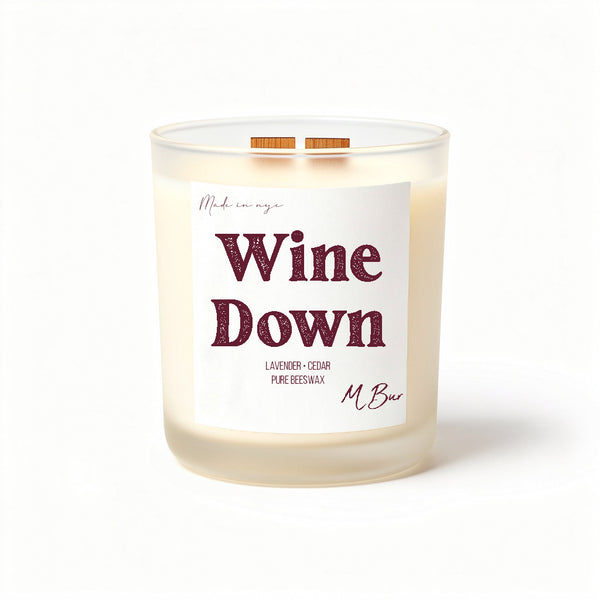
Cheap candles often use a wick that is too small for the jar to save on cost. That is why bargain candles tunnel so often. A brand that tests its wicks against its own wax is worth paying for, and that is exactly what you get with our 100% beeswax candle collection, where each scent is poured and burn-tested with a wooden wick sized to the glass.

The word doing the most work: your first burn
Here is the payoff. The most common reason a candle tunnels has nothing to do with the candle. It is the first burn.
The first time you light a candle, you have to let the melt pool reach the edge of the glass before you blow it out. That first shape becomes the memory. Get it right once, and the candle burns clean the whole way down.
The rule is simple. Burn about one to two hours per inch of the jar's width. A two inch jar needs roughly two hours on that first light. Watch for the wax to melt edge to edge, then you are safe to put it out.
Most people skip this. They light a candle for twenty minutes, blow it out, and doom it on day one. The wax remembers that tiny pool and never recovers.
What good looks like
A healthy melt pool is about an eighth to a quarter inch deep. It spreads to the glass. It does not need to happen in the first hour, and forcing it that fast with a huge wick actually shortens the candle's life.
Slow and even beats fast and hot. A candle that takes three or four hours to reach the edge on the first burn is often the better made one.
The two you can control with your own hands
Two things sit fully in your power. Wick length and where you put the candle.
Trim the wick to about a quarter inch before every burn. A long wick gives you a big flickery flame, soot, and an uneven burn. A quick trim keeps the flame steady and the melt pool balanced. Wooden wicks trim easily, you can often just snap off the charred bit.
Placement matters more than people think. Drafts from a window, a fan, or an AC vent push the flame to one side. That melts one edge and leaves the other cold. Keep the candle on a level surface in a room around 65 to 75 degrees, away from moving air.
Keep any single burn under four hours too. Longer than that overheats the glass and throws off the balance you worked for.
"From the packaging to the burn of the candle-everything was top-notch! Candle burned slowly and was exactly the amount of hours the company said it would burn. I was able to enjoy it for days even though it was the smaller size." Portia Darby
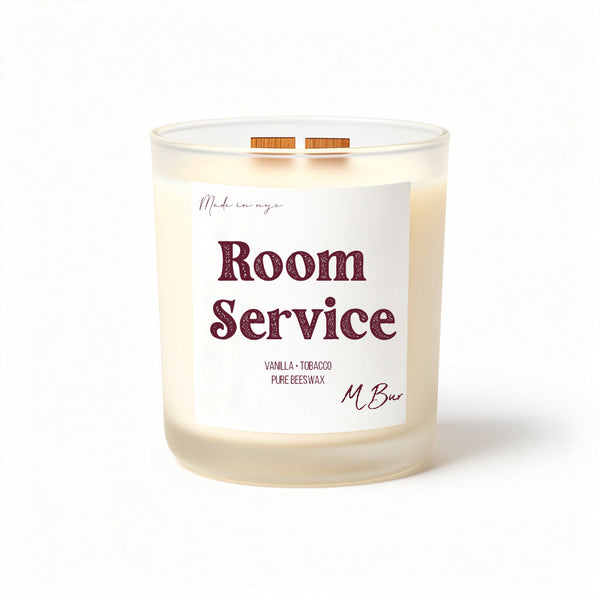
That slow, even, honest burn is what you want. It comes from good wax and a wick that fits. Our Room Service beeswax candle is the bestseller for a reason, with notes of saffron, white tea leaves, purple peonies, orchid, tobacco, vanilla, almond milk, and tonka bean. It starts at $32 for the 40 hour size and goes up to $65 for the 80 hour size.
What about a candle that already tunneled?
You can often save it. Line the inside rim of the jar with foil to trap heat, then burn it long enough to melt the whole top surface flat again. That resets the memory. After that, follow the first-burn rule and it should behave.
But mine is beeswax and still tunneled, you might say. Check the wick trim and the draft first. Even great wax burns badly next to an open window with a two inch wick.
Why beeswax gives you the cleanest shot at an even burn
Beeswax is a single ingredient. No paraffin, which is petroleum waste that throws soot. No chemical dyes that mess with how wax flows and cools. No toxic fragrance loaded with phthalates.
A cleaner wax burns more predictably. Less soot means less gunk on the wick, which means a steadier flame and a more even pool. That is the quiet reason clean candles tend to burn better, not just healthier.
MBur candles are 100% beeswax with wooden wicks, phthalate-free fragrance, and no dyes, handmade in New York City. Each one is burn-tested so the wick matches the glass.
Frequently asked questions
Why does my candle have an uneven melt pool?
Usually a wick that is too small, a draft blowing the flame sideways, or a short first burn that never reached the edge. Poor-quality wax makes it worse. A tested wooden wick candle from our beeswax collection removes the wax and wick from the list of suspects.
How long should I burn my candle the first time?
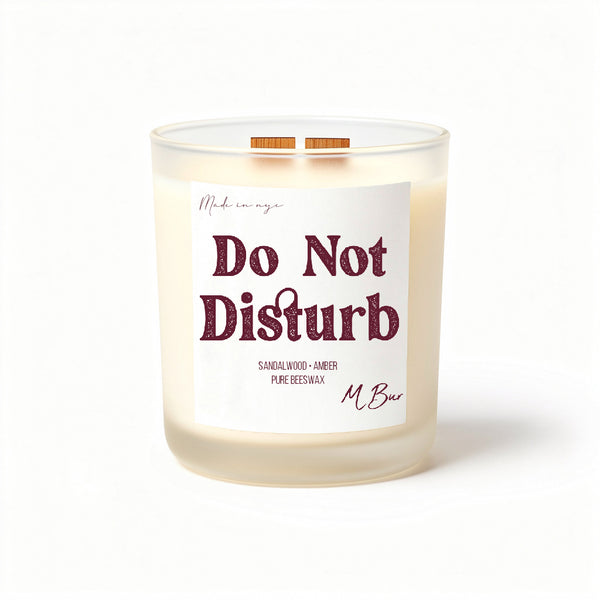
About one to two hours per inch of jar width, or until the top melts edge to edge. A wider jar like the 80 hour Do Not Disturb candle ($65) needs a longer first sitting to set a good memory.
What is tunneling and how do I stop it?
Tunneling is when only the center melts while the outer wax stays hard. Stop it by letting the very first burn reach the glass all the way around, then trimming the wick before each future light.
What is the ideal melt pool depth?
Aim for an eighth to a quarter inch deep. That spreads the scent without overheating the jar. Any of our beeswax candles hit this easily with a proper first burn.
Does the surface I put it on matter?
Yes. A tilted surface pulls the melted wax to one side. Always burn on a flat, level, stable spot.
The short version
An even melt pool comes down to two things you buy and two things you do. Buy good wax with a wick sized to the jar, then give it a full first burn and keep the wick trimmed. Do that and you get the whole candle, not a third of it.
For a candle that burns slow, clean, and even from the first light, start with the bestselling Room Service beeswax candle, loved across hundreds of five-star reviews. Light it, let that first pool reach the edge, and it will burn true all the way down.
Related reading

