

How to Remove the Smell of Fish Sauce from Your Home
Fish sauce smell hangs around for days because you are fighting the wrong thing. That funk on your counters, your dish towels, the inside of your sink drain, it does not come from the smell itself. It comes from what the smell is made of.
Fish sauce is loaded with volatile amines, mostly trimethylamine and ammonia. These are tiny compounds that turn to gas fast and cling to anything porous. They soak into wood, fabric, and plastic. So spraying air freshener over the top does nothing but add a second smell on top of the first. If you want the room to actually smell clean again, you neutralize the source first, then let a candle that burns clean, like our pure beeswax candle collection, keep the air fresh instead of masking it.

Why fish sauce clings harder than almost any other kitchen smell
Trimethylamine, the compound behind that pungent fishy bite, boils at around 37 degrees Fahrenheit. That is barely above freezing. So it flashes into a gas the second it warms up.
Once it is airborne, it drifts and settles. It lands on curtains, cabinet doors, and the little oil film left on your stovetop. Ammonia, its partner in crime, is already a gas at room temperature.
Both are alkaline, or basic. That word matters more than it sounds. Basic compounds get neutralized by acids, and that is the whole key to fixing this.
The mistake that makes it worse: heating the smell
Here is the trap. People try to boil the odor away, or they keep cooking the dish hoping the smell burns off. Heat does the opposite.
Warming fish sauce aerosolizes those amines and spreads them through the whole house on steam. You are not cooking the smell away. You are launching it into every room.
The same goes for boiling a pot of plain water. Without an active neutralizer in it, the steam just carries the odor around. So step one is not about adding anything. It is about ventilation.
Open everything and pull the air out
Cleaning pros say the same thing every time: move the air, fast. Open your windows. Turn your range hood exhaust to high before, during, and after you cook.
You want a cross breeze pulling the airborne amines out, not circulating them. This one step does more than any spray ever will.

Neutralize the source, in the right order
Now for the part that actually works. You fight alkaline amines with acid. Lemon juice and white vinegar are your two best friends here.
Start with any spill. Blot it, do not rub it. Rubbing pushes the oils deeper into wood grain or fabric pores.
- Blot the spill with paper towels to lift the excess oil off the surface.
- Cover it with baking soda and let it sit about 10 minutes, or until it looks wet from soaking up the oil. Then brush or vacuum it away.
- Wipe with an acid. Mix white vinegar with water, roughly one part vinegar to two parts water, or use fresh lemon juice. This breaks down what is left.
For the air itself, simmer a small pot of water with white vinegar mixed in, about one part vinegar to two or three parts water. The acidic vapor meets the floating amines and neutralizes them. Citrus peels and a few cloves in the pot help too.
And do not skip the hidden spots. Your sink drain and garbage disposal trap microscopic fish sauce residue that keeps releasing smell for days. Run some baking soda and hot water through it.
Where a clean-burning candle actually fits in
Here is the honest part. A candle does not break down amines. So lighting one before you clean is a waste.
But once the source is gone, the air is neutral and ready for a fresh scent. This is where the type of candle you use matters a lot. A paraffin candle adds petroleum soot to a kitchen you just cleaned. Many candles also use toxic fragrances loaded with phthalates, which is the last thing you want floating over food.
A pure beeswax candle burns clean with no paraffin soot and uses phthalate-free fragrance. It keeps the room smelling fresh instead of layering chemicals over your hard work. For a kitchen, our Slice of Life candle pulls in spearmint, eucalyptus, tomato leaf, anise, and mint. That cool green snap is the opposite of fishy funk.
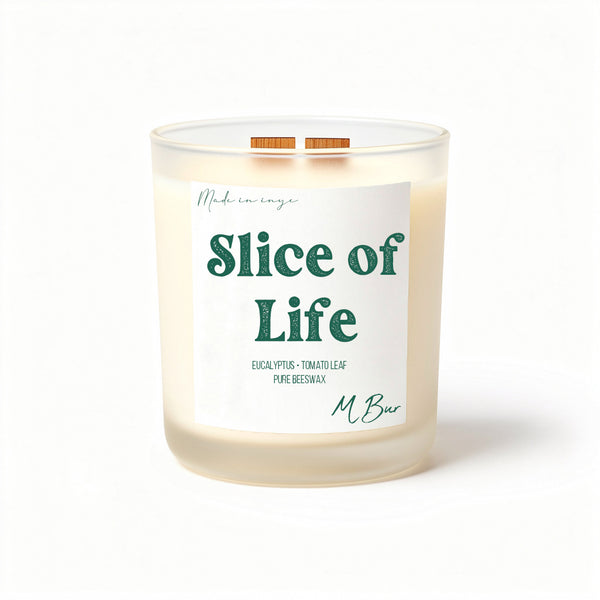
"I love this candle. I burn it everyday and my whole place smells AMAZING." Jessica H.
If you want something warmer and more bakery-adjacent for the kitchen, People Watching leans into orange zest, vanilla, and baking spice, which reads cozy over a stove that just got scrubbed.
Getting it out of the stuff that soaked it up
The air clears fast. The fabric and plastic are what hold on.
Cutting boards and plastic containers
Make a paste of baking soda and water. Scrub it in, let it sit about 15 minutes, then wash with hot soapy water.
Clothing and dish towels
Pre-treat with a little liquid dish soap first. Dish soap cuts oil better than laundry detergent alone. Then wash in the warmest water the fabric can safely take.
Wood floors and counters
Stick with the blot, baking soda, then acid wipe routine. Never soak raw wood in water. A light vinegar-water wipe is enough to neutralize without warping the surface.
Why our candles keep a clean kitchen clean
MBur candles are 100% beeswax, a single-ingredient wax with no blend and no paraffin. Beeswax has the highest melting point of any candle wax, so it burns slow and clean.
The wooden wicks crackle softly and burn evenly. There are no chemical dyes and no toxic fragrance. For a kitchen where you cook real food, that clean burn is the point. The 40 hour size runs $32 and the 80 hour size is $65.
Frequently asked questions
Why does fish sauce leave such a long-lasting smell in the house?
Fish sauce is packed with concentrated nitrogen compounds and volatile amines. They go airborne easily and soak into porous surfaces like wood and fabric. Once the source is cleaned, a clean-burning option from our beeswax candle collection keeps the air fresh without adding soot.
Does boiling vinegar help clear the air of fish sauce smells?
Yes. Simmering water with white vinegar releases acidic vapor that neutralizes the floating alkaline amines. It works far better than boiling plain water, which just spreads the smell on steam.
How do I get fish sauce smell out of plastic containers or cutting boards?
Make a baking soda and water paste, scrub it in, and let it sit about 15 minutes. Then wash with hot soapy water. Once your kitchen is clean, a fresh green scent like our Slice of Life candle helps reset the whole room.
Can I just light a candle instead of cleaning?
No. A candle does not chemically break down amines, so lighting one before you clean only layers one smell over another. Clean the source first, then let a clean candle keep it fresh.
Will a scented candle add chemicals over my food?
Many candles use paraffin and toxic fragrances with phthalates, which you do not want near food. A pure beeswax candle with phthalate-free fragrance avoids that entirely.
The takeaway
Fish sauce smell is an alkaline problem, so you beat it with acid and absorbers, never with heat or a spray. Clean the source with baking soda and vinegar, ventilate hard, then keep the room fresh. For a kitchen that smells clean again, our Slice of Life candle ($32 for the 40 hour size) is the pick, backed by glowing reviews from people who burn MBur every day.
Clean the source, then light one and let your kitchen breathe again.
- Discover the Secret to Soot-Free Candles: Say Goodbye to Mess and Hello to Clean Burn
- Why Paraffin-Free Candles Are a Must-Have for a Healthier Home
- Discover the Benefits of Non-Toxic Candle Fragrance Oils: Enhancing Your Space without Harmful Chemicals
- What Makes a Candle Non-Toxic? How to Spot the Real Thing

