

Are Candles Safe Around a Preemie or NICU Graduate? A Parent's Guide
Your baby is finally home from the NICU. The monitors are gone, the hospital smell is fading, and you want your house to feel like a home again. Then someone lights a candle in the living room and the question hits you mid inhale: is this safe for my baby's lungs?
It is a fair question, and the answer depends almost entirely on what that candle is made of. Preemies and NICU graduates often come home with developing or compromised respiratory systems. Some have Bronchopulmonary Dysplasia (BPD). Many simply have smaller airways that are still catching up. What matters is that these babies breathe faster and take in more air relative to their body weight than adults do, which means whatever is floating in your indoor air reaches them in higher concentrations.
This guide breaks down exactly which candle ingredients pose real risks, which ones are safer, and how to make informed choices so you can enjoy a lit candle at home without second guessing every breath your baby takes. If you want to skip ahead to the cleanest burning options available, browse MBur's full beeswax candle collection, which checks every box on the safety list we are about to walk through.
Why Preemies Are More Vulnerable to Indoor Air Pollutants
A full term newborn already breathes roughly twice as fast as an adult. A preemie born weeks early may breathe even faster, and their lung tissue is less mature. The EPA notes that indoor air quality is a modifiable risk factor for respiratory health, and infants sit squarely in the most vulnerable category.
Every burning candle produces some degree of particulate matter, soot, and combustion byproducts. For a healthy adult, these trace amounts are negligible. For a baby whose lungs are still developing alveoli, even small concentrations of airborne irritants can trigger coughing, wheezing, or increased mucus production.
The risk is real, but it is also specific. The type of wax, the wick material, and the fragrance ingredients determine how much pollution a candle actually puts into your air. A paraffin candle loaded with toxic fragrance and a metal core wick is a fundamentally different product than a pure beeswax candle with a wooden wick and phthalate free fragrance. Lumping them together is like comparing tap water to soda because they are both liquids.

The Three Ingredients That Actually Cause Problems
1. Paraffin Wax
Paraffin is a petroleum byproduct. When it burns, it can release volatile organic compounds (VOCs) including benzene, toluene, and formaldehyde. These are known respiratory irritants, and benzene is classified as a carcinogen. Research has shown that paraffin candles produce measurably more soot and chemical emissions than plant based or beeswax alternatives.
Most candles on store shelves, including many that market themselves as "natural" or "clean," use paraffin as their primary wax or blend it in to reduce cost. If the label says "wax blend" without specifying the ingredients, paraffin is almost certainly part of the mix.
2. Toxic Fragrance Oils
The word "fragrance" on a candle label is a catch all term that can represent hundreds of undisclosed chemicals. Many conventional fragrance oils contain phthalates, parabens, and other compounds that act as endocrine disruptors or respiratory irritants. Because fragrance formulations are considered proprietary, manufacturers are not required to list individual ingredients.
For a preemie or NICU graduate, this is the biggest hidden risk. A candle can be soy or even beeswax and still contain toxic fragrance oils that release irritating compounds when heated. The wax matters, but so does everything else in the jar.
3. Metal Core Wicks
Some candles use wicks with a metal core (zinc, tin, or in older products, lead) to keep the wick upright. When these burn, they can release heavy metal particles into the air. Lead core wicks were banned in the U.S. in 2003, but zinc and tin core wicks are still common and still produce metallic particulate matter that you do not want anywhere near developing lungs.
What "Natural" and "Clean" Actually Mean (Hint: Not Much)
There is no regulatory standard for calling a candle "natural" or "clean." A candle made with 51% soy and 49% paraffin can legally be marketed as a "soy candle." A candle with toxic fragrance oils can still say "made with essential oils" if even a trace amount is included.
The only way to know what you are burning is to look at the actual ingredient list. If a candle does not disclose its wax type, wick material, and fragrance composition, treat that as a red flag. Transparency is the baseline, and any brand that cannot tell you exactly what is in their product is not worth the risk around a medically fragile baby.

Candle Wax Comparison: What Burns Cleanest
| Factor | Paraffin | Soy | Beeswax |
|---|---|---|---|
| Source | Petroleum byproduct | Soybean oil (often blended with paraffin) | Byproduct of honey production |
| VOC Emissions | Higher (benzene, toluene, formaldehyde) | Lower, but varies by blend | Lowest of all natural waxes |
| Soot Production | Significant black soot | Moderate | Minimal to none |
| Burn Time | Shortest | Moderate | Longest (highest melting point) |
| Chemical Processing | Heavily processed | Chemically hydrogenated | Minimally processed |
| Hypoallergenic | No | No | Yes, naturally |
Beeswax consistently comes out on top for clean burning. It produces the least soot, emits the fewest VOCs, and requires the least chemical processing. Some studies suggest beeswax candles may even release negative ions that help settle airborne particulates, though this should be taken as a potential bonus rather than a guaranteed air purifier.
A Checklist for Choosing a Safe Candle When You Have a Preemie at Home
Before you buy any candle, run it through this list:
- Wax: 100% beeswax or 100% soy. No blends, no paraffin.
- Wick: Unbleached cotton or untreated wood. No metal cores.
- Fragrance: Phthalate free, non toxic fragrance oils with full ingredient disclosure. Or unscented.
- Dyes: None. Chemical dyes add unnecessary compounds to your air.
- Transparency: The brand lists every ingredient on the label or website. No vague "proprietary blend" language.
MBur's Do Not Disturb candle, for example, is 100% pure beeswax (single ingredient, no blend), burns with a wooden wick (no metal), uses phthalate free fragrance, and contains zero chemical dyes. Its notes of bergamot, pear, white tea, vanilla, and sandalwood come through without the chemical payload that makes conventional candles risky. It is also naturally hypoallergenic, which matters when your baby's immune system is still calibrating.
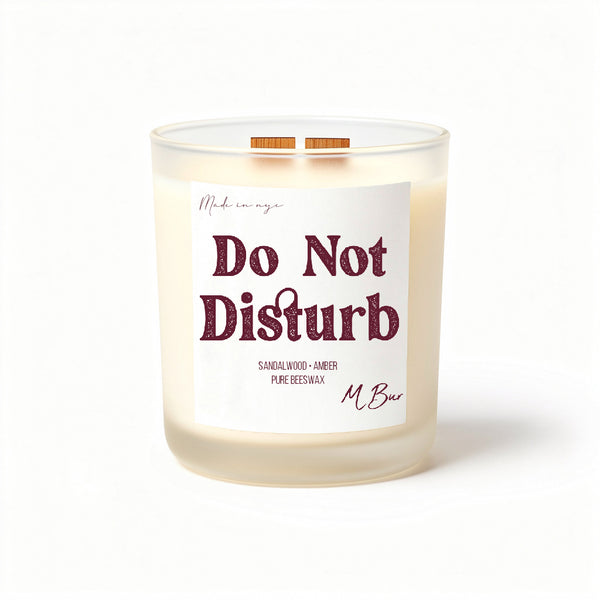
"I love the scent of this candle. It is lovely not overpowering. It's soothing fragrance more than covers my bedroom and bathroom. It is aromatherapy at its best." Dawne Forrest, Do Not Disturb customer
Practical Rules for Burning Candles Safely Around Your Baby
Even the cleanest candle in the world requires smart usage. Pediatric experts and respiratory therapists generally agree on these guidelines:
Never burn a candle in the nursery. Full stop. Even a beeswax candle with perfect ingredients should stay out of the room where your baby sleeps. Enjoy it in the living room, kitchen, or your own bedroom.
Ventilate. Crack a window or run a fan in the room where the candle is burning. Good airflow disperses any particulate matter before it can accumulate.
Trim the wick before every burn. An untrimmed wick produces a larger flame, more heat, and more soot. Trim to about 1/4 inch before lighting.
Limit burn sessions. Burning a candle for hours straight increases pollutant concentration. Keep sessions to two or three hours at a time, then let the room air out.
Consider a HEPA air purifier. Recent guidance from indoor air quality experts emphasizes HEPA purifiers as one of the most effective ways to reduce airborne particulates in a home with a vulnerable infant. A purifier does not replace smart candle choices, but it adds an extra layer of protection.
Check the rest of your air, too. Parents often fixate on candles while overlooking plug in air fresheners, aerosol cleaning sprays, and scented laundry products, all of which can contain the same toxic fragrance chemicals. Audit everything that adds scent to your home, not just the candle on the shelf.

Why Beeswax Is the Best Fit for Families with Preemies
Beeswax is the oldest candle material humans have used, dating back roughly 5,000 years. It is a single ingredient wax, a natural byproduct of honey production, and it requires no chemical processing or hydrogenation. It has the highest melting point of any candle wax, which is why beeswax candles burn significantly longer than soy or paraffin.
For a NICU family, the practical benefits stack up. Fewer irritants in the air. Minimal soot (no black residue on your walls or ceilings). A longer burn time means fewer candles purchased and fewer opportunities for exposure. And beeswax emits light on a spectrum closest to natural sunlight, which creates a warm glow without the chemical cocktail.
MBur's candles are handmade in Manhattan, New York, using 100% pure beeswax, wooden wicks, phthalate free fragrance, and no chemical dyes. The Wine Down candle, with its notes of lavender, chamomile, sage, rosemary, camphor, cedar, and sandalwood, is another option parents reach for. Its gentle herbal scent fills a room without the aggressive throw that cheaper candles rely on.
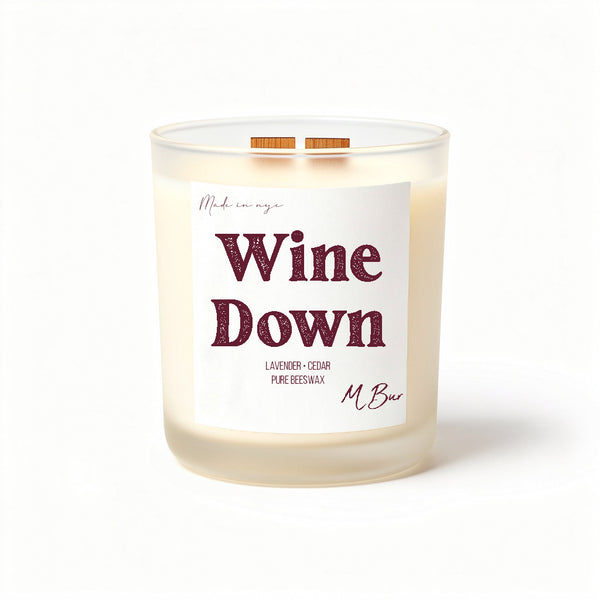
"Absolutely loved the Wine Down candle! The scent is so light and clean, not overpowering at all, which is exactly what I look for. A lot of other candles tend to give me headaches, but this one was a total game changer. I was able to enjoy the calming aroma without any discomfort." Nicole D.
Frequently Asked Questions
Can I burn a candle in a different room from my preemie?
Yes, with caveats. Pollutants do circulate through a home via HVAC systems and open doorways, but concentration drops significantly with distance and ventilation. Burn a clean candle (100% beeswax or soy, non toxic fragrance, no metal wick) in a well ventilated room that is not the nursery. Keep the nursery door closed and consider running a HEPA purifier near the baby. If your child has diagnosed BPD or chronic respiratory issues, talk to your pediatrician before introducing any scented product.
Are soy candles safe enough, or do I need beeswax?
Pure soy is a reasonable alternative to paraffin, but many "soy" candles are actually soy paraffin blends. Soy also requires chemical hydrogenation during processing. Beeswax is the cleanest option because it is a single ingredient wax with no chemical processing, produces the least soot, and is naturally hypoallergenic. You can explore MBur's beeswax candle collection to see the full range of scents available in pure beeswax.
How long do beeswax candles actually burn?
Beeswax has the highest melting point of any candle wax, which translates to the longest burn time. MBur's largest size burns for up to 80 hours. That is roughly double what you would get from a paraffin candle of the same size, which means less frequent burning sessions and less cumulative exposure for your baby.
Is a candle warmer safer than lighting the wick?
A warmer eliminates the open flame and reduces soot, which is a genuine improvement. But it still heats the fragrance oils and releases them into the air. If those fragrance oils contain phthalates or other irritants, the warmer does not solve the core problem. The safest approach is to use a candle with non toxic, phthalate free fragrance, whether you light it or warm it.
What about essential oil candles?
"Essential oil" on a label does not automatically mean safe. Any combustion process produces particulates. And many candles marketed as "essential oil candles" also contain undisclosed fragrance compounds. The wax type and wick material matter just as much as the fragrance source. Apply the same five point checklist regardless of how the candle is marketed.
The Bottom Line
Candles are not inherently dangerous for your preemie. Specific ingredients are. Paraffin wax, toxic fragrance oils, and metal core wicks are the actual culprits, and they are avoidable. Choose a candle made with 100% beeswax, a cotton or wooden wick, phthalate free fragrance, and no chemical dyes. Burn it in a ventilated room away from the nursery. Trim the wick. Keep sessions short. And always follow your pediatrician's guidance for your child's specific situation.
MBur's pure beeswax candles meet every criterion on the safe candle checklist, with wooden wicks, non toxic fragrance, zero dyes, and burn times up to 80 hours in the largest size (starting at $20 for the 20 hour size). Browse the full collection and pick the scent that makes your home feel like yours again.
Related Reading

