

Why Beeswax Candles Burn Longer: The Science of Longevity
Beeswax has been lighting rooms for over 5,000 years, and here is the part most people never hear: it outlasts nearly every wax invented since. A pure beeswax candle burns roughly 30% longer than a soy or paraffin candle of the same size, and in some cases two to three times longer. That is not marketing spin. It comes down to chemistry, specifically the highest melting point of any common candle wax.
So why does one wax hold a flame so much longer than another? And how much of the "long lasting candle" claim on a label is actually true? Let's get into the science, because once you understand what is happening in the melt pool, you will never look at a candle the same way. If you want to see what a genuinely slow burn looks like, our full beeswax candle collection is a good place to start.
The one number that decides everything: melting point
Every wax has a melting point, the temperature at which it turns from solid to liquid. This single number does more to determine burn time than almost anything else.
Beeswax has the highest melting point of any common candle wax, sitting around 62 to 65°C (roughly 144 to 149°F). Soy melts lower, somewhere in the 49 to 68°C range depending on the blend. Some coconut blends melt as low as 39°C. Paraffin varies but generally softens well below beeswax.
Here is why that matters. A higher melting point means the wax needs more heat energy to liquefy and then vaporize before it can burn. More energy per gram equals a slower burn. The flame has to work harder to consume the same amount of fuel, so the candle simply lasts longer.

Dense wax, slow burn
Melting point is only half the story. The other half is what beeswax is made of at the molecular level.
Worker bees secrete wax from glands on their abdomen to build honeycomb. That wax is dominated by long chain monoesters and diesters, big, heavy hydrocarbon molecules that pack together tightly. Recent material science breakdowns of beeswax point out that roughly 71% of its structure is these long chain esters, engineered by evolution to stay solid at hive temperatures around 35°C.
Those dense, tangled molecules do not want to break apart easily. It takes real thermal energy to loosen them enough to vaporize and feed the flame. Compare that to lighter, shorter chain waxes that give up their fuel faster, and you get the burn time gap.
The bees, in other words, already solved the durability problem thousands of years before candle makers came along. No chemical hardeners required.
What the numbers actually look like
Beeswax generally yields about 8 to 10 hours of burn time per ounce of wax. That is a useful rule of thumb, though shape and diameter shift things around. Here is roughly what you can expect from pure beeswax:
| Format | Approx. weight | Approx. burn time |
|---|---|---|
| Tealight | ~0.5 oz | 4 to 6 hours |
| Standard taper | ~0.8 oz | 8 to 12 hours |
| Container candle | ~6 oz | 30 to 50 hours |
| Large container | ~12 oz | up to 80 hours |
| Pillar | ~10.5 oz | 50 to 70 hours |
For context, a standard 9 inch paraffin taper often burns out in 3 to 4 hours. A beeswax taper of similar size can go 8 to 12. That gap is the melting point at work.
Diameter matters more than most people realize. A wide pillar burns slower and more efficiently than a narrow taper of the same weight, because the heat spreads across a bigger melt pool instead of racing down a thin column.
Where the "long lasting" label goes wrong
Here is the catch that trips up a lot of shoppers. The 30% longevity boost only holds if the wax is actually pure beeswax.
Plenty of candles labeled "beeswax" are really beeswax blends cut with paraffin or soy to lower cost. Those hidden additives drag the melting point down and erase most of the burn time advantage. You pay for beeswax and get a fraction of what it should deliver.
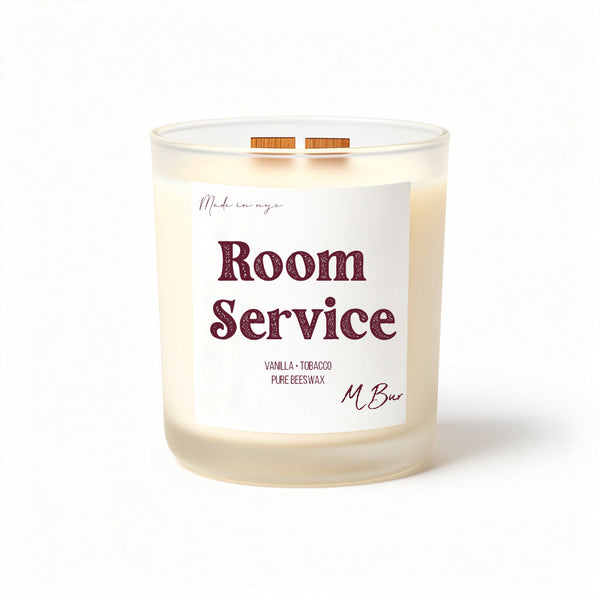
This is why single ingredient wax matters so much. Our candles are made with 100% beeswax, no blends, which is exactly why the 80 hour size of Room Service genuinely reaches 80 hours instead of fizzling out early. It is our bestseller, with that warm hotel lobby thing going on, and it earns its burn time honestly.
"From the packaging to the burn of the candle everything was top notch! Candle burned slowly and was exactly the amount of hours the company said it would burn. I was able to enjoy it for days even though it was the smaller size."
Portia Darby, on Retail Therapy
That is the whole point of purity. When the label says a number, the wax should actually get there.

How to squeeze every hour out of your candle
Even the best wax can be shortchanged by bad habits. A few small moves protect the burn time you paid for.
Trim the wick before every burn
Cut the wick down to about 5 mm, roughly 3/16 of an inch, each time before you light it. A long wick makes an oversized, dancing flame that eats through wax fast and throws soot. A trimmed wick keeps the flame steady and the burn slow.
Let the first burn go long
Because beeswax has such a high melting point, that first burn is critical. Let it stay lit long enough for the melt pool to reach the full edge of the container, usually a couple of hours depending on size. This sets the "burn memory." Skip it and the candle tunnels, burning straight down the middle and wasting the wax along the walls.
Keep it away from drafts
Open windows, vents, and fans make the flame flicker. Every flicker destabilizes combustion and burns fuel faster, plus it causes uneven melting and side dripping. Burn in a still spot and your candle lasts noticeably longer.
Do not panic about the white film
If a soft white powdery coating appears on the surface, that is bloom, the natural oils in pure beeswax migrating up over time. It is actually a sign the wax is real and unadulterated. Buff it gently with a soft cloth or warm it briefly and it disappears.
The clean burn bonus
Longevity is not the only thing beeswax's dense chemistry buys you. Properly wicked beeswax burns cleanly, producing minimal to no black soot compared to unrefined paraffin. Several MBur customers have mentioned they can breathe easier around it than around cheaper scented candles.
"I love these candles. No headache or feeling nauseous like the Bath & Body candles with all the extra chemicals. In addition, I love the package and how carefully everything was wrapped."
Jason H., on Room Service
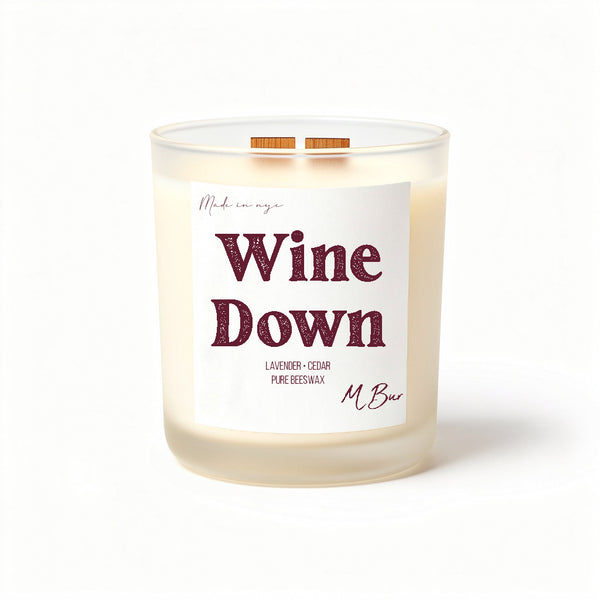
One note worth adding: heavy fragrance and dye loads can actually disrupt a wax's combustion and speed up the burn. That is one more reason we keep things simple with clean, phthalate free fragrance and no chemical dyes. It protects both the burn time and the air in the room. If a slow, calm scent is what you are after, Wine Down is a favorite for winding down at the end of the day.

The takeaway
Beeswax burns longer for a reason you can measure: the highest melting point of any common candle wax, backed by a dense molecular structure that evolution optimized for slow burning. Pure beeswax delivers roughly 8 to 10 hours per ounce and about 30% more burn time than soy or paraffin, but only when it is actually pure and not a blend.
If you want the longest lasting candle that also burns clean, start with single ingredient beeswax. Our candles are 100% beeswax, handmade in Queens, New York, with wooden wicks and non toxic fragrance, and the 80 hour size is genuinely the longest burning wax you can buy. Browse the full beeswax candle collection and pick your first burn.
Related reading

