

Are Candles Bad for Fish and Aquariums?
Are Candles Bad for Fish and Aquariums?
Fish live in water, which makes the candle question seem irrelevant at first. They're not breathing the air directly. But aquarium water has constant gas exchange with the air around it, and whatever's in that air can dissolve into the water and reach the fish. The full answer isn't as obvious as "it's fine, they're underwater," and it isn't as simple as "it's fine, beeswax is clean." Here's what to know about candle use in rooms with fish tanks.
For the cleanest candles to use in a home with fish tanks, browse the full MBur beeswax candle collection.
The Quick Answer
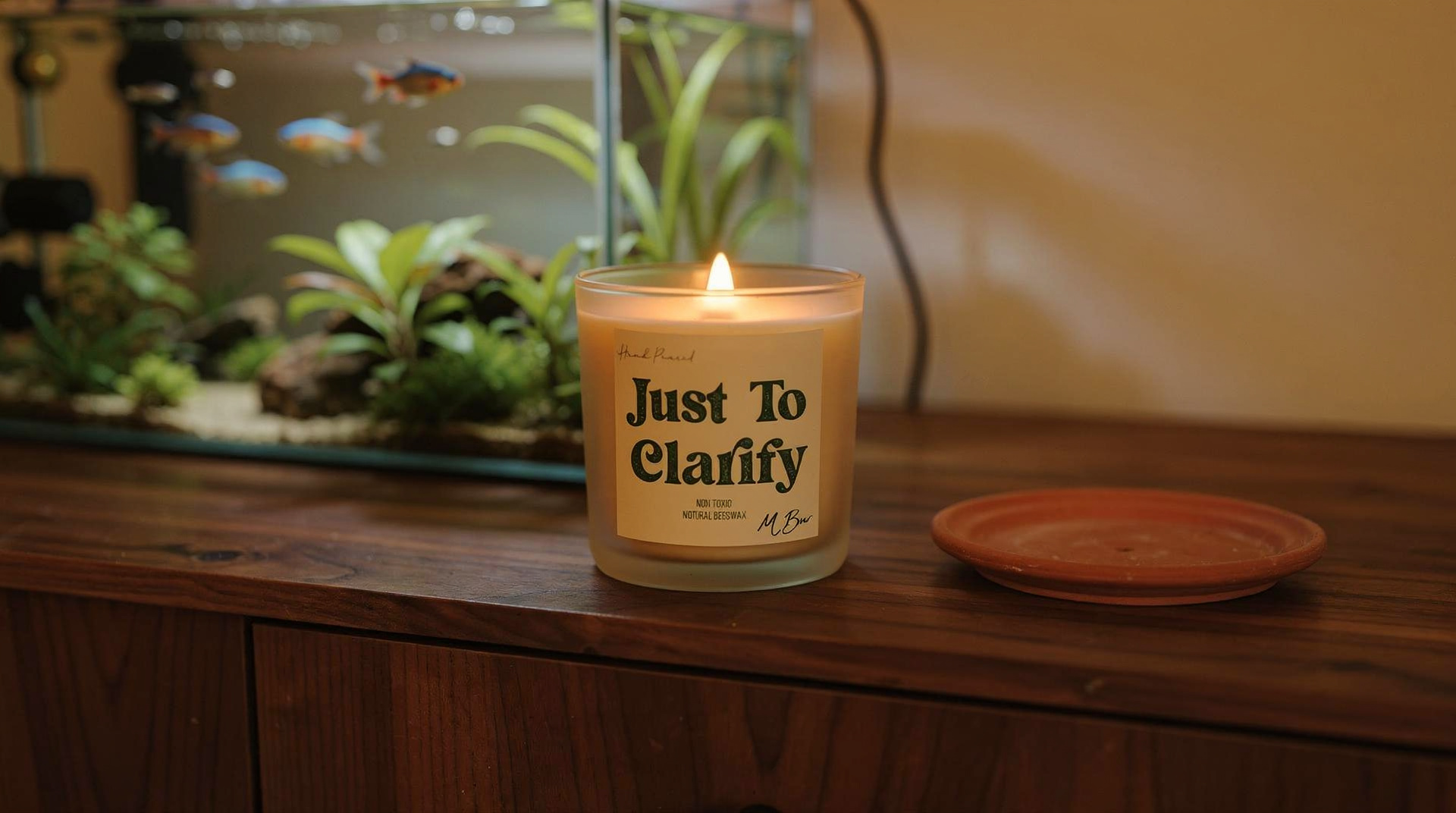
Candles can affect aquariums through three pathways: dissolved compounds entering the water through surface gas exchange, soot particles landing on the water surface and disrupting oxygen exchange, and direct heat affecting water temperature if burned too close. Paraffin candles are the biggest concern. 100% beeswax candles in the same room as a fish tank are generally fine if you burn them several feet away from the tank, ventilate the room, and don't make daily candle burning a habit right next to the tank. Reef tanks, planted tanks with sensitive species, and small tanks with limited water volume are most at risk and warrant more caution.
How Aquarium Water Interacts with Room Air
The water surface of an aquarium isn't an impermeable barrier. Oxygen from the room air diffuses into the water (which is why surface agitation and aeration matter for fish health), and dissolved gases in the water diffuse out into the room. Anything that's in the room air can also enter the water through this gas exchange, including volatile organic compounds from candle combustion. The smaller the tank and the less water turnover, the faster room air pollutants can build up in the water.
Most home aquariums have surface area-to-volume ratios that allow meaningful gas exchange. A 20-gallon tank in a small bedroom with a paraffin candle burning daily will accumulate dissolved combustion byproducts at measurable levels over weeks. A 100-gallon tank in a large ventilated living room with occasional clean candle use will not.
Specific Candle Concerns
Paraffin Combustion Products
Paraffin candles release benzene, toluene, formaldehyde, and other volatile organic compounds when burned. These compounds can dissolve into aquarium water through surface gas exchange. The concentrations from occasional candle use in well-ventilated rooms are typically low. For tanks with sensitive species (shrimp, certain fish, reef inverts) or for daily candle use in small rooms, the cumulative effect matters.
Soot on Water Surface
Candle soot rises in the air around a burning candle and eventually settles. In a fish tank context, soot landing on the water surface creates a film that disrupts the gas exchange the tank depends on. Reduced surface oxygen exchange stresses fish and can affect ammonia processing in the nitrogen cycle. Beeswax produces minimal soot. Paraffin and dyed wax candles produce significantly more.
Synthetic Fragrance
Phthalates and other fragrance compounds can dissolve into aquarium water. Aquatic species are often more sensitive to endocrine-disrupting compounds than terrestrial animals (water-based exposure goes directly through gill membranes rather than through filtered respiratory tissue). The full effect on home aquarium fish isn't well-studied, but the precautionary case for phthalate-free fragrance applies.
Heat
This one is straightforward. Don't burn a candle directly above, beside, or in close contact with a fish tank. The heat can raise water temperature, especially in smaller tanks, and large temperature swings stress fish. A candle several feet from the tank with normal air circulation between them doesn't transfer meaningful heat.
Tank Types Worth Extra Caution
Reef tanks are the most sensitive. Coral and reef invertebrates respond to water quality changes humans wouldn't notice, including dissolved organic compound changes. Many reef-keepers avoid candles in the tank room entirely.
Planted freshwater tanks with shrimp (especially crystal shrimp, neocaridina) are similarly sensitive. Shrimp are bioindicators in much the same way canaries were for coal mines; they show stress before fish do.
Small tanks (under 20 gallons) have less water volume to dilute any incoming compounds. Anything entering the water has a proportionally larger effect.
Larger community tanks with hardy species (most tetras, danios, common cichlids) tolerate more environmental variation, including the small dissolved-compound effects of occasional candle burning.
How to Use Candles Safely Around Fish
Choose 100% beeswax candles unscented or with phthalate-free fragrance from a brand that states it explicitly. Burn candles at least several feet from the tank, never directly above or beside. Keep the room well-ventilated when burning (cracked window, fan, or door open to other rooms). Avoid daily candle burning in the same room as a sensitive tank, especially small tanks. Don't burn candles in the room while doing water changes (when the surface is more exposed and gas exchange is heightened). For reef tanks or shrimp tanks, consider keeping candles out of the room entirely.
Frequently Asked Questions
Will one candle hurt my fish?
Almost certainly not, especially with a clean candle in a well-ventilated room several feet from the tank. The concern is cumulative exposure over time, not single events. A birthday candle, an occasional dinner candle, or a clean beeswax candle used a few times a week in a normal-sized room isn't going to harm typical community fish.
What about wax melts and candle warmers?
Wax melts produce the same fragrance and combustion-byproduct concerns as candles (wax warmers heat the wax which releases fragrance into the air), and the same dissolution concerns apply to aquarium water. The lack of an open flame removes the heat-near-tank concern, but the air quality concern remains. Wax melts with paraffin or undisclosed fragrance are no safer than equivalent candles.
Does the type of fish matter?
Yes. Sensitive species (shrimp, discus, rams, most marine fish, soft corals) are more vulnerable to water quality changes than hardy species. Goldfish, common tetras, danios, and most community fish tolerate normal indoor air quality without issue. Match the precaution level to what's in the tank.
Are essential oil candles safer for fish than fragrance candles?
Not necessarily. Many essential oils are toxic to fish at low concentrations, just as they are to birds. Single-note essential oil candles aren't an automatic upgrade for aquarium households. Unscented beeswax remains the safest option.
Can candle smoke affect water chemistry?
The amounts that dissolve from normal candle burning at normal distances don't meaningfully change pH or hardness in most tanks. The concern is more about specific compounds (VOCs, phthalates, soot) reaching fish gills and tissues than about general water chemistry.
The Bottom Line
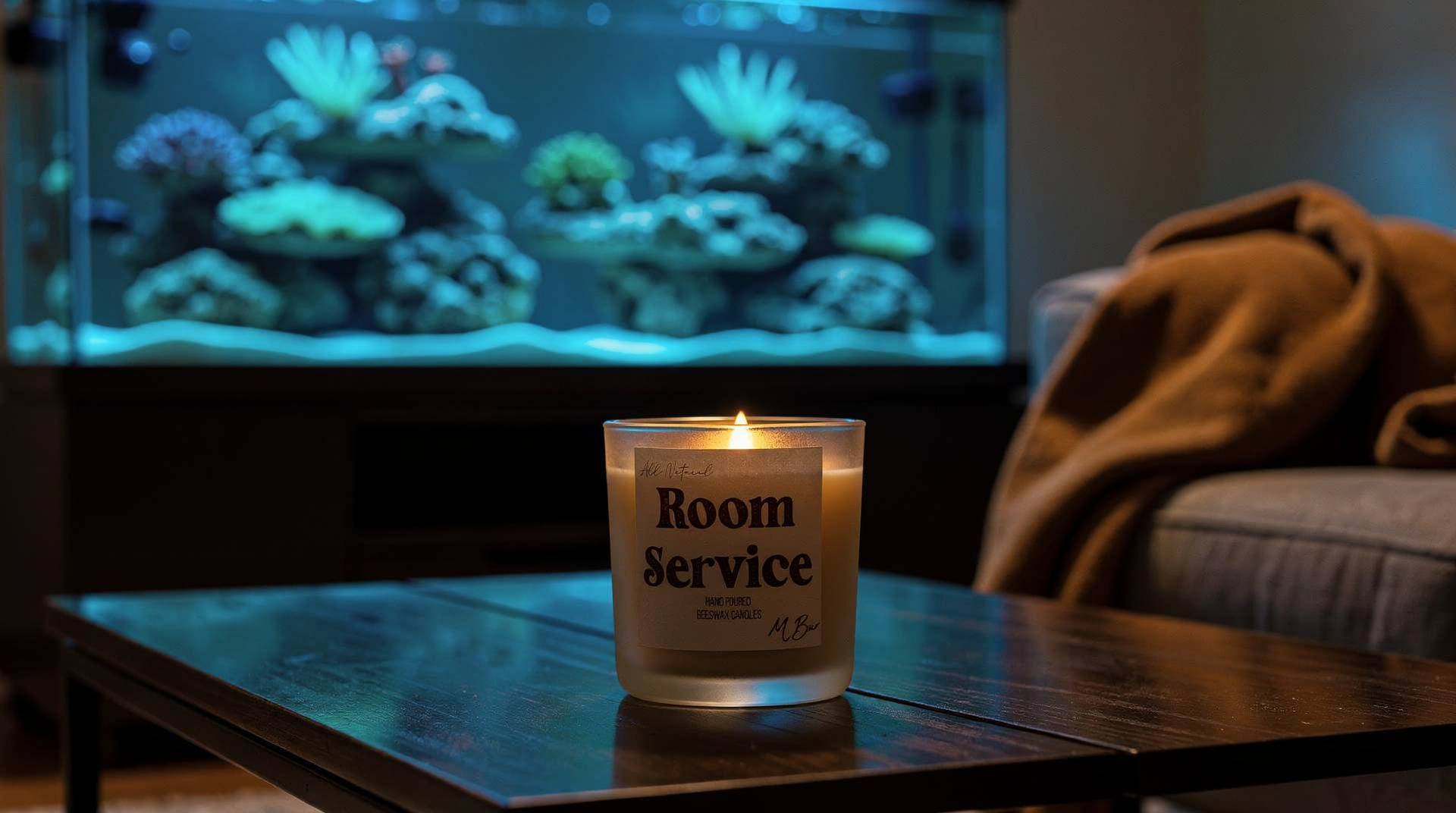
Candles can affect fish tanks through air-water gas exchange, surface soot accumulation, and direct heat. The risk varies by tank type, room ventilation, candle type, and frequency of use. 100% beeswax candles burned occasionally several feet from a hardy community tank in a ventilated room aren't a meaningful issue. Daily paraffin candle burning right next to a small reef tank with sensitive species is a real concern. Match your candle choices to your tank's sensitivity, and when in doubt, ventilate the room and burn cleaner candles farther away.
Shop the full collection of clean-burning beeswax candles
What buyers say:
Related reading:

