

Why Your Coffee Maker Smells (and How to Fix It)
When NSF International swabbed household items to find where germs actually live, coffee maker reservoirs came back worse than bathroom door handles. Roughly half the machines tested had yeast or mold growing inside them. Not on them. Inside, in the tank the water passes through on its way to your cup.
That is usually what you are smelling, though it is not the only candidate and it is not always the main one. There are five or six things that make a coffee maker smell, they each smell slightly different, and knowing which one you have determines whether this takes ten minutes or a full descale cycle. A clean-burning beeswax candle handles the kitchen afterward, which is most of the reason we make them, though it is the last step here rather than the first.
Where the smell is actually coming from
Work down these in order. The first two account for most cases.
1. The water reservoir
A tank that holds standing water, sits warm from the heating element underneath, and stays closed in the dark is close to ideal conditions for mold and yeast. Biofilm builds on the walls as a slick, slightly slimy layer you can feel with a finger before you can see it. That is the musty, damp basement note people usually describe, and every brew pulls water straight through it.
The conditions are the same ones the EPA's household mold guidance describes for any enclosed damp space, which is that moisture plus warmth plus no airflow gets you growth within days.
2. Rancid coffee oils
Coffee is oily, and those oils coat the basket, the spray head, the tubing, and the inside of the carafe. Oil goes rancid with exposure to air and heat, and rancid coffee smells sharp and slightly sour, distinct from the musty reservoir smell. This is the one that makes fresh coffee taste stale and bitter no matter which beans you buy.
Rinsing the carafe does nothing about it, because most of the oil is in the parts you never touch.
3. Wet grounds left in the basket
Spent grounds sitting damp in a closed basket mold within a couple of days, faster in summer. The smell is sour and fermented and it is the fastest of all of these to fix, which is why it is worth ruling out before you start a descale cycle you may not need.

4. The drip tray and the drainage channel
Almost nobody empties the drip tray until it overflows. It collects coffee, sits at room temperature, and grows the same mold as the reservoir. On pod machines there is usually a channel underneath the pod holder that catches drips and is genuinely unpleasant the first time you look at it.
5. Mineral scale
Scale itself does not smell. What it does is create rough, porous deposits inside the tubing where oils and biofilm anchor and become very hard to flush. Hard water areas get this fastest, and the tell is a brew cycle that has gradually slowed down over months.
6. The needle, on pod machines
The piercing needle that punctures the pod clogs with wet grounds and stays wet between uses. It is a small part that punches straight into your drink, and it is the one people forget entirely. A paperclip clears it.
What each smell points to
| What it smells like | Most likely source | Fix time |
|---|---|---|
| Musty, damp, like a basement | Reservoir biofilm | Full descale, about an hour |
| Sharp, sour, stale coffee | Rancid oils in the basket and lines | Wash and descale |
| Fermented, vinegary | Wet grounds left in the basket | Two minutes |
| Foul but only near the base | Drip tray or drainage channel | Five minutes |
| Fine, but the coffee tastes off | Scale holding residue in the lines | Descale |
| Plastic or chemical, new machine | Off-gassing, normal | Two or three water-only cycles |

How to clear it out
Start by emptying everything and washing the parts that come out. Carafe, basket, lid, and the reservoir itself if it lifts free, all in hot soapy water. Get a cloth or a bottle brush against the reservoir walls rather than just rinsing, because biofilm is physically attached and water alone will not lift it.
Then descale. Fill the reservoir with equal parts white vinegar and water, start a brew cycle, and stop it halfway so the solution sits in the tubing for thirty minutes. That soak is the part that matters, and skipping it is why a quick vinegar run often fails to fix the smell. Let the cycle finish afterward.
Rinse properly once it drains. Two or three full cycles of plain water, minimum, or your next coffee will taste of vinegar. Run a third if you can still smell it in the steam.
While that is going, scrub the parts you cannot run liquid through. The spray head above the basket, the basket seams, and on a pod machine the needle and the pod holder. A toothbrush and a paperclip cover all of it. Empty and wash the drip tray at the same time.
Then dry it with the lid open. This is the step that decides whether you are doing this again in six weeks.
The habit that actually prevents it
A reservoir that dries out between brews does not grow anything, so leaving the lid open does more for this than any cleaning product. It takes no effort and it removes the condition the mold depends on.
Alongside that, empty the tank rather than leaving water standing for days, dump grounds as soon as the pot is done instead of at the next brew, and descale monthly, or more often on hard water. If you are only going to change one thing, change the lid.
The kitchen after
Once the machine is clean, the room usually still holds a trace of it, particularly in a small kitchen where the coffee maker sits under a cabinet and the smell has had somewhere to collect. Open a window for twenty minutes first, because moving air out does more than covering it.
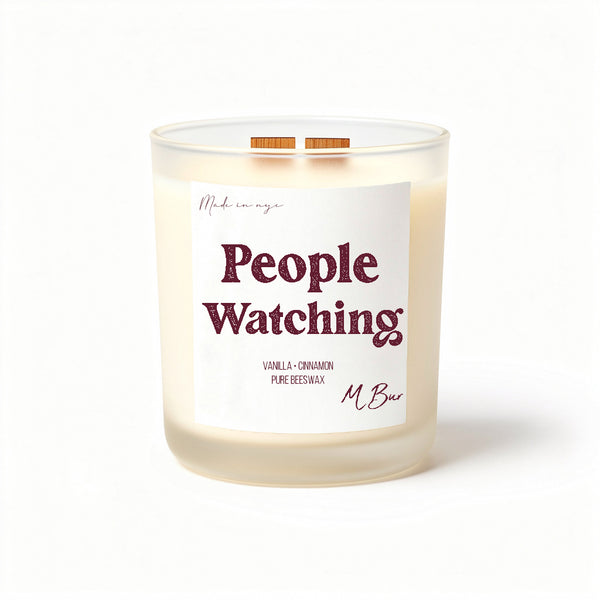
Then light something. People Watching suits this one particularly well, orange and clove over cinnamon and vanilla, which sits alongside coffee rather than fighting it the way a fresh linen or floral scent would. It is poured from 100% beeswax with a wooden wick and phthalate-free non-toxic fragrance oils, so freshening a kitchen you have just spent an hour cleaning does not put soot back into it.
Frequently asked questions
How often should I descale?
Monthly is a reasonable default, and every two or three weeks on hard water. The practical signal is a brew cycle that has slowed down or coffee that tastes flat when the beans have not changed.
Is mold in a coffee maker actually dangerous?
For most healthy people, occasional exposure to household mold in a machine like this is unlikely to cause illness, though it will make coffee taste bad. It matters more if someone in the house has asthma, a mold allergy, or a compromised immune system, in which case it is worth cleaning promptly and keeping the reservoir dry between uses.
Can I use something other than vinegar?
Citric acid or a commercial descaler both work, and some manufacturers specifically recommend against vinegar because it can degrade rubber seals over time. Check your manual. Whichever you use, the plain-water rinse cycles afterward are not optional.
Why does my coffee taste bitter even after cleaning?
Usually oils left in a part you did not reach, most often the spray head or the tubing. It can also be leftover vinegar, which reads as sour rather than bitter. If a second descale does not fix it, the issue is more likely your beans or grind than the machine.
My machine is new and smells like plastic. Is that a problem?
That is normal off-gassing and it fades. Run two or three water-only cycles before your first coffee and it should clear.
Does bleach work better than vinegar?
Do not use bleach in a coffee maker. It is difficult to rinse fully from tubing and reservoirs, and residue ends up in something you drink. Vinegar, citric acid, or a purpose-made descaler are the appropriate options.
Once the machine is clean and the window has been open a while, finish the room properly. Explore the MBur beeswax candle collection and find the scent that fits your kitchen.

