

What Is the Purpose of a Candle Warmer? An Honest Explainer
A candle warmer is, at its core, a tiny hot plate for your candle. Plug it in, set your jar on top (or under a lamp, depending on the style), and the wax melts slowly enough to release fragrance without ever lighting a wick. The concept has been around for decades, but the devices have gotten a serious design upgrade in the last few years. Adjustable heat settings, dimmable halogen bulbs, timers. Some look more like desk lamps than anything you would associate with candle accessories.
So why are so many people swapping flames for warming plates? And does the tradeoff actually make sense? This post breaks down exactly how candle warmers work, what they do well, where they fall short, and when you are better off just striking a match. If you are exploring cleaner ways to scent your home, you might also want to browse our full beeswax candle collection to see what pairs well with either approach.
How Candle Warmers Actually Work
There are two main types, and they heat wax in opposite directions.
Bottom up warming plates sit underneath your candle jar. A low wattage electric element (usually 15 to 25 watts) heats the base of the vessel, and the warmth conducts upward through the glass and into the wax. The surface layer melts first, releasing fragrance into the air. These work best with shorter, wider jars and wax melts in open dishes.
Top down warming lamps use a halogen bulb positioned above the candle. The radiant heat melts the top layer of wax directly, similar to how sunlight would warm a surface. These tend to work better with taller jar candles because the heat does not need to travel through glass to reach the wax.
Both types operate in the same temperature neighborhood. Most waxes melt somewhere between 120°F and 150°F, and a well designed warmer keeps the wax in that range without pushing past it. For context, a lit wick burns at roughly 1,800°F. The difference in thermal intensity is enormous, and that gap is where most of the warmer's advantages (and disadvantages) come from.

The Real Benefits of Candle Warmers
No open flame means fewer fire risks
This is the most straightforward advantage. The National Fire Protection Association tracks candle related fires every year, and the numbers are significant. A warming plate eliminates that risk entirely. If you have small children, curious pets, or live in a dorm or office building that bans open flames, a warmer lets you still get fragrance into the room.
Your candle lasts longer
When you burn a candle, the flame consumes wax as fuel. That is literally how it works: wax vaporizes, travels up the wick, and combusts. A warmer melts the wax without consuming it, so the same jar can release scent over a much longer period. Many users report getting roughly double the life from a warmed candle compared to a burned one.
No soot on your walls or ceiling
Combustion produces soot. Warming does not. If you have ever noticed faint gray marks above where you burn candles, that is carbon particulate from the flame. A warmer sidesteps that entirely because there is no combustion happening.
It can rescue a tunneled candle
Tunneling happens when a candle burns down the center without melting the wax near the edges, leaving a thick ring of unused wax around the perimeter. A warming plate can slowly melt that outer ring back into a flat, even surface. It is one of the more practical uses that people discover after buying a warmer for other reasons.
Where Candle Warmers Fall Short
Warmers solve real problems, but they introduce a few of their own. Being honest about the tradeoffs matters more than pretending the device is perfect.
Scent throw is often weaker
A flame generates convection currents. Hot air rises from the candle, carrying fragrance molecules upward and outward through the room. That natural air movement is a surprisingly effective distribution system. A warmer operates at much lower temperatures, so the thermal lift is minimal. The scent tends to stay closer to the candle and develop more slowly. In a small room, you might not notice the difference. In an open floor plan, you probably will.
You lose the ambiance of a real flame
For a lot of candle lovers, the flame is the point. The flicker, the warm glow, the ritual of lighting it. A warming plate does not replicate any of that. A halogen lamp adds some warm light, but it is a fundamentally different visual experience. If you burn candles primarily for atmosphere rather than scent, a warmer misses the mark.

Heated wax still releases VOCs
This is the misconception worth correcting. Many people assume that because there is no combustion, a warmer produces zero emissions. Recent research suggests that heating scented wax can still release volatile organic compounds and nanoparticles into indoor air. The source of those compounds is usually the fragrance oil and wax additives, not the heat method itself. A warmer eliminates combustion byproducts like carbon monoxide and soot, but it does not neutralize whatever is already in the wax formula.
This is where the candle's ingredients matter far more than how you choose to use it. A paraffin candle loaded with toxic fragrance oils will release those compounds whether you burn it or warm it. The delivery method changes, but the chemistry of the wax and fragrance does not.
Not every candle fits every warmer
Thick, heat resistant glass works well. Thin walled containers can crack. Tall jars do not heat evenly on a bottom up plate. And some warmers simply are not sized for larger vessels. Check compatibility before you commit, or you risk damaging both the warmer and the candle.
Candle Warmer vs. Burning: When Each One Wins
The honest answer is that neither option is universally better. Each one has a context where it makes the most sense.
Choose a warmer when: you have kids or pets in the room, open flames are prohibited, you want to extend a candle's lifespan, or you are dealing with a tunneled candle that needs rescuing.
Choose burning when: you want maximum scent throw in a larger space, you care about the visual ambiance of a real flame, or you are using a candle with a wooden wick that crackles (because that sound only happens with combustion). The ritual of lighting a match, watching the flame catch, hearing the wick pop, those sensory layers disappear entirely with a warmer.
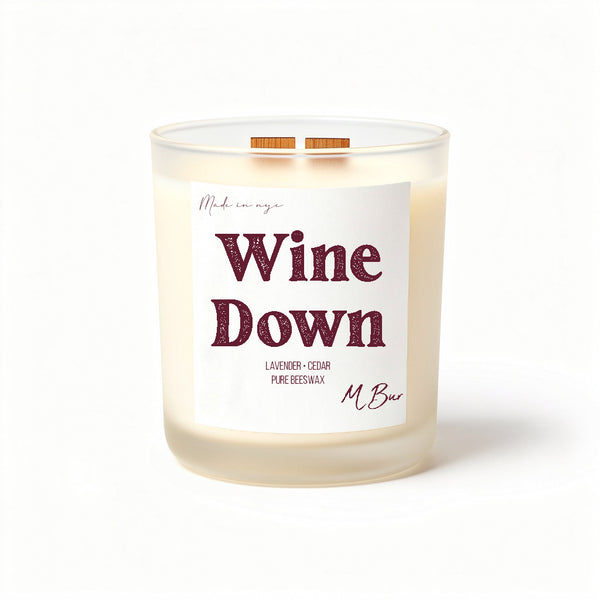
If you care about air quality, the most impactful decision is not warmer vs. flame. It is what is actually in the wax. A pure beeswax candle with non toxic, phthalate free fragrance and a wooden wick, like the ones in MBur's beeswax collection, burns cleaner than a paraffin candle on a warming plate. The wax and fragrance formula is doing the heavy lifting either way.
"I absolutely love these candles! I instantly notice the difference in the air quality, in comparison to the Bath & Body scented candles. I love Bath & Body's candles but I acknowledge that it caused a slight headache and other minor respiratory discomfort. Awesome products. Totally addicted." Jason H.
Practical Tips If You Use a Candle Warmer
A few guidelines that will get you better results regardless of which warmer style you own.
Keep sessions to 3 to 4 hours. Fragrance oils evaporate faster than wax melts. Running a warmer all day does not mean all day fragrance. After a few hours, the top layer of wax loses its scent while the wax itself remains. Let it cool, then restart later for a fresh release.
Use the lowest effective heat setting. Cranking an adjustable warmer to maximum does not make the scent stronger. It burns off the fragrance faster and can degrade delicate scent compounds. Start low and increase only if you are not getting enough throw.
Refresh the scent by pouring off spent wax. When the fragrance fades but plenty of wax remains, carefully pour off a thin layer of the melted, scentless wax on top. This exposes the fresher, still fragrant wax underneath. Never pour wax down a drain. Let it harden in a disposable container first.
Mind the airflow. Placing a warmer in a stuffy corner reduces scent distribution. An open, lightly ventilated area lets the fragrance travel. Near a doorway or in a room with gentle air circulation works well.

What About the Wax Itself?
Whether you burn or warm your candles, the wax type determines most of the experience. Paraffin is a petroleum byproduct that releases benzene, toluene, and formaldehyde when heated. Soy is a step up, but many soy candles are actually soy blends cut with paraffin, and they frequently use toxic fragrance oils containing phthalates and parabens.
Beeswax is the oldest candle material humans have used, dating back roughly 5,000 years. It has the highest melting point of any natural candle wax, which is why beeswax candles burn so much longer than soy or paraffin. A single ingredient wax with no chemical processing, no petroleum, and no blending agents. On a warmer, beeswax melts evenly and holds its fragrance well because that high melting point means the scent compounds release gradually rather than all at once.
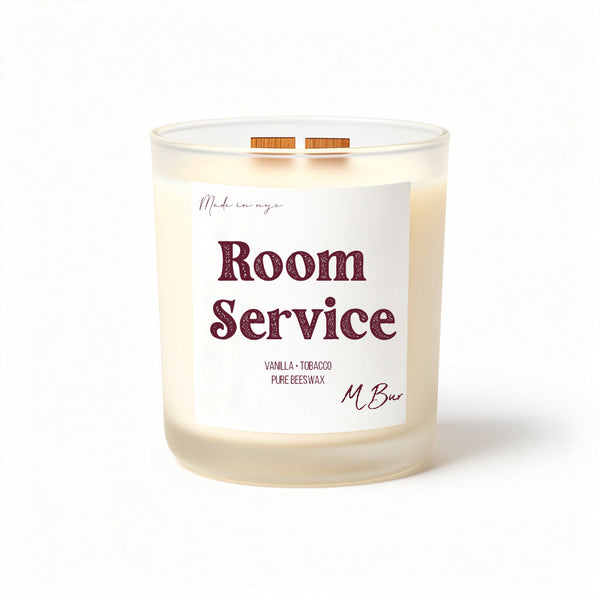
MBur's Room Service candle, for instance, uses 100% pure beeswax with phthalate free fragrance and a wooden wick. You can warm it for a slow, steady scent release during the day and light it in the evening when you want the full sensory experience: the flame, the crackling wick, the stronger scent throw filling the room. Both methods work with the same candle. The clean formula means you are not trading air quality for ambiance either way.
Frequently Asked Questions
Do candle warmers work with beeswax candles?
Yes. Beeswax has a higher melting point than soy or paraffin, so it takes a bit longer to start releasing scent on a warmer. But once it does, the fragrance holds steady for a longer period because the wax melts more gradually. A top down lamp style warmer tends to work especially well with beeswax jar candles. You can explore MBur's full beeswax candle collection to find a scent that fits your space.
Can I switch between warming and burning the same candle?
Absolutely. Many people warm their candles during the day (when they want background scent without monitoring a flame) and light them in the evening for the full ambiance. Just make sure the wax has cooled and solidified before switching methods, and trim the wooden wick to about 3/16 of an inch before lighting.
Why did my candle stop smelling on the warmer even though there is still wax left?
Fragrance oils evaporate out of the melted wax faster than the wax itself melts away. The top layer becomes "spent" wax with no scent left. Carefully pour off that top layer to expose the fragrant wax underneath. This can extend the useful life of a candle on a warmer significantly.
Are candle warmers better for air quality than burning?
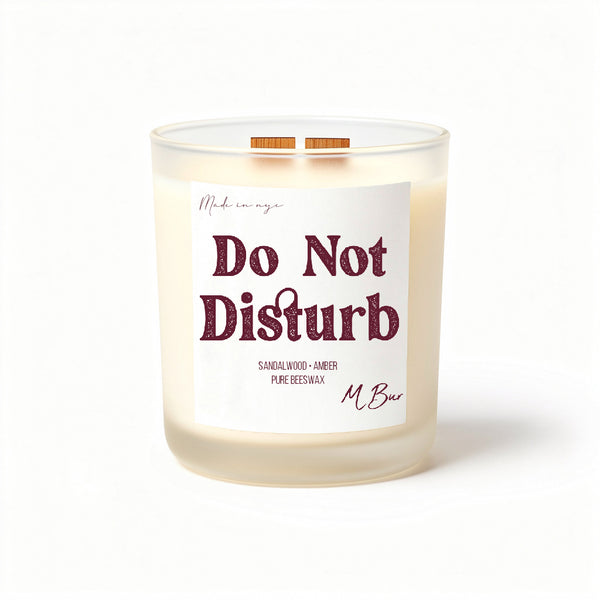
They eliminate combustion byproducts like soot and carbon monoxide, which is a meaningful improvement. But heated wax can still release VOCs from fragrance oils and wax additives. The biggest factor in air quality is the candle's ingredients. A candle made with pure beeswax and non toxic, phthalate free fragrance, like Do Not Disturb, produces fewer concerning compounds regardless of whether you warm it or burn it.
The Bottom Line
A candle warmer is a genuinely useful tool for specific situations: flame free environments, extending candle life, fixing tunneling, or getting low key background scent throughout the day. But it is not a magic air purifier, and it does not make a cheap candle with toxic fragrance suddenly safe to inhale. The warmer changes the delivery method. The wax and fragrance formula determine what you are actually breathing.
If you want the flexibility to warm or burn with confidence, start with a candle made from ingredients you do not have to worry about. MBur's pure beeswax candles are 100% beeswax, wooden wick, phthalate free fragrance, no chemical dyes, handmade in Queens, New York. They work beautifully on a warmer and even better with a lit wick crackling on your nightstand.
Related reading

