

The Ultimate Guide to Eliminating Fish Tank and Aquarium Odors
A fish tank that smells bad is telling you something is wrong. The odor is a symptom, and covering it up with an air freshener sprayed near the tank will only make things worse (aerosol chemicals can settle on the water's surface and poison your fish). The real fix starts inside the tank itself.
This guide breaks down every common aquarium odor, explains what causes it at a biological level, walks you through the fix, and then tackles the part most aquarium guides skip entirely: what to do about the lingering smell in the room around the tank once the water quality is back on track. If you want a shortcut to that last part, our full beeswax candle collection is worth a look, but we will get there.
What a Healthy Aquarium Should Smell Like
A well maintained tank has almost no scent. Maybe a faint earthy note if you press your nose close to the surface, like damp soil after rain. If you can smell your aquarium from across the room, something has gone off balance biologically.
Clear water does not mean healthy water. This is one of the most persistent myths in the hobby. Your tank can look crystal clear while harboring dangerous ammonia spikes or dissolved organic waste that reeks. The nose catches problems the eyes miss.

Diagnosing the Smell: What Each Odor Means
Rotten Eggs
This is hydrogen sulfide gas, and it is serious. Anaerobic bacteria produce it in oxygen deprived pockets of your substrate, usually deep gravel beds that have not been disturbed or vacuumed in a while. The gas is toxic to fish and genuinely unpleasant for everyone in the room.
Ammonia (Sharp, Urine Like)
An ammonia smell signals a failing nitrogen cycle. Your beneficial bacteria colony cannot keep up with the waste being produced, either because the tank is overstocked, the filter media was recently replaced or scrubbed too aggressively, or a dead fish is decomposing somewhere you cannot see it.
Swampy or Earthy
Excessive mulm, which is the organic sludge that accumulates in low flow areas of the tank, is usually the culprit. Insufficient water circulation creates dead zones where this debris builds up and starts breaking down anaerobically.
Stale or Fishy
A persistent fishy smell is often linked to protein waste. Overfeeding is the number one cause. Uneaten food sinks, rots, and feeds bacterial blooms that make the whole room smell like a dock at low tide.
The 7 Step Fix for Aquarium Odor (Starting Inside the Tank)
1. Find the Source Before You Fix Anything
Check behind rocks, inside decorations, and in the back corners of the tank for a dead fish, snail, or shrimp. A single decomposing organism hidden behind a piece of driftwood can make an entire room smell terrible. Pull out decorations if you have to.
2. Remove Decaying Organic Matter
Trim any dying or dead plant leaves. Scoop out visible debris from the substrate surface. If you spot uneaten food on the bottom, that is a sign you are feeding too much.
3. Do a Partial Water Change (Not a Full One)
Replace 15 to 25 percent of the water. Always dechlorinate the new water and match its temperature to the tank before adding it. Resist the urge to drain the whole tank and start over. Removing too much water at once destroys the beneficial bacteria colonies that keep ammonia in check, which will make the smell worse within days.

4. Vacuum the Substrate
Use a gravel vacuum during your water change. Push it gently into the substrate to release trapped gas pockets (this is what eliminates the rotten egg smell) and suck out the mulm that has settled between the gravel. For sand substrates, hover just above the surface.

5. Adjust Your Feeding
Feed only what your fish can consume entirely within two to three minutes. If food is hitting the bottom and sitting there, you are overfeeding. This single change eliminates the most common source of aquarium odor.
6. Check and Rinse Your Filter Media
Open your filter and look inside. If the mechanical media (sponge, floss, or pad) is clogged with brown sludge, rinse it gently in a bucket of the old tank water you just removed. Never rinse filter media under tap water. The chlorine will kill the beneficial bacteria that live on it, crashing your nitrogen cycle and creating an ammonia spike.
7. Improve Water Circulation
Stagnant water breeds anaerobic bacteria. Make sure your filter output creates some surface agitation. If you have dead zones in the tank (corners where debris accumulates because water does not flow through them), consider repositioning your filter output or adding a small circulation pump. Moving water is odor free water.
Quick Reference: Smell, Cause, Fix
| Smell | Likely Cause | Fix |
|---|---|---|
| Rotten eggs | Hydrogen sulfide from anaerobic substrate pockets | Vacuum substrate, improve circulation |
| Ammonia / urine | Nitrogen cycle failure, dead organism, overstocking | Find and remove source, partial water change, test water parameters |
| Swampy / earthy | Organic sludge buildup in low flow zones | Gravel vacuum, reposition filter output, add circulation |
| Stale / fishy | Protein waste from overfeeding | Reduce feeding, remove uneaten food, add activated carbon temporarily |
Activated Carbon: A Useful Tool, Not a Cure
Dropping a bag of activated carbon into your filter will absorb dissolved organic compounds and reduce odor quickly. It works. But it is a bandage, not a solution. If you rely on carbon without fixing the underlying biological issue, the smell returns the moment the carbon is exhausted (usually within three to four weeks).
Use carbon as a bridge while you address the root cause. Replace it monthly if you choose to run it long term.
Now for the Room Itself
You have fixed the tank. Water parameters are stable, the substrate is clean, feeding is dialed in. But the room still carries a residual odor that has settled into fabrics and lingered in the air. This is where most aquarium guides end, and where the rest of your quality of life begins.
A few practical steps first: open a window for cross ventilation, wash any curtains or soft furnishings near the tank, and wipe down surfaces where microscopic water droplets may have landed over time. A HEPA air purifier running in the same room helps pull particulates out of the air.
Then there is scent. And this is where you need to be careful, because the wrong candle can actually make things worse for your fish.
Why Most Candles Are a Bad Idea Near an Aquarium
Paraffin candles release soot, benzene, toluene, and formaldehyde when they burn. That soot settles on every surface in the room, including the water's surface of an open top tank. Many candles also use toxic fragrance oils containing phthalates, which become airborne and can interfere with gas exchange at the water line. If you have been burning cheap candles near your tank and wondering why your fish seem stressed, that is worth investigating.
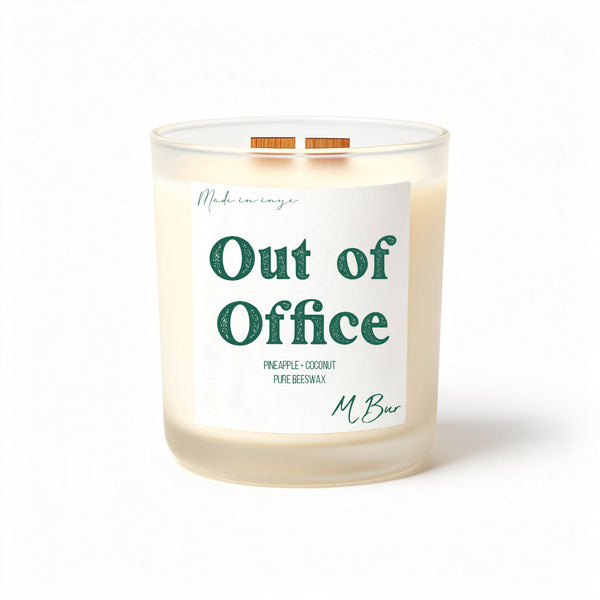
Beeswax burns cleaner than any other candle wax. No petroleum byproducts, no black soot on your walls or settling on your water's surface. The Out of Office candle, with its notes of spearmint, pineapple, bamboo, and coconut, is a good match for a room with an aquarium. The scent is fresh and green without being overpowering, and it complements rather than clashes with the natural earthy quality a healthy tank gives off.
"Absolutely obsessed with M Bur Candle Co, my roommate and I own 6/8 of the scents! They smell up a WHOLE room during the burn and even a while after blowing them out. I won't buy other candles anymore, they're just that good." Paige
If you prefer something warmer and more grounding, the Sunday Reset candle layers eucalyptus, clove, cedar, patchouli, and vanilla. The eucalyptus opens the scent profile with a clean, sharp note that works well in spaces where you are trying to neutralize a lingering funk, and the cedar and patchouli underneath give the room a warm, dry base that feels lived in rather than artificially perfumed.
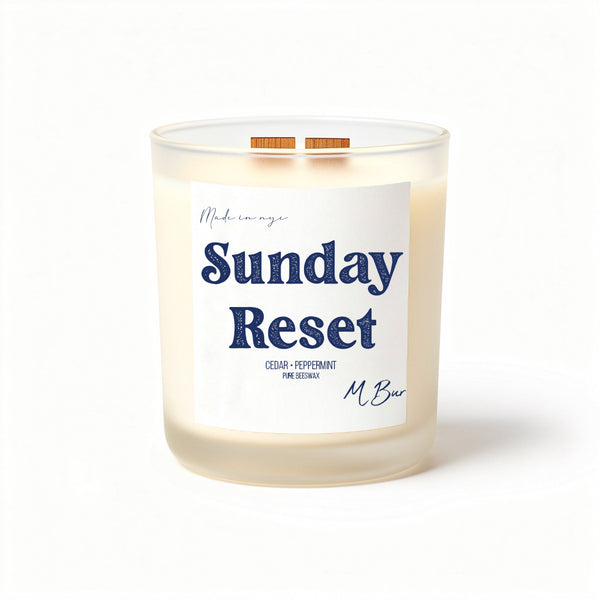

Both are 100% beeswax with wooden wicks and phthalate free fragrance. No soot, no toxic compounds settling on your tank water. The wooden wick crackles softly as it burns, which, in a room that already has the ambient sound of a filter running, creates a genuinely calming background texture.
Ongoing Maintenance to Keep Odors Gone for Good
Weekly: 10 to 15 percent water change with substrate vacuuming. Test ammonia, nitrite, and nitrate levels. Keep nitrates below 40 ppm.
Every two to four weeks: Rinse mechanical filter media in old tank water. Inspect behind decorations for trapped debris.
Monthly: Replace activated carbon if you run it. Trim plants. Check for snail die offs if you keep invertebrates.
Always: Feed only what fish eat in two to three minutes. Remove uneaten food immediately. Maintain surface agitation for gas exchange.
Frequently Asked Questions
Why does my fish tank smell like rotten eggs?
That smell is hydrogen sulfide, a toxic gas produced by anaerobic bacteria in oxygen deprived pockets of your substrate. It means gas is trapped in your gravel or sand, usually because it has not been vacuumed recently or because water circulation is too low near the bottom of the tank. Vacuum the substrate during your next water change and improve flow in the lower portion of the tank.
Can I burn a candle near my fish tank safely?
It depends entirely on the candle. Paraffin candles release soot and volatile organic compounds that can settle on the water surface and stress your fish. Beeswax candles burn much cleaner. If you want scent in the room, look for candles made with 100% beeswax and phthalate free fragrance, like the ones in MBur's beeswax candle collection. Keep the candle a few feet from the tank and ensure good room ventilation.
Does clear water mean my tank is healthy?
No. Water can look perfectly clear while containing dangerous levels of dissolved ammonia, nitrite, or organic waste. The only reliable way to know your water quality is to test it with a liquid test kit. If your water looks clear but smells off, test immediately.
How often should I change my aquarium water to prevent smells?
A 10 to 15 percent partial water change weekly is the standard recommendation. Heavily stocked tanks or tanks with large, messy fish may need 20 to 30 percent. Consistency matters more than volume. Small, regular changes maintain stability far better than infrequent large ones.
Is the smell from my fish tank harmful to me?
The odor itself is mostly unpleasant rather than dangerous, but the conditions causing it (high ammonia, hydrogen sulfide, bacterial blooms) can harbor bacteria that may irritate skin on contact with tank water. The bigger concern is for your fish, who are living in those conditions 24 hours a day. Fix the source, and the health risk to everyone in the room drops.
The Bottom Line
Aquarium odor is a diagnostic signal. Every smell points to a specific biological failure, and every failure has a straightforward fix. Vacuum the substrate, reduce feeding, maintain your filter properly, and keep water moving. Once the tank is healthy, address the room with ventilation, surface cleaning, and a clean burning candle that will not introduce new pollutants into your space.
For the room side of the equation, browse MBur's full beeswax candle collection. Every candle is 100% beeswax, wooden wick, phthalate free fragrance, and handmade in Queens, New York. The 20 hour size starts at $20, and the 80 hour size burns long enough to outlast several rounds of tank maintenance.
Related reading

