

What Is Phthalate-Free Fragrance and Why Does It Matter?
What Is Phthalate Free Fragrance and Why Does It Matter?
Roughly 75 percent of Americans have detectable levels of phthalates in their bodies right now. Most of them have no idea where those chemicals came from. The answer is hiding in plain sight, literally in the air around you, especially if you're burning conventional scented candles or spraying mass market fragrances. Phthalates are chemicals that make fragrance stick around longer, smell stronger, and cost manufacturers less to produce. And they've been quietly absorbed into your system through skin, lungs, and the food supply for decades without your consent. This post breaks down exactly what phthalate free fragrance means, why the chemical industry has fought tooth and nail to keep phthalates legal, and how to actually identify products that don't contain them.
The Phthalate Problem: A Brief History of a Hidden Chemical
Phthalates are a group of chemicals used primarily as plasticizers, meaning they make plastics more flexible and durable. But their use exploded in the fragrance and cosmetics industry for a completely different reason: they're a cheap way to make scents last longer on skin and in the air. When fragrance molecules hit air or body heat, they evaporate quickly, which means the scent fades fast. Phthalates act as a solvent and fixative, stretching out the life of a fragrance and making it more potent. For manufacturers, they're a dream chemical. They're invisible on ingredient labels, unregulated in most fragrance products, and they cost almost nothing to add.
The problem began surfacing in the early 2000s when independent researchers started finding phthalates in human blood, urine, and breast milk. The CDC now runs a National Health and Nutrition Examination Survey that tracks phthalate exposure across the U.S. population. The findings are consistent and alarming: virtually everyone in the country carries measurable phthalate residues. Women of reproductive age tend to have the highest levels, likely because conventional fragrances, lotions, and makeup are major sources.
The fragrance industry's response was to argue that the levels detected in humans don't exceed safety thresholds. But here's the catch: those safety thresholds were set decades ago using outdated testing methods, and many scientists argue they don't account for cumulative exposure or early life vulnerability.
What Exactly Is Phthalate Free Fragrance?
Phthalate free fragrance is any scent composition that deliberately excludes phthalates and replaces them with alternative fixative systems. The key word is "alternative," because removing phthalates creates a real formulation challenge. You can't just drop them and expect the scent to perform the same way. You need to rethink the entire fragrance structure.
When a fragrance is labeled phthalate free, it means the manufacturer has chosen to use different solvents and fixatives. These might include natural plant based fixatives, synthetic alternatives that aren't classified as phthalates, or a combination of both. The challenge is that phthalate free formulations are more expensive to develop. They require more skilled perfumers, better quality raw materials, and more time in the lab to get the performance right. This is why mainstream fragrance companies have been slow to abandon phthalates: it cuts into profit margins.
True phthalate free fragrances fall into a few categories. Some use plant derived fixatives like balsams and resins that naturally slow down evaporation. Others use advanced polymer based fixatives that are chemically inert and don't carry the health concerns associated with phthalates. The best formulations combine both approaches, using natural elements for depth and synthetic alternatives for stability and longevity.
Why Phthalates Are a Health Concern
The science around phthalates and human health is what regulators call "inconclusive," which in bureaucratic speak means "we can't deny the evidence but we're not going to act on it either." Here's what the actual research shows.
Phthalates are endocrine disruptors, meaning they interfere with hormonal systems. Several studies, including research published in the journal Environmental Health Perspectives, have linked phthalate exposure to reduced testosterone levels in men, reproductive abnormalities in children exposed in the womb, and altered puberty timing in girls. The National Institutes of Health maintains a database of phthalate studies, and the pattern is consistent across independent research: exposure is associated with metabolic and developmental issues, particularly in children.
The European Union banned several phthalates from cosmetics and fragrance products back in 2003. The United States, however, has not. The fragrance industry operates under what's called the "fragrance exception" in U.S. law, which allows manufacturers to list fragrance as a single ingredient without disclosing the individual chemicals inside it. This legal loophole means phthalates can be hidden under the word "fragrance" on a product label, and consumers have no way of knowing they're there.
Vulnerable populations face disproportionate risk. Pregnant women and young children are most susceptible to hormone disrupting effects because their developmental systems are still forming. A 2008 study published in Environmental Health Perspectives found that infants exposed to heavily fragranced products, including some baby lotions and powders, had measurable phthalate levels in their blood. The same research showed that girls born to mothers with higher phthalate exposure during pregnancy had less gender typical play behavior, suggesting early developmental effects.
How Phthalate Free Fragrance Works Differently
The formulation shift from phthalate containing to phthalate free fragrances is more than just swapping out one chemical for another. It requires rethinking how a scent evolves over time.
Traditional fragrances with phthalates are engineered to follow a linear projection: you smell the top notes first, they fade, the heart notes emerge, and the base notes anchor everything. Phthalates help stretch out each phase by controlling evaporation rates. Without them, fragrance molecules move through the air faster, which means the scent profile changes more quickly.
Phthalate free formulations work with this reality rather than against it. A skilled perfumer designing without phthalates might adjust the concentration of base notes or use plant based fixatives that have their own aromatic character. The result is often a more nuanced scent that evolves naturally rather than following a strict timeline. Some people find this evolution more interesting because it feels more alive. Others prefer the linear consistency of phthalate containing fragrances, which is why switching brands can feel jarring.
This is also why phthalate free fragrances often perform better in certain applications. In room sprays and diffusers, the absence of phthalate fixatives can actually be an advantage because you want the scent to disperse quickly and naturally, not cling to surfaces. In personal fragrance like perfumes, phthalate free formulations require higher quality base notes to achieve lasting power, which is why genuine phthalate free perfumes tend to cost more than their conventional counterparts.
Reading Labels: How to Spot Phthalate Free Products
The fragrance exception makes this harder than it should be. You cannot reliably tell if a product contains phthalates by reading the ingredient list, because manufacturers can hide them under the umbrella term "fragrance." Your only real options are these:
Look for explicit phthalate free labeling. Responsible brands state it outright on the packaging or product page. If a company is phthalate free, they advertise it because it's a selling point and a competitive advantage. If you don't see it mentioned, it's a red flag.
Check the fragrance source. Brands that emphasize natural or organic fragrance sourcing are more likely to be phthalate free, though not always. Natural fragrance oils are generally free of phthalates because plant extracts don't require them as fixatives. However, "natural fragrance" can still include problematic ingredients, so this isn't a guarantee. The most transparent brands disclose their specific fragrance sourcing and supplier practices.
Research the brand's transparency standards. Companies serious about phthalate free products publish full ingredient lists, fragrance sourcing information, and often third party testing results. Brands that hide behind vague language or refuse to disclose fragrance details are usually covering something up.
Know which categories are worst. Mass market fragrances, drugstore candles, and cheap air fresheners are the highest risk products for phthalates. Luxury fragrance houses have been slower to abandon phthalates because they can afford the legal gray area. Indie and eco focused brands were early adopters of phthalate free formulations because they saw an opportunity to differentiate themselves.
The Performance Question: Do Phthalate Free Fragrances Actually Work?
This is the elephant in the room. Many people assume that going phthalate free means sacrificing scent strength or longevity. This assumption is partly true and partly outdated.
A decade ago, phthalate free fragrances were noticeably weaker in performance. Early adopters had to choose between health and quality. That's no longer the case. Modern phthalate free formulations, especially those built on plant based fixatives and advanced polymers, perform as well as or better than conventional fragrances. The key is sourcing. If a brand uses premium natural ingredients and invests in sophisticated perfume creation, a phthalate free scent can have excellent lasting power and projection.
Here's what to expect: phthalate free fragrances tend to evolve more noticeably as they dry down. You'll smell the full scent journey rather than a static linear progression. For some people, this is more interesting. For others, it feels inconsistent. It's a matter of preference, not quality.
One genuine limitation is spray coverage. Phthalate free room sprays and body mists won't cling to air particles quite as long as phthalate containing versions. If you spray once and expect eight hours of ambient scent, you'll be disappointed. If you understand that you're getting a fresh burst that lasts a few hours, you'll be satisfied. The solution is simple: use it as intended, which is more often than you'd use a traditional room spray anyway.
Beeswax Candles and the Phthalate Free Advantage
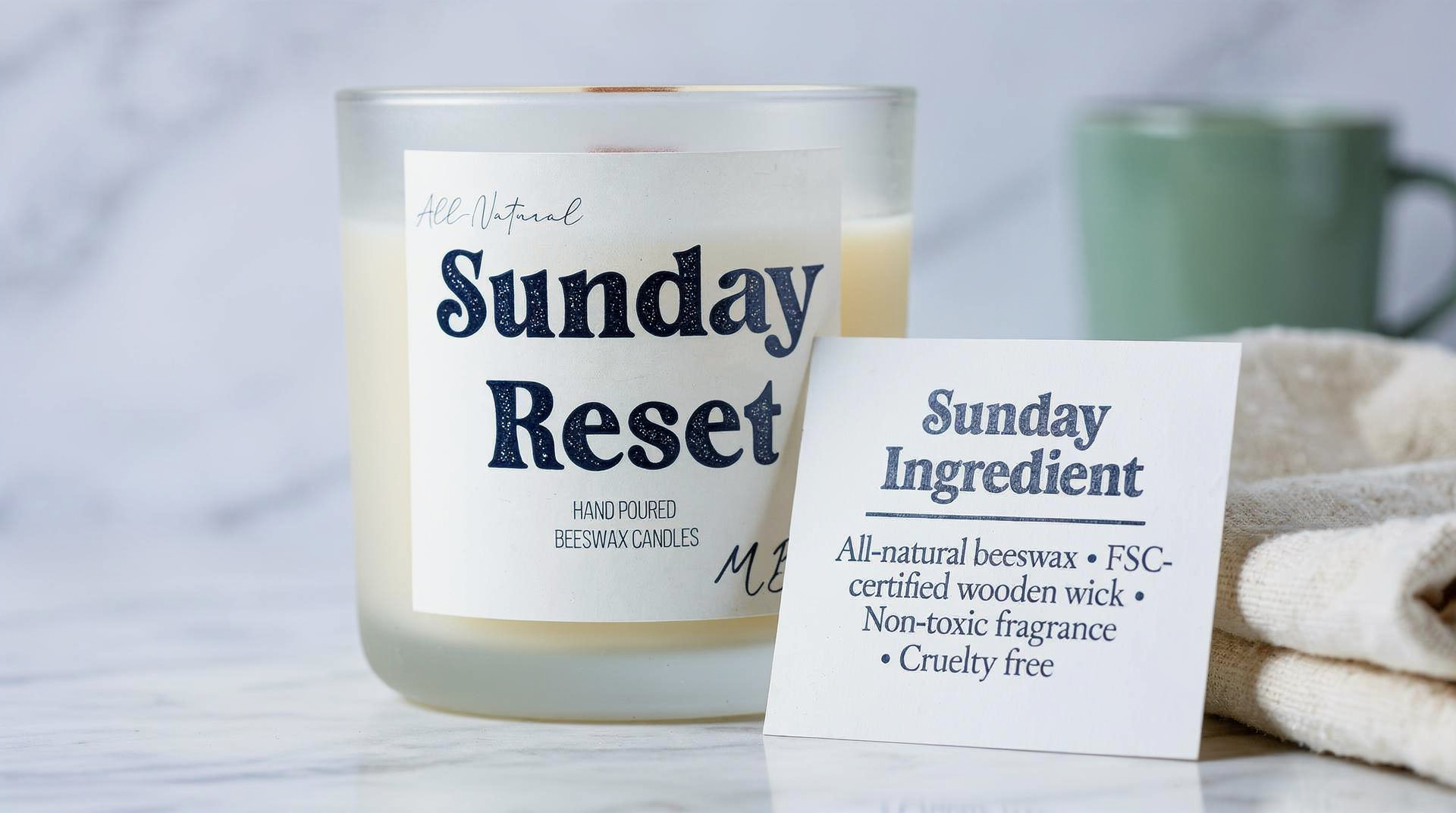
When it comes to candles specifically, beeswax products already have a structural advantage in going phthalate free. Beeswax has a naturally high melting point, which means fragrance molecules release more slowly and consistently as the candle burns. This property eliminates the need for phthalates as a performance booster. A 100 percent beeswax candle with phthalate free fragrance performs beautifully because the wax itself acts as a natural regulator.
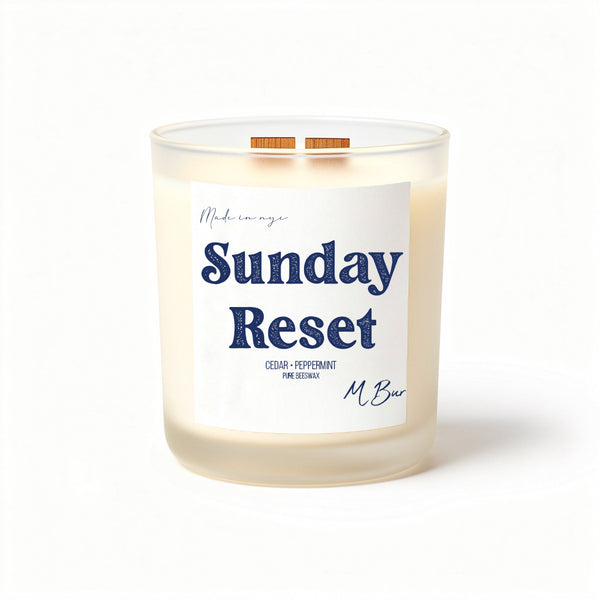
This is one reason why our handcrafted beeswax candles use phthalate free fragrance exclusively. The combination of pure beeswax and clean fragrance composition means you get a scent that develops naturally as the candle burns, without any chemical intervention. The fragrance fills a room evenly and lasts as long as the candle itself, which can be up to 80 hours depending on the size.
Customers switching from paraffin or soy candles often notice the difference immediately. They're used to either a sharp fragrance hit that fades quickly or an artificial smell that lingers unchanged for hours. A phthalate free beeswax candle does neither. The scent starts gently and builds as the pool of liquid wax releases fragrance molecules into the air, creating a more immersive and natural experience.
One customer noted, "I absolutely love these candles. I instantly notice the difference in the air quality in comparison to the Bath and Body Works scented candles. I love Bath and Body's candles but I acknowledge that it caused a slight headache and other minor respiratory discomfort." This shift from conventional to phthalate free fragrances is exactly why some people experience discomfort with mainstream products. The phthalates and other chemical fixatives can trigger sensory sensitivity, respiratory irritation, or headaches, even if the individual isn't consciously aware of the cause.
The Bigger Picture: Consumer Rights and Fragrance Regulation
Phthalate free fragrance matters not just as a personal health choice but as part of a larger conversation about corporate transparency and consumer rights. The fragrance exception in U.S. law is an anomaly. Food labels disclose ingredients. Medications disclose ingredients. Cosmetics disclose most ingredients. Fragrance products are allowed to keep their ingredient lists secret.
This regulatory gap exists because the fragrance industry lobbied hard to protect their trade secrets. Perfume formulations are complex intellectual property, and fragrance companies argue that disclosing all ingredients would expose proprietary techniques. That's not entirely wrong, but it doesn't justify allowing potentially harmful chemicals to hide under a single word on a label.
The European Union's stricter regulations haven't decimated the fragrance market. European brands still innovate, still create bestsellers, and still make money. They've simply shifted to using safer chemicals and disclosing more information. The message is clear: transparency and safety are possible if companies prioritize them.
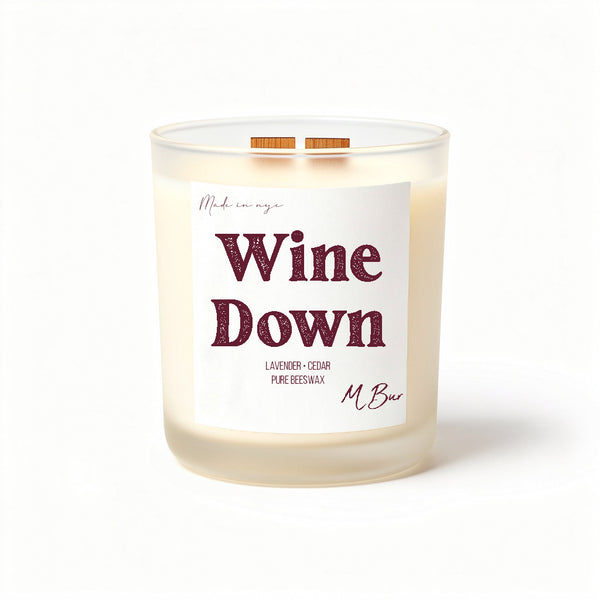
In the United States, change is slowly happening at the brand level rather than the regulatory level. Companies like MBur Candle Co., Boy Smells, and others have made phthalate free fragrance a brand standard because consumers increasingly demand it. Each time someone chooses a phthalate free product over a conventional one, they're sending a signal to the market: we want better.
Common Questions About Phthalate Free Fragrance
Are phthalate free fragrances actually free of all harmful chemicals? No. Phthalate free doesn't mean non toxic overall. A fragrance could be phthalate free but still contain other concerning chemicals like synthetic musks or volatile organic compounds. The best products are both phthalate free and use clean fragrance ingredients sourced from reputable suppliers with transparent practices.
How can I test a product to confirm it's phthalate free? Unless you send samples to a lab for gas chromatography testing, you can't verify it yourself. This is why brand transparency matters so much. Reputable companies provide testing documentation or third party certifications. Ask for it. If a brand won't provide evidence, that's a sign they might not be committed to the claim.
Do natural fragrances automatically mean phthalate free? Not necessarily. Natural fragrance oils don't require phthalates as fixatives, so they're less likely to contain them. But some natural fragrance suppliers do add phthalates for performance reasons. Always verify with the brand rather than assuming.
Is the price difference worth it? That depends on your priorities and budget. Phthalate free fragrances cost more because better ingredients and more sophisticated formulation work go into them. If you burn candles regularly or wear fragrance daily, the cost per use is reasonable for a cleaner product. If you use fragrance occasionally, you might prioritize other factors.
Can I switch from conventional fragrances to phthalate free without adjustment? Probably not entirely. Phthalate free fragrances often smell and feel different because they evolve more naturally. Give yourself a few weeks to adjust before deciding if you like a new phthalate free product. Your nose needs time to recalibrate to scents that don't have the artificial consistency of phthalate based compositions.
Moving Forward: Small Choices, Real Impact
Understanding what phthalate free fragrance means is the first step toward making intentional choices about what you bring into your home and put on your body. Phthalates are invisible and ubiquitous, which makes them easy to ignore. But the science is clear: they're in your body, they're likely affecting you in ways you don't notice, and you have the power to stop accumulating them.
The shift toward phthalate free fragrance is also a shift toward transparency and accountability. Every purchase of a phthalate free product is a vote for brands that prioritize your health over their profit margins. As more consumers make this choice, market pressure forces the entire industry to follow.
Start by auditing your current fragrance use. Check your candles, room sprays, perfumes, and scented lotions. If you can't find an explicit phthalate free claim on the label, research the brand online. Look for companies that openly disclose their fragrance sourcing and testing. If you're sensitive to conventional fragrances or want to eliminate phthalate exposure, switching to phthalate free beeswax candles and room sprays is one of the highest impact changes you can make, since fragrance products are a major exposure vector.
You don't have to change everything overnight. But each intentional choice to go phthalate free is a choice to reclaim control over your chemical exposure and to support brands that do things the harder, cleaner way.
What buyers say:

