

What Is Candle for CNC? A Plain-English Guide to the Software (and the Wax Kind Too)
Type "what is candle for cnc" into a search bar and you will get two very different answers depending on who is asking. One group means a chunk of wax with a wick. The other means a piece of free software that pushes G code to a small CNC router. Both live on workbenches. Only one of them melts.
This guide is mostly about the software, because that is what the phrase usually points to. But since you probably landed here from a candle company, we will also clear up the wax question at the end, and why a hobbyist workshop is one of the better places for a clean burning beeswax candle. If you already know that part, skip ahead to our full beeswax candle collection.
The Short Answer: Candle Is a G code Sender
Candle, originally called GrblControl, is a free, open source application that controls small CNC machines. It was written in Qt and lives on GitHub, maintained by a developer known as Denvi.
Its job is narrow and specific. Candle takes a G code file, shows you a preview of the toolpath, and streams those instructions line by line to your machine's controller. Think of it as the messenger between your computer and the motors that move the cutting tool.
If you own a 3018 engraver, a desktop router, or a small three axis mill, Candle is probably one of the first programs someone told you to download.

What Candle Actually Does
The software groups its work into a handful of clear functions. Once you see them laid out, the whole thing stops feeling mysterious.
Sends and streams G code
This is the core. You load a G code file and Candle feeds it to the controller board, one command at a time, keeping the machine's buffer fed so the tool keeps moving smoothly.
Visualizes the toolpath
Candle has a built in 3D viewer. Before you cut anything, you can watch a rendered preview of where the tool will travel, and during a job you can track the machine's live position and coordinates.
Lets you edit G code
There is a built in text editor. You can open a file, tweak a line, save it, and see the change reflected in the preview. Handy for small fixes without opening separate software.
Jogs the machine manually
Buttons and a numeric pad let you move the tool by hand along the X, Y, and Z axes, set your work coordinates, and send raw console commands directly to the controller.
Generates height maps
For uneven surfaces, like a warped PCB board, Candle can probe the material and build a height map. It then adjusts the Z axis depth on the fly so your cut stays consistent across a surface that is not perfectly flat.

The Firmware It Speaks To: GRBL
Here is the part that trips people up. Candle does not talk to every CNC machine on earth. It was built to communicate with controllers running GRBL firmware, most commonly GRBL v1.1, which typically runs on an Arduino board inside hobbyist machines.
That pairing is why Candle is so popular in the desktop and maker world. GRBL plus an Arduino plus Candle is an inexpensive, well documented starting point. If your machine runs Mach3, LinuxCNC, or a proprietary industrial controller, Candle is the wrong tool. It will not natively drive those systems.
One expert tip worth knowing early: if your visualizer refuses to track the tool position correctly, the fix is often in your GRBL status report settings. Adjusting the machine's parameters, such as setting $10=3, gets the position reporting to sync up.
Two Big Myths, Cleared Up
Because Candle is free and does a lot, people assume it does more than it does. Two misconceptions come up constantly.
Myth one: Candle is CAD/CAM software. It is not. Candle cannot design a part from scratch. You create your design and generate the G code in separate software such as Fusion 360, Inkscape, or Vectric, then import that finished G code into Candle to run it. Candle is the driver, not the designer.
Myth two: Candle runs any CNC machine. As covered above, it is built exclusively for GRBL firmware and machines with three axes or fewer. High end industrial equipment with closed source control systems is outside its scope.
What You Need to Run It
Candle is refreshingly light. It runs on Windows, Linux, macOS, and Raspberry Pi OS. The requirements are modest: a CPU that supports the SSE2 instruction set, a graphics card with OpenGL 2.0 support, and roughly 120 MB of free storage.
The machines it drives are small too. Typical working areas run from around 300 by 180 mm up to about 400 by 400 mm, and the hardware usually operates on low voltage inputs in the 12V to 24V range. This is very much the desktop and hobbyist end of the spectrum, which is exactly what it was designed for.
Recent updates worth noting
Development has stayed active on GitHub. Newer source builds have expanded compatibility to modern platforms including macOS and current Raspberry Pi OS releases. Recent additions include support for G5 and G5.1 cubic and quadratic B splines, standard editing shortcuts like cut, copy, paste, undo, and redo with background toolpath updates, and FluidNC SD card integration commands for controllers on newer firmware variants.
Common Mistakes Beginners Make
A few problems show up again and again. Knowing them ahead of time saves a ruined workpiece.
- Serial dropouts and freezes. If the connection between your PC and the controller board drops mid job, the visualizer can freeze while the machine keeps chewing through its command buffer. Avoid leaving long jobs completely unattended.
- Multi monitor crashes. Dragging the Candle window onto a second monitor and closing it there can cause a crash on the next launch. Resetting your main display or power cycling usually clears it.
- Unsupported G code. Feeding in advanced macros or post processed scripts with functions Candle does not recognize produces parsing errors, often Error 1 or Error 20.
- Mistaking comments for a lockup. The header comments at the top of a G code file, the lines describing metadata and toolpaths, are not a frozen queue. The machine is just reading past them.
Okay, But What About the Wax Kind?
If you came here meaning an actual candle, here is the honest overlap. A workshop is one of the worst rooms to burn a cheap paraffin candle in. You are already surrounded by dust, cutting oil vapor, and whatever your material throws off. Adding paraffin soot to that air mix does you no favors, since paraffin candles can release compounds like benzene, toluene, and formaldehyde as they burn.
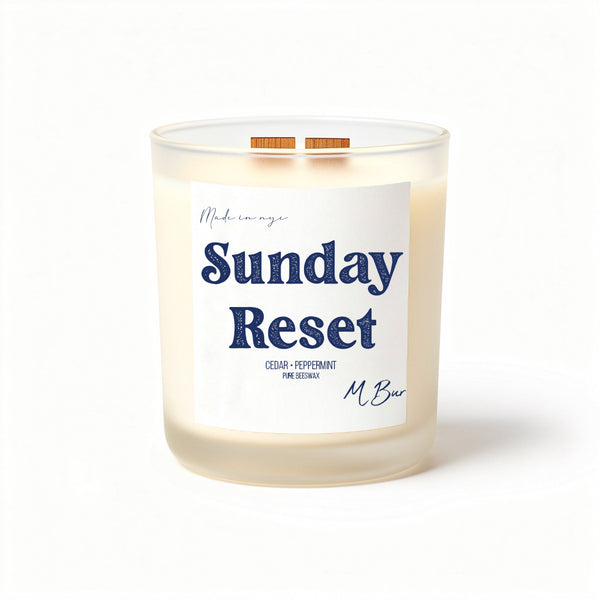
A pure beeswax candle burns cleaner. Beeswax is a single ingredient wax, so there is no petroleum base and no chemical dye. It has a naturally high melting point, which is why a beeswax candle burns slower and longer, and a wooden wick gives off a low crackle that is easy company during a long carving session. Our Sunday Reset candle, with notes of eucalyptus, clove, cedar, patchouli, and vanilla, leans clean and grounding, which suits a focused afternoon at the machine.
"I absolutely love these candles! I instantly notice the difference in the air quality, in comparison to the Bath and Body scented candles. I love Bath and Body's candles but I acknowledge that it caused a slight headache and other minor respiratory discomfort. Awesome products. Totally addicted."
Jason H.
If you spend hours near your bench, that difference in air quality is worth caring about. You can browse the range in our full beeswax candle collection.

Frequently Asked Questions
What is Candle software in CNC machining?
Candle is a free, open source G code sender and controller application built specifically for CNC machines running GRBL firmware. It loads, edits, visualizes, and streams G code to your machine.
Can I edit G code files directly inside Candle?
Yes. Candle includes a built in text editor, so you can load a file, modify a line, save it, and preview the change in the visualizer before running the job.
What is a height map in Candle used for?
The height map feature probes uneven surfaces, like a PCB board, so the software can dynamically adjust the Z axis depth during milling. That keeps your cut depth consistent even when the material is not perfectly flat.
Is a beeswax candle safe to burn in a workshop?
A pure beeswax candle burns cleaner than paraffin and produces no black soot on walls, which matters in a room that already collects dust and vapor. Keep it away from flammable materials and sawdust, trim the wick, and never leave any open flame unattended. If you want a mellow, low key scent for the bench, the Wine Down candle keeps things calm without overpowering the space.

The Takeaway
Candle for CNC is a free, open source G code sender for GRBL based hobbyist machines. It streams and previews your toolpaths, but it is a driver, not a design program, so you still need separate CAD/CAM software to create the G code. Match it to GRBL firmware, keep an eye on your serial connection, and it will serve a small router well.
And if you want the room around that machine to smell like something other than cutting oil, a clean burning beeswax candle is an easy upgrade. With hundreds of reviews and repeat buyers who swear off paraffin after one order, our range is a good place to start. Browse our full beeswax candle collection and pick the vibe that fits your workshop.
Related reading

