

Sustainable Candle Packaging: How MBur Candle Co. Is Doing It Differently
Sustainable Candle Packaging: How MBur Candle Co. Is Doing It Differently
You finally find a candle you love. The scent is incredible. You burn it down to the last drop. And then you stand there holding a glass jar, a cardboard sleeve, and a pile of tissue paper, wondering what on earth to do with all of it. Toss it? Feel bad. Recycle it? Hope for the best.
This is the part of the candle conversation nobody really wants to have. The wax gets all the attention. The fragrance gets the reviews. But packaging? Packaging ends up in the bin before the candle is even lit.
At MBur Candle Co., we think about this a lot. Not because it makes for good marketing copy, but because we are a small brand that actually has to make real decisions about what we put into the world. And those decisions start before the candle ever reaches you. If you want to know more about how we got here and why we care, our story of building MBur from the ground up in Far Rockaway is worth a read.
Here is what sustainable candle packaging actually means, why most brands get it wrong, and how we are approaching it at MBur.
Why Candle Packaging Is a Bigger Problem Than You Think
The candle industry is enormous. Americans spend billions on candles every year. And almost every single one of those candles ships inside layers of plastic wrap, foam inserts, glossy cardboard boxes coated in finishes that make them unrecyclable, and decorative tissue that goes straight to landfill.
Here is the thing about glossy or laminated packaging: it looks premium. It photographs well. It gives you that unboxing experience that brands love to engineer. But the coating that makes it shiny is also the thing that makes it trash. Most curbside recycling programs cannot process laminated cardboard. That beautiful box that makes your Instagram reel so satisfying? It is plastic coated and headed for a landfill.
Foam inserts are even worse. Polystyrene foam, the stuff that cushions fragile items in shipping boxes, is almost never recycled. It breaks apart into microbeads that enter the water supply. It does not biodegrade. It just becomes smaller and smaller pieces of plastic that go everywhere they should not.
None of this is dramatic exaggeration. It is just what happens when an industry prioritizes visual experience over material responsibility.
What "Eco Friendly Candles" Actually Means (and What It Does Not)
Eco friendly is one of those phrases that has been stretched so far it barely means anything anymore. Brands slap it on packaging made from 15 percent recycled content and call it a sustainability initiative. Others use soy wax and market the whole candle as green, without mentioning that the soy was grown using industrial agriculture or that the fragrance inside is loaded with phthalates.
Real eco friendly candles require you to look at the whole picture: the wax, the fragrance, the wick, and yes, the packaging. You cannot offset a toxic fragrance with a paper bag. You cannot make a paraffin candle sustainable by printing your logo in soy based ink.
At MBur, we use 100 percent beeswax. Not a blend. Not beeswax with a percentage of paraffin or coconut oil mixed in to cut costs. Pure beeswax, which is a natural byproduct of honey production. No chemical processing. No petroleum. The wax itself is as clean as it gets.
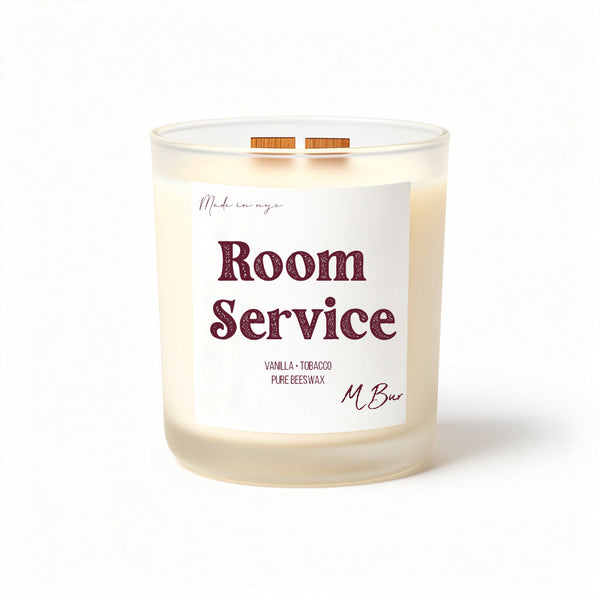
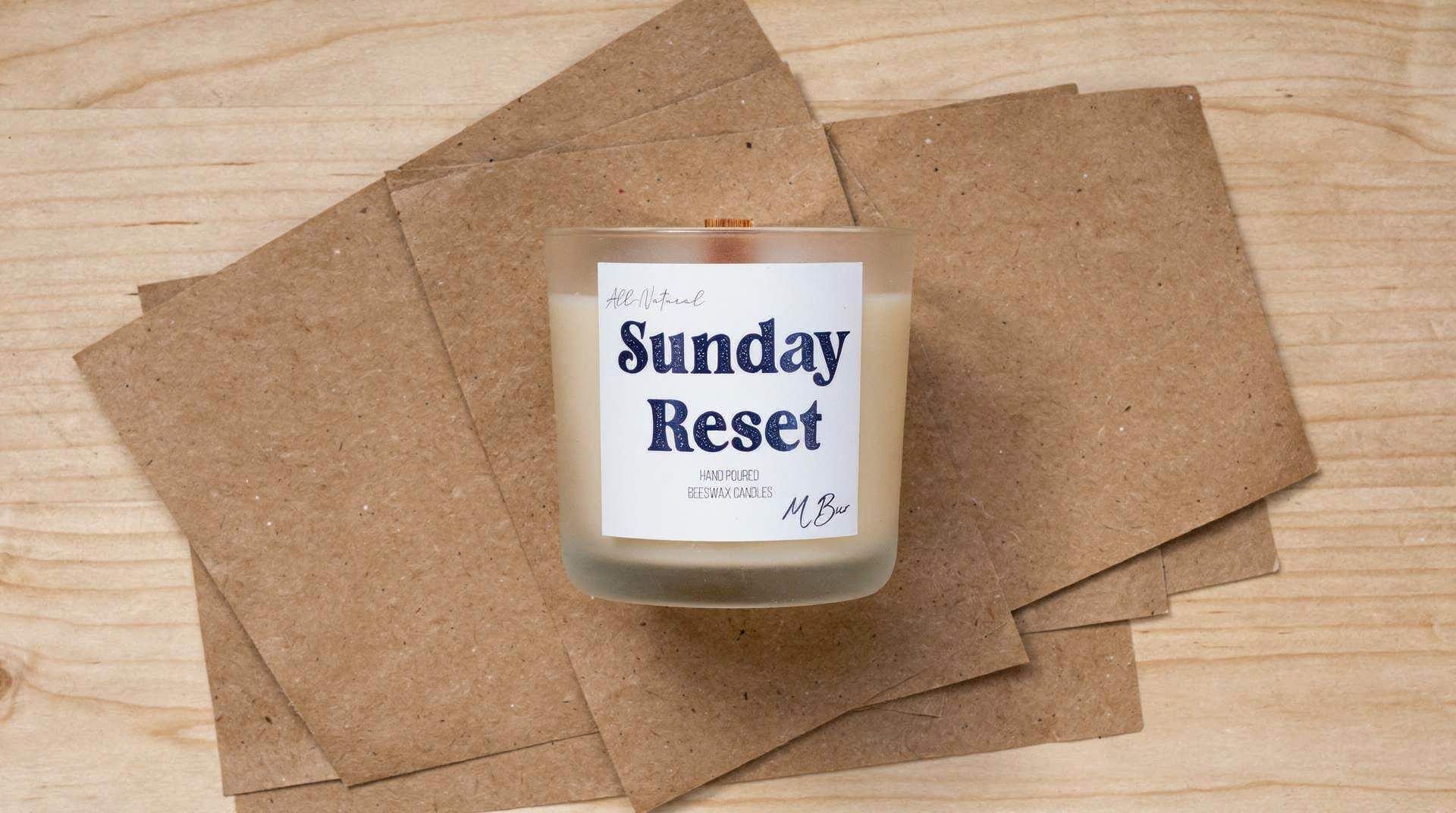
Our Sunday Reset beeswax candle is a good example of what this looks like in practice: a single ingredient wax, phthalate free fragrance, a wooden wick, and no chemical dyes. The candle is doing its part. The packaging needs to do its part too.
MBur's Packaging Approach: The Decisions We Actually Make
We are a small operation. We are not a corporation with a sustainability department and a 50 page ESG report. What we have is the ability to make real choices with full awareness of what those choices mean.
The Jar
Our candles come in clear glass jars. Glass is endlessly recyclable without losing quality, which puts it in a completely different category from plastic. One glass jar can be recycled indefinitely. It can also be repurposed: use it as a votive holder once the wax is gone, a small planter, a pen cup, a vessel for literally anything you want to store. We designed the jars to be clean and simple enough that people actually want to keep them.
The Labels
We keep our labels minimal. No foil. No embossing. No laminate coating. Clean, readable, direct. The design does not need bells and whistles because the candle inside is doing the real work.
Shipping Materials
This is where a lot of small brands take shortcuts because sustainable shipping materials cost more. We use tissue paper where needed and work to avoid foam whenever possible. We are honest that we are still iterating here. Shipping breakable glass safely while eliminating plastic entirely is a genuine challenge, not a solved problem. We are working on it.
No Excess
We do not add decorative filler just to make the box feel full. We do not include marketing materials you did not ask for, printed on paper that goes directly into the recycling bin. What is in the box is what you ordered, packaged to arrive intact. That is it.
The Beeswax Connection to Sustainability
It is worth spending a moment on why beeswax itself is part of the sustainability conversation, not just the packaging around it.
Beeswax is a byproduct of honey production. Bees produce it naturally as part of building their hives. Harvesting it does not require additional land, additional inputs, or additional processing. It has been used as a candle material for roughly 5,000 years, which makes it arguably the most time tested sustainable material in the history of the industry.
Paraffin, by contrast, is a petroleum byproduct. It is what is left over after crude oil is refined into fuel. Burning it releases benzene, toluene, and formaldehyde into your air. It is not a natural material. It is industrial waste repurposed as a candle ingredient, and it is still the most widely used candle wax in the world because it is cheap.
Soy wax is better than paraffin. But soy is almost always blended with paraffin to improve performance, and the fragrance oils used in most soy candles still contain phthalates and other compounds that undercut the cleaner wax. It is also worth knowing that the majority of soy used in commercial products comes from crops with complicated environmental histories.
Beeswax is not perfect. Nothing is. But it is genuinely the cleanest option available, and supporting beeswax candles supports beekeeping, which supports pollinator health. That is a supply chain worth being part of.
Our full beeswax candle collection reflects this commitment from the inside out.
What Our Customers Are Noticing
We did not invent this conversation. Our customers started it.
"I absolutely love these candles! I instantly notice the difference in the air quality, in comparison to the Bath and Body scented candles. I love Bath and Body's candles but I acknowledge that it caused a slight headache and other minor respiratory discomfort. Awesome products. Totally addicted." Jason H., Sunday Reset Candle
Jason is not a sustainability researcher. He is just a person who noticed something different about what he was burning in his home. That kind of noticing is where actual change comes from.
"I love the scent but the actual advertisement of the product... I love candles and grateful I found a non toxic I can burn daily." Tahira, Sunday Reset Candle
The phrase that stands out there: non toxic I can burn daily. That is the goal. Not a candle you light for special occasions and feel vaguely guilty about. A candle you can reach for every day, in a home you feel good about.
Zero Waste Candles: The Honest Reality
We want to be straight with you about something. Zero waste candles, as a concept, are genuinely hard to execute in practice. Shipping requires protective materials. Wicks require some form of processing. Fragrance, even phthalate free fragrance, involves a supply chain.
What zero waste means in a meaningful sense is not that no waste is produced. It means that every decision along the way is made with waste reduction as a priority, not an afterthought. It means choosing glass over plastic. It means not adding unnecessary layers. It means designing products that last longer, which with an 80 hour burn time is something beeswax candles genuinely deliver.
An 80 hour candle that you burn for four hours a night lasts 20 nights. Most paraffin candles in the same size vessel will give you a fraction of that. Fewer candles purchased means fewer jars, fewer boxes, fewer shipping materials. Longevity is a sustainability feature that almost nobody talks about.
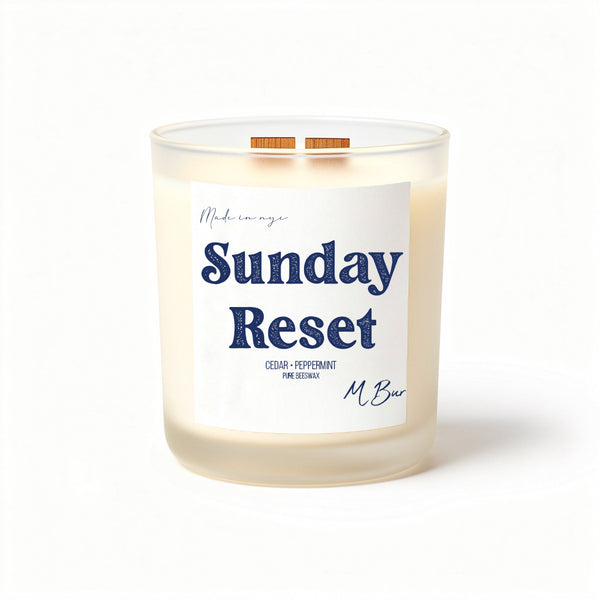
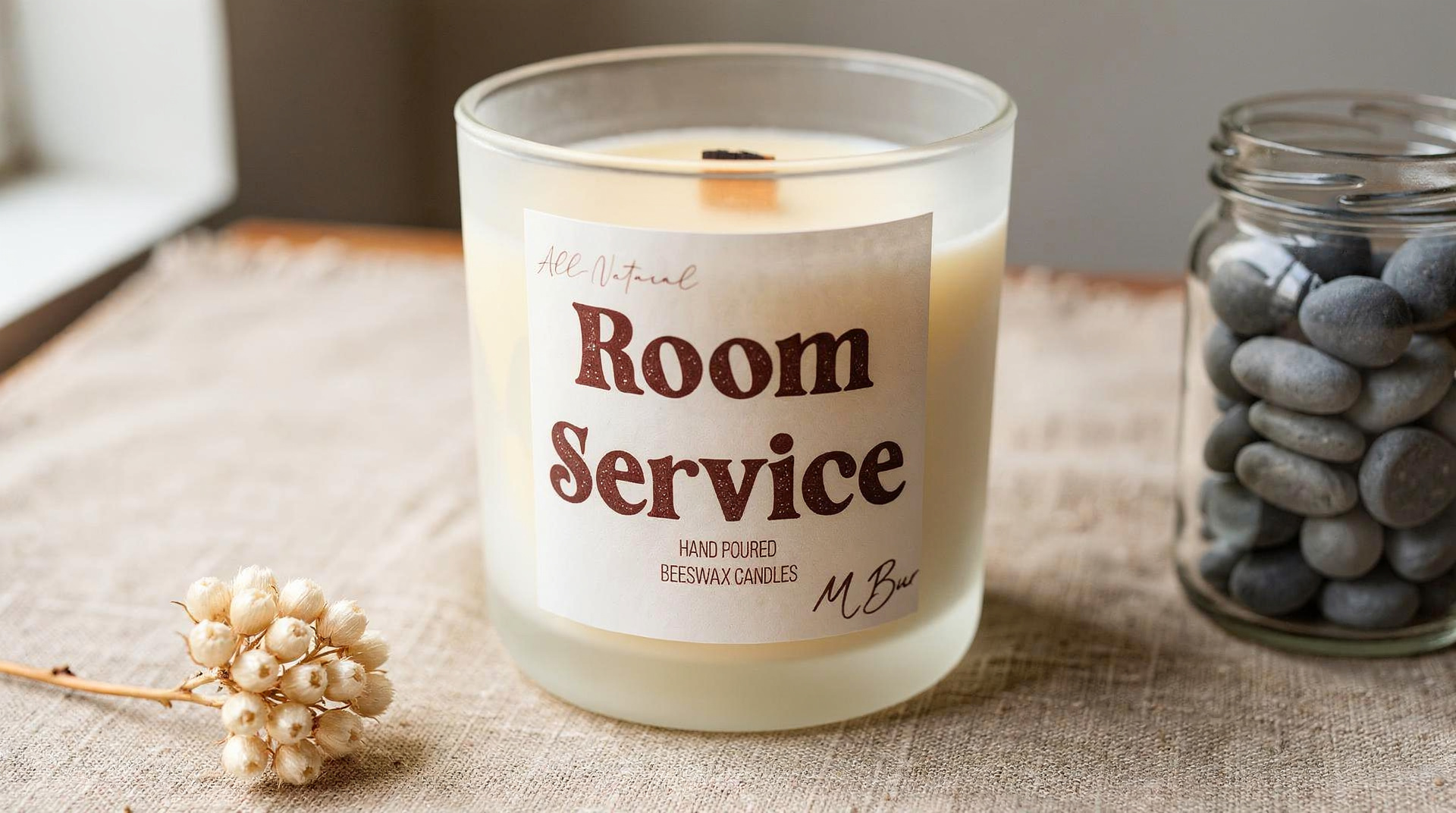
Our Room Service beeswax candle, our bestseller, burns for up to 80 hours in the 12oz size. That is not an accident. Beeswax has the highest melting point of any candle wax, which is exactly why it burns slower and longer than everything else.
Frequently Asked Questions
Can I recycle MBur candle jars?
Yes. Our candles come in clear glass jars, which are accepted by most curbside recycling programs. To prep them: melt or scrape out any remaining wax, remove the label, and wash the jar. Glass can be recycled indefinitely without losing integrity. You can also reuse the jar as a small vessel for anything around your home.
Are beeswax candles actually better for the environment than soy?
It depends on who is making the soy candle and what is in it. Pure beeswax with no additives is a natural byproduct of honey production, requires no chemical processing, and burns cleanly. Most commercial soy candles are blended with paraffin and use toxic fragrance oils that undercut the cleaner wax. Our pure beeswax candles are single ingredient wax, which is about as clean as candles get.
What makes a candle packaging truly sustainable?
Recyclable or reusable materials, no laminate or foil coatings that contaminate the recycling stream, minimal excess packaging, and a product inside that lasts long enough to justify the materials used. Sustainability is about the full picture, not just the box.
How do beeswax candles support pollinators?
Beeswax is produced by honeybees as a natural part of their colony activity. Purchasing beeswax products supports beekeepers, which supports managed bee populations. Healthy bee populations are essential for pollinating a huge percentage of the food we eat. It is a small but real chain of positive impact.
Do MBur candles use any plastic in their packaging?
We work to minimize plastic in our packaging. Our candles are in glass jars with paper labels. We are continuing to refine our shipping materials to reduce plastic protective elements. We will always be honest about where we are still improving rather than claiming perfection we have not achieved.
The Bottom Line
Sustainable candle packaging is not one decision. It is a series of decisions made over and over, every time you source materials, design a label, or pack a box. At MBur, we are a small handmade brand operating out of Queens, NY, which means every one of those decisions is made by real people who care about what they are putting into the world.
We start with 100 percent beeswax, phthalate free fragrance, wooden wicks, and no chemical dyes. We package in glass that can be recycled or reused. We keep things simple because simple is almost always better for the planet than elaborate.
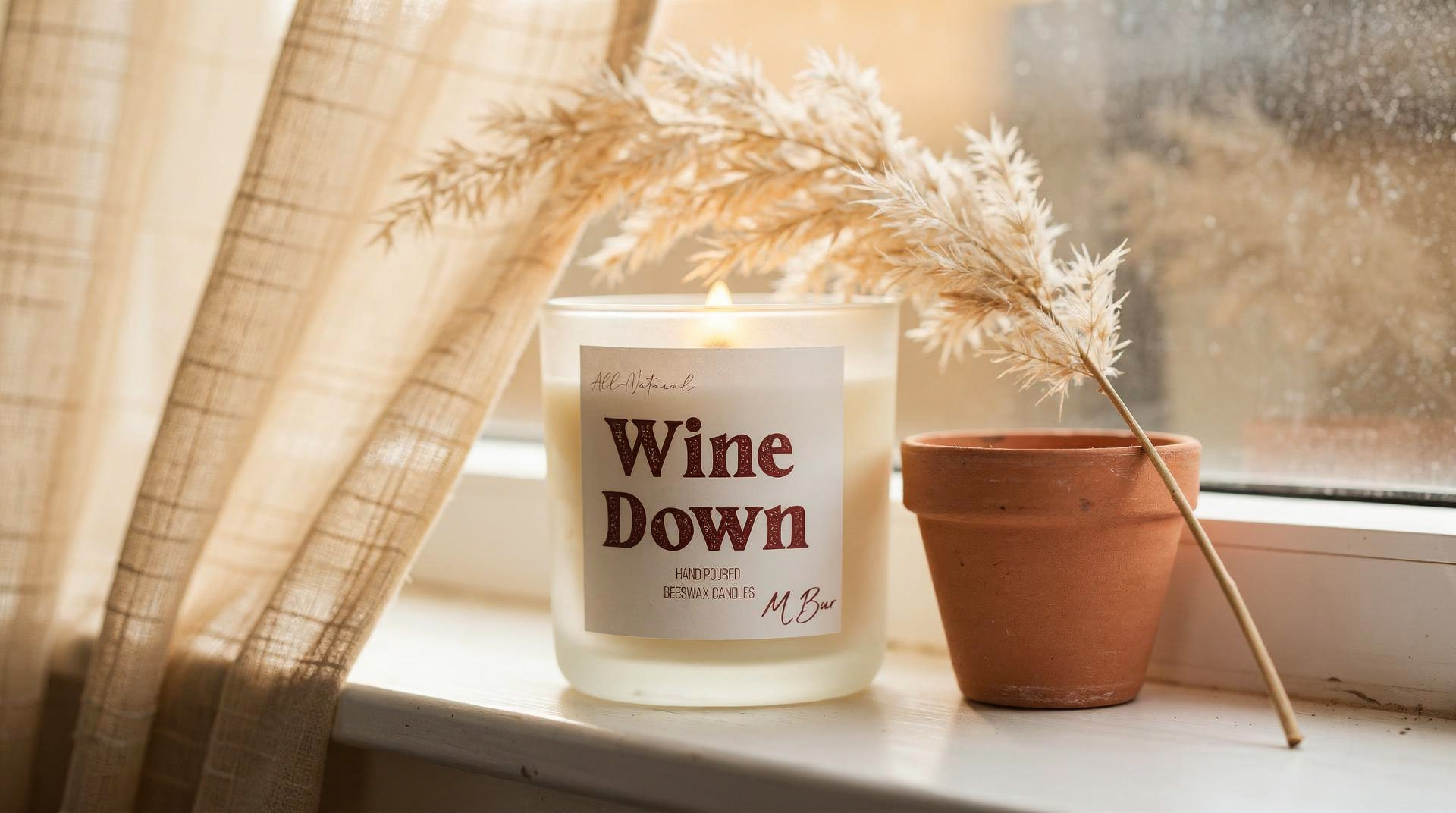
If you want to start somewhere, try our Wine Down beeswax candle, which has become a favorite for people who want a clean, calming burn without the guilt spiral. Starting at $20 for the 20 hour size, it is a low commitment way to find out what a genuinely clean candle actually feels like in your home.
Shop the MBur beeswax candle collection and find out what clean burning actually smells like.
Related Reading:
- Our Commitment to Clean Candles
- Paraffin vs. Beeswax vs. Soy: Which Candle Wax Is Safest for Indoor Air Quality?
What buyers say:

