

Beeswax vs. Soy vs. Paraffin: Which Candle Wax is Actually Best for Your Home Decor?
Beeswax vs. Soy vs. Paraffin: Which Candle Wax is Actually Best for Your Home Decor?
You just moved into a new place. The furniture is placed, the shelves are styled, and the last thing you need is a candle that pulls the whole room together. You grab something at the checkout line, light it up, and within twenty minutes your eyes are watering and your nose is done for the night.
That is not a vibe problem. That is a wax problem.
The candle wax you choose affects everything: how long it burns, how much scent it throws, how it looks in your space, and what it actually releases into your air. This guide breaks down beeswax, soy, and paraffin side by side so you can pick the best candle wax for your home without the guesswork. And if you want to go deeper on how candles function as actual design objects, the complete candle styling guide is worth a read before you shop.
By the end of this post, you will know exactly which wax type fits your space, your nose, and your lifestyle. Let us get into it.
Why Candle Wax Actually Matters for Home Decor
Most people think of candle wax as the part that just holds the fragrance. It is not. Wax determines burn time, flame color, soot output, scent intensity, and the aesthetic of the candle itself. All of that directly affects how your space looks and feels when a candle is lit.
A warm amber flame sitting on a nightstand reads completely differently than a harsh bright flame on a coffee table. A candle that pools cleanly and evenly looks intentional. One that tunnels or frosts unexpectedly looks like a mistake. These are design details, not just chemistry details.
So yes, wax type matters more than the label on the box.
Paraffin Wax: The Petroleum Problem
What It Is
Paraffin is a byproduct of petroleum refining. It is what is left over after crude oil has been processed. That is not a scare tactic, that is just the supply chain. Paraffin is the most widely used candle wax on the market precisely because it is cheap, widely available, and holds fragrance exceptionally well.
What It Is Good At
Paraffin has the strongest hot throw of any wax type. When you walk into a room and the scent hits you from across the hall, that is almost always a paraffin candle. Brands like Yankee Candle have built entire empires on this characteristic. Their classic large jar candles (around $34 for 22 oz) are formulated specifically for maximum scent intensity, which is why they have such a loyal following.
Paraffin also holds color dye vividly, which is why mass market candles come in deep reds, jewel tones, and saturated shades that soy and beeswax simply cannot achieve without significant chemical intervention.
Where It Falls Short
A 2009 study from South Carolina State University found that paraffin candles released chemicals including toluene and benzene when burned. These are recognized VOCs (volatile organic compounds). Industry funded studies have pushed back, arguing emissions stay below safety thresholds when the candle is properly wicked. But here is the thing: most people do not trim their wicks, do not ventilate their rooms, and burn candles in enclosed spaces for hours at a time.
Under those conditions, paraffin produces black petro carbon soot. You have seen it. That dark ring on the ceiling above a candle? That black film on the inside of a jar? Paraffin soot. It is not just an aesthetic problem. It is a particulate problem.
For home decor specifically, paraffin also runs into a longevity issue. It burns fast, roughly 0.5 to 1.0 hours per gram, which means that $34 Yankee Candle disappears faster than you want it to.
Soy Wax: The Better Alternative with an Asterisk
What It Is
Soy wax is made from hydrogenated soybean oil. It emerged in the 1990s as a cleaner, domestically sourced alternative to paraffin, and it largely delivered on that promise. It burns cleaner than paraffin, produces minimal soot (white rather than black), and is biodegradable.
What It Is Good At
Soy wax has a lower melting point than both paraffin and beeswax, which creates a wider melt pool. For home decor purposes, that wide, even pool looks clean and intentional in a glass vessel. Brands like P.F. Candle Co. have leaned into this aesthetic with their amber glass jars, where the creamy, matte surface of 100% soy wax becomes part of the visual appeal. Their 7.2 oz Teakwood and Tobacco candle runs $24 and burns 40 to 50 hours.
Soy also has a gentle cold throw, meaning it smells pleasant right out of the box without being aggressive. For scent sensitive households, that subtlety is a feature, not a bug.
Where It Falls Short
Here is the asterisk. The phrase "soy candle" does not guarantee a clean product. Most commercial soy candles are blended with paraffin to improve scent throw and consistency. Unless the label says 100% soy wax, you are likely burning a blend. And many soy candles still use toxic fragrance, which introduces phthalates and other compounds regardless of what the wax base is.
Soy wax also frosts. That white crystalline surface that appears on unlit soy candles is a natural characteristic of pure soy, but it can look rough if the candle is styled as a decor object rather than tucked away. Some people love it as a marker of purity. Others find it distracting.
Beeswax: The Original and Still the Best
What It Is
Beeswax is the oldest candle material on earth, used continuously since approximately 3,000 BCE. It is produced by honeybees to construct honeycombs and is harvested as a byproduct of honey production, which means burning beeswax actually supports beekeeping operations rather than depleting a separate resource.
It has the highest melting point of any candle wax, around 144 to 149 degrees Fahrenheit, which is exactly why it burns so slowly and lasts so long.
What It Is Good At
Beeswax burns longer than any other wax. Significantly longer. A dense beeswax pillar can run 60 or more hours. MBur's 12 oz beeswax candles are rated for 80 hours, which is not a marketing claim, it is a function of the wax density and melting point. Compare that to paraffin at 0.5 to 1.0 hours per gram and the value math changes completely.
The flame color is also different. Beeswax produces a warm amber flame in the same light spectrum as natural sunlight. For interior design purposes, that warmth is significant. A beeswax candle on a dining table or bookshelf emits a quality of light that reads as intentional, not just functional. If you are building a room that photographs well or just feels considered, that flame color matters. The candle styling guide goes deep on how flame quality interacts with different interior palettes.
Beeswax is also naturally hypoallergenic. No chemical processing, no bleaching, no additives in the wax itself. What you are burning is what the bees made.
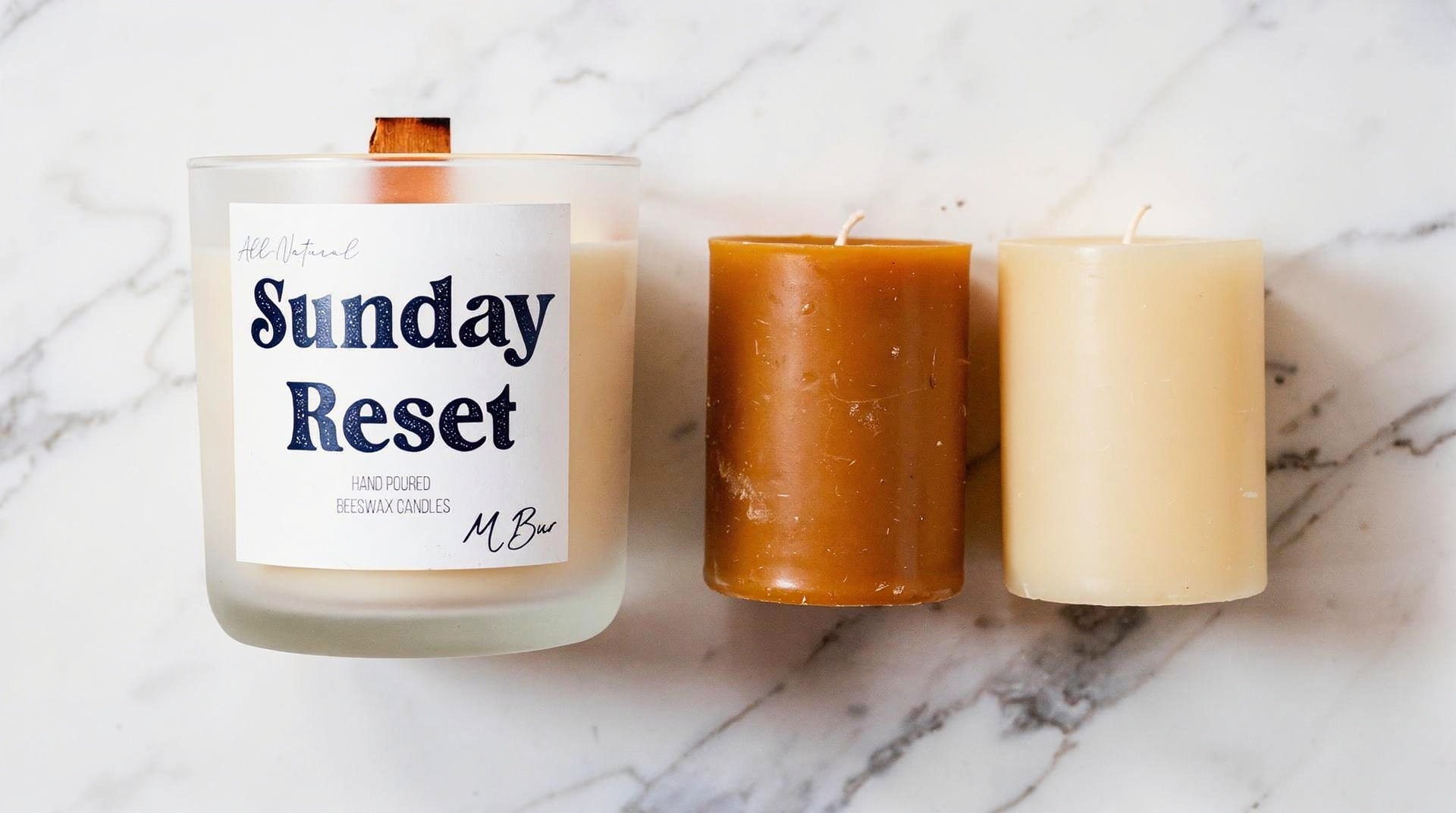
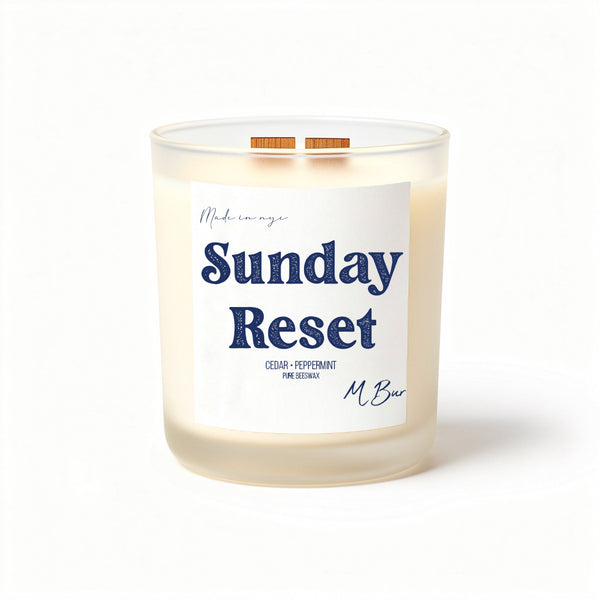
At MBur, all candles are poured with 100% beeswax, no blends, no fillers. The Sunday Reset beeswax candle (starting at $20 for the 20 hour size) is a good entry point if you want to see what a properly crafted beeswax candle feels like in a real room, especially in a workspace or kitchen where you want something clean and grounding.
Where It Falls Short
Beeswax does not hold added fragrance as readily as paraffin. Its naturally high melting point means fragrance oils need more careful formulation to perform well. This is exactly why MBur uses phthalate free, non toxic fragrance that is specifically calibrated for beeswax rather than just dumping in a fragrance load designed for paraffin.
Beeswax also costs more upfront. Raw beeswax is more expensive to source than paraffin or soy. But when you account for the 80 hour burn time on a 12 oz candle, the cost per hour of burn drops considerably.
Side by Side Comparison: Beeswax vs. Soy vs. Paraffin
| Feature | Beeswax | Soy Wax | Paraffin Wax |
|---|---|---|---|
| Source | Honeycomb (natural byproduct) | Soybeans (vegetable oil) | Petroleum (crude oil) |
| Burn Time | Very long (up to 80 hours at MBur) | Long (40 to 50 hours typical) | Fast (burns 30 to 50% faster than soy) |
| Flame Color | Warm amber (sunlight spectrum) | Cool yellow/white | Bright yellow/orange |
| Soot Output | None/negligible | Low (white soot) | High (black petro soot if untrimmed) |
| Scent Throw | Subtle to moderate (natural honey base) | Moderate (softer) | Strong/intense |
| Fragrance Safety | Non toxic fragrance (MBur) | Varies by brand | Often toxic fragrance |
| Aesthetic | Warm golden tone, clean vessel | Creamy matte, may frost | Vivid color, can show soot |
| Price per oz | $3.00 to $4.00+ | $3.00 to $3.50 | $1.50 (mass) to $11.50 (luxury) |
| Hypoallergenic | Yes | Generally | No |
| Toxin Concerns | None in wax | Low (watch for paraffin blends) | VOC emissions (toluene, benzene) |
What Real Customers Actually Notice
Data is useful. Real people burning candles in real rooms are more useful.
"I absolutely love these candles! I instantly notice the difference in the air quality, in comparison to the Bath and Body scented candles. I love Bath and Body's candles but I acknowledge that it caused a slight headache and other minor respiratory discomfort. Awesome products. Totally addicted." Jason H., Sunday Reset Candle
That switch from a paraffin based mass market candle to a 100% beeswax candle with non toxic fragrance is exactly what the data predicts. The difference is not imaginary. It is chemistry.
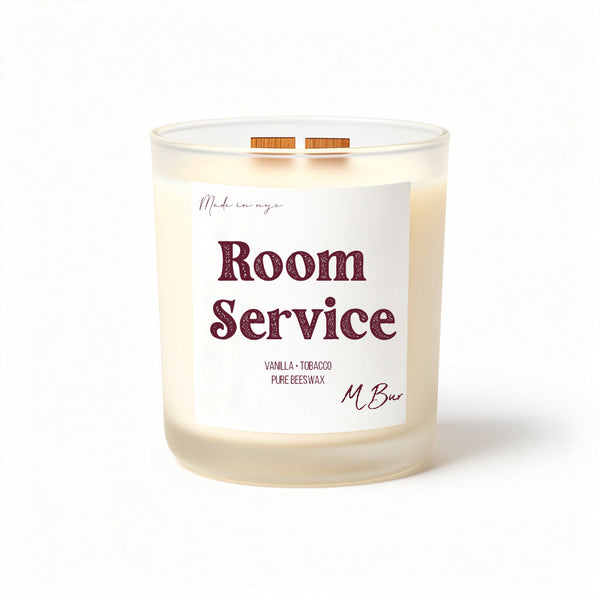
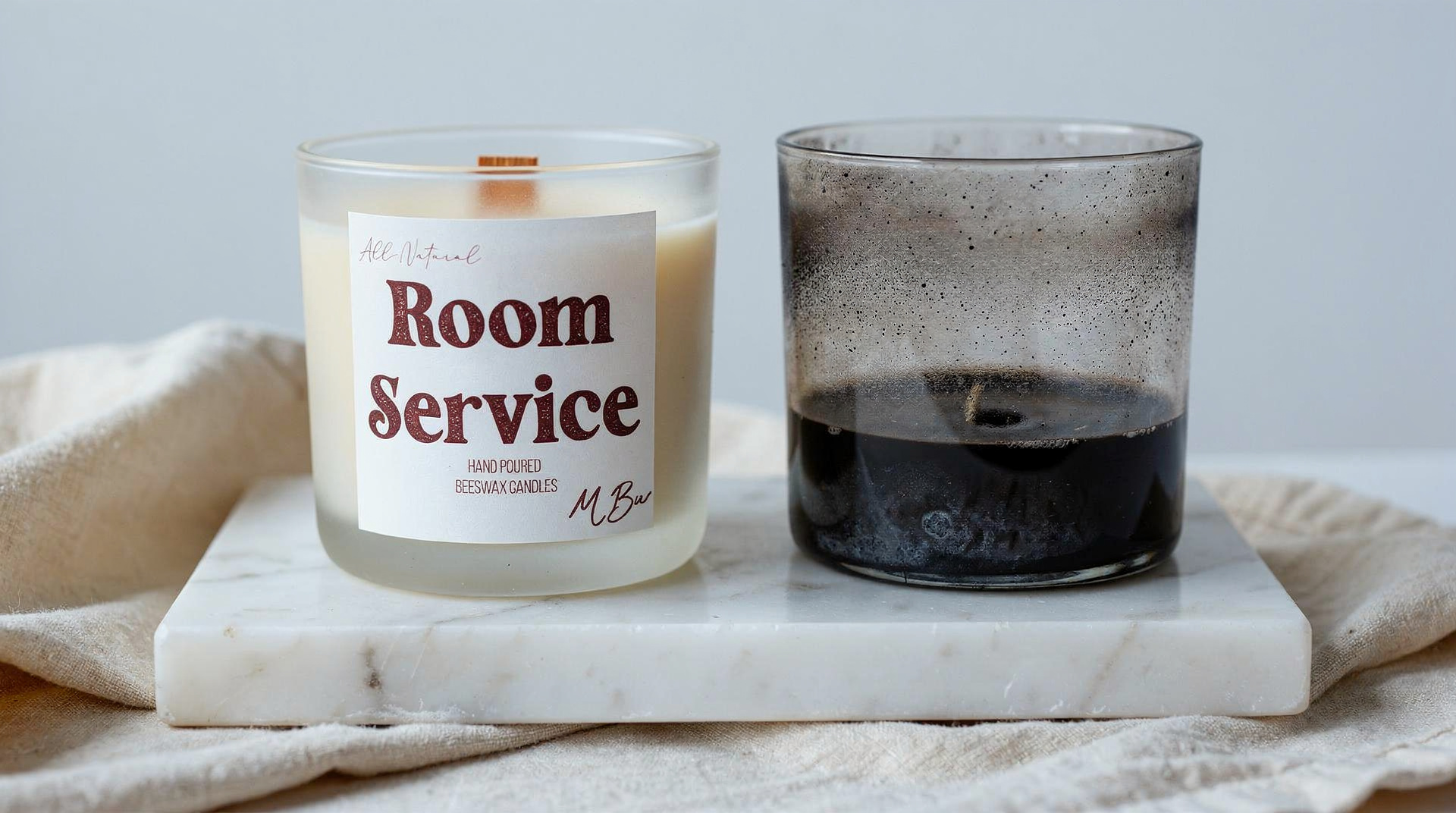
If you are coming from Bath and Body Works or Yankee Candle and wondering whether beeswax is actually worth it, the Room Service beeswax candle (starting at $20 for the 20 hour size) is the most direct comparison. It has a strong scent presence without the heaviness that tends to come from paraffin based formulas.
"I love these candles. No headache or feeling nauseous like the Bath and Body candles with all the extra chemicals. In addition, I love the package and how carefully everything was wrapped." Jason H., Sunday Reset Candle
Beeswax in Home Decor: The Aesthetic Case
Beyond chemistry, beeswax wins on aesthetics in ways that get overlooked in most wax comparisons.
The warm amber flame color is not just pleasant, it is functionally different from what you get with soy or paraffin. Beeswax flame temperature sits closest to the natural light spectrum, which means it does not create the harsh contrasts that a bright white or orange paraffin flame can produce in a carefully lit room. Interior designers who use candles intentionally, not just decoratively, tend to reach for beeswax for this reason.
The vessel matters too. MBur candles are designed without chemical dyes, which means the wax itself has a natural, warm ivory color that reads well in a range of interior palettes from minimalist and Scandinavian to warm and maximalist. It is a color that does not fight with anything.
And then there is the wick. MBur uses wooden wicks, which produce a soft crackle when burning. That sound is not just sensory novelty. It changes how a room feels when a candle is lit. Several reviewers have called it out directly.
"I love the crackle of the wooden wick, very soothing." Beatrice S., Sunday Reset Candle
"I love the sounds it makes as it burns too, it's a nice crackling sound which makes me feel cozy on winter nights." Alexa, Sunday Reset Candle
Sound, light, scent, and material. That is a design object, not just a candle.
How to Choose the Right Wax for Your Space
If you want maximum scent throw in a large, ventilated room
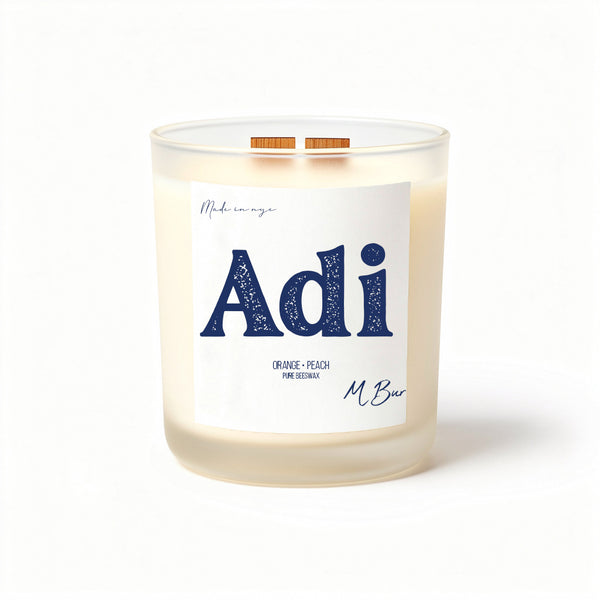
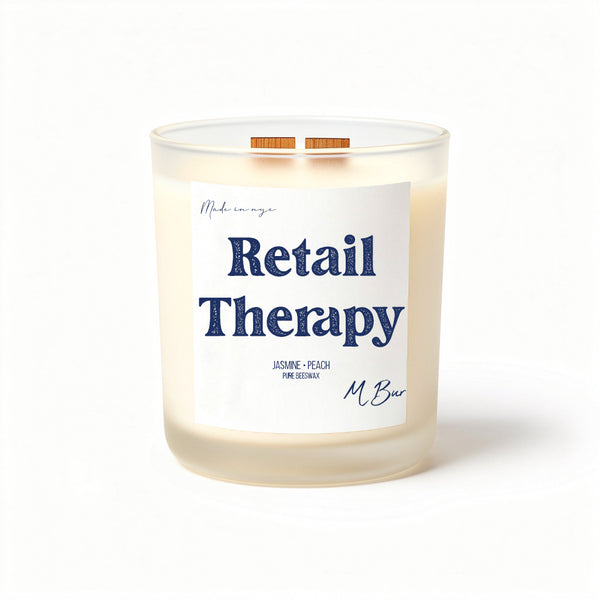
Soy or a high quality soy blend will serve you here. P.F. Candle Co. (7.2 oz, $24, 40 to 50 hours) is a solid pick if you want 100% soy with phthalate free fragrance. For beeswax with strong room coverage, MBur's Retail Therapy beeswax candle (12 oz, 80 hours, $65) fills a room consistently without the petrochemical load.
If you want the cleanest possible burn for a bedroom or small space
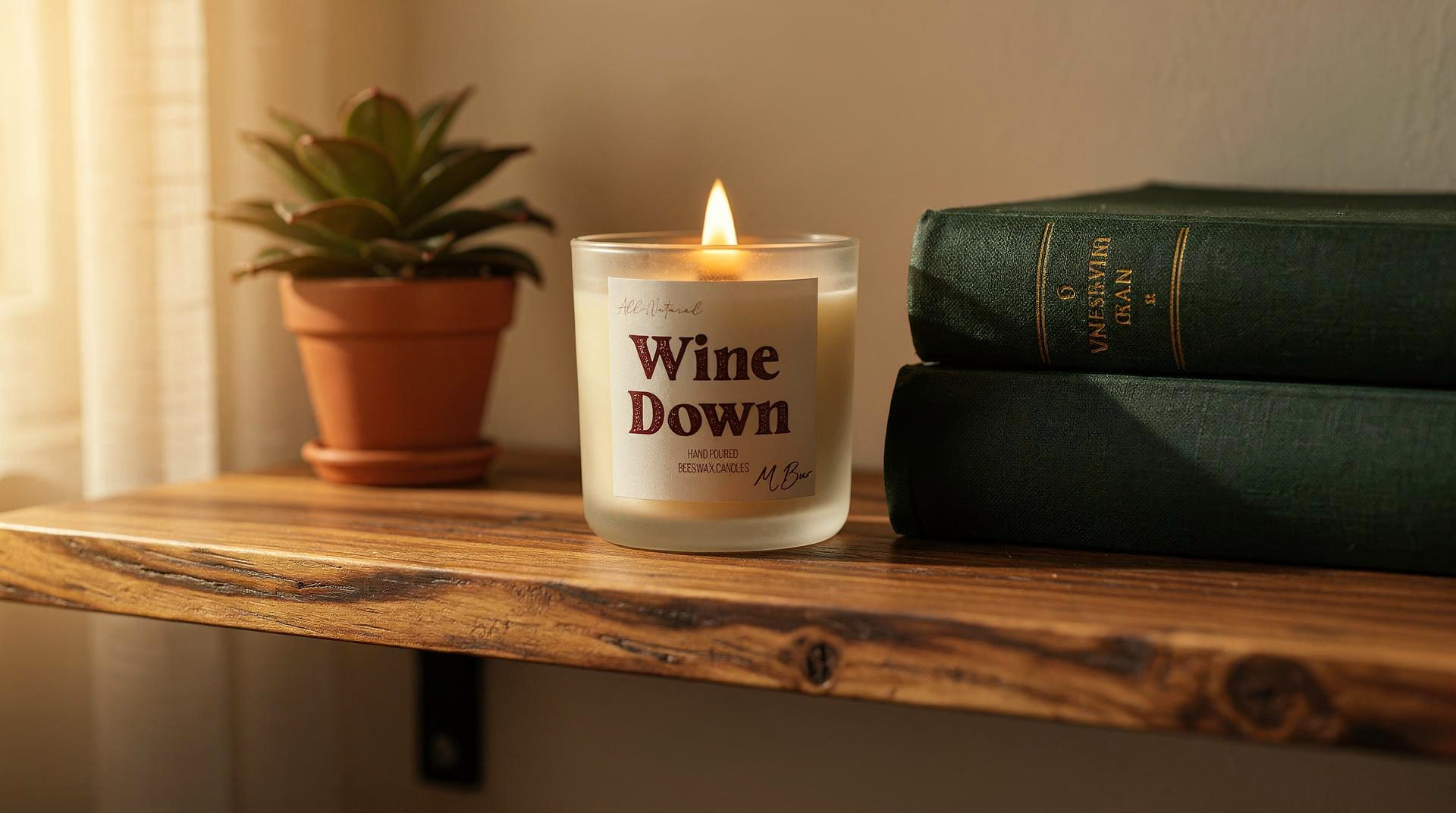
Beeswax, full stop. The hypoallergenic properties and negligible soot output make it the right call for enclosed spaces where you are breathing the air for hours. MBur's Wine Down beeswax candle (starting at $20 for 20 hours) was specifically called out by a reviewer for being the first candle that did not cause headaches.
"A lot of other candles tend to give me headaches, but this one was a total game changer. I was able to enjoy the calming aroma without any discomfort." Nicole D., Sunday Reset Candle
If you are building a styled shelfie or tablescape
Consider beeswax for the flame quality and soy for the vessel aesthetic. P.F. Candle Co.'s amber jars are legitimately beautiful on a shelf. But if you want the candle itself to function as a decor anchor rather than just a prop, the warm tone and consistent pool of a beeswax candle does more visual work when lit.
If you are buying on a tight budget
Paraffin based mass market candles will cost less upfront. They will also burn faster and need replacing more often. Do the math. A Yankee Candle at $34 for 22 oz burns at roughly 0.5 to 1.0 hours per gram. An 80 hour MBur beeswax candle at $65 is a better cost per hour investment, and it does not black ring your ceiling in the process.
Frequently Asked Questions
Which candle wax is safest for indoor air quality?
Beeswax consistently comes out on top for indoor air quality. It produces no black soot, no petroleum derived VOCs, and is naturally hypoallergenic. Soy is a solid second option as long as the candle is 100% soy with non toxic fragrance. Paraffin lags significantly. For a deeper breakdown on what gets released when candles burn, see our post on which candle wax is safest for indoor air quality.
Do beeswax candles actually smell good or just like honey?
Unscented beeswax has a faint, natural honey and floral scent that most people find pleasant. But beeswax candles made with high quality non toxic fragrance, formulated specifically for beeswax, perform very differently from what most people expect. MBur's entire collection is built around this. The MBur candle sample pack is a low commitment way to try multiple scents before committing to a full size candle.
Is soy wax actually better than paraffin, or is it just marketing?
100% soy wax from a reputable brand is genuinely better than paraffin on most environmental and health metrics. The problem is that "soy candle" on a label does not guarantee 100% soy. Many commercial soy candles are paraffin blends. Always read ingredient lists, and always check whether the fragrance is phthalate free.
Why does beeswax cost more than soy or paraffin?
Beeswax is harvested in smaller quantities per hive and requires more labor to process. It is not a manufactured or chemically derived material. The higher upfront cost is offset significantly by longer burn times. An 80 hour beeswax candle burns more than twice as long as most comparable paraffin candles of the same size.
How long do beeswax candles actually burn compared to soy?
Soy burns 30 to 50% longer than paraffin, which is already an improvement. Beeswax burns longer still, because its high melting point requires more sustained heat to consume the wax. MBur's 12 oz candles are rated for 80 hours, which is more than most soy candles of comparable weight. For a full breakdown on burn times, see our guide on how long beeswax candles actually last.
The Bottom Line on Candle Wax for Home Decor
Paraffin is petroleum waste with good scent throw. Soy is a real improvement over paraffin but only when it is actually 100% soy with non toxic fragrance. Beeswax is the original, the cleanest, the longest burning, and the most visually interesting of the three. It is the only wax that does genuine work as both a functional and design object.
If you want a candle that earns its place on a shelf, fills a room cleanly, and burns long enough to justify the price, start with the Room Service beeswax candle in the 20 hour size at $20. It is MBur's bestseller for a reason. Over 30 reviews, with customers consistently noting the scent coverage, the quality of the burn, and the absence of the chemical side effects they got from their previous candles.
"These have been my favorite candles since I discovered them a few years ago! I find that the scent spreads throughout my whole home so much more than any other candle I've tried. I love the wooden wicks! It's a beautiful glow and it makes a very subtle crackling sound. And I can really tell the difference in the natural materials, especially compared to other big brand named candles that I've tried which make me feel like I need to cough." Sarah Thompson, Sunday Reset Candle
Try the Room Service beeswax candle. If it is not the best candle you have burned, you will know within the first hour.
Shop Room Service, starting at $20 for 20 hours.
What buyers say:
Browse the full collection of 100% beeswax candles.
Related Posts

