

Small Batch vs. Mass Produced: How Fragrance Blends Truly Differ in Candles
The label says "hand poured." The price says $12. Something does not add up.
Walk into any home goods store and you will find dozens of candles claiming to be hand poured, all natural, or made with love. Walk into a small batch candle studio and you will hear the same vocabulary. So what actually separates a candle made in a 50 gallon vat from one poured in batches of twenty?
More than you would guess. The difference lives in the fragrance oils, the wax, the wick, and the amount of time a maker spends dialing in the ratio between all three. This post breaks down exactly where small batch and mass produced candles diverge, with a side by side comparison you can use the next time you are choosing between a $12 candle at Target and something from a small batch beeswax candle collection that costs more and tells you exactly why.
What "small batch" actually means (and what it does not)
"Small batch" has no legal definition. Neither does "hand poured." A company producing 10,000 units a day could technically call each run a "batch." So the label alone tells you very little.
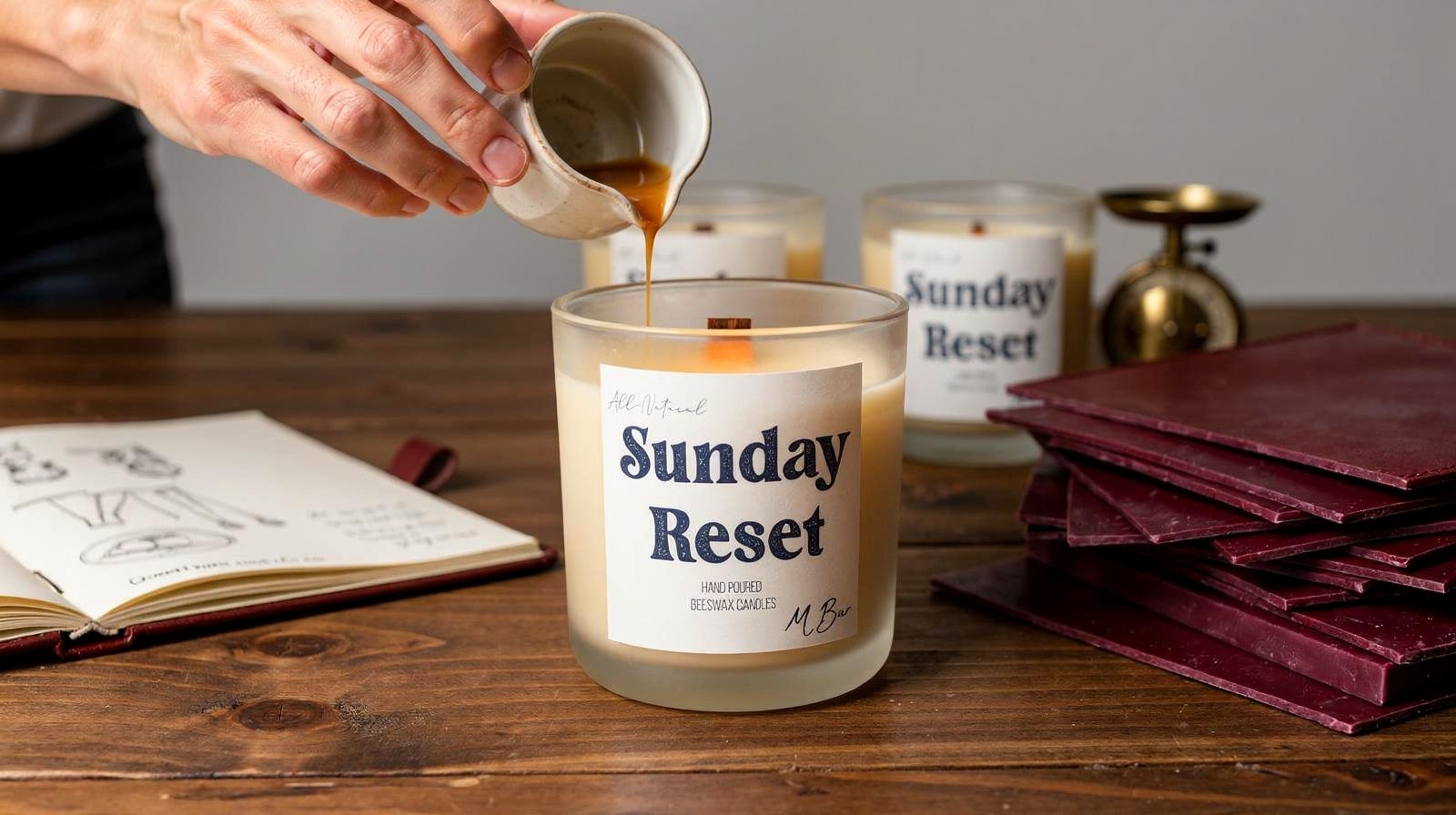
What matters is what small scale production makes possible. When a maker pours 20 to 50 candles at a time instead of thousands, they control the wax temperature within a narrow window. That precision matters because fragrance oils bind to wax differently at different temperatures. Pour too hot and volatile top notes flash off before the wax sets. Pour too cool and the oil sits in pockets instead of dispersing evenly.
Mass production prioritizes consistency at scale. Large vat systems automate the pour, which is efficient but leaves less room to adjust for the quirks of a specific fragrance blend. The result is a candle that smells identical jar to jar, but often at the cost of complexity. You get one flat note instead of a layered scent that evolves as it burns.
The fragrance question: what is actually in there?
This is where the gap between small batch and mass produced gets wide.
Most mass produced candles use toxic fragrance blends built for cost efficiency. The word "fragrance" on a label is a catch all that can represent dozens or even hundreds of undisclosed chemical compounds, including phthalates and parabens. Manufacturers are not required to itemize what is inside that single word. For a company producing millions of units, the priority is a scent that is strong on the shelf and cheap to source.
Small batch makers who prioritize clean ingredients tend to use phthalate free, non toxic fragrance oils and list what is in them. The cost per pound is significantly higher, but the tradeoff is a fragrance that does not trigger headaches, does not leave chemical residue on your walls, and actually smells like what it claims to smell like.
According to the National Candle Association, both natural and constructed fragrance materials are used across the industry. The distinction worth paying attention to is not "natural vs. constructed" but whether the specific compounds are disclosed and whether known irritants like phthalates are present.
Side by side: small batch vs. mass produced candles
| Factor | Small Batch | Mass Produced |
|---|---|---|
| Wax type | Typically single ingredient: 100% beeswax, soy, or coconut | Often paraffin or paraffin blends labeled as "soy blend" (may contain minimal soy) |
| Fragrance quality | Non toxic, phthalate free oils with disclosed ingredients | Undisclosed "fragrance" blends, often containing phthalates and parabens |
| Scent throw | Layered, evolving scent profile with distinct top, middle, and base notes | One dimensional scent, strong on cold throw (in store) but often weak hot throw (when lit) |
| Burn time | Varies by wax. Beeswax burns longest due to highest melting point (up to 80 hours for a large candle) | Paraffin burns faster. A comparable jar often lasts 40 to 60 hours |
| Price per candle | $20 to $65+ depending on size | $10 to $20 |
| Price per burn hour | $0.25 to $0.81 (beeswax, 80 hour size at $65 = $0.81/hr; 20 hour at $20 = $1.00/hr) | $0.25 to $0.50 (but shorter total life and potential hidden costs like soot cleanup) |
| Soot and residue | Minimal to none with beeswax and wooden wicks | Black soot common with paraffin and cotton wicks, deposits on walls and ceilings |
| Ingredient transparency | Full ingredient list typically available. You can ask the maker directly | "Fragrance" listed as single ingredient. No breakdown provided |
| Freshness | Produced close to point of sale. Fragrance oils are fresh | May sit in warehouses for months. Scent intensity can diminish in storage |
| Health impact | Fewer irritants. Suitable for people sensitive to strong scents or prone to headaches | Known VOC emissions from paraffin (benzene, toluene, formaldehyde). Toxic fragrance compounds may cause headaches and respiratory irritation |
Scent throw: the metric most people care about (and get wrong)
If you have ever bought a candle that smelled incredible in the store and then disappeared the moment you lit it at home, you have experienced the gap between cold throw and hot throw.
Cold throw is how a candle smells unlit. Mass produced candles are often engineered to maximize this because it drives impulse purchases in retail. The fragrance load is front loaded with volatile top notes that hit hard when you pop the lid.
Hot throw is what actually matters. It is how the scent disperses when the candle is burning, filling a room over time. Hot throw depends on three things working together: the wax type, the wick's heat output, and how well the fragrance oil bonded to the wax during curing.
Small batch candles typically cure for days or weeks before shipping. This curing period lets the fragrance oil fully integrate with the wax, which produces a stronger, more consistent hot throw. Mass produced candles are often shipped within days of production to meet demand cycles, cutting the curing window short.
Beeswax, specifically, has a unique advantage here. Its high melting point means it creates a deeper, wider melt pool that releases fragrance steadily rather than in a quick burst. The scent builds slowly and lasts.
"This candle permeates every corner of the room. Can't say enough about how impressed I am with this company."
Tiffany Gordon, Retail Therapy review
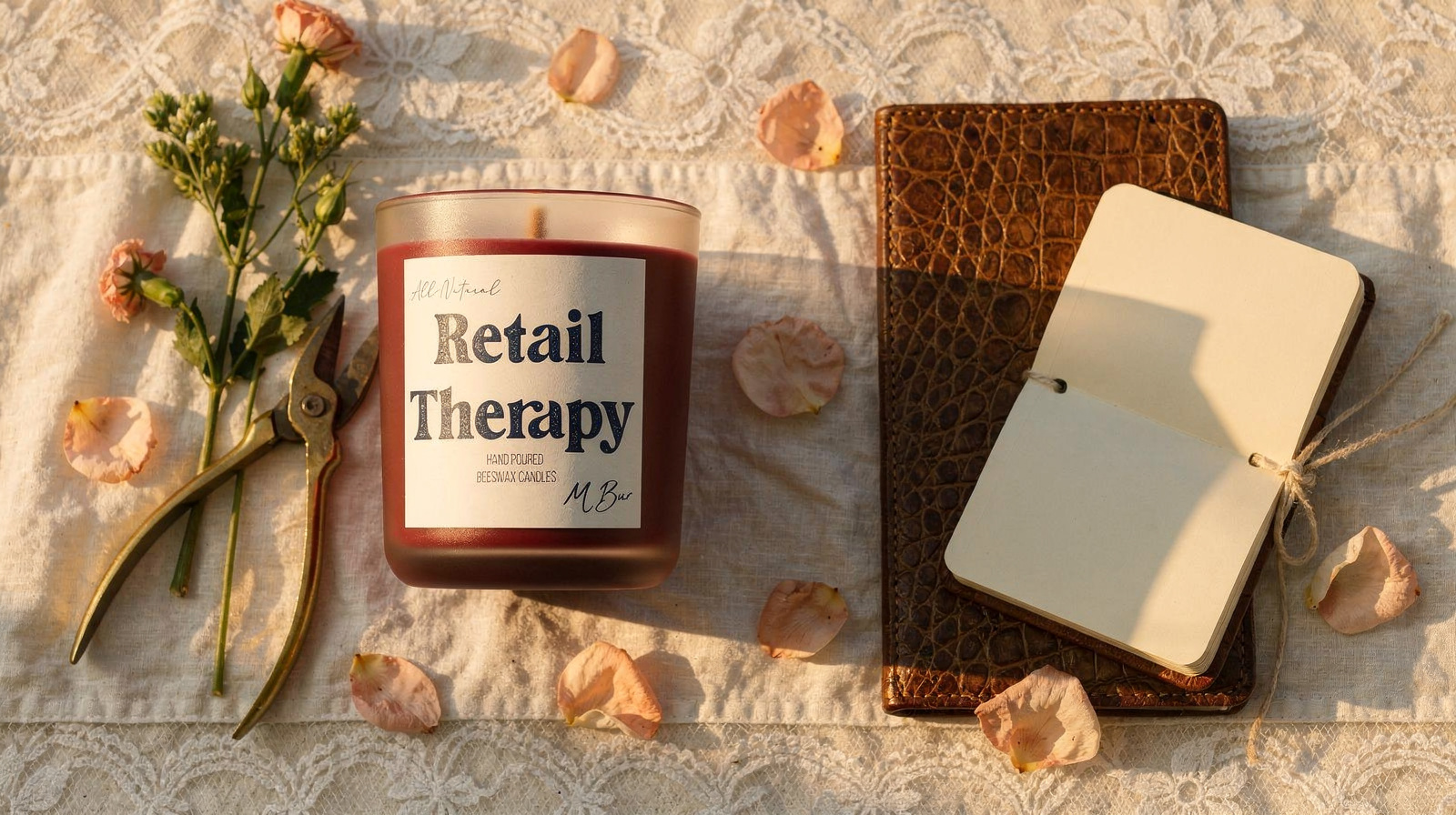
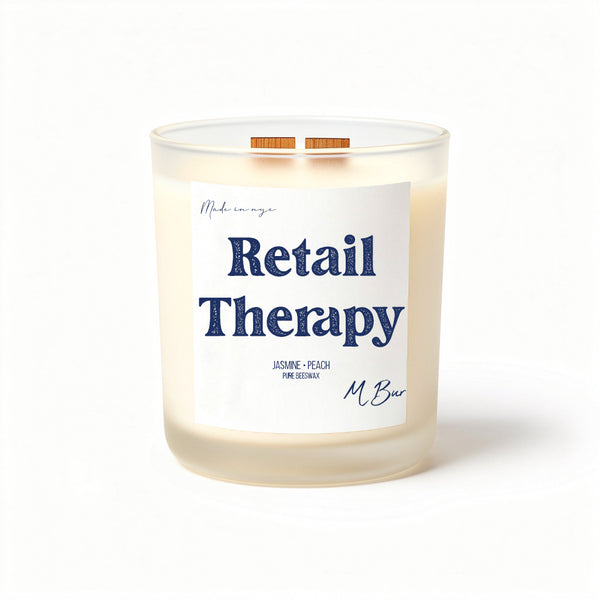
That kind of room filling performance comes from the combination of 100% beeswax, a properly sized wooden wick, and a non toxic fragrance oil that was given time to cure. You can explore scents like Retail Therapy, with its layered black currant, jasmine, and amber profile, to see what a well made fragrance blend actually does in a room.
The "hand poured" myth
A quick note on this because it trips people up. "Hand poured" sounds artisanal. It sounds like a person carefully tending to each candle. And sometimes that is exactly what it means.
But the phrase is unregulated. A factory worker pouring wax from a spigot into jars on a conveyor belt is technically hand pouring. The term tells you nothing about ingredients, fragrance quality, or burn performance.
Instead of looking for "hand poured" on the label, look for these specifics: what type of wax (single ingredient or blend), what is in the fragrance (phthalate free or undisclosed), what kind of wick (wooden, cotton, metal core), and whether the company will tell you exactly what is in the candle if you ask. A maker who is proud of their ingredients will list them. A company hiding behind the word "fragrance" has a reason.
Who wins? It depends on what you are buying for
If you want the cheapest candle possible: Mass produced wins on sticker price. A paraffin jar candle at $12 is hard to beat if your only metric is dollars out of pocket. Just know that the burn time will be shorter, the scent may underwhelm once lit, and the soot on your ceiling is a real possibility.
If you want the best value per hour of burn: Beeswax small batch candles close the gap fast. An 80 hour beeswax candle at $65 costs roughly $0.81 per hour of burn time. A 45 hour paraffin candle at $15 costs about $0.33 per hour, but you are also burning petroleum byproduct in your living room.
If you care about what you are breathing: Small batch with disclosed, non toxic ingredients wins decisively. Paraffin releases benzene, toluene, and formaldehyde when burned. Toxic fragrance oils add phthalates and parabens to the mix. A candle made with 100% beeswax and phthalate free fragrance eliminates those concerns entirely.
If you want a candle that actually fills the room: A well made small batch candle with proper curing time and the right wick to wax ratio will outperform most mass produced options on hot throw. The complaints about weak scent throw in mass produced candles are one of the most common themes in buyer reviews across the industry.

What to look for when choosing a candle (the short checklist)
Forget the marketing language. When you are evaluating any candle, small batch or otherwise, check these five things:
- Single ingredient wax. "100% beeswax" or "100% soy" means one thing. "Soy blend" or "natural wax blend" means paraffin is probably in there.
- Non toxic, phthalate free fragrance. If the label just says "fragrance" with no further detail, assume the worst.
- Wick material. Wooden wicks burn cleaner and more evenly. Cotton is fine. Metal core wicks are a red flag.
- No chemical dyes. The color of your candle should come from the wax itself, not from added dyes that release compounds when burned.
- Transparency. Can you find out exactly what is in the candle? Will the maker answer your questions? If the answer is no, keep looking.
MBur Candle Co. checks every item on that list. 100% beeswax, wooden wicks, phthalate free fragrance, no chemical dyes, handmade in Queens, New York. Every ingredient is disclosed because there is nothing to hide.
Frequently asked questions
Does "hand poured" mean a candle is higher quality?
The term is unregulated, so on its own it tells you very little. A mass producer can use the phrase just as easily as a two person studio. What actually indicates quality is the ingredient list, the wax type, and whether the maker discloses what is in the fragrance. Look for specifics like "100% beeswax" and "phthalate free" rather than relying on production buzzwords.
Why do some candles smell amazing in the store but barely scent my room?
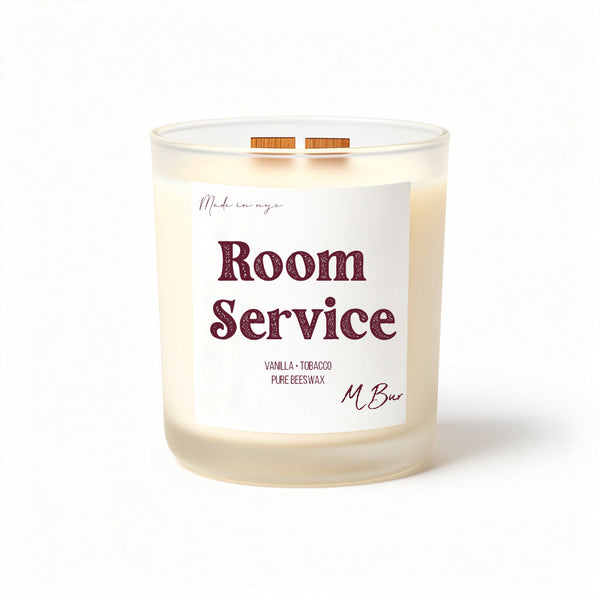
That gap is the difference between cold throw (unlit scent) and hot throw (scent when burning). Mass produced candles are often optimized for cold throw to drive impulse buys. Hot throw depends on curing time, wax type, and wick performance. Beeswax candles like Room Service are cured properly and designed for strong, steady hot throw that fills a room over time.
Is small batch always better than mass produced?
A well engineered mass produced candle can outperform a poorly made small batch one. The advantage of small batch is the ability to control variables like pour temperature and curing time with more precision. When a small batch maker also uses premium ingredients (beeswax, non toxic fragrance, wooden wicks), the combination is hard to beat. Browse MBur's full beeswax candle collection to see what that combination looks like in practice.
How long do beeswax candles actually burn compared to paraffin?
Beeswax has the highest melting point of any candle wax, which means it burns slower and lasts longer. MBur's largest size burns for up to 80 hours. A comparable paraffin jar candle typically runs 40 to 60 hours. The difference adds up, especially when you factor in that beeswax produces virtually no soot.
Are non toxic fragrance oils less strong than conventional ones?
They do not have to be. Scent strength comes from the fragrance load percentage and how well the oil bonds with the wax during curing. Phthalate free fragrance oils can deliver excellent throw when paired with the right wax and wick. The issue with toxic fragrance is not that it is "stronger" but that it achieves intensity through compounds your body would rather not inhale.
The bottom line
Mass produced candles are cheaper upfront. Small batch candles made with clean ingredients give you more burn hours, a fuller scent experience, and none of the toxic compounds that come standard in most commercial fragrance blends. If you are going to light something in a closed room and breathe it for hours, the ingredients matter more than the price tag.
"I absolutely love these candles! I instantly notice the difference in the air quality, in comparison to the Bath & Body scented candles. I love Bath & Body's candles but I acknowledge that it caused a slight headache and other minor respiratory discomfort. Awesome products. Totally addicted."
Jason H., Retail Therapy review
Start with MBur's full beeswax candle collection. Every candle is 100% beeswax with a wooden wick, phthalate free fragrance, and zero chemical dyes, handmade in Queens, New York. The 20 hour size starts at $20 if you want to try one before committing to the 80 hour size.
Related reading

