

How to Tell Real Beeswax From a Beeswax Blend: A Comprehensive Guide
The label says "beeswax candle." The price seems right. You bring it home, light it, and within twenty minutes there is black soot crawling up the glass and a faintly plastic smell drifting through the room. That is because the candle is not actually beeswax. It is a beeswax blend, which in most cases means a small percentage of beeswax mixed with paraffin, soy, or palm wax to cut costs.
This bait and switch is rampant. The global beeswax market is valued at over $650 million, and that kind of money attracts adulteration. Suppliers stretch real beeswax with cheaper fillers, pass it off as pure, and most buyers never know the difference. But you can learn to spot it. This guide breaks down five practical tests you can do at home to identify pure beeswax, explains why blends exist in the first place, and shows you what to look for when shopping for a candle that is actually what it claims to be.
If you want to skip the detective work entirely, MBur's full beeswax candle collection uses single ingredient beeswax with zero fillers. But if you are here to learn, keep reading.
Why Beeswax Blends Exist (and Why They Are a Problem)
Pure beeswax is expensive. Bees produce roughly one pound of wax for every six to seven pounds of honey, and the wax has to be carefully filtered and cleaned before a candle maker can use it. Paraffin, by contrast, is a petroleum byproduct that costs a fraction of the price.
So manufacturers blend. They add paraffin, stearic acid, or soy wax to beeswax, drop the production cost significantly, and still get to put "beeswax" on the label. In many markets, there is no legal minimum percentage required to use the word. A candle could be 10% beeswax and 90% paraffin and still be marketed as a "beeswax candle" or "beeswax blend."
The problem goes beyond misleading labels. The reason many people seek out beeswax in the first place is to avoid the volatile organic compounds that paraffin releases when burned, things like benzene, toluene, and formaldehyde. A blend defeats that purpose entirely. You think you are getting a cleaner burn, but you are still inhaling petroleum byproducts.

Five Tests to Identify Real Beeswax
Laboratory methods like FTIR spectroscopy and NMR profiling can detect adulteration with scientific precision. Most of us do not have a spectrometer in the kitchen. These five tests use your hands, nose, and a glass of water.
1. The Smell Test
Pick up the candle before you light it and hold it close to your nose. Pure beeswax has a subtle, warm, honey like aroma. It is not strong, but it is unmistakable once you know what to look for. If you smell nothing at all, or if there is a faintly chemical, plasticky undertone beneath the fragrance, that is a red flag. Paraffin has a distinct petroleum smell that manufacturers try to mask with fragrance, but it often bleeds through, especially when the wax is cold.
2. The Bend Test
This one works best with taper candles, but you can also press a fingernail into container candle wax. Pure beeswax is dense and slightly pliable at room temperature. A beeswax taper will bend into a gentle arc under steady pressure without snapping. Paraffin and soy blends are more brittle. They crack or break cleanly. If you are testing a container candle, press your thumbnail into the surface. Pure beeswax gives slightly and feels tacky. Paraffin feels waxy and smooth, almost slippery.
3. The Texture and Warmth Test
Rub a small piece of the wax between your fingers for about 30 seconds. At body temperature (around 97°F), pure beeswax becomes slightly sticky and tacky. It grips your skin. Paraffin heavy blends feel greasy or slick, almost like rubbing a bar of soap. The difference is subtle but consistent once you have felt both side by side.
4. The Burn Test
Light the candle and watch it for 30 minutes. Pure beeswax has the highest melting point of any candle wax, between 144°F and 147°F. It burns slowly, with a steady flame, and produces very little soot when the wick is properly sized. If the candle drips excessively, flickers constantly, or starts leaving black residue on the jar within the first burn, the wax likely contains lower melting point fillers. Paraffin melts at a much lower temperature, which is why blended candles tend to burn through faster and messier.

5. The Bloom Test (Long Term)
This one takes patience. Pure beeswax naturally develops what is called "bloom" over time, a soft, white, powdery film on the surface. It looks like the candle has been lightly dusted with flour. Bloom is caused by minor natural components in the wax migrating to the surface, and it is a sign of authenticity. You can wipe it away with a soft cloth and the wax returns to its original warm color underneath. If your candle never develops bloom after weeks or months of sitting, it may contain additives that prevent this natural process.
What the Label Should (and Should Not) Say
Beyond physical testing, the label itself tells you a lot if you know how to read it.
Look for: "100% beeswax" or "pure beeswax" as the wax ingredient. A transparent ingredient list that names the wax, wick material, and fragrance type separately.
Be skeptical of: "Beeswax blend," "beeswax formula," or just "beeswax" listed alongside other wax types. "Natural wax blend" is another common dodge. It sounds clean, but it usually means soy or paraffin with a small amount of beeswax stirred in for marketing purposes.
Watch for missing information: If the label does not list ingredients at all, that is not a good sign. Candle manufacturers in the U.S. are not required by law to disclose ingredients the way food or cosmetics companies are. Brands that voluntarily list everything are signaling transparency. Brands that do not may have something to hide.
"I absolutely love these candles! I instantly notice the difference in the air quality, in comparison to the Bath & Body scented candles. I love Bath & Body's candles but I acknowledge that it caused a slight headache and other minor respiratory discomfort. Awesome products. Totally addicted." Jason H., verified MBur customer
Jason's experience is common. The difference between a pure beeswax candle and a paraffin blend is something your body often notices before your brain does. If you have been getting headaches from candles you thought were "natural," the wax itself might be the culprit.
A Quick Reference: Pure Beeswax vs. Common Blends
| Characteristic | 100% Pure Beeswax | Beeswax Blend (Paraffin/Soy Mix) |
|---|---|---|
| Cold Scent | Mild honey aroma | No scent or faintly chemical |
| Flexibility | Bends without breaking | Snaps or cracks under pressure |
| Touch at Body Temp | Slightly tacky, grips skin | Slick or greasy |
| Melting Point | 144°F to 147°F | Significantly lower |
| Burn Quality | Slow, steady, minimal soot | Faster burn, more dripping and soot |
| Bloom Over Time | Develops white powdery film naturally | Rarely or never develops bloom |
| Shelf Life | Indefinite, non perishable | Soy components may degrade over time |
Why This Matters More Than You Think
Beeswax adulteration is a supply chain problem that affects more than candles. The same beeswax used in lip balms, food wraps, and pharmaceutical coatings gets stretched with the same fillers. A peer reviewed study on FTIR spectroscopy methods for detecting beeswax adulteration found that blending is widespread enough to warrant calls for standardized routine testing across the industry, particularly in Europe.
For candles specifically, the stakes come down to what you are breathing. Paraffin is a petroleum byproduct. When it burns, it releases volatile organic compounds into your air. If you chose beeswax to avoid those compounds, a blend puts them right back.

What to Look for When Buying a Beeswax Candle
Here is a practical checklist for your next purchase:
- Ingredient list says "100% beeswax," not "beeswax blend" or "natural wax blend"
- Wick material is disclosed (cotton or wood, never metal core)
- Fragrance is identified as phthalate free or non toxic (not just "fragrance" with no further detail)
- No chemical dyes (beeswax is naturally golden, it does not need artificial color)
- The brand names the maker or the location (transparency about production signals confidence in the product)
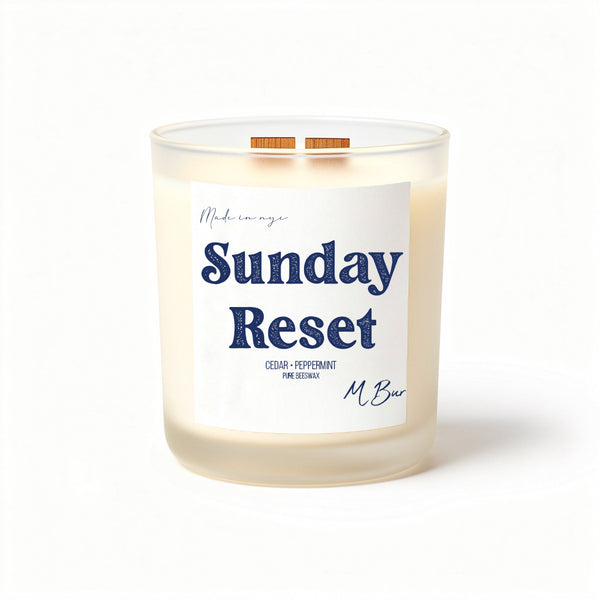
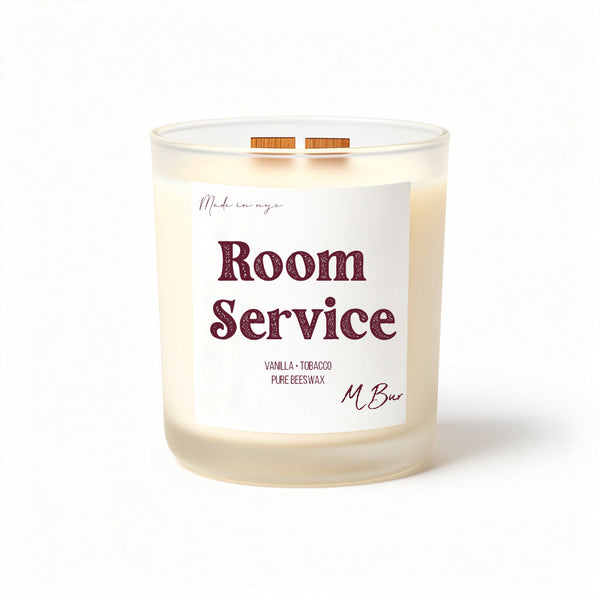
MBur Candle Co. checks every item on that list. Their candles are single ingredient beeswax, not a blend. The wicks are wooden. The fragrance oils are phthalate free and non toxic. No dyes. Everything is handmade in Queens, New York. The Room Service candle, their bestseller, burns for up to 80 hours in the largest size because beeswax's high melting point gives it the longest burn time of any candle wax. That burn time alone is a good authenticity signal. Paraffin blends cannot match it.
FAQ
How can I tell if my beeswax candle is mixed with paraffin?
Start with the bend test and the smell test. Pure beeswax flexes without snapping and has a natural honey scent when unlit. If the candle breaks cleanly when bent, smells faintly of plastic, or leaves heavy black soot on the glass during burning, it likely contains paraffin. For a candle you can trust without testing, MBur's pure beeswax collection uses zero fillers or blending agents.
Does the color of beeswax tell you if it is pure?
Not reliably on its own. Natural beeswax ranges from pale cream to deep golden yellow depending on the flowers the bees foraged. White beeswax is simply filtered and bleached, so it can still be pure. What should raise concern is an unnaturally uniform, glossy appearance. Real beeswax has subtle variation in color and texture from batch to batch.
What is the white film that appears on beeswax candles?
That is called bloom, and it is actually a sign of purity. Bloom is a soft, powdery white coating that develops naturally as minor components in the beeswax migrate to the surface over time. It wipes off easily with a soft cloth. Candles that never develop bloom after extended storage may contain additives that suppress this natural process.
How long do real beeswax candles burn compared to blends?
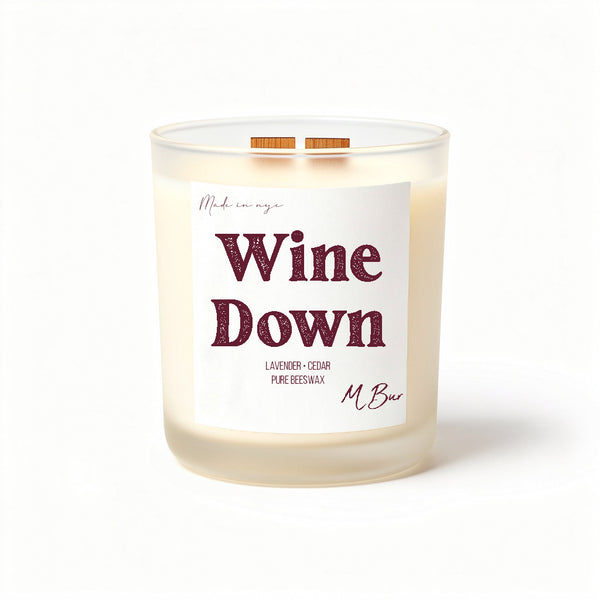
Significantly longer. Beeswax has the highest melting point of any candle wax (144°F to 147°F), which means it burns slower and lasts longer than paraffin or soy. MBur's Wine Down candle, for example, delivers up to 80 hours of burn time in the largest size. A paraffin candle of the same weight would burn through considerably faster.
Is "organic beeswax" actually organic?
Genuine organic certification for beeswax is extremely difficult to achieve. Bees forage over distances of eight miles or more, making it nearly impossible for beekeepers to guarantee their bees only visited organic crops. If a candle claims "organic beeswax" without a recognized certification seal, treat that claim with healthy skepticism.
The Bottom Line
The beeswax candle market has a transparency problem, and the only way to protect yourself is to know what real beeswax looks, smells, feels, and burns like. The five tests above, smell, bend, texture, burn, and bloom, will catch most blends. A clear ingredient list and a maker willing to tell you exactly what is in the candle will catch the rest.
If you would rather skip the forensics and just burn something you can trust, browse MBur's full beeswax candle collection. Every candle is 100% beeswax, wooden wick, phthalate free fragrance, no dyes, handmade in Queens. Prices start at $20 for the 20 hour size.
"I love these candles. No headache or feeling nauseous like the Bath & Body candles with all the extra chemicals. In addition, I love the package and how carefully everything was wrapped." Jason H.
Related reading

