

Brooklyn Candle Makers: What Local Small-Batch Actually Means
The phrase "small batch" appears on roughly every third candle you scroll past online. It sits right next to "hand poured" and "locally made," usually in a nice serif font, sometimes on a label designed to look like it was printed in someone's garage. The words have become so common that they barely register anymore. Which is a problem, because the difference between a genuinely small batch candle and a factory run with better branding is enormous. It affects what you breathe, how long your candle lasts, and whether the person who made it would actually recognize it on a shelf.
If you care about what goes into the products you bring home, this distinction matters. And if you have been browsing beeswax candles made by actual people in actual neighborhoods, you deserve to know what separates the real thing from the label.
"Small Batch" Has No Legal Definition. That Is the First Thing to Know.
There is no federal standard that governs the use of "small batch" on a candle label. The FTC regulates "Made in USA" claims, but "small batch" exists in a gray area. A company pouring 10,000 units a week could technically call their product small batch if they wanted to. Nobody is going to stop them.
In practice, genuine small batch candle makers pour somewhere between 8 and 30 candles per session. One person (or two, or three) handles every step: melting the wax, monitoring temperature with a digital thermometer, adding fragrance at the precise moment the wax can absorb it, centering the wick, pouring, and then waiting. The waiting part is important. A soy candle needs at least seven days to cure before the fragrance fully bonds with the wax. Beeswax has its own timeline. Rushing that cure means weaker scent throw, and no serious maker ships a candle that smells like a whisper of what it should be.
Mass production compresses all of this. Automated lines pour thousands of units per day, and the speed introduces trade offs. Wick centering gets less precise. Temperature fluctuations go uncorrected. Fragrance loads get standardized across every scent rather than adjusted per formula. The result is a candle that looks identical to a handmade one on a shelf but performs differently once you light it.

The "Hand Poured" Trick
This is the one that gets people. "Hand poured" sounds like a person carefully tipping a pot of molten wax into a vessel, and sometimes that is exactly what it means. But many brands use the phrase when only the final step involves a human hand. The wax was melted in an industrial vat, the fragrance was added by machine, and someone at the end of a conveyor belt placed a lid on the jar. Technically, a hand was involved. Technically, that counts.
Genuine handmade candle production means human involvement throughout the entire process. The maker decides when the wax is ready. The maker adjusts the pour temperature based on the room's humidity and ambient temperature, because a cold or drafty workspace causes uneven cooling that shows up as wet spots on the glass or rough, frosted surfaces on the wax. A variance of even 10 to 15 degrees Fahrenheit can ruin a batch. That level of attention is not something you automate.
What "Local" Does and Does Not Tell You
"Local" is another word without a universal legal definition in retail. Some businesses interpret it as a geographic radius. Others use it to mean the product was designed or conceived in a particular city, even if the actual manufacturing happens somewhere else entirely. A candle brand can be headquartered in Brooklyn, source wax from the Midwest, fragrance oils from New Jersey, vessels from China, and still call itself a Brooklyn candle maker. Whether that feels honest to you depends on where you draw the line.
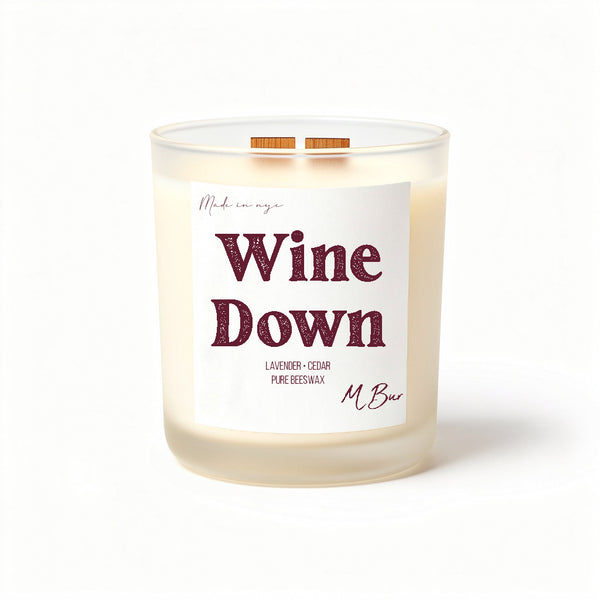
The more useful question is not "where is the label from" but "where does the making happen, and who does it." A two person operation pouring candles in their studio in Queens is a fundamentally different business than a brand with Brooklyn in its name and a fulfillment center in another state. Both can make good candles. But the word "local" tells you almost nothing about which one you are buying from.
What local production does reliably offer is a shorter feedback loop. When the people making the candle are also the people reading customer reviews and answering emails, problems get caught faster. A wick that burns too aggressively in a particular scent formula gets noticed and fixed within a batch or two, not after 5,000 units have shipped.
The Ingredient Question Nobody Asks
Most of the conversation around small batch candles focuses on the process: how many were made, where, by whom. But the ingredients matter just as much, and this is where the gap between artisan and industrial gets wide.
Paraffin wax is a petroleum byproduct. It is cheap, holds fragrance well, and produces soot that deposits on your walls and ceiling over time. Many mass produced candles use paraffin because the economics make sense at scale. Some "soy blend" candles mix soy with paraffin to cut costs, and the label does not always tell you the ratio.
Beeswax is the oldest candle material humans have used, dating back roughly 5,000 years. It burns longer than soy or paraffin because it has the highest melting point of any candle wax. It produces virtually no soot. And it is a single ingredient wax, a byproduct of honey production, which means it supports beekeeping as an industry. The trade off is cost. Beeswax is significantly more expensive than paraffin, which is why you rarely see it in mass market candles.

Then there is fragrance. The word "fragrance" on an ingredient list is a catch all that can represent hundreds of undisclosed chemical compounds. Many conventional candles use toxic fragrance oils containing phthalates and parabens, compounds that research has linked to endocrine disruption and respiratory irritation. A small batch maker who lists every ingredient and uses phthalate free, non toxic fragrance oils is giving you something a mass market label simply does not: full transparency.
"I absolutely love these candles! I instantly notice the difference in the air quality, in comparison to the Bath & Body scented candles. I love Bath & Body's candles but I acknowledge that it caused a slight headache and other minor respiratory discomfort. Awesome products. Totally addicted." Jason H.
Jason's experience is common. Many people who switch from conventional candles to clean burning alternatives report fewer headaches and less irritation. The difference is not magic. It is ingredients.
What a Real Small Batch Operation Looks Like, Day to Day
Picture a studio, not a factory floor. A couple hundred square feet. Shelves of raw beeswax. Wooden wicks sorted by width because wick size has to match the specific diameter of the container and the wax and fragrance formula being used. You cannot use the same wick for every candle and expect consistent results.
The wax gets melted in controlled batches. Temperature is monitored with a thermometer, not guessed at. Fragrance oil goes in at a precise ratio, roughly one ounce per pound of wax, and it gets stirred until fully incorporated. The wax is poured into pre warmed vessels to prevent jump lines where the wax separates from the glass. Then everything sits. Curing takes days. During that time, the fragrance molecules bond with the wax, and the candle develops its full scent throw.
After curing, each candle gets inspected. Is the wick centered? Is the surface smooth? Does the wax adhere cleanly to the vessel walls? Any candle that does not pass gets pulled. In a run of 20 candles, that might mean scrapping two or three. At a factory producing thousands per hour, that level of individual inspection is not possible.
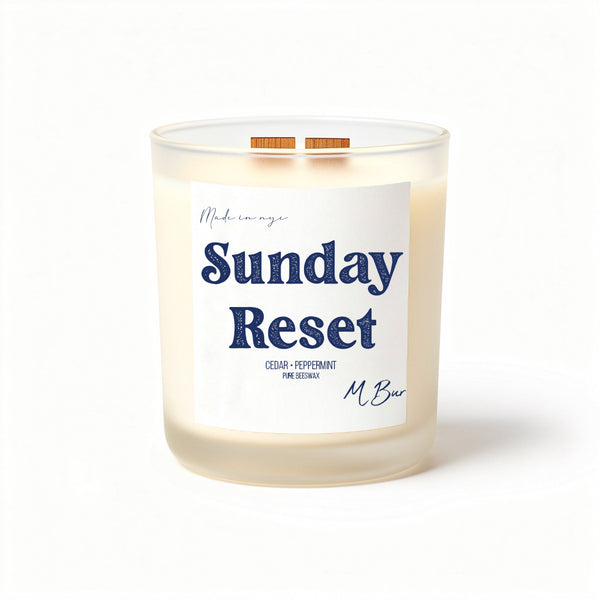
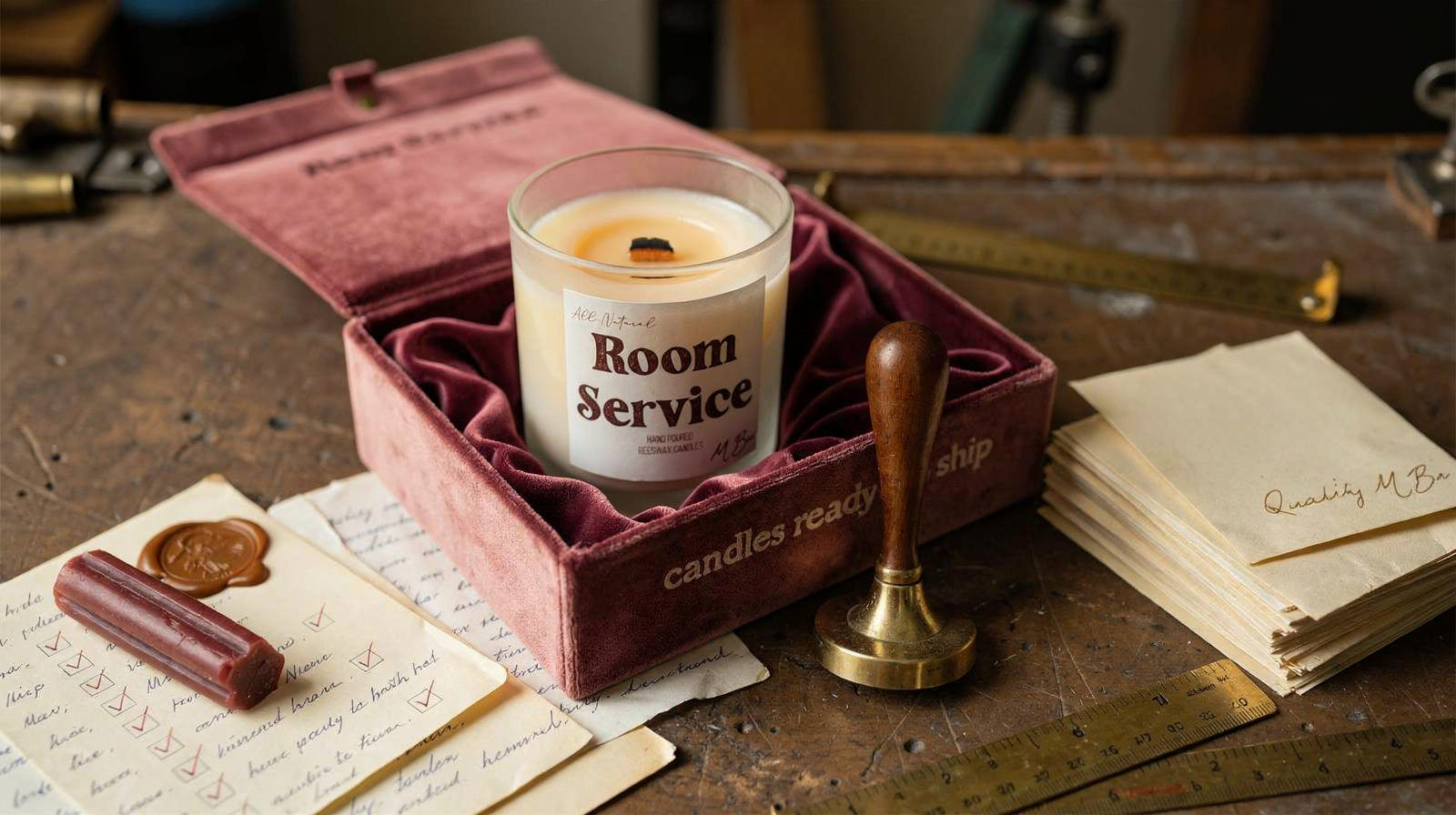
MBur Candle Co. runs this way. Melissa and Donivan make every candle by hand in their Queens, New York studio. Pure beeswax, wooden wicks, non toxic fragrance oils, no chemical dyes. When a customer emails about a specific candle's burn behavior, the person who poured it is the person who reads that email. That is what local small batch actually looks like.
How to Tell If a Brand Is Genuinely Small Batch
You cannot always tell from the label. But you can ask a few questions that separate the real operations from the marketing.
Do they name their makers? A genuine small batch brand will usually tell you who is behind the candles. If the "About" page reads like it was written by a PR firm and never mentions a specific person, that is a signal.
Do they disclose ingredients fully? "Proprietary blend" is not transparency. You want to know the wax type (100% beeswax, 100% soy, or a blend and what the blend contains), the wick material, and whether the fragrance is phthalate free.
Do they talk about their process with specificity? Vague language like "crafted with care" tells you nothing. A maker who mentions cure times, pour temperatures, or wick testing is a maker who actually does those things.
Is their product line focused? A two person operation making 47 different products is probably not making all of them by hand. A tighter product line often signals genuine small batch production because there are only so many hours in a day.
Why This Matters Beyond the Candle
When you buy from a genuine small batch maker, the money stays closer to the people who did the work. There is no corporate layer skimming margin before the maker gets paid. The supply chain is shorter and more visible. And the product itself tends to be better because the person whose name is on it has a direct stake in every single unit.
The candle industry is shifting. Retailers are becoming more selective, replacing underperforming brands faster than in previous years and prioritizing ingredient transparency over novelty. Buyers are getting smarter about reading labels. The brands that will last are the ones that can back up their claims with specifics, not just aesthetics.
Frequently Asked Questions
Are small batch candles always safer than mass produced ones?
The batch size alone does not determine safety. What matters is the ingredients. A small batch candle made with paraffin and toxic fragrance oils is no cleaner than a factory made one. Look for 100% natural wax (beeswax or soy, not a blend with paraffin), phthalate free fragrance, and cotton or wooden wicks. MBur's full beeswax candle collection checks all of those boxes.
Why do small batch candles cost more than ones from big retailers?
Three reasons: materials, labor, and scale. Beeswax costs significantly more than paraffin. Hand pouring takes longer than machine filling. And a small operation cannot negotiate the bulk pricing that a corporation can. MBur's entry point is the 20 hour size at $20, which works out to about a dollar per hour of burn time. For pure beeswax with a wooden wick, that is a reasonable number.
How can I tell if a candle is truly locally made?
Look for specifics. Where is the studio? Who pours the candles? Where do the materials come from? A brand that names its makers and its neighborhood (like MBur, which operates out of Queens, New York) is giving you verifiable information. A brand that says "locally inspired" is giving you a vibe.
Do beeswax candles really burn longer than soy?
Yes. Beeswax has the highest melting point of any candle wax, which means it burns more slowly. MBur's largest size delivers 80 hours of burn time. A comparably sized soy candle typically runs 40 to 50 hours. The difference is significant over the life of the candle, and it means you replace beeswax candles less often.
What is the difference between "fragrance" and "non toxic fragrance" on a label?
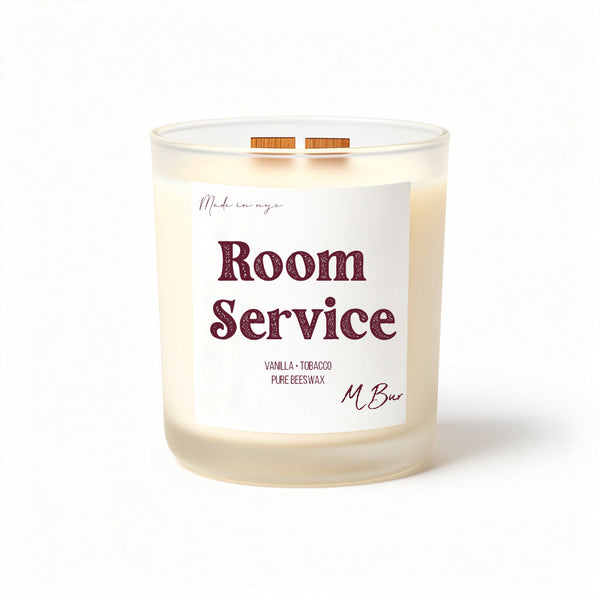
The generic term "fragrance" on an ingredient list can represent hundreds of undisclosed compounds, including phthalates and parabens. "Non toxic fragrance" or "phthalate free fragrance" means the oil has been formulated without those specific harmful chemicals. Candles like Room Service use only phthalate free, non toxic fragrance oils with every ingredient disclosed.
The Short Version
"Small batch" and "local" are meaningful concepts that have been diluted by overuse. The real thing, a candle made by identifiable people in a specific place using transparent ingredients, still exists. You just have to look past the label and ask for specifics. When a brand can tell you exactly who made your candle, what is in it, and where it was poured, that is worth paying attention to.
If you want to see what genuine small batch beeswax candles look like, browse MBur's full collection. Handmade in Queens, pure beeswax, wooden wicks, every ingredient listed. As one customer put it:
"From the packaging to the burn of the candle, everything was top notch! Candle burned slowly and was exactly the amount of hours the company said it would burn." Portia Darby
Related reading

