

What Makes a Candle Small Batch (and Why It Matters)
Every candle you have ever bought from a big box store was made by a machine that pours thousands of units per hour. The wax moves through heated pipes, gets dosed with fragrance by an automated pump, fills a jar on a conveyor belt, and receives a pre cut wick dropped in by a robotic arm. Nobody touches it. Nobody smells it. Nobody checks whether the wick landed dead center or slightly off to the left. If a certain percentage of jars come out wrong, that is factored into the production model as an acceptable loss.
Small batch candle making is the opposite of that process. It is slower, more expensive, and far more particular. And the candle you end up burning in your bedroom or kitchen is measurably different because of it. This post breaks down what "small batch" actually means in practice, why the distinction matters for scent, burn quality, and air quality, and how to tell whether a brand's small batch claim holds up.
If you want to skip ahead and see what small batch beeswax candles actually look like, browse MBur's full beeswax candle collection.
What "Small Batch" Actually Means
The term gets thrown around loosely, so it is worth being specific. In candle making, small batch typically means producing somewhere between 8 and 30 candles per session. The maker melts the wax, monitors the temperature with a digital thermometer, blends in fragrance at a precise window (usually between 155°F and 185°F depending on the wax and fragrance oil), pours at a controlled temperature, and hand places or adjusts every wick.
That is not a marketing story. It is a fundamentally different manufacturing process. When you are making 20 candles at a time instead of 2,000, you can catch problems in real time. A wick that drifts off center gets repositioned. A pour that looks slightly uneven gets corrected. The fragrance load can be adjusted by weight, down to the gram, for that specific batch of wax.

Mass production relies on statistical quality control. If 3% of candles come off the line with a defect, that is an acceptable failure rate built into the cost model. Small batch makers do not have a failure rate model. They inspect every single unit for wick centering, surface finish, and label alignment before it ships.
Why Temperature Precision Changes Everything
If you have ever burned a candle that barely threw any scent, or one that smelled incredible for the first hour and then went flat, you likely experienced a temperature problem during production.
Fragrance oils bind to wax molecules within a specific temperature range. Add the fragrance when the wax is too hot, and the volatile compounds evaporate before the wax solidifies. Add it too cool, and the oil never properly integrates. It sits in pockets instead of distributing evenly, which means your candle might smell strong in one spot and faint in another.
In a factory setting, the equipment is calibrated once and then runs continuously. Ambient temperature changes, slight variations in wax shipments, and humidity shifts are absorbed into the process as acceptable variables. A small batch maker can respond to those variables in the moment. If the wax in this particular melt is behaving differently than last week's batch, the temperature gets adjusted by a few degrees. If the workshop is cooler today, the pour temperature shifts to compensate.
This is also why curing matters. After pouring, candles need time for the wax and fragrance molecules to fully bond. Many natural wax candles require 7 to 12 days of curing before they reach optimal performance. A mass producer shipping candles straight from the line to a warehouse to a shelf often compresses or skips this window entirely. A small batch maker builds it into the timeline.
The Wick Problem Nobody Talks About
Wick selection is probably the most technical decision in candle making, and it is the one that suffers most from mass production shortcuts.
The right wick depends on the jar diameter, the wax type, and the fragrance load. A wick that is too small creates tunneling, where the candle burns down the center and leaves a thick ring of unmelted wax along the edges. A wick that is too large burns too hot, consumes the candle faster than it should, and can produce excess soot.

Factory candles typically use a single wick type across an entire product line. It is the wick that works "well enough" for the most common scenario. Small batch makers can test and select wicks specific to each scent, because different fragrance loads change the way wax melts. A heavily fragranced candle needs a different wick than a lightly scented one, even in the same jar size.
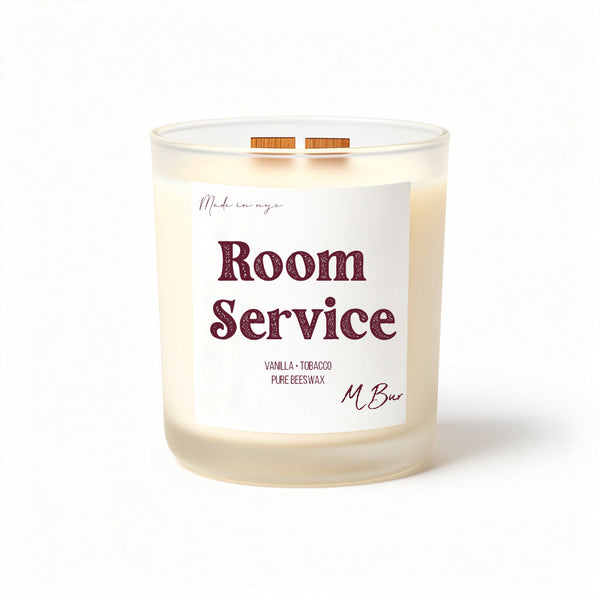
MBur uses wooden wicks across their line, which behave differently than cotton wicks entirely. Wood wicks create a wider, more even flame that pulls the melt pool to the edges of the jar more consistently. They also produce that quiet crackling sound, which is a nice bonus, but the functional benefit is the even burn. Proper wick selection is a big part of why Room Service can deliver up to 80 hours of burn time in the largest size.
What Goes Into the Wax Matters More at Small Scale
The candle industry has a labeling problem. The word "beeswax" can appear on a label even if the candle is mostly paraffin with a small percentage of beeswax blended in. "Soy blend" often means soy mixed with paraffin. These blends exist because they are cheaper to produce at scale and paraffin is easier to work with in automated systems.
A small batch maker choosing to work with 100% beeswax is making a deliberate, more difficult choice. Beeswax has a higher melting point than soy or paraffin, which means it requires more precise temperature control during production. It is also more expensive per pound. But it burns significantly longer than other waxes because of that high melting point, and it burns cleaner, producing virtually no soot compared to paraffin.
Beeswax is also the oldest candle material humans have used, dating back roughly 5,000 years. It is a natural byproduct of honey production, which means using it supports beekeeping rather than petroleum refining. And it emits light on a spectrum closer to natural sunlight than any other candle wax, which is one of those facts that sounds like marketing but is actually just physics.
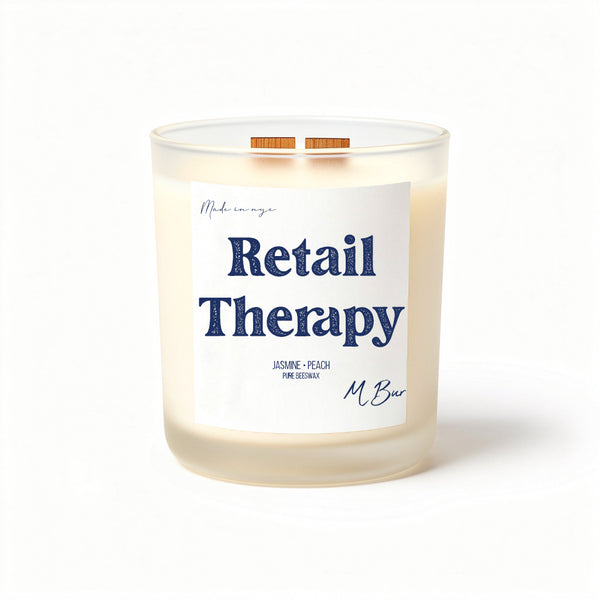
"From the packaging to the burn of the candle, everything was top notch! Candle burned slowly and was exactly the amount of hours the company said it would burn. I was able to enjoy it for days even though it was the smaller size. Company included samples, instructions, and shipped fast. Well done, MBur Candle Co!"
Portia Darby, Retail Therapy customer
Fragrance Quality: Toxic vs. Non Toxic
When a mass market candle label says "fragrance," that single word can represent a blend of dozens or even hundreds of undisclosed chemical compounds. Many of these compounds include phthalates and parabens, which are endocrine disruptors. The FDA does not require candle companies to disclose the individual components of their fragrance blends, so "fragrance" on a label is essentially a black box.
Small batch makers who prioritize ingredient transparency tend to use non toxic, phthalate free fragrance oils and list their scent notes openly. This is not because small batch production inherently requires better ingredients. It is because makers who care enough to produce in small quantities usually care enough to source carefully too. The two commitments tend to travel together.
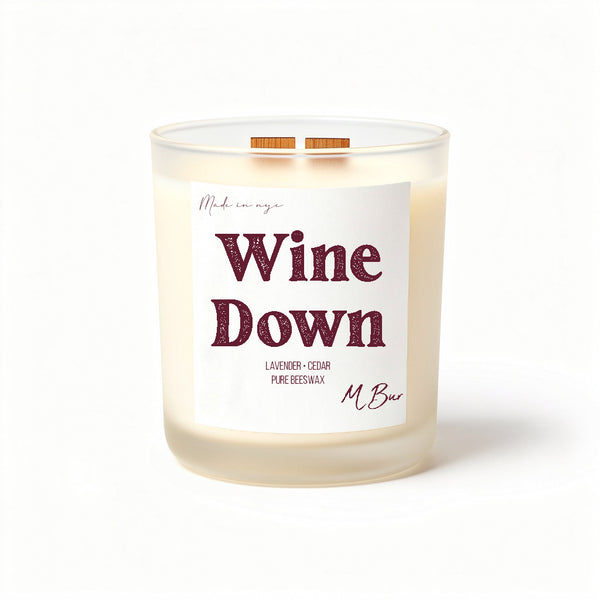
MBur uses only non toxic, phthalate free fragrance oils across every scent in their collection. No chemical dyes either. When you read the scent notes for a candle like Wine Down, with its lavender, chamomile, sage, rosemary, camphor, cedar, and sandalwood, those are the actual fragrance components. No hidden fillers.

How to Tell If "Small Batch" Is Real
Some brands use "small batch" as a marketing label without the production practices to back it up. A few things to look for when evaluating whether the claim is genuine:
Ingredient specificity. A real small batch maker will tell you exactly what wax they use (not "natural wax blend"), what type of wick, and whether their fragrance is phthalate free. Vague ingredient lists are a red flag.
Production location. If the brand names where the candles are made, that is a good sign. MBur makes everything by hand in Queens, New York. A company that cannot tell you where production happens is likely outsourcing to a larger facility.
Batch consistency vs. perfection. Handmade candles may have very slight visual variations between units. A perfectly identical candle every time usually means machine production. Small cosmetic variation with consistent burn performance is actually the hallmark of genuine small batch work.
Burn time claims. Mass produced candles rarely publish specific burn time numbers because their quality control cannot guarantee them. A small batch maker who says 80 hours and delivers 80 hours is demonstrating the precision that comes from hands on production.
The Cost Question
Small batch candles cost more. That is just true, and it is worth understanding why rather than treating it as a downside.
The maker's time is the biggest factor. Hand pouring, hand inspecting, and hand packaging 20 candles takes far longer per unit than a machine producing 2,000. The ingredients cost more because premium waxes and non toxic fragrance oils are more expensive than paraffin and bulk fragrance compounds. And there are no economies of scale to spread fixed costs across tens of thousands of units.
But the math works differently when you factor in burn time. A 100% beeswax candle that burns for 80 hours costs more upfront than a paraffin candle that burns for 30 hours. Per hour of burn time, the beeswax candle is often comparable or cheaper. You are also not replacing it as frequently, which means less packaging waste over time.
MBur's entry point is the 20 hour size at $20. The largest size, at $65 for 80 hours of burn time, works out to about 81 cents per hour. Try running that math on a department store candle that costs $28 and burns for 25 hours.
Frequently Asked Questions
What does "small batch" actually mean for candles?
It means candles produced in limited quantities, often 8 to 30 at a time, rather than thousands on an automated line. The maker manually monitors pour temperatures, wick placement, and fragrance blending for every batch. You can see this approach in action across MBur's beeswax candle collection, where every candle is hand poured in Queens, New York.
Do small batch candles actually burn longer?
Burn time depends primarily on the wax type and wick selection, both of which small batch makers can optimize more precisely than factories. Beeswax has the highest melting point of any candle wax, which is why it burns longest. Room Service in the 80 hour size delivers exactly that because the wick and wax are matched specifically for that jar.
Why are small batch candles more expensive?
Higher ingredient costs (pure beeswax vs. paraffin, non toxic fragrance vs. bulk fragrance compounds), more labor per unit, and no economies of scale. But when you calculate cost per burn hour, premium small batch candles often match or beat mass market options.
How can I tell if a candle is genuinely small batch?
Look for specific ingredient disclosure (exact wax type, wick material, phthalate free fragrance), a named production location, and published burn time numbers. Vague labels like "natural wax blend" or "fragrance" without further detail usually indicate mass production practices.
Is small batch the same as sustainable?
They often overlap but are not the same thing. Sustainability depends on the full lifecycle: sourcing, production energy, packaging, and shipping. Many small batch makers prioritize sustainable materials, but the batch size alone does not guarantee it. What matters is the specific choices the maker makes at every step.
The Short Version
Small batch candle making is a production method that prioritizes precision over volume. It results in better wick selection, more accurate fragrance integration, cleaner ingredients, and longer, more consistent burns. The trade off is a higher price point, but the per hour value and the quality of what you are breathing in while the candle burns make the math work.
If you want to experience the difference firsthand, explore MBur's full collection of handmade beeswax candles. Every one is hand poured in Queens with wooden wicks, 100% beeswax, and non toxic, phthalate free fragrance. Portia called the experience "top notch from packaging to burn," and she is not the only one.
Related reading

