

Safe Candles for Work: A Guide for People with Chemical Sensitivities
The headache that shows up 20 minutes after someone lights a candle in the break room
If scented candles give you headaches, nausea, or brain fog at work, your body is flagging something specific. Roughly 13% of Americans report some degree of chemical sensitivity, and for many of them, a single candle burning in a shared office is enough to derail an entire afternoon. The reaction feels disproportionate. One coworker lights a candle and you are the only person reaching for ibuprofen.
But the problem usually has nothing to do with how sensitive your nose is. It has everything to do with what is actually burning. Most commercial candles combine paraffin wax (a petroleum byproduct), toxic fragrance oils loaded with undisclosed chemicals, and cotton wicks that may contain trace metals. When that combination burns in a small, poorly ventilated office, it releases volatile organic compounds like benzene and toluene, plus fine particulate matter that penetrates deep into your lungs.
This guide breaks down exactly why certain candles trigger reactions, what to look for in a genuinely clean burning candle, and how to bring scent back into your workspace without paying for it with a migraine. If you want to skip ahead to what actually works, our full beeswax candle collection is a good place to start.
Why Your Body Reacts (and Your Coworker's Doesn't)
Chemical sensitivity, sometimes called Multiple Chemical Sensitivity or MCS, means your nervous system responds to low level chemical exposures that most people's bodies simply ignore. The Job Accommodation Network notes that under the Americans with Disabilities Act, chemical sensitivity can qualify as a disability when it limits major life activities like breathing. This is a recognized, documented condition.
When a paraffin candle burns, it releases a cocktail of VOCs into the air. Benzene is a known carcinogen. Toluene is a central nervous system depressant. These compounds exist at low concentrations in a single candle's output, but in a closed office with limited air exchange, they accumulate. For someone with MCS, that accumulation crosses the threshold from "unnoticeable" to "debilitating" much faster than it does for the general population.
Most reactions people experience from candles are caused by direct chemical irritation of the nasal passages and airways, not an immune system allergic response. That distinction matters because it means the trigger is specific and avoidable. Remove the offending chemicals and the reaction goes away.
The Three Ingredients That Cause Most Reactions
When you strip away the marketing language, candle reactions almost always trace back to three categories of ingredients. Knowing what they are gives you a filter for every candle you evaluate.
1. Paraffin Wax
Paraffin is refined from petroleum sludge, the heavy residue left after crude oil processing. When it burns, it releases VOCs including benzene, toluene, and formaldehyde. The soot it produces is chemically similar to diesel exhaust. If you have ever noticed black residue on the rim of a jar candle or on a nearby wall, that is paraffin soot, and you have been breathing it.
2. Toxic Fragrance Oils
The word "fragrance" on a candle label is a legal loophole. Under current regulations, manufacturers can group hundreds of undisclosed chemical compounds under that single word. Many of these compounds include phthalates (endocrine disruptors), parabens, and masking agents that are among the most common irritants for chemically sensitive people. A candle can be labeled "all natural" and still contain toxic fragrance oils, because the fragrance is technically a separate ingredient from the wax.
3. Wicks with Metal Cores or Chemical Treatments
Lead core wicks were banned in the U.S. in 2003, but zinc core wicks remain common, and many cotton wicks are treated with chemical stiffeners. These additives burn off into the air along with everything else. For someone whose system is already on high alert from the wax and fragrance, the wick becomes the third strike.

What Actually Makes a Candle Safe for Sensitive People
A candle that works for someone with chemical sensitivities needs to pass a specific checklist. Vague claims like "clean" or "natural" mean nothing without ingredient transparency.
The Clean Candle Checklist
| What to Look For | Why It Matters | Red Flag Alternative |
|---|---|---|
| 100% beeswax (single ingredient, no blends) | Cleanest burning wax, naturally hypoallergenic, no petroleum byproducts | "Beeswax blend" (often mostly paraffin) |
| Phthalate free, non toxic fragrance oils | Eliminates the most common chemical irritants in scented candles | "Fragrance" with no further disclosure |
| Wooden or untreated cotton wicks | No metal cores or chemical stiffeners burning into your air | Zinc core wicks, treated cotton |
| No chemical dyes | Dyes release additional compounds when heated | Brightly colored wax |
| Full ingredient transparency | If a company will not tell you exactly what is in the candle, assume the worst | "Proprietary blend" |
Beeswax specifically earns its reputation here. It has the highest melting point of any candle wax, which means it burns at a lower temperature relative to its flash point, producing significantly less soot and fewer airborne particulates than paraffin or even soy. Some studies suggest beeswax may release negative ions during combustion that help neutralize pollutants, though the evidence on that is still emerging. What is well established: beeswax produces a cleaner burn with fewer irritants, period.
A Candle That Checks Every Box
MBur Candle Co. makes 100% pure beeswax candles with wooden wicks and phthalate free fragrance oils. No chemical dyes. No paraffin. No blends. Handmade in Queens, New York.
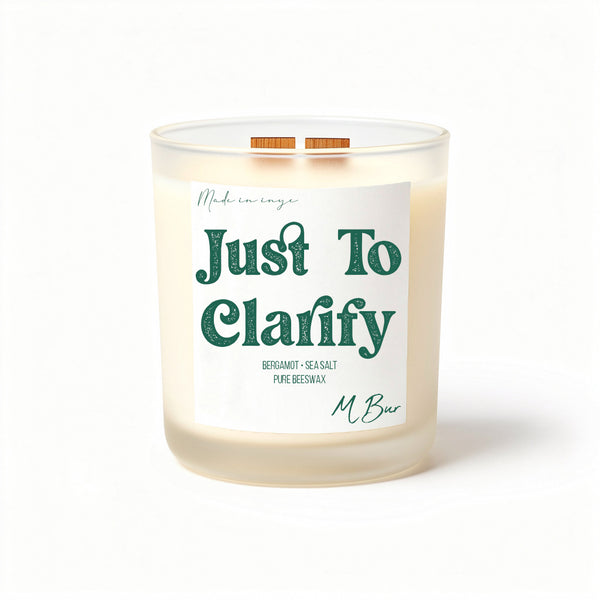
For a work environment where you want something present but not overpowering, Just to Clarify is worth a look. Its notes are bergamot, lemon, orange, green tea, black tea, and sandalwood. The green tea and sandalwood keep it grounded and quiet, the kind of scent that makes a room feel cleaner without announcing itself. It is a good fit for a desk or a shared office where you need something subtle.
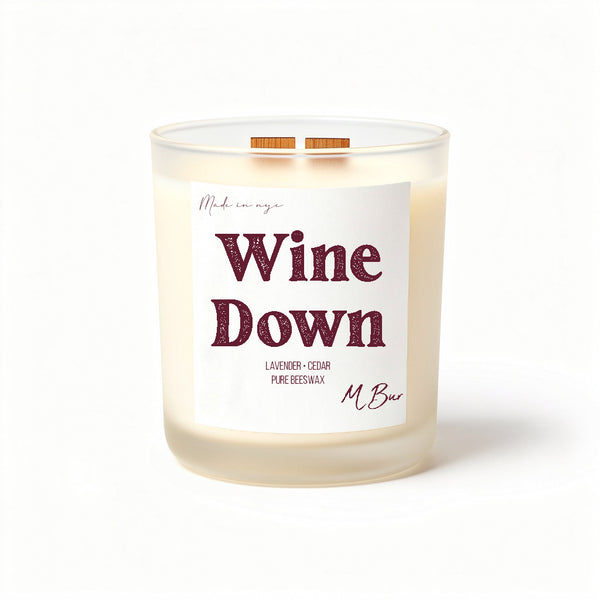
"Absolutely loved the Wine Down candle! The scent is so light and clean, not overpowering at all, which is exactly what I look for. A lot of other candles tend to give me headaches, but this one was a total game changer. I was able to enjoy the calming aroma without any discomfort." Nicole D.
Nicole's experience is one we hear repeatedly. People who had given up on candles entirely because of headaches or respiratory discomfort find that switching to pure beeswax with non toxic fragrance changes the equation completely. The scent stays. The reaction goes away.
The Wine Down candle Nicole mentions has notes of lavender, chamomile, sage, rosemary, camphor, cedar, and sandalwood. It leans herbal and grounding, which makes it another strong option for winding down after a long day at the office, even if you do not burn it at work itself.

Practical Tips for Burning Candles at Work with Sensitivities
Even with the cleanest candle on the market, how you burn it matters. These habits reduce particulate output and keep your air as clean as possible.
Trim the wick before every burn. Wooden wicks should be trimmed to about 5 millimeters. A longer wick creates a larger flame, which means more combustion byproducts. Five seconds with a wick trimmer makes a measurable difference in air quality.
Ventilate. Crack a window or make sure your HVAC system is circulating air. A candle in a sealed, stagnant room will always produce more buildup than one in a space with airflow, regardless of the wax type.
Burn in sessions, not marathons. Two to three hours is the sweet spot. Longer burns can overheat the wax pool and increase soot production. Beeswax is more forgiving here because of its high melting point, but shorter sessions still produce cleaner air.
Snuff, do not blow. Blowing out a candle releases a burst of smoke and particulate matter. Use a snuffer or dip the wick into the wax pool and straighten it back up. It sounds fussy, but it eliminates that plume of smoke entirely.
Consider your total chemical load. Candles are rarely the only source of VOCs in an office. Cleaning products, printer toner, air fresheners, and even new furniture off gas chemicals that compound each other. Reducing the overall load, not just the candle, gives your system more room to tolerate individual exposures.
Frequently Asked Questions
How long do beeswax candles actually burn?
Beeswax has the highest melting point of any candle wax, which translates directly to longer burn times. MBur's largest size burns for approximately 80 hours. The 20 hour size starts at $20, making it a reasonable way to test whether beeswax works for your sensitivities before committing to a larger candle. Browse the full range on the collection page.
Can I request a scent free workplace if candles bother me?
Yes. Under the Americans with Disabilities Act, chemical sensitivity can qualify for reasonable accommodations if it limits major life activities like breathing. The Job Accommodation Network provides detailed guidance on how to start that conversation with your employer. Accommodations can range from scent free policies to improved ventilation to workstation relocation.
Are soy candles a good alternative for sensitive people?
Soy burns cleaner than paraffin, but many soy candles are actually soy and paraffin blends, and they frequently use the same toxic fragrance oils that cause reactions. A "soy candle" with undisclosed fragrance ingredients can be just as problematic as a paraffin candle. The wax matters, but the fragrance is often the bigger trigger.
Do wax melts or flameless options avoid the problem?
Recent research, including a 2025 Purdue University study, found that scented wax melts can be significant sources of atmospheric nanoparticles. When fragrance compounds react with indoor ozone, they create ultrafine particles that penetrate deep into the lungs. Flameless does not mean emission free. The same toxic fragrance oils that cause problems in candles cause problems in melts and diffusers too.
Should I just go unscented if I have chemical sensitivities?
If your sensitivities are severe, unscented beeswax is the safest option. But many people with moderate sensitivities find that removing paraffin and toxic fragrance is enough. A candle made with 100% beeswax and phthalate free fragrance, like Just to Clarify, gives you scent without the chemical load that triggers reactions. If you have a diagnosed condition, follow your doctor's guidance on what level of exposure works for you.
The Bottom Line
Chemical sensitivity reactions to candles are real, documented, and almost always traceable to specific ingredients: paraffin wax, toxic fragrance oils, and treated wicks. Swap those out for 100% beeswax, phthalate free fragrance, and a clean wooden wick, and most people find the reactions disappear while the scent stays.
MBur's hypoallergenic beeswax candles check every box on the clean candle checklist. The 20 hour size starts at $20, so you can test the difference without a big commitment.
"I absolutely love these candles! I instantly notice the difference in the air quality, in comparison to the Bath & Body scented candles. I love Bath & Body's candles but I acknowledge that it caused a slight headache and other minor respiratory discomfort. Awesome products. Totally addicted." Jason H.
Browse the full beeswax candle collection and find the scent that fits your workspace.
Related reading
- Do Scented Candles Make Your Head Spin? Understanding the Potential Headache Triggers
- What Makes a Candle Non Toxic? How to Spot the Real Thing
- Why Paraffin Free Candles Are a Must Have for a Healthier Home
- Discover the Benefits of Non Toxic Candle Fragrance Oils: Enhancing Your Space without Harmful Chemicals

