

Nursery Air Quality: What New Parents Get Wrong About Scent
The nursery smells perfect. That might be the problem.
You painted the walls two weeks early to let them off gas. You washed every onesie in fragrance free detergent. You read the car seat manual cover to cover. And then, because the diaper pail smells like a crime scene by day three, you plugged in an air freshener or lit a scented candle without thinking twice.
Most new parents obsess over the right things: sleep safety, feeding schedules, outlet covers. Air quality rarely makes the list. But the air inside a nursery can be two to five times more polluted than outdoor air, and the products designed to make that room smell "clean" are often the biggest contributors.
This post breaks down where nursery air quality actually goes wrong, which ingredients to watch for, and how to keep the room smelling good without filling it with compounds your baby's lungs were never built to handle. If you want to skip ahead to what a genuinely clean candle looks like, our full beeswax candle collection is a good place to start.
Why babies absorb more of everything in the air
A newborn can take up to 60 breaths per minute. Adults average about 15. Pound for pound, that means an infant is pulling in significantly more air, and everything floating in it, relative to their body weight.
Their lungs are still developing. Their skin is thinner and absorbs chemicals more readily. Their immune systems are building from scratch, learning what to react to and what to ignore. Flooding that environment with airborne chemicals during the first year of life, a critical window for immune and respiratory development, gives their bodies a lot of confusing signals at the worst possible time.
Chronic exposure to indoor pollutants during infancy is associated with increased risk of childhood asthma, wheezing, respiratory infections, and developmental issues. Recent research from 2025 and 2026 has shifted focus from studying single chemicals in isolation to examining how mixtures of common indoor pollutants interact, and the findings suggest that combined exposures carry a more significant health impact than any one ingredient alone.

The word "fragrance" is doing a lot of heavy lifting
Flip over any scented product in the nursery, the plug in, the spray, the candle from the grocery store, and look for the word "fragrance" or "parfum" on the ingredient list. That single word is a regulatory loophole. It can represent hundreds of individual chemical compounds that manufacturers are not required to disclose.
Many of those hidden compounds are phthalates, which are endocrine disruptors linked to developmental issues. Others are volatile organic compounds (VOCs) that linger in the air long after you stop smelling them. The American Academy of Pediatrics specifically advises against using scented candles and air fresheners around infants for this reason.
The problem is compounded by the fact that most conventional candles burn paraffin wax, a petroleum byproduct that releases benzene, toluene, and formaldehyde when it burns. Add a toxic fragrance blend on top of paraffin soot, and you have a cocktail of airborne irritants in a small, often poorly ventilated room.
Three myths that keep nursery air quality poor
"Clean" should smell like something
Pine. Linen. Lavender. We have been conditioned to associate fragrance with cleanliness. Actual cleanliness is odorless. When a product makes a room smell "clean," it is masking odors with additional chemicals rather than removing the source. In a nursery, that means you are layering irritants on top of whatever you were trying to cover up.
"Natural" on the label means safe
Products labeled "natural," "green," or "organic" can still contain toxic fragrances and VOC emitting ingredients. Essential oil diffusers fall into this trap too. Even genuinely plant derived compounds can react with trace ozone in indoor air to create secondary pollutants, including formaldehyde. "Natural" describes a marketing position, not a safety standard.
That "new room" smell is fine
Fresh paint, new furniture, a foam crib mattress still in its packaging. That "new" smell is off gassing VOCs. Indoor air pollution can spike dramatically immediately after introducing new furniture or fresh paint. If you are setting up the nursery close to your due date, you are filling the room with peak level emissions right when baby arrives.

What actually works: a nursery air quality checklist
The good news is that most of this is fixable without spending a fortune or turning the nursery into a sterile lab. The principle is simple: eliminate the source of the problem instead of masking it.
1. Ventilate aggressively
Open windows when weather permits. Run a fan. If you painted or assembled furniture recently, air the room out for as long as possible before baby moves in. Keep CO2 levels below 1,000 ppm if you are monitoring. Nurseries with closed doors and poor airflow can spike to 1,500 or 2,000 ppm overnight.
2. Control humidity
Keep nursery humidity between 35% and 50%. Too high encourages mold. Too low dries out tiny nasal passages. A simple hygrometer costs under $15 and takes the guesswork out.
3. Address odors at the source
The diaper pail smells because the diapers are sitting there. Empty it more frequently. Use baking soda. Clean surfaces with fragrance free products. Solving the actual odor removes the temptation to spray something over it.
4. Audit every scented product
Go through the nursery and pull anything with "fragrance" or "parfum" on the label. That includes plug ins, sprays, scented wipes, scented diaper bags, and candles made with paraffin or toxic fragrance blends. If you would not put it on baby's skin, reconsider letting it into baby's air.
5. If you want scent, choose the cleanest option available
This is where most advice stops at "just don't use anything scented, ever." That is technically the safest path. But plenty of parents want the nursery to smell warm and inviting, especially when visitors come through or during those long middle of the night feeds where a pleasant scent genuinely helps your own mood. The answer is choosing a candle with transparent ingredients and zero toxic additives.
What makes a candle actually safe for a nursery
A candle you can burn near a baby (in the same home, with the door open, and proper ventilation) needs to check several specific boxes:
- No paraffin wax. Paraffin is a petroleum byproduct. It produces soot and releases VOCs. Many candles labeled "soy" or "beeswax blend" still contain a majority of paraffin.
- No toxic fragrance. The fragrance oil must be phthalate free and paraben free, with every ingredient disclosed. If the label just says "fragrance," that is not enough.
- No metal core wicks. Some wicks contain lead or zinc cores that release heavy metals when burned. Cotton or wooden wicks avoid this entirely.
- No chemical dyes. Dyes can release additional compounds when heated. An undyed candle removes one more variable.
Pure beeswax meets all of these criteria on its own. It is a single ingredient wax, a natural byproduct of honey production, with the highest melting point of any candle wax. That high melting point means a slower, cooler burn with significantly less soot. Some studies suggest beeswax may even release negative ions that help settle particulate matter from the air, though this should be taken as a potential bonus rather than a proven claim.
"Absolutely loved the Wine Down candle! The scent is so light and clean, not overpowering at all, which is exactly what I look for. A lot of other candles tend to give me headaches, but this one was a total game changer. I was able to enjoy the calming aroma without any discomfort." Nicole D.
Nicole's experience is common among people who switch from conventional candles. The headaches and stuffiness they attributed to "being sensitive to scent" often disappear when the paraffin and toxic fragrance compounds are removed from the equation.

Two candles worth considering for your home
If you are looking for a candle you can burn in the living room or bedroom while baby sleeps down the hall (with the nursery door closed and good airflow), two from our collection fit especially well.
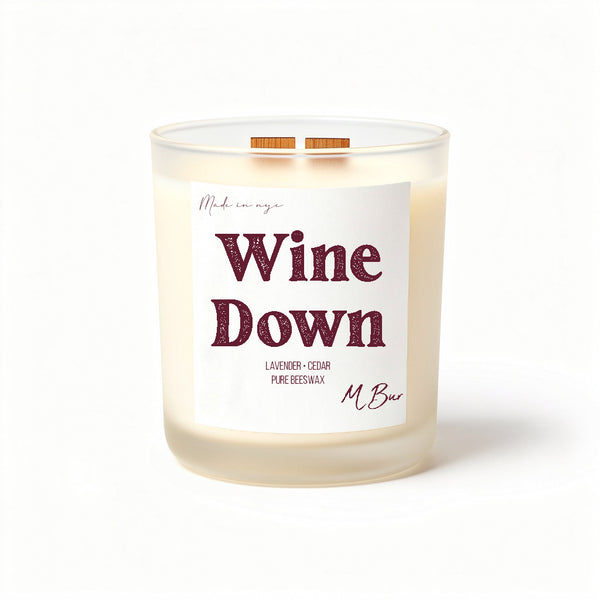
Wine Down is built for exactly that end of day exhale. Its notes are lavender, chamomile, sage, rosemary, camphor, cedar, and sandalwood. Light, herbal, grounding. The kind of scent that fills a room without overwhelming it.
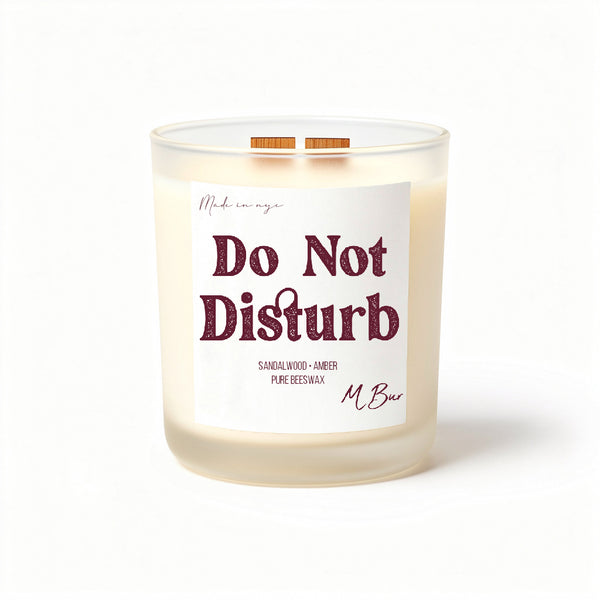
Do Not Disturb leans into bergamot, pear, white tea, and a warm base of vanilla and sandalwood. It is the one people reach for in the bedroom, and it pairs well with a quieter evening when the house is finally still.
Both are 100% pure beeswax (single ingredient, no blends), phthalate free fragrance, wooden wicks, no chemical dyes, and handmade in Queens, New York. The 20 hour size starts at $20, and the 80 hour size runs $65 with the longest burn time of any candle wax on the market.
A note on where to burn, not just what to burn
Even with the cleanest candle available, pediatric guidance is clear: do not burn anything directly in the nursery while baby is in the room. Candle safety around infants is about placement as much as ingredients.
Burn in an adjacent room with the nursery door closed. Allow at least 24 hours for any scent to dissipate before exposing an infant to that specific space if you are being especially cautious. Trim the wick before every burn to reduce soot. Keep burn sessions under four hours. And always, always place candles on a stable surface far from anything flammable or within baby's future reach.
If your baby has been diagnosed with a respiratory condition, follow your pediatrician's guidance on all scented products, including clean ones. A cleaner candle produces fewer irritants, but your doctor knows your child's specific needs better than any blog post does.
Frequently asked questions
Can I use essential oil diffusers in the nursery instead of candles?
Most experts advise against it. Essential oils, even genuinely plant derived ones, release VOCs and can react with indoor ozone to create secondary pollutants like formaldehyde. "Natural" does not automatically mean safe for infant airways. If you want scent in your home, a pure beeswax candle with non toxic fragrance burned in a separate room is a cleaner option.
How long should I air out the nursery after painting or assembling new furniture?
As long as possible. VOC levels spike immediately after introduction and taper over days to weeks. Ideally, paint and assemble furniture at least two to four weeks before baby arrives, and keep windows open and fans running during that period. An air quality monitor that tracks VOC levels can tell you when the room has returned to baseline.
Do beeswax candles actually purify the air?
Some studies suggest beeswax releases negative ions that may help settle airborne particulate matter. It is not a replacement for ventilation or an air purifier, but beeswax produces dramatically less soot and fewer airborne irritants than paraffin. The primary benefit is what beeswax does not put into the air, rather than what it takes out. You can explore the full range of MBur's pure beeswax candles to see the difference firsthand.
What is the safest way to make the nursery smell nice?
Start with source control: frequent cleaning with fragrance free products, regular diaper pail emptying, good ventilation. For ambient scent in your home, burn a clean candle like Do Not Disturb in another room with the nursery door closed. The scent will gently drift without concentrating irritants where baby sleeps.
The short version
Most nursery air quality problems come from well intentioned products that introduce more chemicals than they remove. The fix is straightforward: eliminate toxic fragrance sources, ventilate well, address odors at the root, and if you want scent in your home, choose a candle made with ingredients you can actually read and verify.
Every candle in our beeswax candle collection is 100% pure beeswax, phthalate free fragrance, wooden wick, no dyes, no paraffin, handmade in Queens. As one customer put it:
"I absolutely love these candles! I instantly notice the difference in the air quality, in comparison to the Bath & Body scented candles. I love Bath & Body's candles but I acknowledge that it caused a slight headache and other minor respiratory discomfort. Awesome products. Totally addicted." Jason H.
Browse the full collection and find the one that fits your home.
Related reading

