

Are Candles Safe to Burn While a Baby Naps in the Next Room?
The baby is finally asleep. You have maybe forty minutes before the next wake up, and all you want is to light a candle, sit down, and feel like a human being for a few consecutive minutes. But then the worry kicks in: is the smoke drifting into the nursery? Are the fumes reaching those tiny, brand new lungs one room over?
That worry is worth paying attention to. Babies breathe faster than adults, and their respiratory systems are still developing, which makes them more vulnerable to airborne irritants. The question isn't really whether candles in general are safe. It's whether the specific candle you're burning is releasing compounds that could circulate through your home and reach your baby's room.
The answer depends almost entirely on what your candle is made of. And most candles on the market are made of ingredients you'd probably rather not have anywhere near an infant. Below, we'll break down exactly what those ingredients are, which ones to avoid, and how to keep your sanity (and your candle habit) without compromising your baby's air quality. If you want to skip ahead to the solution, our full beeswax candle collection is built for exactly this kind of concern.
First, the Non Negotiable Rule
No candle belongs in the room where your baby is sleeping. Period. Open flames and sleeping infants do not mix, regardless of what the candle is made of. This is a fire safety issue before it's an air quality issue, and every pediatric safety organization agrees on it.
The real question parents are asking is about the next room over, the living room, the kitchen, the hallway. That's where ingredient quality and ventilation become the deciding factors.
Why Most Candles Are a Problem (Even From Another Room)
Indoor air circulates. If you burn a candle in your living room, the particulate matter and volatile organic compounds it releases don't stay politely contained in that one space. They move through doorways, down hallways, and into adjacent rooms. In a small apartment, this is especially true.
The biggest culprit is paraffin wax. Paraffin is a petroleum byproduct, and when it burns, it releases benzene, toluene, and formaldehyde into your air. These are the same compounds found in diesel exhaust. Research has consistently shown that indoor air can be two to five times more polluted than outdoor air, and burning paraffin candles is a documented contributor.

Then there's the fragrance. The word "fragrance" on a candle label is a catch all that can hide hundreds of undisclosed chemicals, including phthalates and parabens. These are endocrine disruptors. For an adult, occasional exposure might be a minor concern. For a baby whose systems are still forming, the stakes are different.
And the wick matters too. Some cheaper candles still use metal core wicks that can release trace heavy metals when burned. Lead core wicks were banned in the U.S. in 2003, but zinc core wicks are still common and can contribute to soot and particulate matter.
The Three Ingredients That Actually Matter
When you're evaluating whether a candle is safe to burn while your baby naps nearby, it comes down to three things: the wax, the fragrance, and the wick. Everything else is secondary.
The Wax
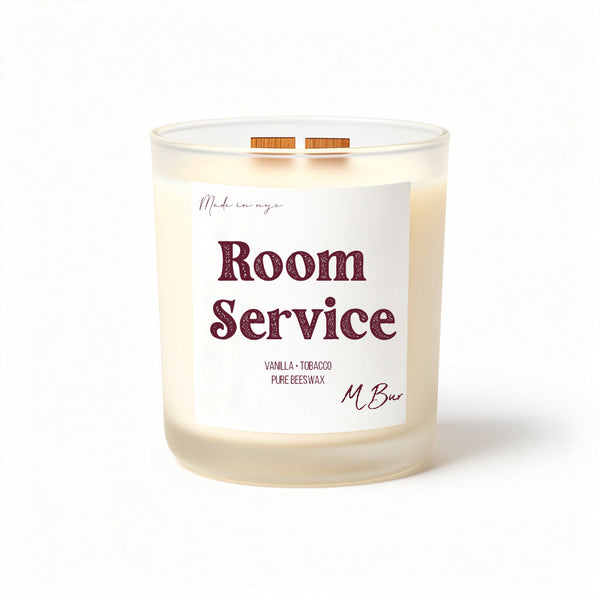
Paraffin is the worst option for air quality. It's cheap, which is why roughly 80% of mass market candles use it. Soy is better, but read labels carefully. Many "soy" candles are actually soy and paraffin blends, and manufacturers aren't required to disclose the ratio. Beeswax is the cleanest burning candle wax available. It has the highest melting point of any candle wax, which means it burns slower and produces significantly less soot and particulate matter.
The Fragrance
Toxic fragrance oils are the primary trigger for respiratory irritation in both adults and infants. If a candle label just says "fragrance" with no further detail, assume the worst. Look for candles that specifically state their fragrance oils are phthalate free and non toxic. Unscented candles are the safest option for the nursery itself, but if you're burning in another room, a candle with non toxic, phthalate free fragrance is a reasonable choice.
The Wick
Cotton wicks are standard and generally fine. Wooden wicks are even better for air quality because they produce a lower, more even flame that generates less soot. They also don't curl or mushroom the way cotton wicks can, which means fewer particulate emissions over the life of the candle.
A Quick Comparison
| Factor | Paraffin Candle | Soy Candle | Pure Beeswax Candle |
|---|---|---|---|
| Wax source | Petroleum byproduct | Soybean oil (often blended with paraffin) | Byproduct of honey production |
| VOCs released | Benzene, toluene, formaldehyde | Lower than paraffin, varies by blend | Minimal |
| Soot production | High (black residue on walls and ceilings) | Moderate | Very low |
| Burn time | Shortest | Moderate | Longest (highest melting point) |
| Common wick type | Cotton or zinc core | Cotton | Cotton or wood |
| Fragrance transparency | Rarely disclosed | Varies widely | Varies (look for phthalate free) |

What Parents Who've Made the Switch Actually Say
The concern about candles and babies isn't theoretical for a lot of people. Many parents discover the problem only after noticing symptoms.
"I absolutely love these candles! I instantly notice the difference in the air quality, in comparison to the Bath & Body scented candles. I love Bath & Body's candles but I acknowledge that it caused a slight headache and other minor respiratory discomfort. Awesome products. Totally addicted." Jason H.
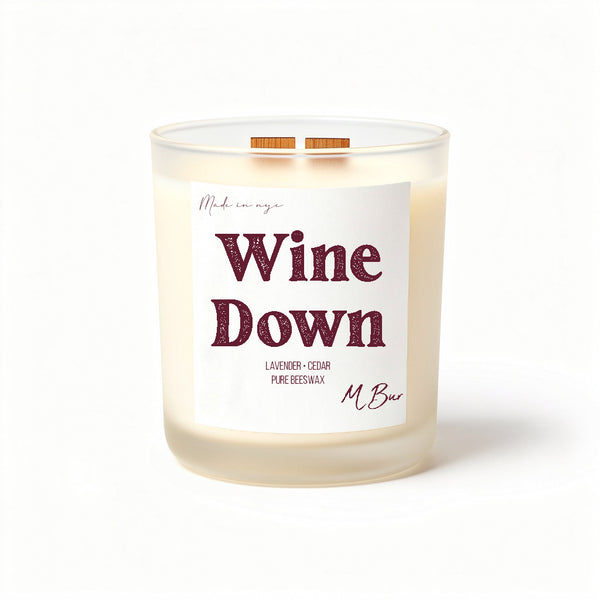
Jason's experience is common. The headaches and respiratory discomfort he describes are textbook reactions to the VOCs and toxic fragrance compounds in paraffin candles. When you switch to a candle made with pure beeswax and non toxic fragrance, those symptoms tend to disappear. The Wine Down candle, with its lavender, chamomile, sage, rosemary, camphor, cedar, and sandalwood notes, is one that parents gravitate toward for exactly this reason. It's calming without being cloying, and the wooden wick keeps soot production minimal.
Your Checklist for Baby Safe Candle Burning
If you want to keep candles in your routine while your baby sleeps in the next room, follow these guidelines:
- Wax: Choose 100% beeswax. If a label says "beeswax blend," that usually means it's mostly paraffin. Single ingredient wax only.
- Fragrance: Non toxic and phthalate free, or unscented. If the label doesn't specify, skip it.
- Wick: Cotton or wood. No metal cores.
- No dyes: Chemical dyes can release additional compounds when burned. Look for candles that get their color from the wax itself (beeswax is naturally golden).
- Ventilation: Crack a window or ensure airflow in the room where you're burning. This is the single easiest thing you can do to reduce particulate buildup.
- Trim the wick: Keep it at roughly a quarter inch before every burn. A longer wick means a bigger flame, more soot, and more smoke.
- Limit burn time: Four hours maximum per session. Longer burns overheat the wax and increase emissions.
- Use a snuffer: Blowing out a candle creates a burst of smoke and soot. A snuffer eliminates that entirely.
- Close the nursery door: This seems obvious, but it meaningfully reduces how much air from other rooms circulates into the baby's space.
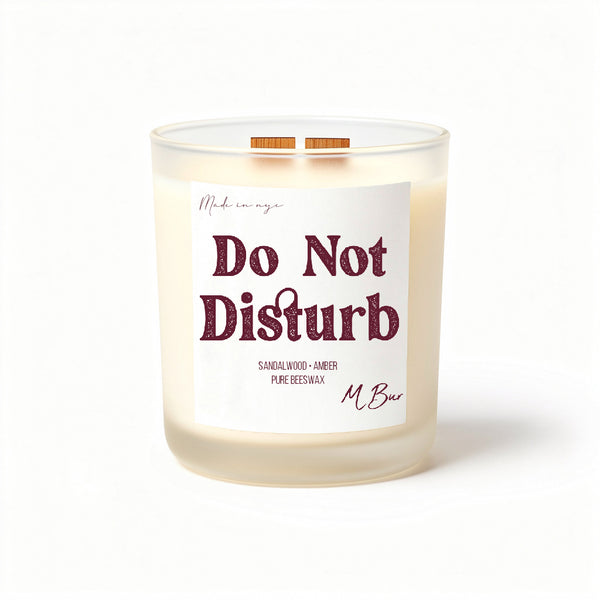
MBur candles check every box on that list. Pure beeswax, wooden wicks, phthalate free fragrance, no chemical dyes, handmade in Queens, New York. The Do Not Disturb candle is a natural fit for parents who want something gentle burning while the baby sleeps. Its notes of bergamot, pear, black tea, amber, and musk are soft enough to stay in the background without overwhelming a room.

Signs Your Current Candle Might Be Affecting Your Baby
Babies can't tell you the air quality is bothering them, so you have to watch for it. Common signs include increased sneezing or coughing (especially after you've been burning a candle), watery or red eyes, congestion that doesn't seem connected to a cold, and in some cases, dark particulate matter visible around the nostrils.
If you notice any of these, stop burning your current candle immediately and consult your pediatrician. Then take a hard look at the ingredient list on whatever you were burning. Odds are strong you'll find paraffin wax, undisclosed fragrance compounds, or both.
Frequently Asked Questions
How far away does a candle need to be from a baby's room to be safe?
Distance helps, but indoor air circulates throughout a home regardless of which room the candle is in. The more important factor is what the candle is made of. A paraffin candle two rooms away still releases VOCs into your home's air. A pure beeswax candle with non toxic fragrance in the next room produces dramatically fewer harmful compounds. Pair a clean candle with good ventilation and a closed nursery door for the best results. Browse MBur's full collection of pure beeswax candles if you're looking for options built with clean ingredients.
Are unscented candles safer for homes with babies?
Only if the wax itself is clean. An unscented paraffin candle still releases benzene, toluene, and formaldehyde when burned. The fragrance is one risk factor, but the wax is another. A scented beeswax candle with phthalate free fragrance oil will produce cleaner air than an unscented paraffin candle.
Do beeswax candles actually purify the air?
Some studies suggest that burning beeswax produces negative ions, which may help reduce airborne pollutants and dust. This is promising but not definitively proven at household scale. What is well established is that beeswax produces significantly less soot and fewer VOCs than paraffin, which means it contributes far less pollution to your indoor air in the first place.
Can I use a candle warmer instead of lighting the wick?
A candle warmer eliminates the combustion element entirely, which means no soot and no flame. It's a reasonable alternative, especially in smaller spaces. Keep in mind that warming a paraffin candle still releases some VOCs from the wax as it melts, so ingredient quality still matters even without a flame.
What about essential oil diffusers as an alternative?
Diffusers avoid the combustion issue, but essential oils can still irritate an infant's airways. Some oils (like eucalyptus and peppermint) are specifically flagged by pediatricians as potentially harmful for babies under two. If you go the diffuser route, use it in a well ventilated room away from the nursery, and research each oil's safety profile for infants.
The Bottom Line
You don't have to give up candles when you have a baby. You do have to give up bad candles. The risk isn't the flame in the next room (as long as it's supervised). The risk is paraffin wax, toxic fragrance oils, and cheap wicks filling your home's air with compounds that have no business being near developing lungs.
Switch to a candle made with pure beeswax, a wooden wick, and phthalate free fragrance. Trim the wick, ventilate the room, close the nursery door, and burn for four hours or less. That's the whole protocol.
"Absolutely loved the Wine Down candle! The scent is so light and clean, not overpowering at all, which is exactly what I look for. A lot of other candles tend to give me headaches, but this one was a total game changer. I was able to enjoy the calming aroma without any discomfort." Nicole D.
If you're ready to make the switch, explore MBur's full beeswax candle collection. Every candle is 100% beeswax with a wooden wick, non toxic fragrance, and no chemical dyes, starting at $20 for the 20 hour size. Parents with sensitive noses (and sensitive babies) keep coming back for a reason.
Related reading

