

Lead or Zinc Wick Concerns: What's Actually in Your Candle
If you are worried about a lead wick hiding inside a candle you bought this year, that fear is aimed at the wrong decade. Lead-cored wicks were banned in the United States back in 2003. The bigger surprise is what replaced them, and why "lead-free" on a label tells you almost nothing.
Most people stop reading the second they see that phrase. That is exactly the problem. A candle can be lead-free and still carry a metal core, a stiffener, or a wick treatment you would rather not breathe. If you care about what floats into the air of a small room, the smarter move is a wick that skips metal entirely, which is why our wooden-wick beeswax candles exist.

The word doing the most work on the label
"Lead-free" sounds like a badge. It is closer to a floor. Every candle legally sold in the U.S. has to be lead-free. That is the law, not a feature.
So when a brand shouts it in big letters, they are advertising the bare minimum. It is like a restaurant bragging that its kitchen has walls. True, but not the point.
Here is the honest reason this matters. "Lead-free" only rules out one metal. It says nothing about zinc, tin, or the chemical coatings some wicks get to burn stiff and straight.
Why lead ended up in wicks at all
A wick needs to stand up. Cotton on its own tends to droop into the pool of melted wax and drown the flame. Makers wanted a wick that stayed rigid and centered.
A thin metal core fixed that. For decades, lead was the cheap, easy choice. Then the science caught up.
Research on metal-core wicks found that burning them released lead into the air. Environmental health models suggested that burning several leaded candles at once for a couple of hours could push indoor lead levels into harmful territory. Regulators acted on that.
The CPSC banned lead-cored wicks in 2003. Europe moved the same direction. The lead problem, for legal domestic candles, is over.

What actually replaced the lead
Makers still needed a stiff wick. So most swapped lead for zinc or tin. Both are legal. Both are far less toxic than lead.
That is real progress. Zinc does not carry the severe risks that made lead so dangerous. If you are picturing lead poisoning from a modern store candle, you can set that fear down.
But zinc is not nothing. Studies show metal-core wicks can still release fine metal particles into the air as they burn. Less than lead, yes. Still, some.
For a candle burning for hours in a closed bedroom, "less" is not the same as "none." That gap is where the wick material choice starts to matter.
The three wick types, from most to least metal
| Wick type | Metal core? | Air impact | Legal status |
|---|---|---|---|
| Lead core | Yes, lead | Releases lead particles | Banned since 2003 |
| Zinc or tin core | Yes, zinc/tin | Releases minor metal particles | Legal and common |
| Cotton or wood | No metal | No metal emissions | Legal, cleanest option |
The two things you can check yourself
You cannot see the difference between a lead core and a zinc core. That takes a lab. So stop trying to eyeball it.
What you can check is whether a core exists at all. Gently bend the unburned wick. If it holds a stiff, upright shape, there is metal inside. If it flops over soft, you are likely looking at cotton or paper.
The second check is the label wording. A brand that means it says "metal-free" or names the material outright, like wood or cotton. "Lead-free" alone is the weaker claim.
"I absolutely love these candles! I instantly notice the difference in the air quality, in comparison to the Bath & Body scented candles. I love Bath & Body's candles but I acknowledge that it caused a slight headache and other minor respiratory discomfort. Awesome products. Totally addicted." Jason H.
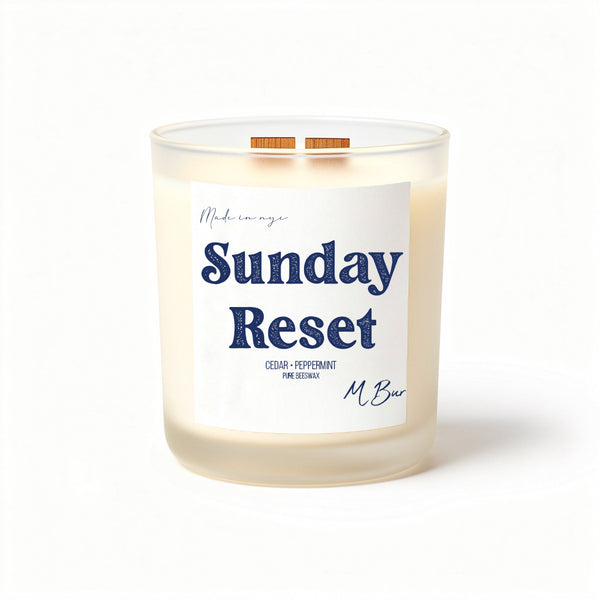
That air-quality difference is why the wick material is worth the thought. A wooden wick removes the metal question completely. Our Sunday Reset candle uses one, with notes of eucalyptus, clove, cedar, patchouli, and vanilla. The 40-hour size runs $32, and the 80-hour is $65.
But mine came from a big-box store, so it's fine, right?
Mostly, yes. Legally sold domestic candles have been lead-free for two decades. Treating every metal wick like a lead hazard is ungrounded panic.
The gap is imports. Watchdogs still turn up illegal lead-cored wicks in cheap novelty, seasonal, or prayer candles sold through unverified overseas sellers. If a candle came from a random third-party marketplace listing with no brand behind it, that is where caution earns its keep.
Buy from a brand that names its wick material and pours its own product. That single habit removes the guesswork.
How to pick a wick you never have to worry about
Skip the metal question by choosing wood or 100% cotton. Untreated wooden wicks and unbleached braided cotton are the cleanest options going.
Look for the word "metal-free," not just "lead-free." Give the unburned wick a light bend to confirm.
Trim the wick to a quarter inch before every burn. That keeps the flame steady and cuts down on soot. A steady flame is a cleaner flame.
Plenty of brands do good work here. Boy Smells built its name on mood and design. Fontana Candle Company leans hard into clean, simple ingredients. And MBur pours 100% beeswax with wooden wicks, handmade in New York City. If wick material is your worry, wood is the answer that ends the conversation.
Why beeswax and wood go together
A wooden wick removes the metal. Beeswax handles the rest of the burn. It is a single-ingredient wax, no paraffin, so there is no petroleum soot to breathe.
Our fragrance is phthalate-free, with no chemical dyes. Beeswax also holds the longest burn time of any candle wax, thanks to its high melting point. The 80-hour size gets you weeks of evenings.
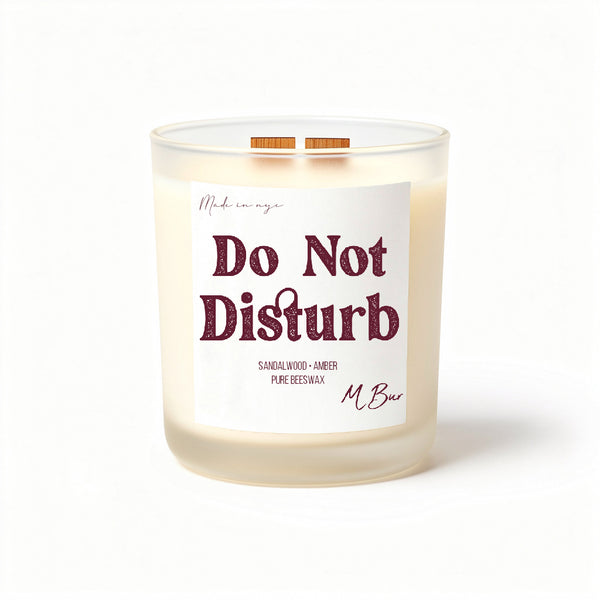
For a bedroom, where a candle sits close and burns long, the Do Not Disturb candle pairs a soft bergamot and pear scent with that clean wooden-wick burn. The 40-hour is $32, the 80-hour is $65.
Frequently asked questions
Are lead candle wicks still legal to sell?
No. The CPSC banned the manufacture and sale of lead-cored wicks in 2003. Any legally sold domestic candle is lead-free by law. If you want to skip metal entirely, the wooden wicks across the MBur candle collection are your simplest route.
Can lead wicks still turn up in imported candles?
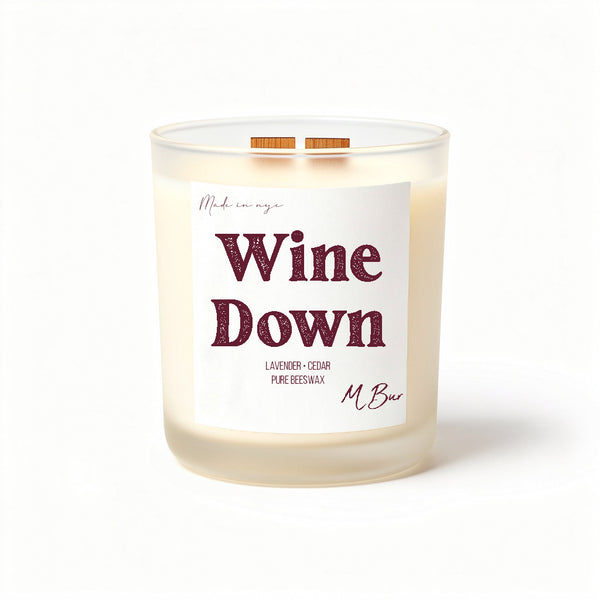
Occasionally, yes. Independent testing sometimes finds illegally imported or counterfeit candles with lead wicks slipping past screening. Buying from a brand that names its wick material, like our Wine Down candle with its wooden wick, sidesteps the risk.
How can I tell if a wick has metal in it?
Gently bend the unburned wick. A metal core stays rigid and upright. A cotton or wood wick flops over soft.
Is zinc a safe alternative to lead?
Zinc is legal and much safer than lead, without the severe risks lead carries. It can still release minor metal particles as it burns, so if you want zero metal emissions, a wooden or pure cotton wick is the cleaner pick.
What are the safest non-metal wick options?
Unbleached 100% cotton, paper-core cotton, and untreated wooden wicks. All three skip metal completely and are widely available from transparent brands.
The takeaway
The lead scare belongs to a banned era, and zinc, while legal and much safer, still puts trace metal in the air. Choosing a wooden or pure cotton wick ends the question for good. For a metal-free burn in a beeswax candle, start with the Do Not Disturb candle, backed by hundreds of five-star reviews from people who notice the difference in their air.
Shop the wooden-wick beeswax collection.
Related reading

