

How to Survive Cluster Feeding Nights with Beeswax Candles
The reason your baby won't stop nursing at 9 PM is not that your milk supply failed. Cluster feeding is your baby stocking up before a long sleep stretch, and it tends to hit hardest in the evening. It feels endless. You are pinned to the same chair, phone light stabbing your eyes, baby latched for the fourth time in an hour.
Most parents reach for something to make that dark, quiet space feel less bleak. A candle is the obvious move. The trouble is that many candles quietly worsen the air in a room where a newborn is breathing fast, which is exactly why so many parents lean on pure beeswax candles that burn clean and keep the nursery air soft instead of heavy.
So the fix is not just "light a candle." It is choosing one that belongs near an infant at all.
Why cluster feeding runs so late, and why it is normal
Newborns feed 8 to 14 times a day. During a cluster, that jumps. Babies may nurse every 15 minutes to an hour, in bursts of 10 to 30 minutes each.
It clusters in the evening for a reason. Your baby is loading up on calories before a longer sleep window. They are also seeking comfort after a full day of noise and light.
This is a supply-and-demand system doing its job. Frequent nursing tells your body to make more milk for the next growth spurt. Those spurts tend to peak around 10 days, 3 weeks, 6 weeks, and 3 months.
Major pediatric authorities describe cluster feeding as normal and temporary. The Cleveland Clinic notes most babies outgrow the evening fussiness by 3 to 4 months. So the phase ends. The chair does not have to be miserable in the meantime.

The part nobody warns you about: the air in that room
Lactation consultants recommend keeping night feeds calm, dark, and quiet. Low light helps your baby tell day from night. It also helps you stay half-asleep for the next round.
Here is where the candle choice matters more than you think. A newborn breathes faster than you do. Their airways are narrow. Whatever floats in that room, they take in more of it, quicker.
Paraffin candles are made from petroleum. When they burn, they can release benzene and toluene into the air. That is not the air you want near a sleeping infant.
Many candles also carry toxic fragrances loaded with phthalates. These release unstable compounds, sometimes called VOCs, as they burn. A candle marketed as "natural" can still hide a paraffin blend or a heavy toxic fragrance.
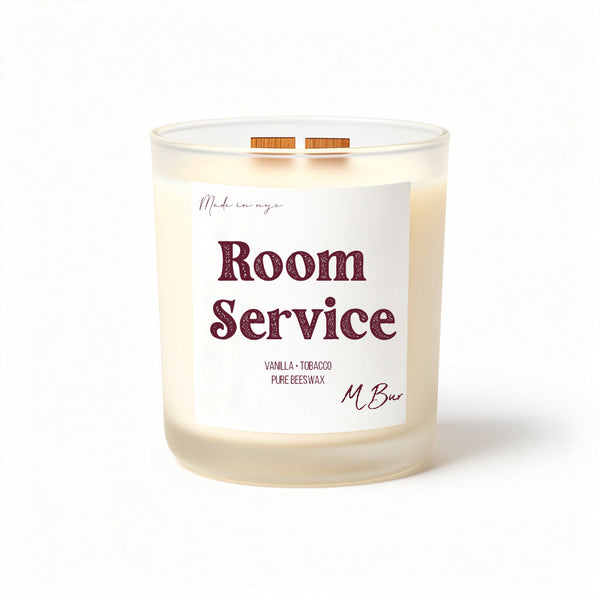
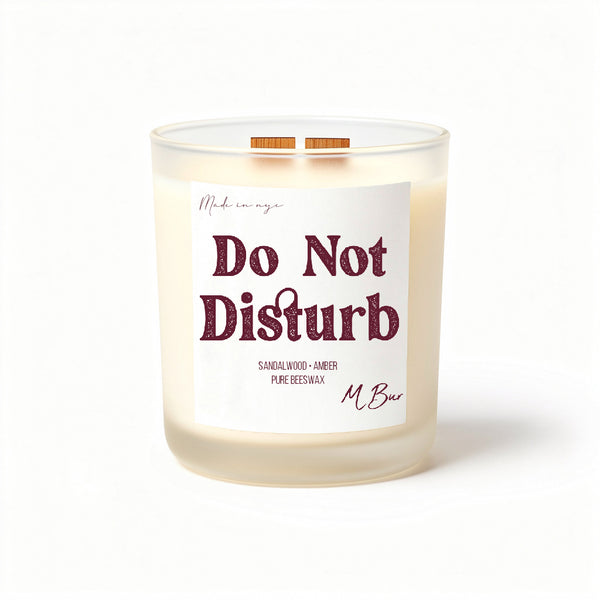
Beeswax is different at the source. It is a single ingredient, made by bees as a byproduct of honey. Pure beeswax with a wood or cotton wick has no petroleum and no chemical additives. That is why our Do Not Disturb beeswax candle earns its spot on the nursing table: clean burn, soft light, and a calm scent that never fills your throat. Its notes are Bergamot and Pear. If you are managing allergies, asthma, or any respiratory concern, follow your doctor's guidance on what belongs in your baby's room.
What a clean candle actually gives you at 2 AM
A wood wick gives a soft crackle. It sounds like a tiny fireplace. That low, steady sound can settle a fussy baby and your own nerves at once.
Beeswax also burns with a warm, low glow close to natural light. It is bright enough to see the latch. It is dim enough that your baby stays sleepy and you both drift back down after.
And beeswax lasts. The high melting point means a slow, even burn. Our 80-hour size holds a lot of these nights before it runs out.
"Absolutely loved the Wine Down candle! The scent is so light and clean, not overpowering at all, which is exactly what I look for. A lot of other candles tend to give me headaches, but this one was a total game-changer." Nicole D.
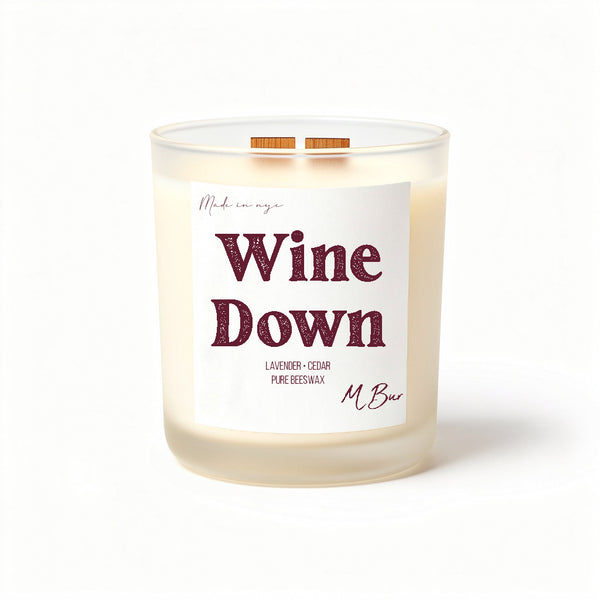
That headache point matters postpartum. Your senses run high after birth. A heavy scent can push a tired, overwhelmed brain over the edge. A light, clean burn keeps the calm you are trying so hard to build. If you want something even softer and herbal for the wind-down, the Wine Down beeswax candle carries Lavender, Chamomile, Sage, Rosemary, Camphor, Cedar, and Sandalwood.

Your cluster feeding night survival plan
Set up before the witching hour hits. Around 6 PM, the marathon usually starts.
- Trim the wick to about a quarter inch before you light it. This cuts soot and gives a steady flame.
- Keep the candle on a stable surface, out of reach and away from anything that can catch. Never leave it burning if you fall asleep.
- Crack a window or run a fan for gentle airflow. Good ventilation keeps the air fresh for both of you.
- Stack water, snacks, a phone charger, and burp cloths within arm's reach. You will not be getting up.
- Keep the lights low and the room quiet. Let the candle be the only light source so your baby stays in night mode.
- Feed on demand. Do not try to stretch the intervals or add formula out of panic. Frequent nursing is building your supply.
Track wet diapers if you worry about intake. Plenty of heavy, wet diapers over 24 hours is a good sign. That is the real measure, not how often the baby wants the breast.
What to look for in a candle that belongs near a newborn
Read past the front label. "Soy" candles are often blended with paraffin. "Natural" is not a regulated word.
Check for four things. The wax should be 100% pure, ideally beeswax. The wick should be wood or cotton, never metal-core. The fragrance, if any, should be phthalate-free and non-toxic. And there should be no chemical dyes.
MBur checks all four. Single-ingredient beeswax, wood wicks, phthalate-free fragrance, no dyes, handmade in New York City. You can browse the full beeswax candle collection to find the scent that fits your nursery.
Frequently asked questions
Does cluster feeding mean my milk supply is too low?
No. Cluster feeding is a normal supply-boosting mechanism. Frequent evening nursing signals your body to make more milk for a growth spurt. If you want a calm scent for those long sessions, the Do Not Disturb candle keeps the room soothing without a heavy fragrance.
How long do cluster feeding phases last?
Each phase usually runs a few days, often around 48 hours before it settles. They tend to appear during growth spurts near 3 weeks, 6 weeks, and 3 months. Most babies outgrow evening cluster phases by 3 to 4 months. A slow-burning Wine Down candle in the 80-hour size ($65) will carry you through several of them.
Is it safe to burn a candle near a newborn?
Choose a 100% pure beeswax candle with a wood or cotton wick, keep it well away from the baby, ventilate the room, and never leave it burning while you sleep. Skip paraffin and toxic fragrances near an infant. The MBur candle collection is single-ingredient beeswax with no chemical dyes.
How can I tell if my baby is getting enough during long nursing sessions?
Count the diapers. Plenty of heavy, wet diapers over 24 hours means your baby is well fed and hydrated. If you have concerns, follow your pediatrician's guidance.
The takeaway
Cluster feeding nights are temporary, and they are your body doing exactly what it should. A pure beeswax candle keeps that dark, quiet space calm and the air clean while you ride it out. Our customers rave that these candles fill a room without the headaches other candles give them.
For a nursery-friendly pick, start with the Do Not Disturb beeswax candle, available from the 40-hour size at $32 up to the 80-hour size at $65. Light it before the witching hour and let the crackle do some of the work.
Related reading

