

How to Get Rid of Skunk Smell in and Around Your House: Effective Tips and Solutions
Skunk spray hit your house, and now everything smells like burning rubber soaked in sulfur. The dog tracked it inside, or a skunk sprayed under the porch, and the odor crept through every vent and doorway until your entire living space became unbearable. You have probably already tried opening windows, maybe even grabbed a can of air freshener, and discovered that lavender layered on top of skunk somehow smells worse than skunk alone.
The good news: skunk odor is a solvable chemistry problem, and the solution does not require expensive professional equipment. The bad news: most of the advice floating around online (tomato juice, vinegar baths, beer) is either a myth or a half measure that lets the smell come roaring back the next time it rains.
This guide covers the actual science of why skunk spray is so persistent, the only neutralizing method that reliably works, and how to reclaim every room in your house once the worst is over. And once you have eliminated the source, we will talk about how to bring your home back to smelling like a place you actually want to be, including how a clean burning candle from our full beeswax candle collection can help in the final stage of recovery.
Why Skunk Smell Is So Hard to Get Rid Of
Skunk spray is not just a bad smell. It is an oily, sulfur based liquid that bonds to almost everything it touches. The active compounds are called thiols, and they are detectable by the human nose at concentrations as low as 10 parts per billion. That is why even a tiny amount of spray can make an entire house reek.
But thiols are only half the problem. Skunk spray also contains thioacetates, dormant compounds that sit quietly on surfaces until they come into contact with moisture. When humidity rises or it rains, thioacetates convert into fresh thiols, and the smell returns as if the skunk just sprayed again five minutes ago. This is why people who think they have solved the problem on a dry Tuesday find themselves gagging again on a rainy Thursday.
According to the University of Nebraska Extension, the oily nature of the spray means water alone does not remove it. In fact, wetting a sprayed surface without a degreaser can spread the oil further and activate those dormant thioacetates, making things actively worse.

The Myths That Waste Your Time
Before we get to what works, a quick word about what does not.
Tomato juice is the most stubborn myth in skunk odor removal. It does not neutralize anything. What actually happens is a phenomenon called olfactory fatigue: the strong tomato scent overwhelms your nose, temporarily preventing you from detecting the skunk. The moment the tomato smell fades, the skunk is right back. You have not fixed the problem. You have just given your nose a short break from noticing it.
Vinegar, beer, and standard air fresheners fall into the same category. They mask the odor without breaking down the sulfur compounds that cause it. Layering a pleasant scent on top of an active thiol is like putting a hat on a problem. The problem is still there. Everyone can still see it.
The Only Method That Actually Neutralizes Skunk Odor
The science based solution uses an oxidation reaction to break the sulfur bonds in thiols, rendering them odorless. This is the method recommended by Penn State Extension, Colorado State University Extension, and virtually every wildlife management program in the country.
The Recipe
- 1 quart of 3% hydrogen peroxide (the kind from any drugstore)
- 1/4 cup of baking soda
- 1 to 2 teaspoons of liquid dish soap (this is the degreaser that breaks up the oily spray)
How to use it: Mix all three ingredients in an open container. Apply the solution to the affected surface, whether that is your dog's fur, your porch railing, or the side of your house. Let it sit for 5 to 10 minutes. Scrub if needed, then rinse thoroughly with water.
Critical safety notes: Never store this mixture in a sealed bottle. The chemical reaction releases oxygen gas, and a closed container can build pressure and rupture. Mix it fresh every time. Also, hydrogen peroxide can bleach fabrics and lighten pet fur, so test a small area first if you are treating something you care about cosmetically.
For Pets Specifically
Keep the sprayed pet outside. This is the single most important step people skip. Bringing a skunked dog inside contaminates your furniture, carpet, and curtains with secondary spray, turning a one surface problem into a whole house problem. Apply the hydrogen peroxide mixture outdoors, massage it into the fur (avoiding eyes and mouth), wait 5 minutes, rinse, and follow with regular pet shampoo.

Eliminating Skunk Smell Inside Your House
If the odor has already made it indoors, you are dealing with a multi step process. The smell clings to soft surfaces (upholstery, curtains, carpet) much more stubbornly than hard ones.
Step 1: Maximize Airflow Immediately
Open every window. Set up fans to create cross ventilation, pulling air through the house and out the other side. This is the single most effective first step for indoor skunk odor. Do this before you try anything else.
Step 2: Absorb Lingering Odor
Place bowls of white vinegar or activated charcoal in affected rooms. These work as passive odor absorbers, pulling thiol compounds out of the air over several hours. Replace them daily until the smell fades. Baking soda sprinkled on carpets and upholstery, left overnight, then vacuumed up also helps pull odor from soft fibers.
Step 3: Clean Hard Surfaces
Wipe down walls, floors, countertops, and any hard surface the spray may have contacted with a solution of 1 part bleach to 9 parts water (on bleach safe surfaces) or undiluted white vinegar (on surfaces where bleach is not appropriate). Pay special attention to areas near doors, windows, and vents where the spray entered.
Step 4: Launder Soft Goods
Wash all affected clothing, bedding, curtains, and removable cushion covers with regular detergent plus 1/2 cup of baking soda. If the smell persists after one cycle, add a cup of white vinegar to the rinse cycle and run it again. Dry items outdoors in sunlight if possible. UV light helps break down residual thiol compounds.
Step 5: Address Your HVAC System
If the skunk sprayed near an air intake or the smell entered through your ductwork, replace your HVAC filter. The old filter has been circulating skunk compounds through every room. A fresh filter, ideally HEPA rated, stops the cycle.
Preventing Skunks from Coming Back
Treating the smell is reactive. Keeping skunks away from your property is the real long term fix.
Skunks den under porches, decks, sheds, and crawl spaces. According to the University of California Integrated Pest Management Program, the most effective prevention is physical exclusion: install hardware cloth or wire mesh around the base of any structure where a skunk could burrow, burying it at least 12 inches into the ground so they cannot dig underneath.
Remove food sources too. Secure garbage cans with locking lids, bring pet food indoors at night, and clean up fallen fruit from trees. Skunks are opportunistic. If your yard offers easy food and shelter, they will keep returning no matter how many times you chase them off.
Professional skunk removal (trapping and exclusion) typically runs between $300 and $600 if the DIY approach is not working or you are dealing with a skunk that has already made a den on your property.

The Final Step: Making Your Home Smell Like Home Again
Once you have neutralized the skunk spray, absorbed the residual odor, and cleaned every surface, there is often a ghost of the smell that lingers. Your nose might be playing tricks on you at this point (olfactory memory is powerful), or there may be trace thioacetates hiding in a surface you missed. Either way, this is the stage where most people reach for an air freshener or a scented candle.
A word of caution here: cheap candles made with paraffin wax and toxic fragrance oils can actually make indoor air quality worse, not better. Paraffin is a petroleum byproduct that releases compounds like benzene and toluene when burned. After spending all that effort cleaning your air, the last thing you want is to fill it with new irritants.
A pure beeswax candle is a better choice for this recovery stage. Beeswax burns cleaner than any other candle wax, produces virtually no soot, and has a naturally warm honey undertone that gently replaces stale or chemical smells without competing with them. The wooden wick adds a quiet crackling sound that makes your house feel like a place worth being in again, which is half the battle after a skunk encounter.
"I absolutely love these candles! I instantly notice the difference in the air quality, in comparison to the Bath & Body scented candles. I love Bath & Body's candles but I acknowledge that it caused a slight headache and other minor respiratory discomfort. Awesome products. Totally addicted." Jason H.
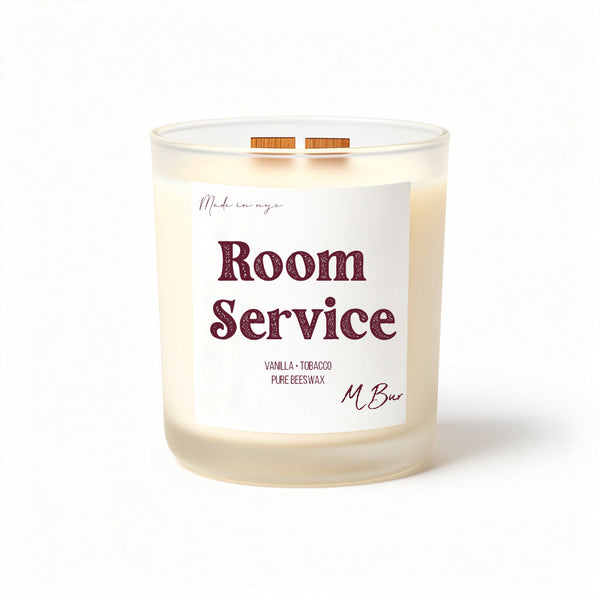
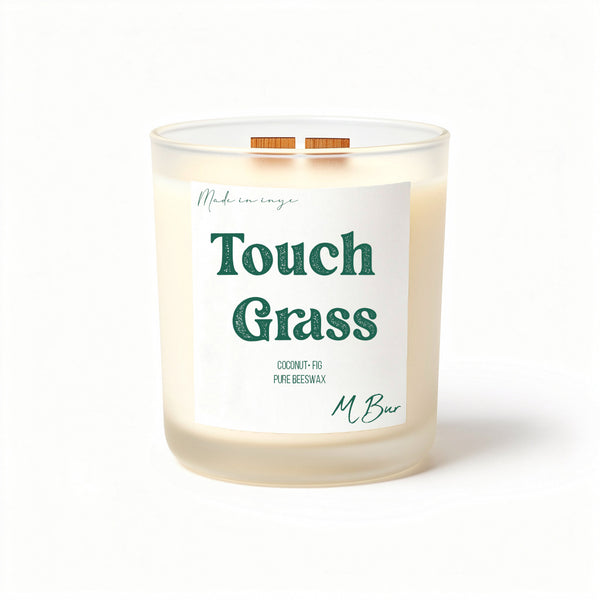
If you want something that fills the room without being overpowering, Room Service is MBur's bestseller for a reason. The saffron, white tea, and vanilla profile reads as warm and clean, exactly the kind of scent that signals "this house smells good" without screaming over whatever faint trace might still be lurking. For something greener and more energizing, especially if you have been keeping windows open and want to lean into that fresh air feeling, Touch Grass has fig, black currant, and cedarwood notes that feel like stepping outside into a garden.
Frequently Asked Questions
Does tomato juice actually get rid of skunk smell?
No. Tomato juice overwhelms your nose temporarily through olfactory fatigue, but it does not break down the sulfur compounds (thiols) that cause the odor. Once the tomato scent fades, the skunk smell returns in full. The hydrogen peroxide, baking soda, and dish soap mixture is the only home remedy that chemically neutralizes the odor.
Why does the skunk smell come back when it rains or gets humid?
Skunk spray contains dormant compounds called thioacetates. When these come into contact with water or humidity, they convert into fresh thiols, which are the molecules your nose detects as "skunk." This is why a surface that seemed clean on a dry day can suddenly reek again after a rainstorm. Thorough cleaning with the oxidizing solution on the first pass reduces the amount of thioacetates left behind.
Can I just use a regular scented candle to cover up the smell?
Masking skunk odor with fragrance does not eliminate it, and many mass market candles introduce their own air quality problems. Paraffin wax releases soot and volatile compounds when burned. If you are going to use a candle after neutralizing the spray, choose one made with clean ingredients. A pure beeswax candle with a non toxic, phthalate free fragrance, like the ones in MBur's beeswax candle collection, adds pleasant scent without adding new irritants to your freshly cleaned air.
How long does skunk smell last if I do nothing?
Untreated skunk odor can persist for two to three weeks outdoors and even longer indoors, especially on porous surfaces like carpet and upholstery. Humidity and rain can reactivate dormant compounds and extend the timeline further. Active treatment shortens this dramatically.
Should I call a professional for skunk smell removal?
If the DIY methods above do not resolve the odor after two or three rounds of treatment, or if the skunk sprayed directly into your HVAC system or crawl space, professional odor removal services have industrial grade neutralizing agents that can reach places household products cannot. Expect to pay between $300 and $600 depending on the severity and your location.
Reclaim Your Space
Skunk smell feels catastrophic in the moment, but it is a chemistry problem with a chemistry solution. Neutralize the thiols with the hydrogen peroxide mixture, absorb residual odor with vinegar or charcoal, clean every surface methodically, and prevent future encounters by sealing off den sites. Once the source is gone, a clean burning beeswax candle is the best way to put the finishing touch on a house that finally smells like yours again.
"Absolutely obsessed with M Bur Candle Co my roommate and I own 6/8 of the scents! They smell up a WHOLE room during the burn & even a while after blowing them out. I won't buy other candles anymore, they're just that good." Paige
Browse the full beeswax candle collection and pick the scent that makes your house feel like home again. Every candle starts at $20 for the 20 hour size and burns up to 80 hours in the largest size, which is a lot of clean, skunk free air.
Related reading

