

How to Choose Pet Safe Candles for a Happier, Healthier Home
If your cat starts sneezing every time you light a candle, or your dog wanders into the other room the second you strike a match, the problem is probably the candle itself. Pets react to what candles put into the air, and most candles put a lot into the air. The good news is that once you know what to look for, choosing pet safe candles gets pretty simple.
This is not about giving up scent entirely. A clean candle keeps the smell you love and drops the compounds your animals react to. If you want to skip straight to the shortlist, our full beeswax candle collection is built on exactly the ingredients vets recommend. But it helps to understand why some candles bother pets so much in the first place.
Why candles affect pets more than they affect you
Your dog smells the world at a scale you cannot imagine. A dog's nose is roughly 10,000 to 100,000 times more sensitive than yours, so a fragrance that reads as pleasant to you can be overwhelming to them.
Cats have a different problem. Their sense of smell is around 14 times sharper than ours, and they tend to sit low, where heavier soot particles settle. Worse, cats lack certain liver enzymes (glucuronosyltransferase) needed to break down some of the aromatic compounds in fragrances and essential oils. What their bodies cannot process, they hold onto.
Birds are the most fragile of all. Their respiratory systems are extremely efficient at pulling particles out of the air, which means airborne pollutants hit them fast and hard. If you keep a bird, heavy home fragrance deserves real caution.

The three ingredients that actually cause the trouble
Most of what upsets pets comes down to what a candle is made of. Here is where the risk lives.
Paraffin wax
Paraffin is a petroleum byproduct. When you burn it, it releases hazardous air pollutants including benzene and toluene, plus more soot than a cleaner wax. That soot is exactly what settles at cat and dog level.
Toxic fragrance
Cheap candles lean on toxic fragrances that can contain phthalates, which are linked to hormone disruption. The word "fragrance" on a label can legally hide hundreds of undisclosed ingredients, so a vague label tells you almost nothing.
Metal core wicks
Some unverified imports still use metal core wicks, which can put unwanted particles into the air as they burn. Cotton and FSC certified wood wicks are the safer standard.
The clean candle checklist
When you are shopping, run every candle through this quick list. A genuinely pet safe candle should check all of it.
- Wax: 100% beeswax, soy, or coconut. No paraffin, no vague "wax blend" (which is usually mostly paraffin).
- Wick: unbleached cotton or FSC certified wood. Never metal core.
- Fragrance: phthalate free, fully disclosed, gentle rather than aggressive.
- Dyes: none. Chemical dyes add nothing but more compounds to burn.
- Transparency: the brand actually lists what is in it.
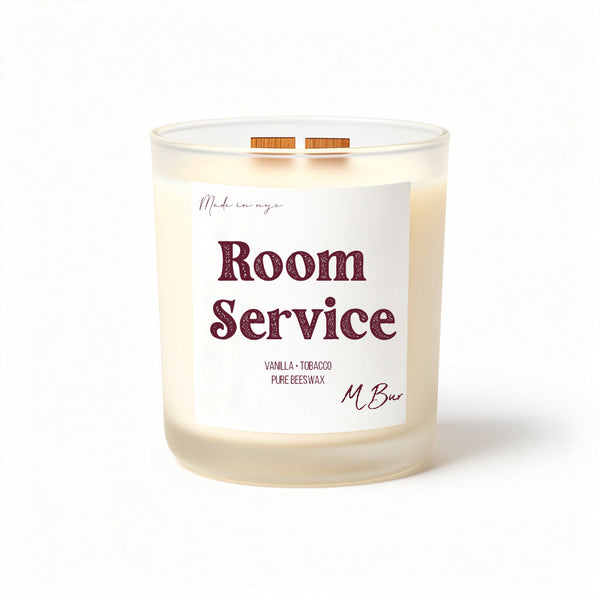
This is the standard MBur was built on. Our candles are 100% beeswax (single ingredient, never a blend), use crackling wooden wicks, skip chemical dyes entirely, and use only phthalate free fragrance. Beeswax also happens to burn the cleanest and longest of the natural waxes, up to 80 hours in the largest size, so you are not relighting constantly in a closed room.
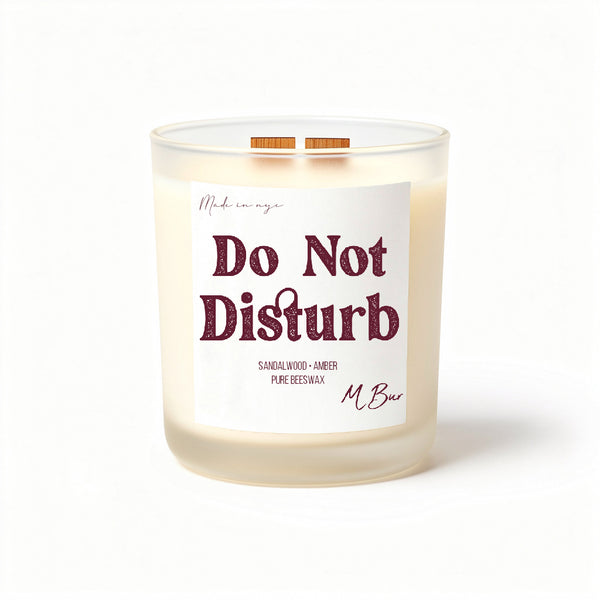
"I love the scent of this candle. It is lovely not overpowering. Its soothing fragrance more than covers my bedroom and bathroom. It is aromatherapy at its best." Dawne Forrest, on Do Not Disturb
That "not overpowering" note matters more than it sounds when you have pets. Do Not Disturb, with its soft bergamot and pear, fills a bedroom without shouting, which is exactly what a sensitive nose down at floor level needs.

The natural scent trap
Here is the mistake most well meaning pet owners make: assuming that anything "natural" is automatically safe. It is not that simple. Plenty of pure essential oils are toxic or seriously irritating to cats and dogs when inhaled or metabolized.
Vets specifically warn against concentrated tea tree, eucalyptus, peppermint, spearmint, wintergreen, pine, fir, cinnamon, clove, ylang ylang, and citrus oils around pets. Cats in particular struggle to process these. So a candle marketed as "all natural essential oils" can still be a problem if those oils are on the caution list.
Gentler profiles like vanilla, soft woods, and light florals tend to sit better in a pet home. A phthalate free fragrance oil built to be mild is often a safer choice than a heavy dose of concentrated essential oil.
Placement and burning habits that keep everyone safe
Even the cleanest candle needs a little common sense once it is lit.
- Burn in a ventilated room and leave your pet a clear escape route to somewhere unscented.
- Place candles high, out of reach of curious paws and wagging tails. Cats and floor level candles are a bad combination for both soot and fire.
- Trim the wick before each burn. A flickering, untrimmed wick produces more smoke and particulate no matter how good the wax is.
- Never leave a burning candle unattended near an animal.
- If you keep birds, be extra cautious and consider burning only in rooms they never enter.
None of this replaces your vet's judgment. If your animal has asthma or any respiratory condition, talk to your veterinarian before adding any fragrance to your home.
Frequently asked questions
Are scented candles toxic to pets?
They can be. Paraffin emissions, toxic fragrances, and certain essential oils can irritate a pet's airway or cause toxicity. A candle made from 100% beeswax with phthalate free fragrance, like the ones in our beeswax collection, removes the most common offenders.
Why are cats more sensitive to candles than dogs?
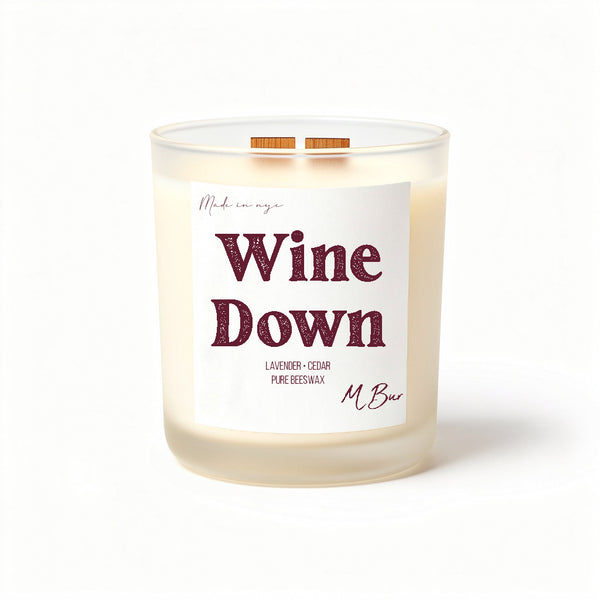
Cats lack certain liver enzymes needed to metabolize many aromatic compounds and essential oils, so those compounds build up rather than clear out. Gentle, low key scents like Wine Down are a friendlier pick in a cat household.
What wax types are safest for pets?
100% beeswax, soy, and coconut all burn cleaner than paraffin and skip the petroleum based pollutants. Beeswax burns the longest and leaves no black soot on your walls, which is why every MBur candle is single ingredient beeswax.
Which candle scents should I completely avoid?
Steer clear of concentrated pine, cinnamon, wintergreen, citrus, eucalyptus, and tea tree. Softer profiles are the safer route in a pet home.
What should I do if my pet eats candle wax?
Watch them closely and call your vet or animal poison control, especially if the wax contained essential oils or additives.

The bottom line
A pet safe candle comes down to three things: a natural wax like beeswax, a proper cotton or wood wick, and a phthalate free fragrance you can actually read on the label. Get those right and you can keep the cozy without making your animals miserable.
MBur candles check every box on that list, and with over 50 five star reviews from people who used to get headaches from other candles, they tend to sit well with sensitive humans and pets alike. Ready to swap out the ones that bother your household? Browse our full beeswax candle collection.

