

Getting Rid of Microwave Smell Without Masking It
You open the microwave and last night's dinner hits you before the plate is even in. Baked-on splatter on the ceiling and walls reheats every time you run it, driving the smell deeper. Steam a bowl of water and lemon inside for a few minutes, wipe the softened grime, and the smell lifts.
We make small-batch beeswax candles in Far Rockaway, so a room that truly smells clean is our whole focus, and that always starts at the source rather than the scent. Below is where the smell comes from, how to clear it step by step, and how to keep the space fresh afterward, with the full the MBur beeswax candle collection here as you read.
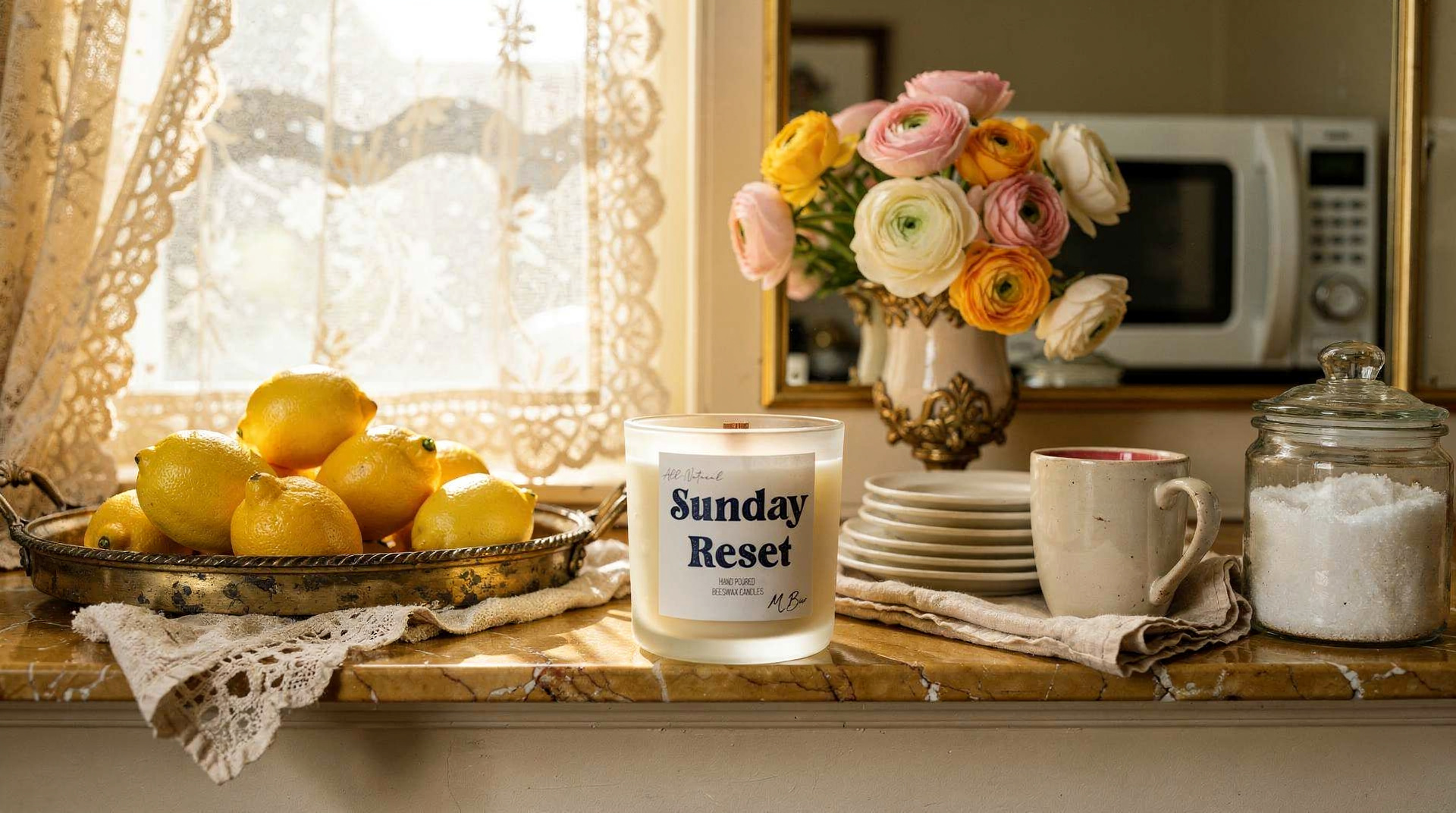
Why a microwave holds onto smells
Uncovered food erupts upward, coating the top and sides of the interior with sauce and grease. Each new use heats that residue again and releases the odor all over whatever you are warming.
A scorched bag of popcorn is the worst offender, since the burnt oils coat every surface and cling for days. The residue is the source, so lifting the smell means softening and removing it, not spraying over it.
The steam-and-wipe method
- Steam it loose. Fill a microwave-safe bowl with a cup of water and several lemon slices, or two tablespoons of white vinegar, and microwave on high for three to five minutes until the window fogs.
- Let it sit. Leave the door closed for five more minutes so the trapped steam softens the baked-on grime.
- Wipe it down. Remove the bowl and wipe the ceiling, walls, and floor with a cloth, then pull out the turntable and wash it in the sink.
- Tackle stubborn spots. For anything that resists, spread a paste of baking soda and water on it, wait five minutes, and wipe clean.
- Finish the details. Wipe the door, the seal, and the vent openings, then leave the door open to air out.
Deodorizing between cleanings
Between deeper cleans, an open bowl of baking soda or activated charcoal left inside overnight, door propped, pulls lingering smells out of the air. A shallow bowl of used coffee grounds does the same and leaves a faint roasted note behind.
If you reheat strong foods often, a quick wipe with a lemon-water cloth after each use stops the odor from building at all, which is far easier than steaming out a week of it later.

When the smell is not a food smell
A sharp burning-plastic or electrical odor is worth taking seriously, because no amount of cleaning will fix it. If you notice it, stop using the microwave, unplug it, and have it checked or replaced, since it can signal a failing component behind the panel.
Masking that kind of smell would hide a real problem, so it is the one case where an air freshener of any sort is exactly the wrong move.
Keep it clean
Cover food with a lid or paper towel while heating, wipe spills as soon as the surface is cool, and run the steam treatment every couple of weeks.
A microwave that never accumulates residue never develops the smell in the first place.
Freshen the whole room once the source is gone
With the baked-on splatter handled, the air itself is the last step. A clean candle is the finishing touch here, best lit once the space is already clean. From there it is the fastest way to make the room read fresh rather than merely neutral.
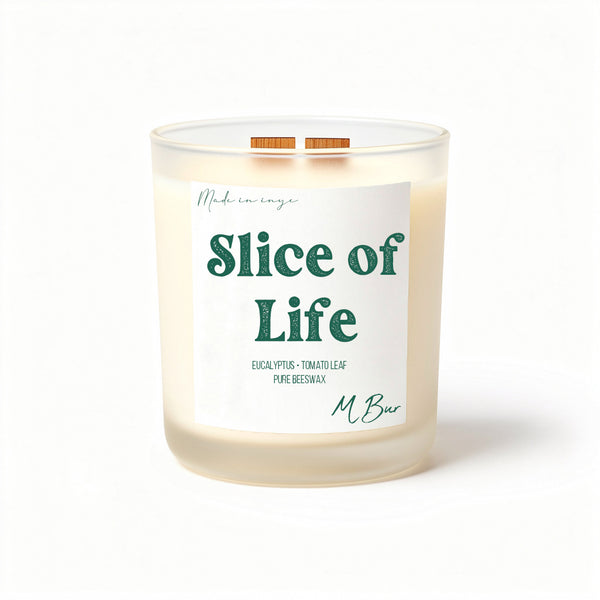
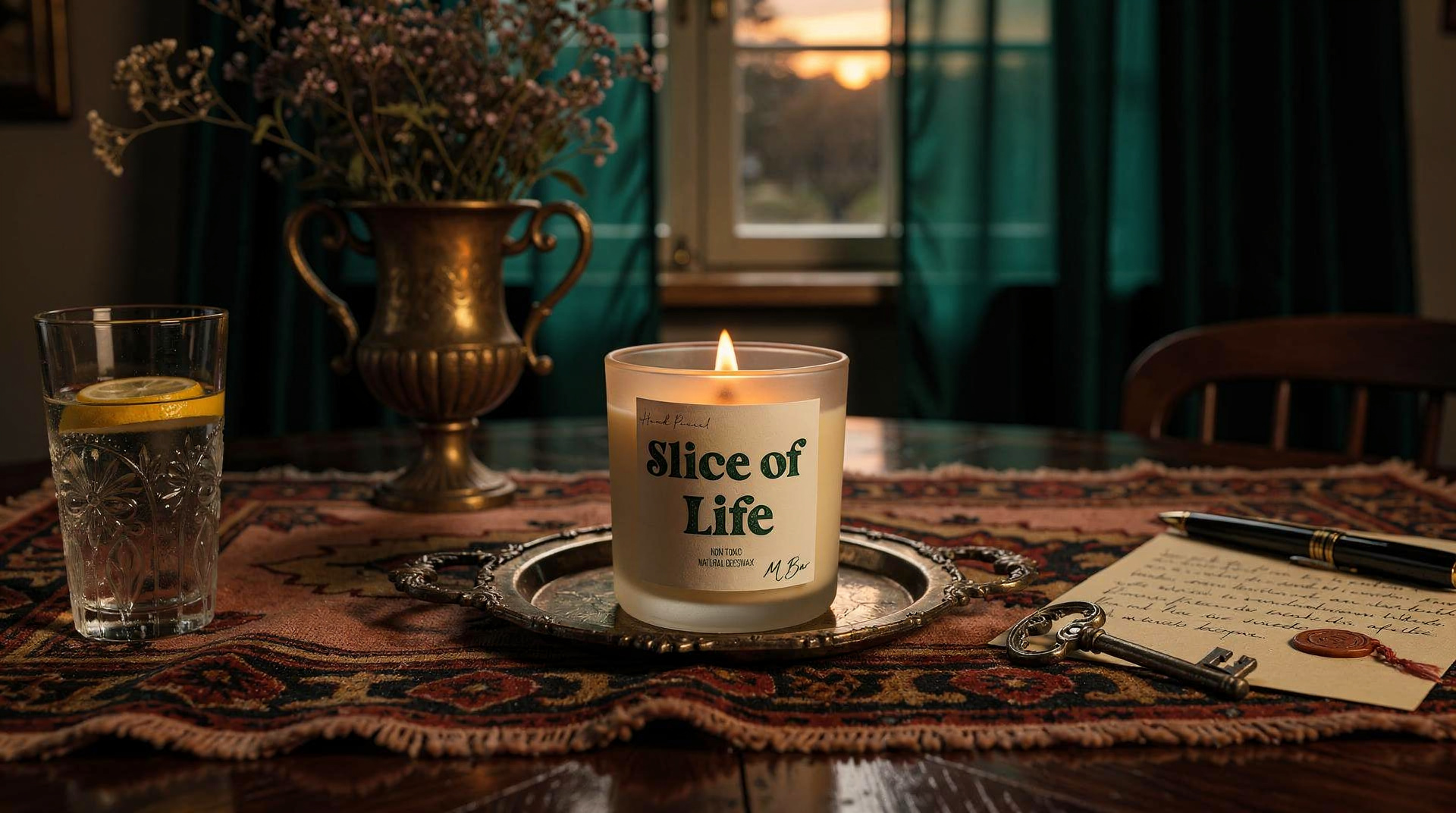
For your kitchen, Slice of Life fits well. It is green and garden-fresh, with tomato leaf, basil, and lemon peel, and like every MBur candle it is poured from 100% beeswax with a wooden wick and phthalate-free non-toxic fragrance oils, so freshening the air never means adding soot on top.
Frequently asked questions
How do I get burnt popcorn smell out?
Run the lemon or vinegar steam, wipe everything down, then leave an open bowl of baking soda inside overnight with the door ajar to absorb what is left.
Can I use commercial cleaner inside?
Stick to food-safe options like vinegar, lemon, and baking soda, since the interior touches your food, and rinse any residue with a damp cloth.
Why does the smell return when I reheat?
Leftover residue on the ceiling is re-heating. Clean the top of the interior specifically, as it is the spot most people miss.
Why does my microwave smell like plastic when it heats?
In a newer unit, a mild plastic smell is usually the interior coating curing, and it fades after a few uses and a wipe-down. A strong, scorched plastic smell in an older microwave is the electrical warning above, so stop and have it checked.
Ready to keep your space smelling clean once the source is handled? Explore the MBur beeswax candle collection and find the scent that fits the room.

