

EWG Verified Candles: What the Certification Really Means for Your Health
The word "clean" appears on roughly every candle label at your local home goods store. So does "natural," "pure," and "eco friendly." None of those words are regulated. A brand can slap them on a paraffin candle loaded with phthalates and face zero consequences. Which is exactly why certifications like EWG Verified exist: to give shoppers something more concrete than a marketing department's best guess at what sounds trustworthy.
But EWG Verified is one specific tool doing one specific job. It covers certain things rigorously and skips others entirely. If you are shopping for a candle that is genuinely safer to burn in your home, understanding what this certification does and does not guarantee is the difference between making an informed choice and just buying a prettier label. We will break down the fine print, compare it to other standards, and walk through what actually matters when you are choosing a clean burning beeswax candle.
What EWG Verified Actually Means
The Environmental Working Group launched its EWG Verified program as a third party certification focused on ingredient safety and transparency. A product bearing the mark has gone through a documented review process. The brand submits its full formulation, the EWG cross references every ingredient against its database of chemicals of concern, and the product must avoid everything on the organization's "unacceptable" list.
That list includes some of the worst offenders in personal care and home products: certain phthalates, parabens, formaldehyde releasing preservatives, and a range of compounds linked to endocrine disruption or respiratory irritation. The certification also requires full ingredient disclosure, which is a bigger deal than it sounds. In the candle industry, the single word "fragrance" on a label can legally hide hundreds of undisclosed chemical compounds. EWG Verified forces brands to open up the fragrance formula.
Brands must also follow Good Manufacturing Practices, which means the production environment itself meets baseline quality and safety standards.

What the Certification Does Not Cover
This is where most shoppers get tripped up. EWG Verified is a banned list certification. It checks whether a product's ingredients appear on its list of known problematic chemicals. What it does not do is audit the entire product from every angle.
Combustion and Emissions
A candle is not a lotion. You do not just apply it to your skin. You light it on fire and breathe in whatever it releases for hours. EWG Verified focuses on ingredient formulation and transparency, not on what happens when those ingredients combust. It does not test particle emission rates, soot production, or the volatile organic compounds a candle releases while burning. A candle could pass EWG's ingredient screen and still produce significant soot if it uses a low quality wick or a wax that burns dirty.
Wax Type and Wick Materials
The certification does not specifically audit whether a candle uses paraffin, soy, coconut, or beeswax. It does not evaluate wick composition. A paraffin candle with a metal core wick could theoretically meet EWG's ingredient transparency requirements while still releasing benzene and toluene during a normal burn session. The wax itself is the fuel source, and the certification does not differentiate between petroleum derived wax and naturally occurring alternatives.
Environmental Impact
EWG Verified is a human health certification. It does not assess sourcing practices, environmental sustainability, or the ecological footprint of production. If those factors matter to you (and for many candle buyers, they do), you will need to look beyond this single mark.
The "Natural" Question
One of the most persistent misconceptions: EWG Verified does not mean a product is natural or organic. The program is built on toxicology based safety standards. Safe synthetic ingredients are permitted. This is actually reasonable science, since "natural" does not automatically mean "safe" and "synthetic" does not automatically mean "harmful." But it does mean you cannot assume an EWG Verified candle avoids all synthetic compounds.
EWG Verified vs. Other Certifications
EWG Verified is one option on a spectrum. Understanding where it sits relative to other standards helps you calibrate your expectations.
MADE SAFE takes a broader approach. It audits the entire formula, including processing residues and potential contaminants, not just the ingredient list as submitted. Many industry observers consider it a more rigorous standard because it evaluates what might end up in the product during manufacturing, not just what was intentionally added.
Self declared "clean" labels sit at the opposite end. Terms like "clean," "natural," and "pure" are entirely unregulated in the candle industry. A brand defines its own criteria (or doesn't) and uses the term freely. There is no review, no submission process, no accountability.
EWG Verified falls in between: meaningfully more rigorous than marketing language, but narrower in scope than a full product audit. Think of it as a solid floor for safety rather than a ceiling.

What Actually Makes a Candle Safer to Burn
Certifications are useful shortcuts, but they are not the whole picture. If your goal is a candle that is genuinely cleaner to have burning in your living space, these are the specific factors that matter most.
The Wax
Paraffin is a petroleum byproduct. When it burns, it releases compounds including benzene and toluene. Research has shown these are not compounds you want accumulating in an enclosed room. Soy is a step up, but many "soy" candles are actually soy and paraffin blends, and the label does not always make that clear. Beeswax is the oldest candle material humans have used, dating back roughly 5,000 years, and it burns the cleanest of any natural wax. It produces virtually no soot, has the highest melting point (which translates to a significantly longer burn time), and emits a light spectrum closest to natural sunlight.
The Fragrance
This is the single biggest variable in candle safety, and the one most certifications struggle to fully address. Many candles use toxic fragrance oils containing phthalates and parabens, compounds that can trigger headaches, respiratory irritation, and hormonal disruption. The word "fragrance" on a label is a legal loophole that allows brands to withhold their full ingredient list. A truly clean candle uses non toxic, phthalate free fragrance oils and discloses what is in them.
The Wick
Metal core wicks can release trace heavy metals when burned. Cotton and wooden wicks are the safer alternatives. Wooden wicks in particular burn at a lower temperature and produce a more even flame, which means less soot and a more complete combustion of the wax.
The Dyes
Chemical dyes add another layer of compounds that combust and release into your air. The simplest solution is a candle that skips them entirely.
"I absolutely love these candles! I instantly notice the difference in the air quality, in comparison to the Bath & Body scented candles. I love Bath & Body's candles but I acknowledge that it caused a slight headache and other minor respiratory discomfort. Awesome products. Totally addicted." Jason H.
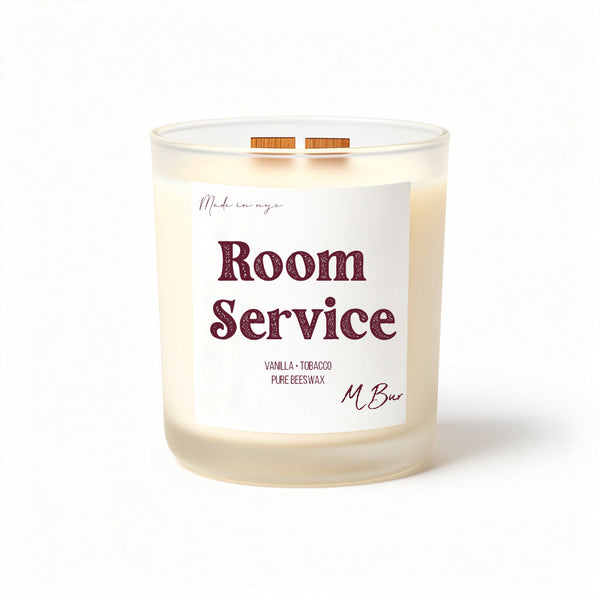
Jason's experience is one we hear repeatedly. The difference between a candle made with clean ingredients and one loaded with toxic fragrance compounds is something your body notices before your brain catches up. MBur's Room Service candle, for example, gets its complex scent profile from phthalate free fragrance oils, burns on a wooden wick, and uses 100% beeswax with zero chemical dyes. No certification required to understand why that combination produces a cleaner burn.
A Practical Checklist for Choosing a Clean Candle
Whether a candle carries EWG Verified, MADE SAFE, or no certification at all, run it through these five questions:
- What is the wax? Look for 100% beeswax, coconut, or soy. If the label says "wax blend" without specifying, assume paraffin is involved.
- What is in the fragrance? The brand should disclose fragrance ingredients and confirm they are phthalate free. If the label just says "fragrance" with no further detail, that is a red flag.
- What is the wick made of? Cotton, paper, hemp, or wood. If the wick has a visible metal core, skip it.
- Are there chemical dyes? The color of the wax should come from the wax itself (beeswax is naturally golden) or from naturally derived colorants.
- Does the brand disclose everything? Transparency is the baseline. A company that will not tell you what is in the product is telling you something by omission.
MBur checks every item on this list. Pure beeswax, wooden wicks, non toxic phthalate free fragrance, no chemical dyes, full ingredient transparency, handmade in small batches in Queens, New York. You can browse our full beeswax candle collection to see the details for yourself.

Burning Smarter: Tips That Matter More Than Any Label
Even the cleanest candle benefits from good burn habits. A few practical steps make a real difference in your indoor air quality.
Trim the wick to about a quarter inch before every light. An untrimmed wick produces a larger flame, more soot, and an uneven burn. This is the single most impactful thing you can do.
Burn in a ventilated room. Crack a window or keep a door open. Any combustion source benefits from airflow, and candles are no exception.
Limit burn sessions to four hours. Longer sessions can overheat the container and degrade the wax quality. Beeswax is more forgiving here because of its high melting point, but the four hour guideline is still smart practice.
Stop burning when half an inch of wax remains. Burning a candle to the very bottom risks overheating the vessel. Leave that last bit of wax and repurpose the container.
Keep candles away from drafts. Vents, fans, and open windows near the flame cause uneven burning and increased smoke. Pick a stable spot away from air currents.
Frequently Asked Questions
Does "EWG Verified" mean a candle is completely safe to breathe?
It means the candle's ingredients avoid EWG's list of chemicals of concern and that the brand has disclosed its full formula. It does not test what the candle releases during combustion, so factors like wax type and wick material still matter independently. Choosing a candle made with 100% beeswax and a wooden wick, like those in MBur's collection, addresses the combustion side that certifications often miss.
Is EWG Verified the same thing as "natural"?
No. EWG Verified is based on toxicology standards, and safe synthetic ingredients are allowed. "Natural" is an unregulated marketing term with no standardized definition in the candle industry. A candle can be EWG Verified without being natural, and a truly natural candle (like one made with pure beeswax) may not carry the EWG mark simply because the brand has not applied for certification.
Can a paraffin candle be EWG Verified?
Potentially, yes. EWG's program evaluates ingredient safety and transparency, not wax sourcing. A paraffin candle that meets the ingredient disclosure requirements and avoids banned chemicals could qualify. This is one of the key limitations of relying on a single certification.
What should I look for if a candle does not have any certification?
Full ingredient transparency, a single ingredient wax (not a "blend"), phthalate free fragrance disclosure, and a cotton or wooden wick. Many excellent small batch candle makers, including MBur, prioritize clean ingredients and full disclosure without necessarily pursuing every available certification. The ingredients themselves matter more than the logo on the box.
How long do beeswax candles actually burn compared to soy or paraffin?
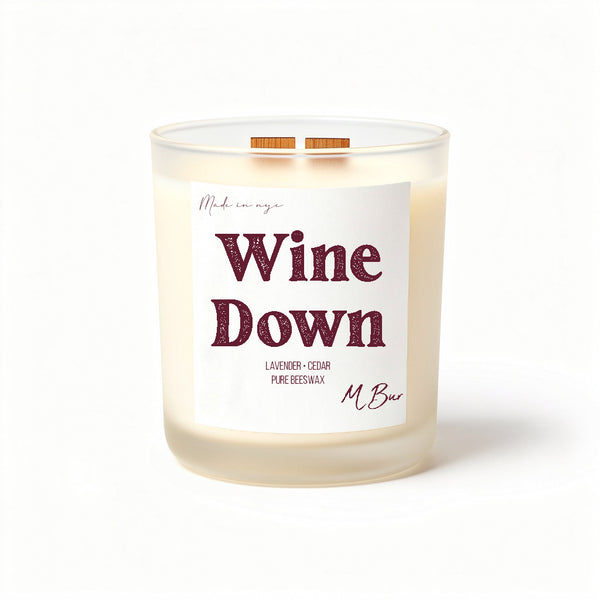
Beeswax has the highest melting point of any candle wax, which means it burns significantly slower. MBur's largest size delivers up to 80 hours of burn time. A comparable soy candle in the same volume would typically burn for considerably less. The Wine Down candle is a good example: its lavender, chamomile, and sage scent profile paired with that extended burn time makes it a favorite for evening routines.
The Bottom Line
EWG Verified is a meaningful certification that does real work: it forces ingredient transparency and screens out known chemicals of concern. That puts it well above unregulated marketing terms like "clean" and "natural." But it was designed primarily for ingredient safety, not for evaluating how a candle actually performs when you light it. Wax type, wick material, fragrance quality, and burn habits all fall outside its scope, and those factors have a direct impact on what you are breathing.
The smartest approach is to treat EWG Verified as one data point, not the whole answer. Pair it with your own ingredient check: 100% beeswax, wooden wick, non toxic phthalate free fragrance, no chemical dyes. If a candle meets all of those criteria, you are in good shape regardless of which logo is on the label.
"Absolutely loved the Wine Down candle! The scent is so light and clean, not overpowering at all, which is exactly what I look for. A lot of other candles tend to give me headaches, but this one was a total game changer." Nicole D.
Ready to see what a genuinely clean candle looks and smells like? Browse MBur's full beeswax candle collection and check the ingredients for yourself.
Related reading

