

Do Scented Candles Affect Baby Sleep? What Parents Should Know
Your baby finally fell asleep after forty minutes of rocking, and now you want to light something that smells good and sit in silence for a while. Totally reasonable. But somewhere between reaching for the lighter and actually striking it, a question stops you: is this safe to burn while the baby is sleeping down the hall?
The short answer is that candles belong nowhere near a sleeping infant. The longer answer is more useful, because it involves understanding what is actually in most candles, why those ingredients matter more for tiny lungs, and how you can keep your evening ritual without compromising your baby's air quality. That is what we are covering here.
If you want to skip ahead to the cleanest burning option we make, browse our full beeswax candle collection. But read the science first. It will change how you think about every candle in your house.
Why Baby Lungs React Differently to Candle Smoke
Infants breathe faster than adults, pound for pound. Their airways are narrower. Their lungs are still developing tissue and building the mucosal barriers that will eventually help filter out airborne irritants. All of this means that the same room air you barely notice can be genuinely problematic for a newborn.
When any candle burns, it produces some amount of fine particulate matter (PM2.5) and combustion gases. The question is how much, and of what. A paraffin candle, which is made from petroleum byproducts, releases volatile organic compounds including benzene, toluene, and formaldehyde. These are the same chemicals flagged in indoor air quality studies as respiratory irritants.
Layer in the fragrance. On most candle labels, "fragrance" is a single word that can represent dozens of undisclosed chemicals, including phthalates and parabens. A baby's developing endocrine and respiratory systems have no meaningful defense against these compounds. Pediatricians broadly recommend keeping nurseries and sleeping areas free of all fragrances and aerosol pollutants for exactly this reason.

The Myth That Scented Candles Improve Baby Sleep
You will find plenty of blog posts and social media advice suggesting that lavender candles help babies drift off. The idea is appealing. Lavender does have calming associations for adults. But there is no clinical evidence that burning a scented candle improves infant sleep. None.
What the research does show is that strong scents can cause headaches, nasal congestion, and airway irritation in infants. For the roughly 20 to 30 percent of children who have asthma or allergies, the particulate matter and VOCs from candle smoke can trigger coughing, wheezing, or full respiratory distress episodes. So the candle you lit to create calm might actually be the thing disrupting your baby's rest.
The confusion comes from conflating two separate things: the parent's relaxation ritual and the baby's sleep environment. Those should be completely separate spaces.
What Is Actually in Most Candles (and Why It Matters)
Before you can choose a safer candle, you need to understand what makes most of them problematic. The issues come down to three ingredients.
The Wax
Paraffin is the most common candle wax on the market and the most concerning. It is a petroleum byproduct, essentially the sludge left over after crude oil is refined into gasoline. When burned, it releases benzene and toluene into your air. Many candles labeled "soy blend" are actually majority paraffin with just enough soy to justify the label. If the ingredient list does not say 100% soy or 100% beeswax, assume paraffin is in the mix.
The Fragrance
Toxic fragrance oils are the biggest hidden problem in the candle industry. "Fragrance" is a legally protected trade secret, which means manufacturers can use that single word to cover hundreds of undisclosed chemical compounds. Many of these contain phthalates, which are endocrine disruptors, and parabens. For a baby whose hormonal and respiratory systems are still forming, these compounds deserve serious scrutiny.
The Wick
Metal core wicks were banned in the U.S. in 2003 after studies linked them to lead exposure. But imported candles sometimes still contain them. Cotton wicks are the standard improvement. Wooden wicks burn at a lower temperature and produce less soot than cotton, which means fewer particulates in the air.
| Factor | Paraffin Candle | Soy Candle | 100% Beeswax Candle |
|---|---|---|---|
| Wax source | Petroleum byproduct | Soybean oil (often blended with paraffin) | Natural bee byproduct |
| VOC emissions | Highest (benzene, toluene, formaldehyde) | Lower, but depends on blend purity | Lowest of all wax types |
| Soot production | Heavy black soot | Moderate | Minimal to none |
| Burn time | Shortest | Moderate | Longest (highest melting point) |
| Fragrance disclosure | Rarely transparent | Varies widely | Varies (look for phthalate free) |

The Practical Solution: Separate the Ritual from the Nursery
You do not have to give up candles. You just have to be strategic about where and what you burn. Recent expert guidance emphasizes separating the "scent ritual" from the "sleep environment," and that framing is genuinely useful.
Step 1: Keep the nursery flame free and fragrance free
No candles in the baby's room. Period. Even burning a candle in the nursery while the baby is elsewhere leaves lingering particulates and chemical residue that affect air quality for hours. The nursery should be a zero fragrance zone.
Step 2: Build your wind down ritual in a separate room
The living room, the kitchen, your bedroom with the door closed. Light your candle there. Let it be part of YOUR decompression after a long day of keeping a small human alive. That ritual matters for your mental health, and it does not need to happen in the same room where the baby sleeps.
Step 3: Choose a candle that produces the fewest irritants
This is where ingredient quality becomes the whole game. A candle made from 100% beeswax with a wooden wick and phthalate free fragrance produces dramatically fewer VOCs and less particulate matter than a paraffin candle with toxic fragrance oils. The difference in air quality is measurable.
The Wine Down candle is what a lot of new parents in our community reach for. Its notes are lavender, chamomile, sage, rosemary, camphor, cedar, and sandalwood. Lit in the living room after bedtime, it gives you that calming, herbal atmosphere without introducing any of the compounds that would concern a pediatrician.
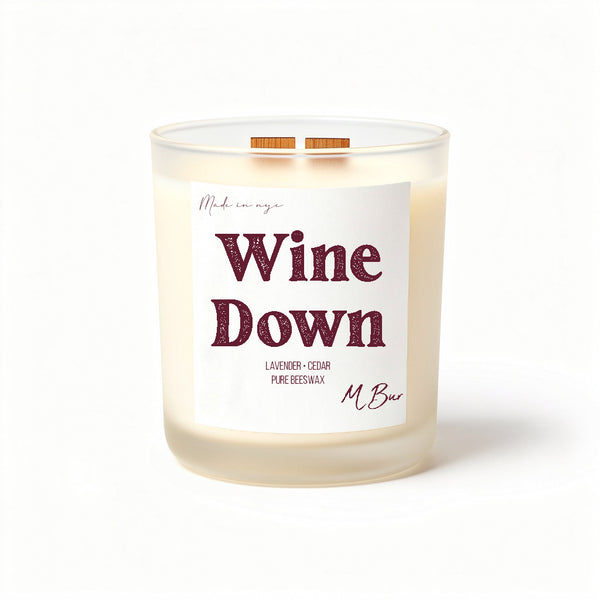
"Absolutely loved the Wine Down candle! The scent is so light and clean, not overpowering at all, which is exactly what I look for. A lot of other candles tend to give me headaches, but this one was a total game changer. I was able to enjoy the calming aroma without any discomfort." Nicole D.
Step 4: Follow safe burn practices every time
Even the cleanest candle needs good habits around it.
- Burn for a maximum of 1 to 2 hours at a time, especially in smaller rooms.
- Keep a window cracked or a door open for ventilation.
- Trim the wick before every burn to reduce soot. For wooden wicks, snap off the charred tip so it sits about 1/8 inch above the wax.
- Extinguish completely before moving the baby into the room or going to sleep yourself.
- Never leave a burning candle unattended. A baby monitor does not count as supervision for an open flame.
Your Clean Candle Checklist
When shopping for candles as a parent with a baby in the house, run every option through this filter:
- Wax: 100% beeswax, coconut, or soy. If it says "blend" without specifying percentages, skip it.
- Fragrance: Phthalate free, non toxic fragrance oils with disclosed ingredients. If the label just says "fragrance," that is a red flag.
- Wick: Cotton or wood. No metal cores.
- Dyes: None. Chemical dyes add another layer of combustion byproducts you do not need.
- Soot test: If your candle leaves black residue on the jar or nearby walls, it is producing excessive particulate matter. Switch immediately.
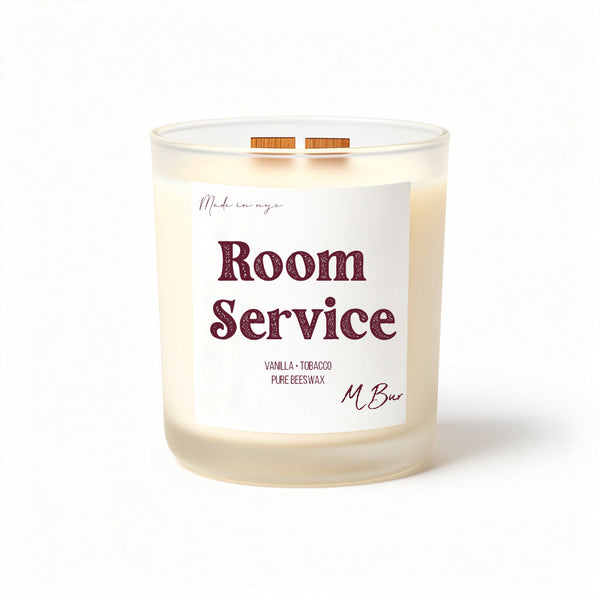
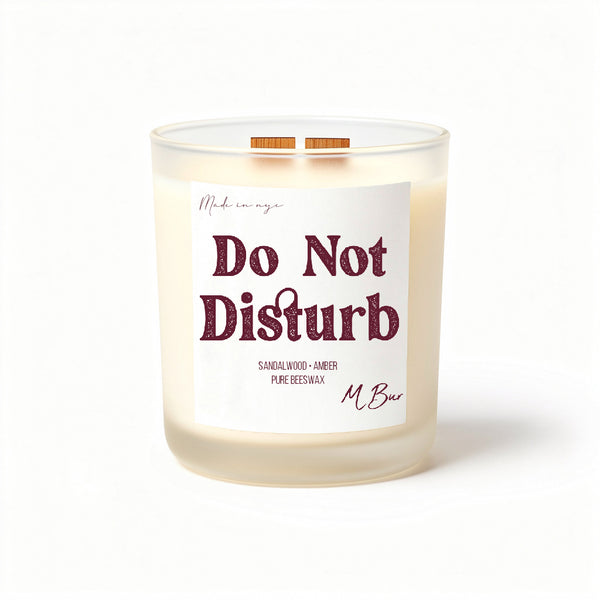
MBur candles check every item on that list. 100% beeswax (single ingredient, no blending), wooden wicks, phthalate free fragrance, no chemical dyes, handmade in Queens, New York. The 80 hour burn time on the largest size means you are not replacing candles every week, either. The Do Not Disturb candle, with notes of bergamot, pear, jasmine, vanilla, sandalwood, and musk, is another parent favorite for quiet evenings.

Frequently Asked Questions
Can I burn a candle in the nursery if the baby is not in the room?
Experts advise against it. Burning a candle deposits particulate matter and chemical residue that lingers in the air and on surfaces long after the flame is out. Even with the baby elsewhere during the burn, those particles will still be present when you bring the baby back in. Keep your candle ritual in a separate, well ventilated room. If you want a calming scent for your own space, something like the Wine Down candle in the living room gives you that wind down atmosphere without compromising nursery air quality.
Are "natural" or "soy" candles automatically safe around babies?
The word "natural" on a candle label is unregulated. Many soy candles are actually soy and paraffin blends, and even pure soy candles can use toxic fragrance oils loaded with phthalates. The wax type matters, but the fragrance chemistry and wick material matter just as much. Always look for full ingredient transparency and phthalate free labeling.
How long should I burn a candle when there is a baby in the house?
Keep burn sessions to 1 to 2 hours maximum, always in a room separate from where the baby sleeps, with ventilation. Trim the wick before every use to minimize soot. Extinguish the candle completely before moving the baby into that space or before you go to sleep.
Do beeswax candles actually produce less soot than other types?
Yes. Beeswax has the highest melting point of any candle wax, which means it burns slower and cleaner. It produces minimal to no black soot compared to paraffin, which is why you will not see dark residue on your walls or jar. Paired with a wooden wick, the burn is even cleaner. You can see the full range of options in our beeswax candle collection.
Should I talk to my pediatrician about candle use at home?
If your baby has asthma, allergies, or any respiratory sensitivity, absolutely bring it up. Your pediatrician can give you guidance specific to your child's health. For any baby, the safest approach is keeping the sleeping environment fragrance free and using candles only in separate, ventilated rooms.
The Bottom Line for Parents
Scented candles will not improve your baby's sleep. But they can absolutely improve yours, and a rested parent is a better parent. The key is keeping candles out of the nursery entirely and choosing ones made from ingredients that produce the fewest airborne irritants.
A 100% beeswax candle with a wooden wick and phthalate free fragrance, burned in a ventilated room away from where your baby sleeps, lets you keep the ritual you need without the worry. Explore MBur's full beeswax candle collection and find the scent that makes your post bedtime hour feel like it belongs to you again.
"I absolutely love these candles! I instantly notice the difference in the air quality, in comparison to the Bath & Body scented candles. I love Bath & Body's candles but I acknowledge that it caused a slight headache and other minor respiratory discomfort. Awesome products. Totally addicted." Jason H.
Related reading

