

Do Beeswax Candles Release Negative Ions? Separating Claim From Evidence
If you have ever Googled "beeswax candle benefits," you have almost certainly run into the claim that burning beeswax releases negative ions that purify your indoor air. It shows up on wellness blogs, product descriptions, and Pinterest infographics with the confidence of settled science. The problem is that no peer reviewed study has ever confirmed it.
That puts you in an awkward spot. You bought beeswax candles partly because of that claim, or you are considering buying them and want to know if the air purification angle is real. Fair question. The answer is more interesting than a simple yes or no, because the actual, proven advantages of beeswax are strong enough that the negative ion myth does not need to carry the weight.
Below, we will walk through what the science actually says about negative ions, why this claim keeps circulating, and what beeswax candles genuinely do better than every other wax on the market. If you want to skip ahead and see what a clean burning beeswax candle looks like in practice, browse our full beeswax candle collection.
Where the Negative Ion Claim Comes From
The theory goes like this: when beeswax burns, the flame generates negative ions. Those ions attach to positively charged airborne particles like dust, pollen, and odor molecules, making them too heavy to float. The particles drop to the ground or onto surfaces, and your air gets cleaner.
It sounds plausible because the underlying mechanism is real. Mechanical air ionizers do exactly this. They use high voltage electrical discharge to produce dense concentrations of negative ions in a controlled way, and published research on negative air ions confirms that the process can reduce airborne particulate matter under laboratory conditions.
The leap happens when you assume a candle flame can replicate what an engineered ionizer does. A flame is a combustion reaction. An ionizer is an electrical device designed to generate ion density at levels a candle simply cannot match. No published study has measured meaningful negative ion output from burning beeswax, or any other candle wax for that matter.

Why the Myth Persists
Beeswax is genuinely different from paraffin and soy in ways that matter. People who switch to beeswax often notice their walls stay cleaner, their sinuses feel less irritated, and the air in the room smells different after the candle goes out. Those are real observations. The mistake is attributing them to negative ions instead of to the actual cause: beeswax produces less soot and fewer volatile organic compounds than paraffin.
Paraffin is a petroleum byproduct. When it burns, it can release compounds like benzene and toluene. Beeswax is a naturally occurring substance produced by honeybees, and its combustion profile is significantly cleaner. So when someone lights a beeswax candle and notices the air feels "better," they are experiencing the absence of petroleum byproducts, not the presence of negative ions.
Wellness marketing filled in the gap with a tidy explanation that sounded scientific. Once the negative ion claim appeared on enough blogs, it became self referencing. Everyone cited everyone else, and nobody cited a study, because the study does not exist. Utah State University's extension program addressed this directly, noting the lack of supporting research for the air purification claim.
What Beeswax Candles Actually Do Better
Dropping the negative ion claim does not diminish beeswax. The real advantages are substantial and well documented.
Cleaner Combustion
Beeswax has the highest melting point of any candle wax, which means it burns at a hotter temperature with more complete combustion. More complete combustion means less particulate matter released into your room. If you have ever noticed black soot rings on the ceiling above a paraffin candle, that is visible evidence of incomplete combustion and airborne carbon particles. Beeswax produces dramatically less of that residue.
No Petroleum Byproducts
Paraffin wax is refined from crude oil. Beeswax is a single ingredient produced by bees as a byproduct of honey production. There is no chemical processing involved, no petroleum derivatives, and no blending with other waxes. When a label says "beeswax blend," that usually means the candle is mostly paraffin with a small percentage of beeswax added for marketing purposes. A 100% beeswax candle is a fundamentally different product.
Longest Burn Time
That high melting point also means beeswax burns slower than soy or paraffin. An 80 hour beeswax candle will outlast a comparable soy candle by a significant margin. You burn through less wax per hour, which means fewer replacement candles and less total combustion in your home over time.

Naturally Hypoallergenic
Beeswax does not require chemical additives to hold fragrance or maintain its structure. Combined with a wooden wick (which eliminates the zinc or lead core found in some cotton wicks) and non toxic, phthalate free fragrance, you get a candle that is less likely to irritate sensitive noses or airways.
"I absolutely love these candles! I instantly notice the difference in the air quality, in comparison to the Bath & Body scented candles. I love Bath & Body's candles but I acknowledge that it caused a slight headache and other minor respiratory discomfort. Awesome products. Totally addicted." Jason H.
Jason's experience lines up with what the science supports. The benefit is fewer irritants, not active air purification. That distinction matters because it is honest, and it is enough.
The Real Checklist for a Clean Burning Candle
If your goal is to minimize indoor air pollutants from candles, here is what actually moves the needle. Forget ionization. Focus on the inputs.
Wax type: 100% beeswax or 100% soy. Avoid paraffin entirely. Avoid "blends" unless the brand discloses the exact ratio.
Fragrance: Phthalate free, non toxic fragrance oils with full ingredient transparency. Many candle brands use the word "fragrance" as a catch all that can hide hundreds of undisclosed chemicals. If a brand will not tell you what is in their fragrance, that tells you something.
Wick: Cotton core or wooden wick. No metal cores. Trim to about 1/4 inch before every burn to keep the flame small and combustion clean.
Dyes: Skip them. Chemical dyes can release additional compounds when burned. A natural beeswax candle has a warm golden color on its own.
Ventilation: This is the single most effective thing you can do for indoor air quality while burning any candle. Crack a window or keep airflow moving. A candle in a sealed, tiny room with no ventilation will degrade air quality regardless of the wax type. Experts in indoor air quality have increasingly stressed this point in recent years: every flame is a combustion source, and ventilation is the appropriate countermeasure.
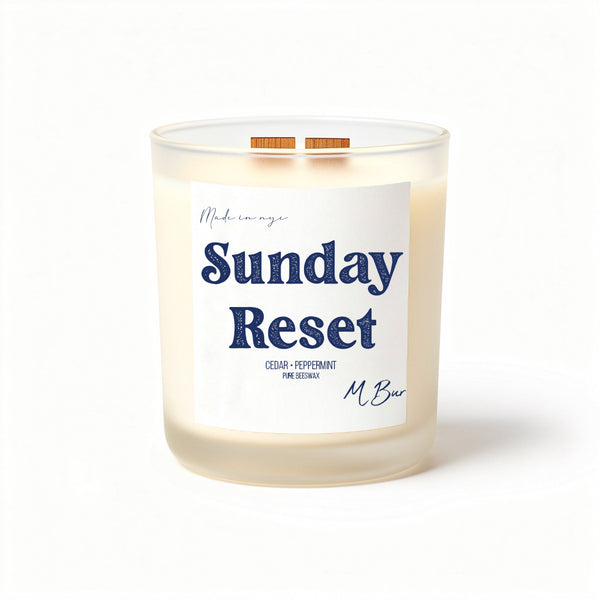
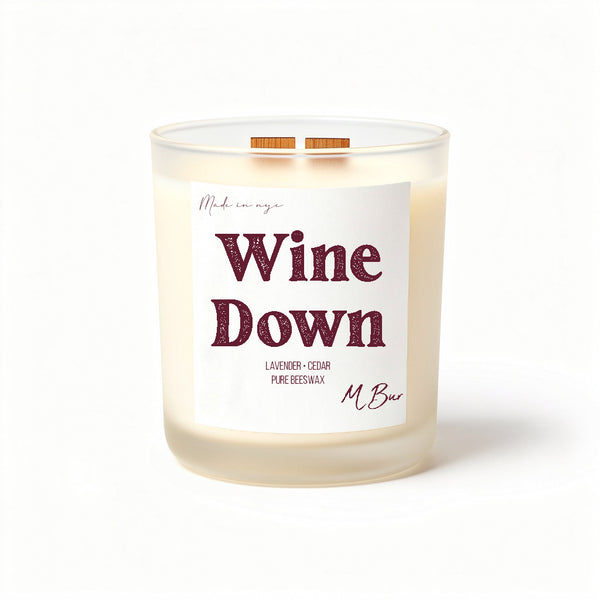
MBur candles check every box on that list. 100% pure beeswax, wooden wicks, phthalate free fragrance, no chemical dyes, handmade in Queens, New York. The Sunday Reset candle, with its eucalyptus and cedar notes, is a good example. It fills a room without that heavy, chemical coated feeling you get from mass produced paraffin candles. And Wine Down, with lavender, chamomile, sage, and rosemary, is the one people reach for at the end of a long day when they want the room to feel calm.

So Should You Still Buy Beeswax Candles?
Absolutely. The negative ion claim was always the weakest argument in the beeswax case, and it turns out beeswax does not need it. The real reasons to choose beeswax are straightforward: cleaner combustion, no petroleum derivatives, longer burn time, naturally hypoallergenic, and a warm light spectrum that is closer to natural sunlight than any other candle wax.
The candle industry has a transparency problem. Paraffin is cheap, toxic fragrances are cheap, and most brands do not volunteer what is actually in their product. Beeswax is the oldest candle material humans have used, dating back roughly 5,000 years, and it remains the cleanest burning option available. You do not need a debunked ionization theory to justify choosing it. The facts do the work on their own.
Frequently Asked Questions
Do beeswax candles actually release negative ions?
There is no published, peer reviewed scientific evidence confirming that burning beeswax releases negative ions in any meaningful quantity. The claim originated in wellness marketing and has been repeated widely without supporting data. Beeswax candles have plenty of real advantages, but air ionization is not one that science has confirmed. You can see those real advantages in action with any candle from our beeswax collection.
Are beeswax candles better for air quality than paraffin?
Yes, but through a different mechanism than ionization. Beeswax produces significantly less soot and fewer volatile organic compounds than paraffin, which is a petroleum byproduct known to release benzene and toluene when burned. Fewer pollutants going into the air means better air quality, even without active purification.
How long do beeswax candles actually burn?
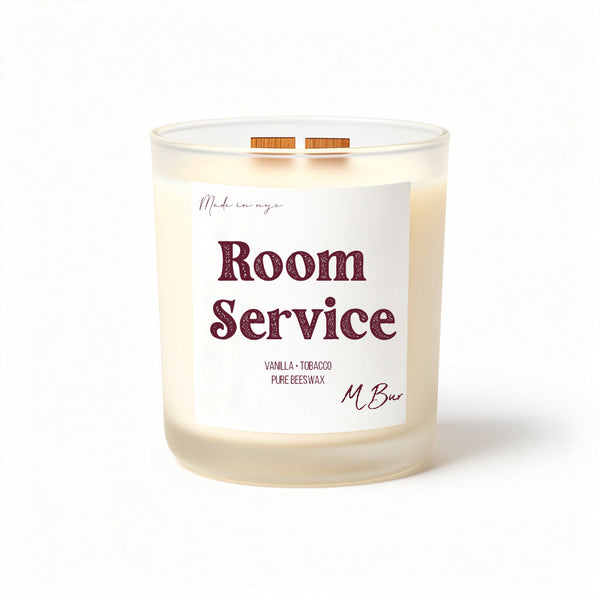
Beeswax has the highest melting point of any candle wax, so it burns slower. MBur's largest size delivers up to 80 hours of burn time. Even the 20 hour size at $20 outlasts most soy candles of comparable weight. The Room Service candle is a good one to test this with, since it is our bestseller and people tend to burn it frequently.
What is the best way to improve air quality when burning candles?
Ventilation. Keep a window cracked or air circulating. Beyond that, choose 100% beeswax (not a blend), use candles with phthalate free fragrance and no chemical dyes, and trim your wick to about 1/4 inch before each burn. A small, steady flame means more complete combustion and fewer airborne particles.
Why do so many websites say beeswax purifies the air?
The claim became self perpetuating. One blog published it, others cited that blog, and the cycle repeated until it looked like established fact. Nobody in the chain cited a peer reviewed study because none exists. Utah State University's extension program is one of the few institutional sources that has addressed this directly, noting the lack of research supporting the claim.
The Bottom Line
Beeswax candles are the cleanest burning candle you can buy. They produce less soot, contain no petroleum, burn longer, and pair beautifully with non toxic fragrance and wooden wicks. Those are facts backed by chemistry, not marketing. The negative ion claim, while widespread, remains unproven, and beeswax is strong enough to stand on what is actually real.
"Absolutely loved the Wine Down candle! The scent is so light and clean, not overpowering at all, which is exactly what I look for. A lot of other candles tend to give me headaches, but this one was a total game changer." Nicole D.
If you are ready to try a candle that earns its reputation on real ingredients instead of debunked claims, explore the full MBur beeswax candle collection. Every candle is 100% beeswax, wooden wick, phthalate free, and handmade in Queens, New York. Sizes start at the 20 hour for $20.
Related reading

