

Best Clean-Burning Candles for Pneumothorax: A Safe and Soothing Guide
If you are recovering from a pneumothorax, the candle question you should ask is not which scent smells best. It is what is going into the air you breathe while your lung heals. A collapsed lung leaves your airways touchy for weeks. What you burn near your bed matters more now than it ever did before.
Most candle advice ignores lung recovery entirely. Doctors do flag one thing: sudden hard breathing efforts can strain a healing lung, and that includes blowing candles out with force. So the goal is a candle that keeps the air clean and does not tempt you into a big puff at the end of the night. That is where pure beeswax earns its place, and where MBur's clean-burning beeswax candles fit a recovery room well.
This is a comfort and air-quality guide, not medical care. Always follow your own doctor's guidance on what is safe for you.

Why the air near your bed matters more right now
A pneumothorax means air leaked into the space around your lung. Your body needs the lung to re-expand and settle. During that window, your airways get irritated more easily than usual.
Research has found that burning candles adds tiny particles to indoor air. Those particles are called particulate matter, meaning fine bits small enough to breathe deep into the lungs. For most healthy people this is minor. For a lung that is healing, it is worth taking seriously.
Studies have also shown that paraffin candles release volatile organic compounds when they burn. Volatile organic compounds, or VOCs, are unstable chemicals that drift into the air off the flame. Paraffin is a petroleum byproduct, and its VOCs include benzene, toluene, and formaldehyde.
That is the part most guides skip. Swapping to a cleaner candle helps, but no candle is a treatment. The real win is fewer irritants in the room while you rest.
The wax is where it starts
Wax sets the floor for how clean a candle burns. Get this wrong and the wick, the scent, and everything else cannot fix it.
Paraffin is the worst pick for a healing lung. It emits more soot and more VOCs than plant or animal waxes. Soot is the black residue you sometimes see on a jar rim, and it can drift into the air you breathe.
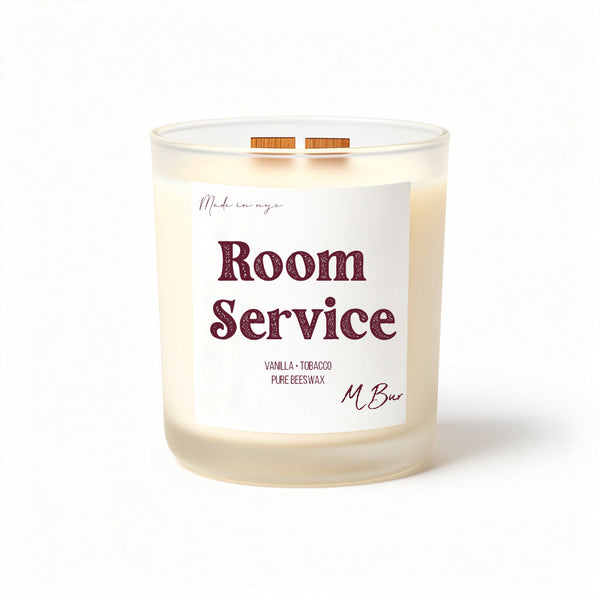
Soy is a step up, but soy is often blended with paraffin, and many soy candles carry toxic fragrances loaded with phthalates. Phthalates are chemicals used to stretch and hold scent, and they are worth avoiding.
Beeswax is the cleanest of the three. It is a single natural material, made by bees, with no chemical processing. It burns slow and steady, which means less soot and a calmer flame.
| Wax type | Source | Burn cleanliness | Common issues |
|---|---|---|---|
| Paraffin | Petroleum byproduct | Most soot and VOCs | Benzene, toluene, formaldehyde |
| Soy | Plant (soybean) | Cleaner than paraffin | Often blended with paraffin, may use toxic fragrance |
| Beeswax (MBur) | Byproduct of honey | Cleanest, low soot | None; single-ingredient, phthalate-free |
MBur is 100% beeswax, not a blend. That single-ingredient promise is the whole point when your lungs are sensitive.
The word doing the most work on the label
"Fragrance" is the sneaky one. It can hide phthalates and parabens, two groups of chemicals that some people react to.
Many candles use toxic fragrances built for a strong throw, not a clean burn. That is a bad trade for a recovering lung. You want scent that fills the room without loading the air with junk.
MBur uses only non-toxic, phthalate-free fragrance oils. The scent still fills a space, it just does it without the extras your body flags. One customer put the difference plainly.
"I absolutely love these candles! I instantly notice the difference in the air quality, in comparison to the Bath & Body scented candles. I love Bath & Body's candles but I acknowledge that it caused a slight headache and other minor respiratory discomfort. Awesome products. Totally addicted." Jason H.
For a recovery room, a soft and clean scent beats a loud one. If strong smells bother you right now, our Wine Down beeswax candle keeps it gentle, with notes of Lavender, Chamomile, Sage, Rosemary, Camphor, Cedar, and Sandalwood. A reviewer who gets headaches from most candles said this one did not.
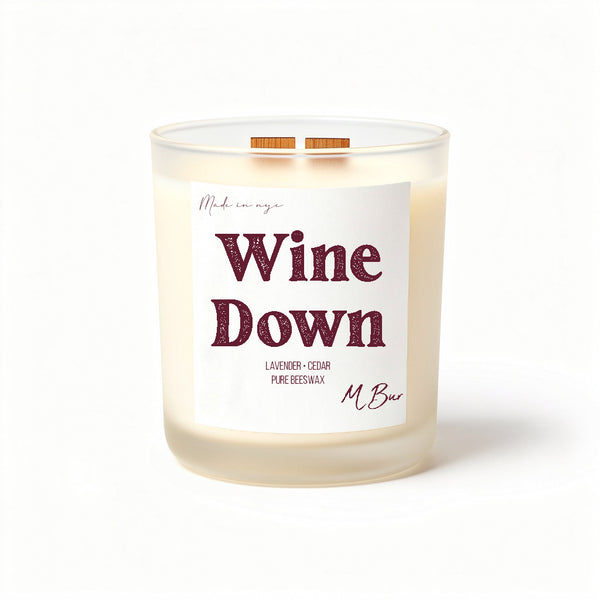
"Absolutely loved the Wine Down candle! The scent is so light and clean, not overpowering at all, which is exactly what I look for. A lot of other candles tend to give me headaches, but this one was a total game-changer." Nicole D.

The two things you can see with your own eyes
Look at the wick and the flame. A metal-core wick can add unwanted particles to the air, so you want cotton or wood.
MBur uses wooden wicks. They burn even, make a soft crackle, and produce less flicker and soot than a wobbly wick. A steady flame is a cleaner flame.
Then there is dye. Chemical dyes add nothing but color and more stuff to burn. MBur skips them, so the candle burns cleaner from the first light.
How to pick a pneumothorax-safe candle
Here is the checklist. MBur checks every box.
- 100% beeswax, not a blend
- Phthalate-free, non-toxic fragrance
- Cotton or wooden wick, never metal-core
- No chemical dyes
- A gentle scent throw, not an overpowering one
The Do Not Disturb beeswax candle fits a bedside setup, with notes of Bergamot and pear that stay soft. One customer called it aromatherapy at its best for the bedroom.
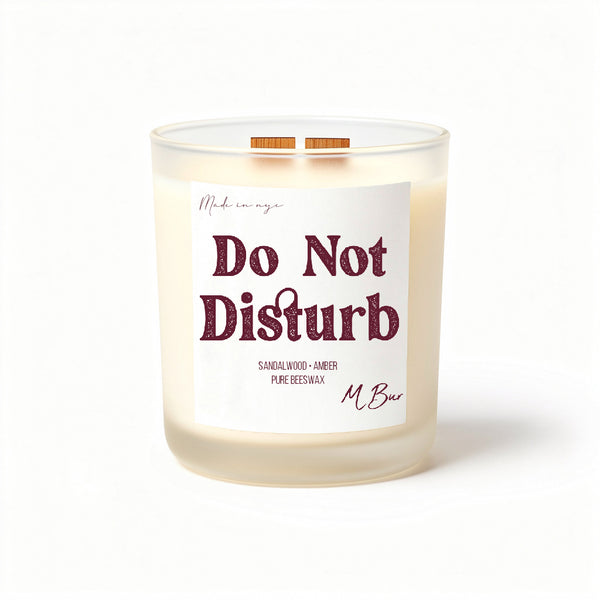
"I love the scent of this candle. It is lovely not overpowering. It's soothing fragrance more than covers my bedroom and bathroom. It is aromatherapy at its best." Dawne Forrest
MBur's candles start at $32 for the 40-hour size and go up to $65 for the 80-hour size. Beeswax has the highest melting point of any candle wax, so it burns the longest, up to 80 hours.

Simple habits that protect a healing lung
The candle is one piece. How you use it matters just as much.
Keep a window cracked so fresh air moves through. Good ventilation lowers the particles that build up in a closed room. Trim the wooden wick to about a quarter inch before each burn, since a long wick smokes.
Do not burn for hours on end. A couple of hours is plenty. And when you are done, use a snuffer or a lid instead of blowing hard, because a big forced breath can strain a lung that is still healing. Follow your doctor's advice on what is safe for you.
Frequently asked questions
Can I use candles after a pneumothorax?
There is no medical rule against it, but you should follow your doctor's guidance. Choose a clean-burning option and keep the room ventilated. A single-ingredient beeswax candle from MBur's candle collection keeps the air cleaner than paraffin.
Does indoor air quality really affect recovery?
Burning candles raises fine particles throughout a home, and a healing lung is more sensitive to irritants. Cleaner wax and good airflow both help. The Wine Down candle is a gentle, low-throw pick for this.
Why should I snuff instead of blow it out?
A hard, sudden puff raises chest pressure, and sudden respiratory efforts can strain a susceptible lung. A snuffer or lid avoids that. Pair it with a steady wooden-wick candle like the Do Not Disturb candle.
How long do these candles burn?
MBur candles run up to 80 hours in the largest size, the longest of any candle wax. The 40-hour size starts at $32. You can browse sizes on the collection page.
You can read more about clean burning in our guide on paraffin-free candles for a healthier home.
The takeaway
A pneumothorax makes your lungs picky, so the cleanest candle you can find is the smart choice. Pure beeswax with a wooden wick and phthalate-free scent keeps the air calm while you rest, and a snuffer keeps you from a risky big breath. MBur's candles are 100% beeswax, hypoallergenic, and made by hand in New York City, with dozens of happy reviewers who notice the air-quality difference.
For a soft, low-throw scent in a recovery room, start with the Wine Down beeswax candle, starting at $32 for the 40-hour size.

