

Best Candles for College Dorm Rooms (That Won't Get You in Trouble)
The rule you are worried about is probably not the one that gets you written up. Almost every student housing contract bans open flames, and a candle warmer has no flame, so most people stop reading there and order one. The clause that actually catches them sits somewhere else in the handbook entirely, usually several pages away under a heading that has nothing to do with candles.
Whether you can keep a warmer in your room comes down to how your specific school wrote two separate rules, and to which kind of warmer you buy. Both are worth ten minutes before you spend the money. If it turns out you are clear, what you put on the warmer decides whether you smell anything at all, and a 100% beeswax candle behaves differently on a warmer than the soy jar sitting next to it in the shop.
The two rules that decide this
The first is the open flame prohibition. It covers candles, incense, oil burners, anything with an exposed wick, and at some schools anything that produces smoke at all. A warmer clears this one comfortably, because there is nothing burning.
The second is the appliance clause, and this is the one that catches people. Residence contracts limit what you can plug in, usually anything with an exposed heating element, and sometimes anything above a stated wattage. Warmers with a hot plate are heating appliances by any reasonable reading, which puts them in the same category as the hot plates, space heaters, and toasters that are already on the banned list.
Some schools have caught up and now name wax warmers or candle warmers explicitly. Others have not, which leaves it to whoever is doing your room inspection. Neither situation is one you want to discover in October.
Lamp or plate, because it changes the answer
Warmer lamps sit above the candle and melt the surface with a bulb, usually halogen. They read as a desk lamp, they draw modest power, and they are the version most likely to survive an inspection. They also have a real hazard of their own, since a halogen bulb runs hot enough to burn skin and to scorch anything that touches it.
Plate warmers sit under the jar and heat it from below with a coil or element. They are cheaper and they work fine, and they are also the ones a strict reading of an appliance clause is most likely to catch, because there is an element under there doing exactly what an element does.
If your handbook is vague, the lamp is the safer purchase.
How to actually check, in about ten minutes
Open the PDF of your housing contract or residence life handbook and search it rather than skimming. Try "open flame," then "appliance," then "heating element," then "wax," then "warmer," then "wattage." The relevant text is almost never in one place, which is why reading the candles section alone gives people the wrong answer.
If the language is ambiguous, email your RA or the residence life office and ask directly, naming the product. Do it by email rather than in person, because a reply in writing is the thing that matters if a warmer turns up in an inspection later. Approval from one RA verbally is worth very little when a different staff member is doing the walkthrough.
Worth knowing why schools are strict about this. Campus housing fires cluster around cooking equipment and heat sources in small rooms with a lot of fabric and paper in them, and candles specifically account for a meaningful share of the ones that start in residence halls. The rules are usually stricter than they look because someone already had a bad year.
What each option is likely to get you
| Option | Open flame rule | Appliance rule | Usual outcome |
|---|---|---|---|
| Burning a candle | Prohibited | Not applicable | Banned at most schools |
| Warmer lamp | Clears it | Usually clears it | Most commonly allowed |
| Hot plate warmer | Clears it | Often caught | Depends on the wording |
| Plug-in air freshener | Clears it | Usually clears it | Generally allowed |
| Reed diffuser | Clears it | Not applicable | Allowed everywhere |
| Unlit candle as passive scent | Not applicable | Not applicable | Always allowed |
If warmers are banned too
A reed diffuser is the one nothing prohibits, since there is no heat and nothing to plug in. Throw is modest and steady, which suits a room this size better than people expect.
The other option is the candle you already own, unlit. A jar left open on a shelf gives off a quiet version of its scent at room temperature, strongest in the first weeks and in a small closed room, which describes a dorm exactly. It will not fill the space the way heat does, and it costs you nothing to try with a candle you are already keeping for the summer.
Getting real scent out of a warmer
Here is the part nobody mentions when they recommend a warmer as a workaround. A flame creates a convection current that pushes scent across a room. A warmer melts the top layer and lets it rise, which is gentler and more local. In a 150 square foot room that is often enough, and you should still expect less than the same candle lit.
Wax type changes this more than the warmer does. Beeswax has the highest melting point of the common candle waxes, around 144°F, so a weak warmer will barely break the surface and you will smell almost nothing. Check that yours reaches at least 140°F to 160°F before you pair it with beeswax. Soy melts lower and will throw sooner on a cool plate, and it is also the wax more likely to be a blend with something undisclosed.
On the label question, there is no federal standard defining how much beeswax a candle needs to contain before a brand can put the word on the front. That is why the only phrasing worth trusting is an explicit percentage. "100% beeswax" means something. "Beeswax" or "beeswax blend" on its own tells you nothing about the other ingredients, which matters in a room you sleep in with the windows shut.
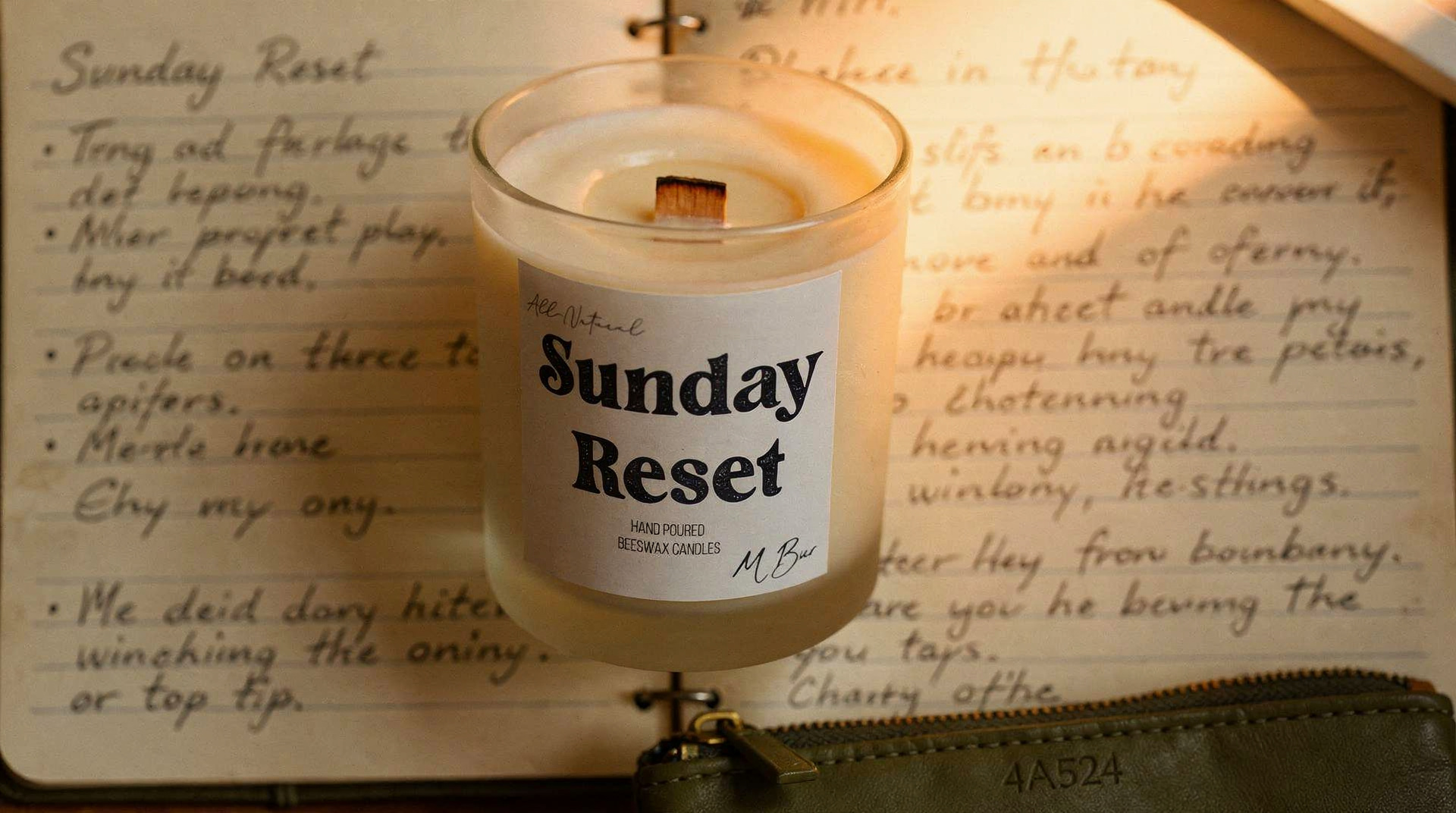
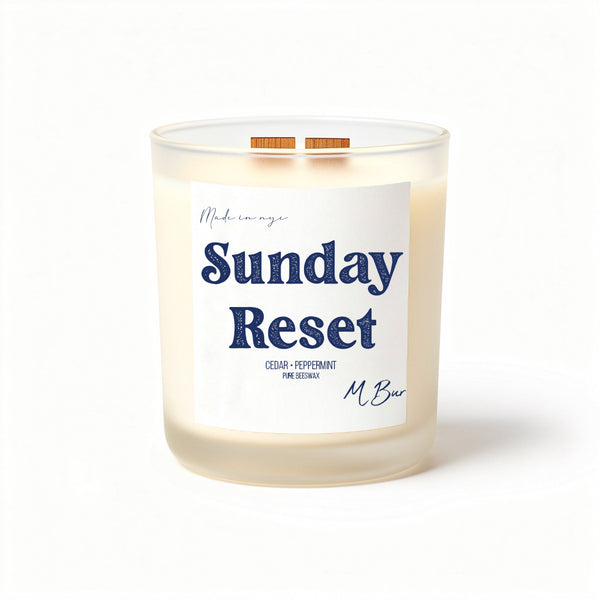
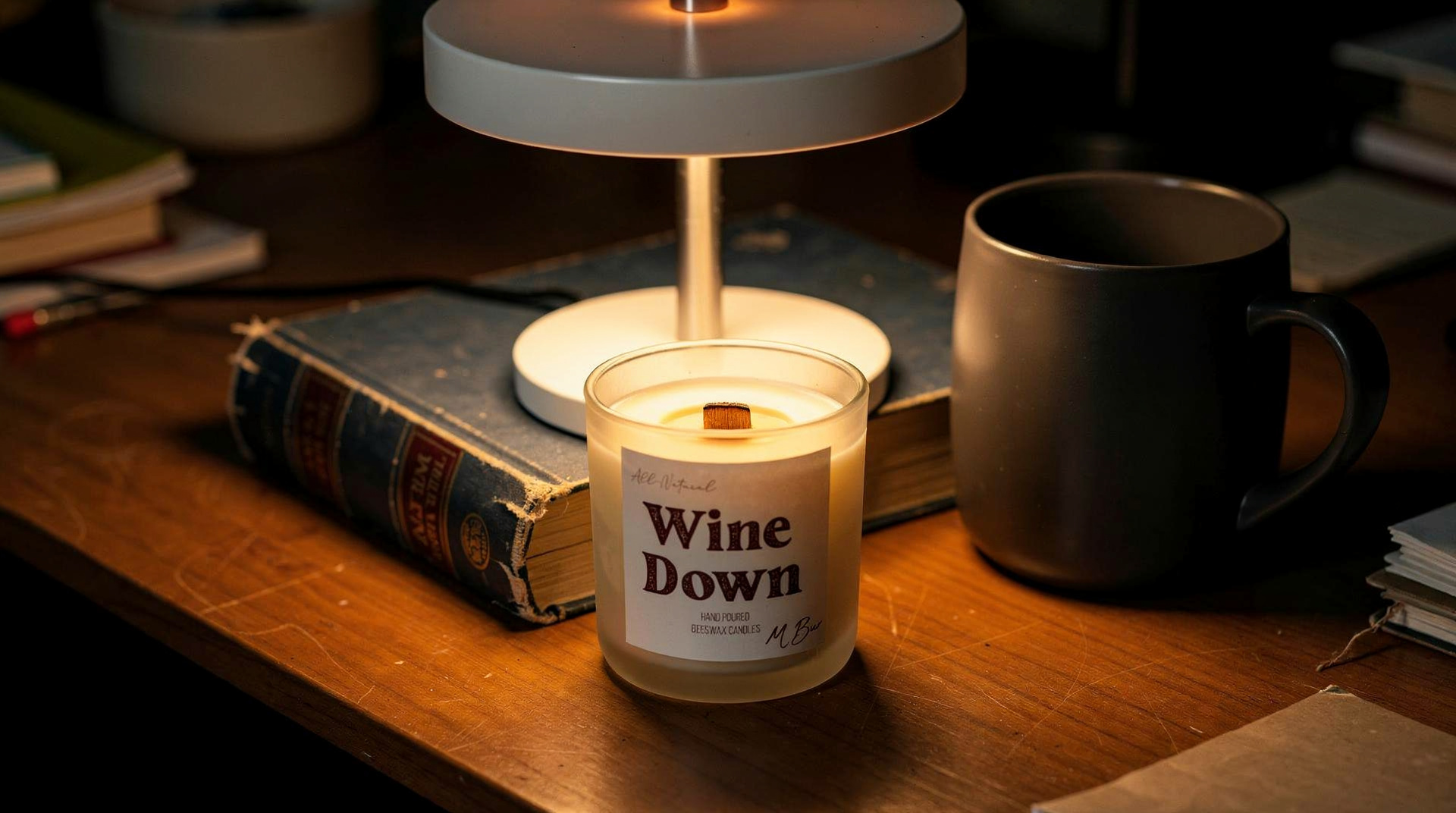
Every candle we make is 100% beeswax with an untreated wooden wick and phthalate-free non-toxic fragrance oils. Sunday Reset is the one that suits a shared room, peppermint and eucalyptus over cedar, which reads as clean rather than loud and is less likely to become a roommate problem than something sweet.
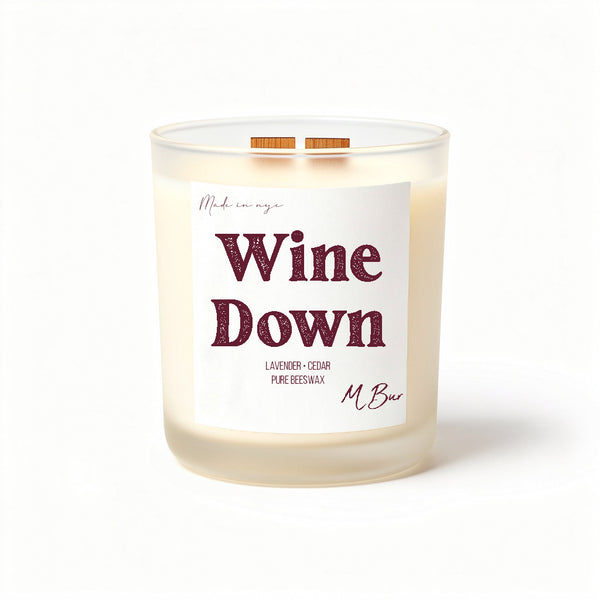
"Absolutely loved the Wine Down candle! The scent is so light and clean, not overpowering at all, which is exactly what I look for. A lot of other candles tend to give me headaches, but this one was a total game changer." Nicole D., verified buyer, on Wine Down
The 5oz is $32 and is the right size for a dorm, since a 12oz in a room this small throws harder than you want with someone else living in it. The 12oz is $65 and includes a lid.
Frequently asked questions
Are candle warmers allowed in dorms?
Often, though not universally, and the answer depends on your school's appliance policy rather than its open flame policy. Warmer lamps clear both rules at most schools. Hot plate warmers are the ones that get caught. Check your handbook for "appliance" and "heating element" rather than only "candle," and get any approval in writing.
Will I get in trouble for a candle I never light?
Some schools ban possession of candles regardless of use, on the reasoning that a candle in the room can be lit. Most treat an unlit decorative candle as fine. This one genuinely varies, so it is worth the same handbook search.
Do warmer lamps set off smoke detectors?
They should not, since nothing is combusting and there is no smoke. That is the main practical argument for them over an open flame in a building where a false alarm empties the whole hall at two in the morning.
Can I leave a warmer on overnight?
Better not to. Halogen bulbs and heating plates both run hot enough to scorch what they touch, and an unattended heat source in a room full of textbooks and bedding is the exact scenario the rules exist for. Look for one with an auto-shutoff timer and use it.
Does using a warmer make the candle last longer?
The wax lasts longer since none of it burns away, and the fragrance runs out on roughly the same schedule. Once the scent is gone you are left with a full jar of unscented wax, so the value is closer to even than it looks.
What if my roommate is sensitive to scents?
Agree on it before you buy anything. A warmer is easier to negotiate than a flame because you can switch it off instantly, and a cool, clean profile is far less likely to cause a problem in a shared room than a sweet or heavy one.
Once you know what your building allows, shop the full MBur beeswax candle collection and pick something that works lit or warmed.
Related reading:

