

Best Candles for Self-Care Sunday Routines: What Most People Get Wrong
Best Candles for Self Care Sunday Routines: What Most People Get Wrong
That "beeswax" candle you bought at the boutique down the street? It might be 51% paraffin. That is not a typo. In the US, a candle only needs to contain 51% of a wax to be labeled as that wax type. Which means the "beeswax" pillar you paid $40 for could be burning more petroleum than anything bees ever touched. And if you are building a Sunday reset ritual around it, you deserve better than that.
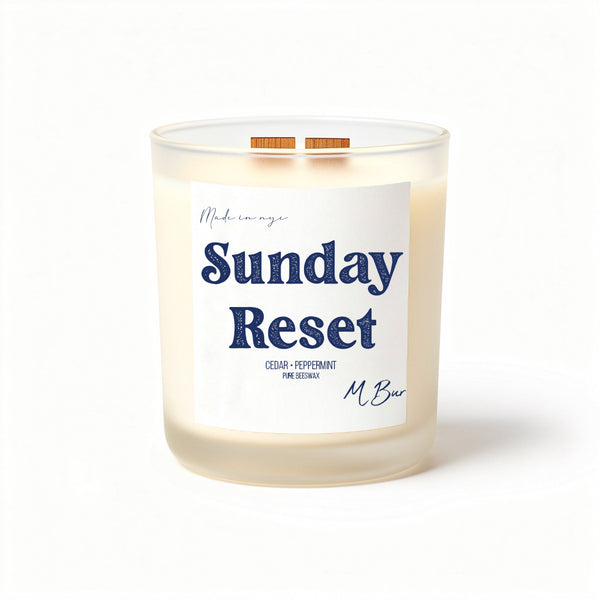
Self care Sundays get a lot right: the bath, the phone down, the slow morning. But the candle? That part is usually an afterthought. A grab off the shelf, smells nice enough, probably fine choice. This guide is here to change that. We are going to walk through every decision that actually matters when buying self care candles worth burning on your best day of the week.
Decision Criteria 1: Wax Type
This is the most important call you will make, and most people skip right past it. The wax determines what goes into the air when your candle burns. Period.
Paraffin
Paraffin is a petroleum byproduct, full stop. When burned, it releases benzene, toluene, and formaldehyde, the same chemicals found in diesel exhaust. The EPA has documented this. The Cleveland Clinic has flagged it. If you have ever gotten a headache from a candle, paraffin is the most likely culprit.
Soy
Soy is a meaningful step up. It burns cooler and cleaner than paraffin. The catch: most soy candles on the market are blended with paraffin (see: the 51% rule above), and they nearly always use toxic fragrance oils loaded with phthalates. "Soy candle" is a marketing word more often than it is a material fact.
Beeswax
Beeswax is the original candle material, used since roughly 3000 BCE. It has the highest melting point of any candle wax, which translates directly to slower, longer burns. It produces no chemical byproducts when burned clean. Some studies suggest it may release negative ions that help neutralize airborne particles, and many users report fewer headaches and less respiratory irritation. It is the only wax that does not require chemical processing to become a candle.
For a Sunday reset ritual specifically, this matters more than usual. You are burning a candle for two, three, sometimes four hours at a stretch. That is a long time to be breathing whatever your wax is releasing.
MBur candles use 100% pure beeswax, not a blend, not a "beeswax blend", 100% beeswax. That distinction is why they exist as a brand.
Decision Criteria 2: Wick Type
Cotton wicks are the default, and they are fine. But wooden wicks are better for the kind of long, ambient burn that a self care Sunday demands.
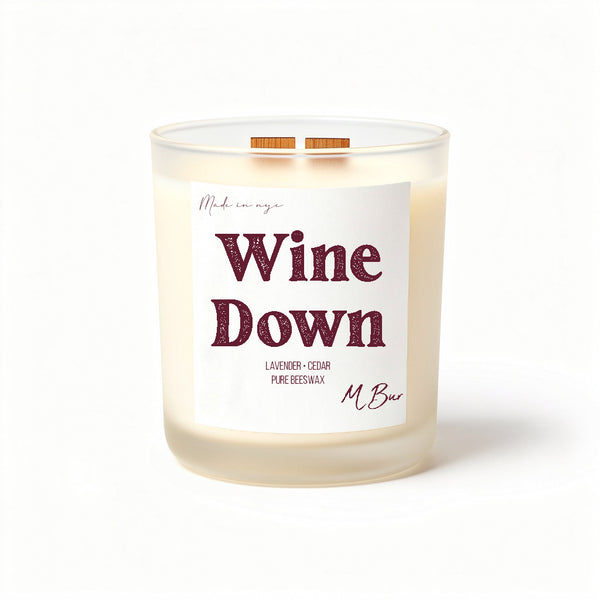
Wooden wicks burn wider and more evenly, which means fewer tunneling issues (that annoying situation where the candle burns a hole down the middle and leaves wax on the sides). They also crackle. Not aggressively, just a soft, low sound that turns a candle into something closer to a small fire than a light source.
What you want to avoid: metal core wicks. Older or cheaper candles sometimes use a metal wire through the center of the wick to keep it upright. When that metal is zinc or lead, it releases those metals into the air when burned. Always check. If the wick has a rigid core and the brand does not disclose the material, skip it.
Decision Criteria 3: Scent Sourcing
This is where things get sneaky. "Fragrance" on an ingredient label is a legally protected trade secret, which means a brand can list a single word and hide dozens of chemicals behind it. Many of those chemicals, particularly phthalates, are endocrine disruptors linked to hormonal issues and respiratory irritation.
What you are looking for: fragrance oils that are phthalate free, clearly disclosed, and ideally tested for safety. The question to ask any candle brand is not "is it scented?" but "what is your fragrance made from?"
For a Sunday routine oriented around wind down and restoration, scent matters directionally too. Lavender, chamomile, sage, and rosemary are consistently associated with reduced cortisol and calmer states. If you are building a candlelit bath or an evening unwind, those are your anchors. If you want something that signals a clean start to the week rather than pure relaxation, eucalyptus, peppermint, and cedar tend to feel more reset than rest.
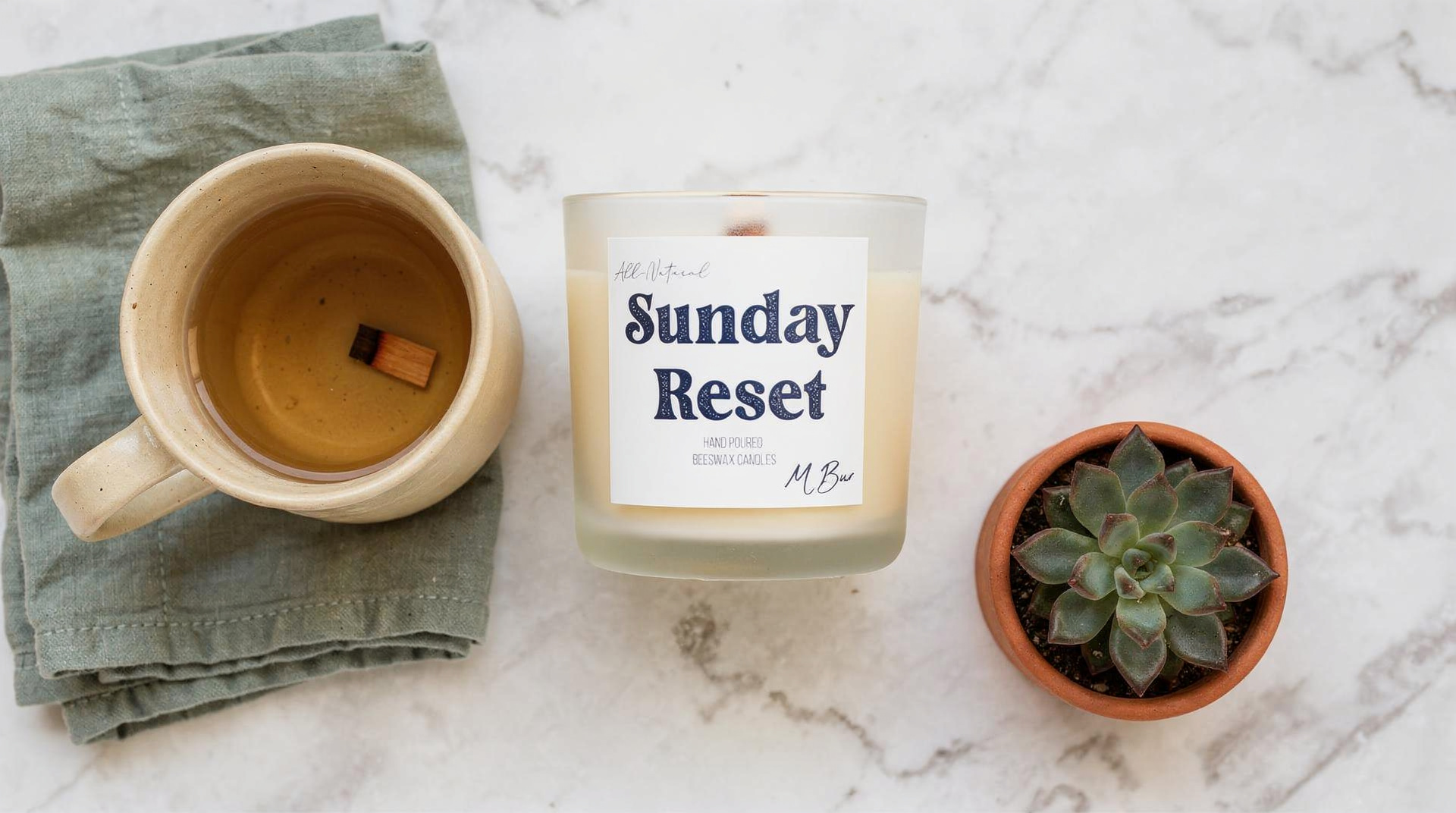
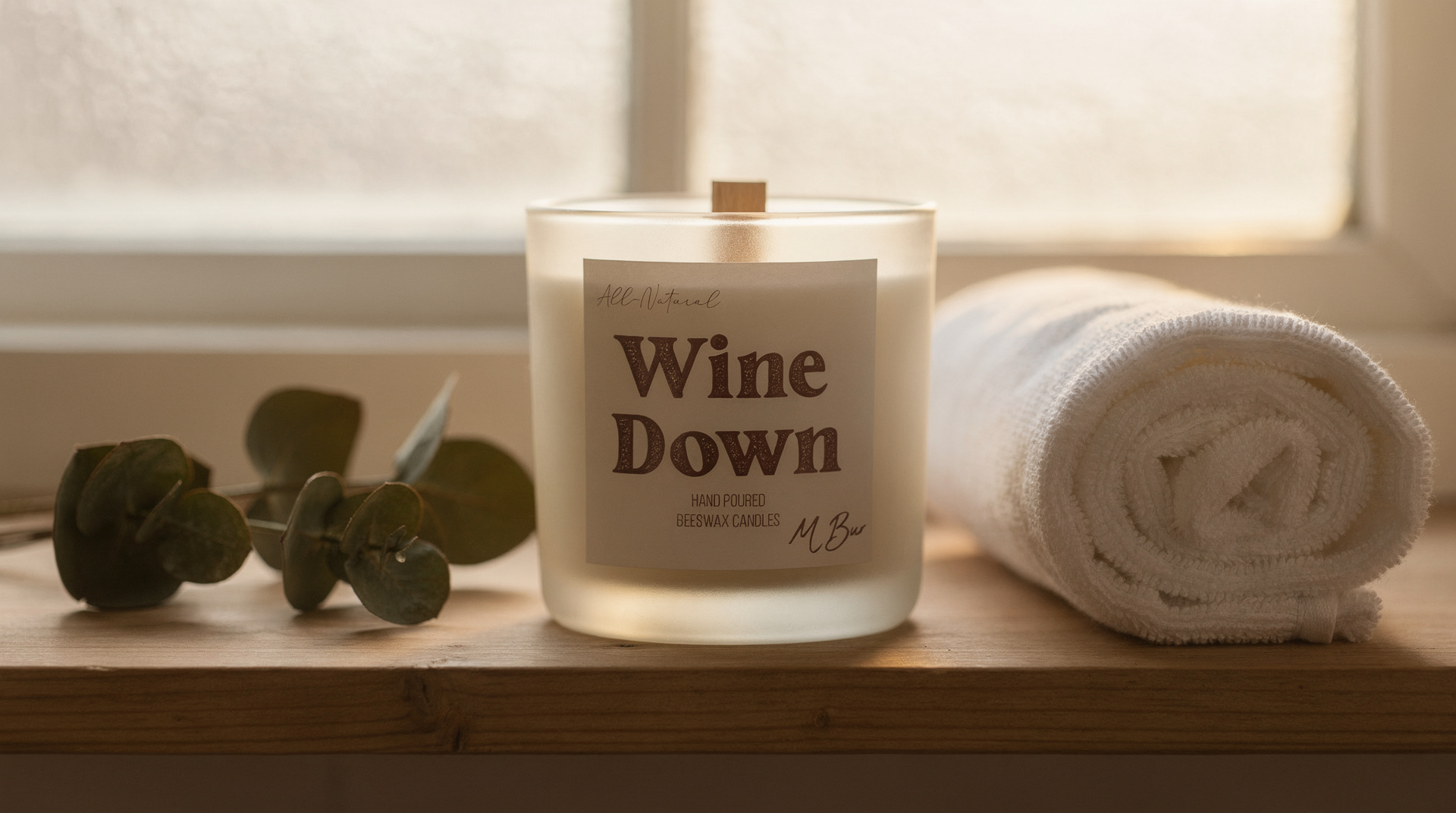
MBur's Wine Down beeswax candle leans into the bath and evening end of the spectrum, with lavender, chamomile, sage, camphor, and rosemary. The Sunday Reset beeswax candle goes the other direction, peppermint and eucalyptus up top, cedar and patchouli underneath, the scent equivalent of opening all your windows.
"I love the scent of this candle. It is lovely not overpowering. It is soothing fragrance more than covers my bedroom and bathroom. It is aromatherapy at its best." Dawne Forrest, Do Not Disturb candle
Decision Criteria 4: Size
Size is not about how big the candle looks on your shelf. It is about how long it will burn and how much scent throw it produces in your specific space.
A quick reference:
- Small rooms (bathroom, bedroom under 150 sq ft): A 20 hour candle (2.5oz) is plenty. It will fill the space, and you will burn it in 4 to 5 sessions before it is done.
- Medium rooms (living room, open bedroom, studio): A 40 hour (5oz) or 55 hour (7oz) candle is the sweet spot. Enough wax to throw scent across the room without overpowering it.
- Large open spaces or if you want this candle to last all year: Go 80 hours (12oz). At that burn time, a Sunday ritual candle becomes a months long companion.
Both the Wine Down and Sunday Reset candles come in all four sizes, starting at $20 for the 20 hour size up to $65 for the 80 hour size. Given that beeswax burns roughly 25% longer per ounce than paraffin, a $65 candle here outlasts what you would get from a $40 paraffin candle of the same weight by a significant margin.
Decision Criteria 5: Price Per Hour
This is the metric almost nobody uses, and it is the only one that actually lets you compare candles honestly across brands and wax types.
Here is how to calculate it: divide the price by the stated burn time.
| Candle | Price | Burn Time | Price Per Hour |
|---|---|---|---|
| MBur Wine Down (80 hrs, 12oz) | $65 | 80 hours | $0.75/hr |
| MBur Sunday Reset (40 hrs, 5oz) | $23 | 40 hours | $0.58/hr |
| [COMPETITOR 1: name, price, burn time, price per hour] | |||
| [COMPETITOR 2: name, price, burn time, price per hour] |
When you run those numbers, a beeswax candle almost always wins on price per hour even when it costs more upfront. The higher melting point means the wax lasts longer per ounce, and a single 80 hour candle at $65 clears most of the competition on pure value.
One note: always verify burn times. Some brands claim numbers that require ideal conditions, perfect wick trimming, no drafts, exact burn sessions. MBur has been called out positively on this by customers who actually tracked it.
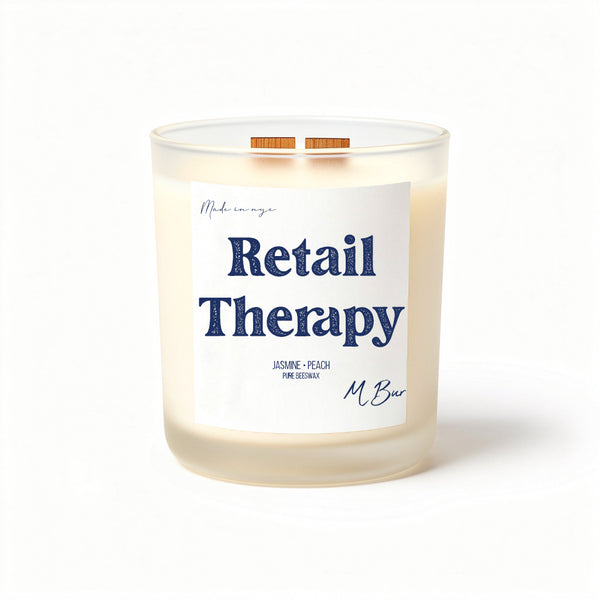
"Candle burned slowly and was exactly the amount of hours the company said it would burn. I was able to enjoy it for days even though it was the smaller size." Portia Darby, Retail Therapy candle
Quick Reference Checklist: Self Care Sunday Candle
- Wax is 100% beeswax, or explicitly labeled as single ingredient (not a blend)
- Wick is wooden or uncoated cotton, no metal core
- Fragrance is phthalate free and disclosed
- No chemical dyes
- Burn time is realistic and backed by reviews
- Size matches your space (see criteria 4 above)
- Price per hour is calculated, not just sticker price
- Scent direction fits the ritual: wind down (lavender, chamomile) or reset (eucalyptus, mint)
Which Candle for Which Sunday Ritual
Not all Sunday self care looks the same. Here is a quick map.
If your Sunday is about unwinding after a long week: The Wine Down candle is built for this. Lavender forward, with chamomile, sage, and rosemary in the middle. It belongs next to a bath or on the nightstand while you do nothing productive.
If your Sunday is about setting up the week ahead: The Sunday Reset candle matches that energy exactly. Peppermint and eucalyptus open things up, cedar and patchouli ground it. It was literally named for this ritual, not as branding but as function.
If you are not sure what you want yet: Start with a candle sample at $5 before committing to a full size. You will know immediately if the scent is right for your space and your Sunday.
If you are also dealing with candles that leave you congested or give you a headache, there is a deeper read on soothing aromatherapy candle scents for stress and anxiety that goes into the science behind why some scents work and others backfire.
Frequently Asked Questions
How long should I burn a candle during a self care Sunday?
Two to four hours is the sweet spot. Long enough to fill the room and hold the mood, short enough to protect the wax pool and extend candle life. Always burn until the top layer of wax has melted to the edges on the first burn, especially with beeswax, or you risk tunneling.
Do beeswax candles actually smell different from paraffin?
Yes. Beeswax has a faint natural honey note even without added fragrance. Combined with phthalate free fragrance oils, the result is cleaner and less synthetic smelling than what most people are used to. The scent throw is different too, more diffuse and room filling rather than sharp and concentrated near the flame.
How do I know if a candle is really 100% beeswax?
Ask the brand directly. A company that uses 100% beeswax will say so explicitly and not use phrases like "beeswax blend" or "contains beeswax." Check the ingredient list. If it just says "wax," that is a red flag. Reviews that mention clean burns and long hours are also a reliable signal.
Are beeswax candles better for people with scent sensitivities?
Generally yes, and the reviews support it. The difference usually comes down to the combination of wax type and fragrance sourcing. Paraffin plus toxic fragrance is the most common irritant. Beeswax plus phthalate free fragrance tends to be much better tolerated. That said, individual sensitivities vary and starting with a sample is always a smart move.
What is the best candle size to start with for a Sunday routine?
The 40 hour (5oz) size at $23 is the best entry point. It is substantial enough to last several Sundays, affordable enough to test a new scent without committing to a full size purchase, and the right amount of wax for most bedroom or bathroom spaces.
The Bottom Line
Most candles on the market fail at least one of the criteria above. The wax is blended. The fragrance is not disclosed. The burn time is optimistic. The price per hour math does not work. For a Sunday ritual specifically, where the goal is actually feeling better rather than just smelling something nice for a few minutes, those failures add up.
The Sunday Reset beeswax candle (starting at $20 for the 20 hour size) is the most direct answer to this ritual. 100% beeswax, wooden wick, phthalate free fragrance, and a scent profile designed specifically for starting the week right. The Wine Down candle is its evening counterpart, same standards, different energy.
If you want to try before you commit, a $5 candle sample gets you there without risk.
Shop the full collection and find your Sunday scent at MBur Candle Co.
What buyers say:

