

Best Candles for Children's Rooms: What's Actually Safe to Burn
The candle aisle does not come with a kids' section. So parents end up guessing, holding a jar labeled "clean" and wondering whether that word means anything when the room in question belongs to a seven year old with a closed door and a developing set of lungs. Your hesitation is the correct instinct. Most candles on the shelf were never formulated with children's rooms in mind.
By the end of this post you will know exactly which wax to look for, which ingredients to avoid, and the handful of burn rules that matter more than anything printed on a label. If you want to skip ahead to candles that already pass the test, our full beeswax candle collection is the shortcut. Every candle in it is 100% beeswax with phthalate free fragrance and no chemical dyes.
Why the Worry Is Legitimate
Paraffin, the wax in most mass market candles, is a petroleum byproduct. When it burns, it can release benzene, toluene, and formaldehyde into the air. In a large, ventilated living room, that is a concern. In a small bedroom with the door shut and a child breathing that air for hours, it is a bigger one.
Kids' respiratory systems are still developing, which is why pediatric resources like Nationwide Children's Hospital have raised questions about scented candles and air fresheners around children. The good news is that the problem is ingredient specific. Candles as a category are fine. Certain candles, with certain ingredients, in certain rooms, are the issue.

The Wax Question: Paraffin vs. Soy vs. Beeswax
Wax is where most of the difference lives, so start there.
Paraffin is refined from petroleum. It is cheap, it holds fragrance well, and it produces the black soot you have probably seen ringing old candle jars. That soot is fine particulate matter, exactly what you do not want a child inhaling.
Soy is a step up. The catch is that many "soy" candles are actually soy paraffin blends, and labels rarely admit it. A candle can be labeled soy while containing a meaningful amount of paraffin. Pure, unblended soy is acceptable, but you have to verify it.
Beeswax is a single ingredient wax made by bees as a byproduct of honey production. It requires no chemical processing, produces the cleanest burn of the three, and has the highest melting point of any candle wax, which is why it burns longest. It is also naturally hypoallergenic, a real advantage in a room where a kid sleeps every night.
| Paraffin | Soy | Beeswax | |
|---|---|---|---|
| Source | Petroleum refining | Soybean oil, often blended with paraffin | Honeybees, byproduct of honey production |
| Burn quality | Sooty, releases VOCs | Cleaner if pure, blends vary widely | Cleanest burn, minimal soot |
| Processing | Heavy chemical refining | Chemical processing, sometimes bleaching | None required |
| Burn time | Shortest | Moderate | Longest of any wax |
| Kid's room verdict | Avoid | Only if verified 100% soy | Best choice |
The Four Real Risk Factors
Wax is only part of the picture. Four specific ingredients cause most of the trouble in children's rooms.
Toxic fragrance. This is the big one. Many candles use toxic fragrances containing phthalates and parabens, and "fragrance" on a label can legally hide dozens of undisclosed compounds. Look for candles that explicitly state phthalate free fragrance. Vague terms like "fine fragrance" tell you nothing.
Metal core wicks. Some imported candles still use wicks with metal cores that can emit metal particles when burned. Cotton or wooden wicks sidestep this entirely.
Paraffin soot. Beyond the VOCs, paraffin's fine black soot settles on walls, bedding, and stuffed animals, and gets inhaled along the way.
Chemical dyes. Bright colored wax looks fun in a kid's room, which is unfortunate, because dyes add combustion byproducts with zero benefit. Naturally colored wax is the safer call.
What a Kid Safe Candle Actually Looks Like
Here is the checklist. A candle you would burn anywhere near a child's room should be:
- 100% beeswax, or verified 100% unblended soy
- Scented with non toxic, phthalate free fragrance, or unscented
- Fitted with a cotton or wooden wick, never metal core
- Free of chemical dyes
- Transparent about every ingredient
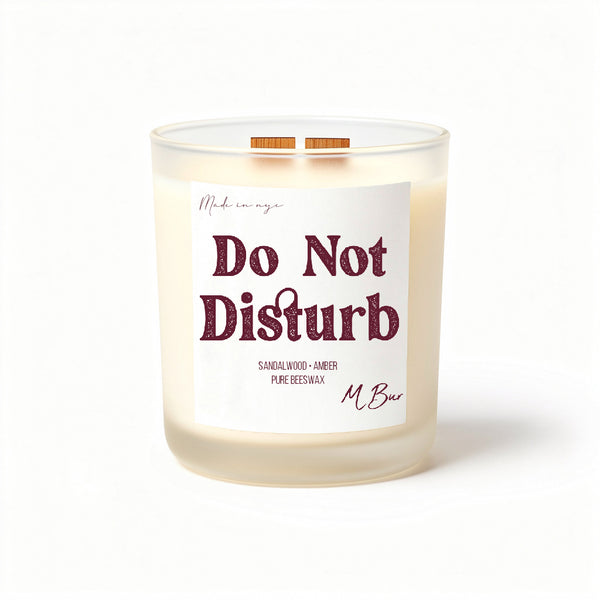
Every candle we make checks all five boxes, because MBur exists specifically for people who read labels. For a child's bedroom, the natural fit is Do Not Disturb, a soft, calming scent built for nighttime rooms. The 20 hour size is $20, and the wooden wick gives off a faint crackle kids tend to find genuinely soothing.
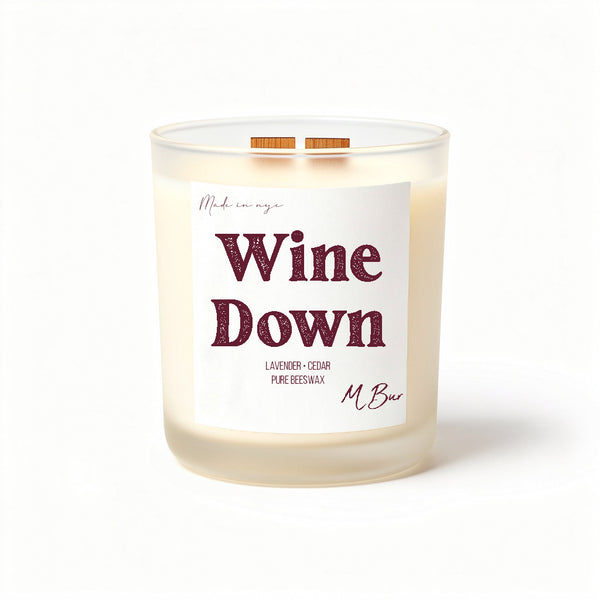
For the family wind down hour, when everyone is in pajamas but nobody is asleep yet, Wine Down is the pick. Its notes are lavender, chamomile, sage, rosemary, camphor, cedar, and sandalwood, and it stays gentle rather than perfumey. One customer, Nicole D., put it better than we could:
"The scent is so light and clean, not overpowering at all, which is exactly what I look for. A lot of other candles tend to give me headaches, but this one was a total game changer. Highly recommend if you're sensitive to strong scents but still want something that smells amazing!"
Sensitive noses come in all sizes. A candle gentle enough for an adult who gets headaches from strong scents is the right starting point for a kid's space too. To be clear on what a clean candle can and cannot do: fewer irritants and a cleaner burn are the honest benefits. If your child has asthma, allergies, or any respiratory condition, follow your pediatrician's guidance on candles in their room.

The Burn Rules That Matter More Than the Label
Even the cleanest candle is still an open flame, and fire safety in a kid's room is non negotiable. Fire safety organizations, including the National Candle Association, are blunt on this point: children should never sleep in a room with a lit candle, and candles should never burn unattended.
So here is how candle loving parents actually make it work:
- Burn in adjacent rooms. Light the candle in the hallway or living room and let the scent drift in naturally. A 100% beeswax candle fills more space than you would expect, so the kid's room gets the cozy without the flame.
- Scent the room while they are out of it. Burn for an hour during homework or dinner, extinguish, and ventilate before bedtime.
- Keep flames at least 12 inches from anything flammable. Curtains, bedding, books, stuffed animals. Kids' rooms are basically made of kindling.
- Elevate and supervise. High, stable surface, adult in the room, always.
- Trim the wick and cap the burn. Trim before each use and keep sessions under four hours for the cleanest burn.

The Bottom Line
A safe candle for a child's room comes down to two things: clean ingredients and smart burn habits. Choose 100% beeswax with phthalate free fragrance and skip the paraffin, the mystery scents, and the dyes, then keep every flame supervised and out of sleeping rooms.
Our recommendation is to start with Do Not Disturb in the 20 hour size and burn it just outside the kid's room during the evening routine. Customers like Dawne Forrest describe it as "lovely, not overpowering," which is exactly the energy a child's space needs.
Ready to swap the mystery jar for something you can actually read the label on? Browse the full beeswax candle collection and pick the scent that fits your family's evenings.
Related reading

