

Best Candles for Asthmatics: Choosing Safe and Clean Burning Options
Your inhaler comes out within twenty minutes of lighting a candle, and the packaging gives you no explanation for why. For a lot of people with asthma, that reaction feels random. It is not. Certain waxes, wicks, and fragrance formulas release specific irritants when they burn, and once you know which ones, you can actually keep burning candles without the coughing fit.
This post walks through why some candles set off asthma symptoms, which ingredients are the real problem, and what to look for instead. If you want to skip ahead, you can browse our full beeswax candle collection built around the ingredients allergists actually recommend.
Why Your Airways React to Certain Candles
Most conventional candles are made from paraffin, a byproduct of petroleum refining. When paraffin burns, it releases fine soot particles along with compounds like benzene, toluene, and formaldehyde into the air. For someone with healthy lungs, that might just mean a stuffy nose. For someone with asthma, those particles can settle into already inflamed airways and trigger tightness, coughing, or a full flare.
Your reaction is not an overreaction. Groups like the American Lung Association have specifically flagged scented candles as a common asthma trigger during high burn seasons like the holidays, and allergists routinely tell patients with sensitive airways to be selective about what they burn.

Paraffin vs. Soy vs. Beeswax: What Actually Burns Clean
Not all wax behaves the same way once it is lit. Here is how the three most common types stack up.
| Wax Type | Source | Soot Output | Chemical Processing |
|---|---|---|---|
| Paraffin | Petroleum byproduct | High, visible black soot | Heavily refined |
| Soy | Soybean oil, often blended with paraffin | Lower than paraffin, but varies by blend | Hydrogenated |
| Beeswax | Naturally occurring, byproduct of honey production | Minimal, cleanest burn of the three | None required |
Beeswax has the highest melting point of the three, which means it burns slower and cooler, producing far less smoke and particulate matter in the process. That matters a lot if you are trying to keep your airways calm through a whole evening of candlelight.
The Real Risk Factors, Ingredient by Ingredient
Wax type is only part of the story. A few specific ingredients cause most of the trouble, regardless of what the wax is called on the label.
- Toxic fragrance oils. Many mass market candles use fragrance blends containing phthalates and parabens, which can irritate sensitive airways and skin.
- Metal core wicks. Some wicks use a zinc core to help them stand upright, and that metal can vaporize into the air as the candle burns.
- Chemical dyes. Colored wax often relies on dyes that were never tested for inhalation safety, and they volatilize right along with the smoke.
The good news is that none of these are unavoidable. They are choices manufacturers make, and you can choose differently.

What to Look For in an Asthma Friendly Candle
When you are shopping for a candle that will not fight your lungs, run it through this checklist:
- 100% beeswax, not a "beeswax blend" that is mostly paraffin
- A cotton or wooden wick, never a metal core
- Phthalate free, non toxic fragrance
- No chemical dyes added for color
MBur candles check every one of those boxes. Every candle is 100% beeswax with a wooden wick, no metal core, and phthalate free fragrance. Do Not Disturb, with its bergamot and pear notes, was built for exactly this kind of nighttime use, when you want a calm bedroom without worrying about what is drifting into the air while you sleep. You can find it in the Do Not Disturb candle listing, available from the 20 hour size at $20 up to the 80 hour size at $65.
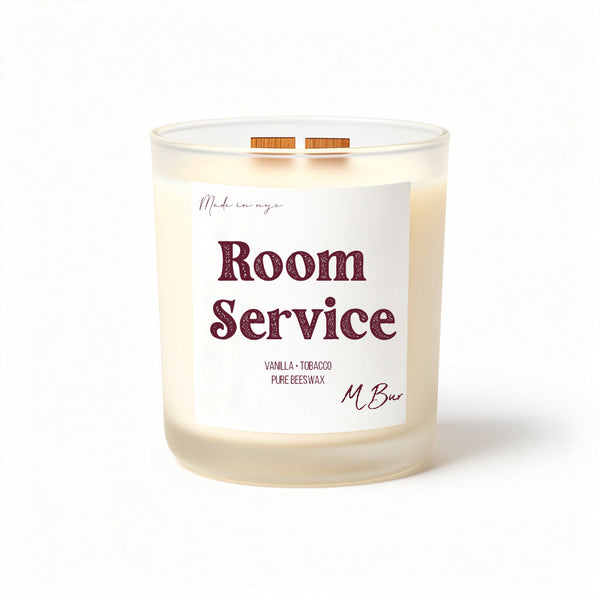
\\\"Absolutely loved the Wine Down candle! The scent is so light and clean, not overpowering at all, which is exactly what I look for. A lot of other candles tend to give me headaches, but this one was a total game changer. I was able to enjoy the calming aroma without any discomfort. It made my space feel cozy and refreshed at the same time. I'll definitely be purchasing it again. Highly recommend if you're sensitive to strong scents but still want something that smells amazing!\\\" — Nicole D.
That's the exact experience a clean burning candle should give someone with sensitive airways. If evenings are more your thing than bedtime, the Wine Down candle Nicole is describing runs from $20 for the 20 hour size to $65 for the 80 hour size, and uses the same phthalate free, beeswax formula throughout the whole line.
A clean burning candle is less likely to irritate your airways than a paraffin one loaded with toxic fragrance and dye. That said, no candle is a treatment for asthma, and if you have diagnosed asthma, keep following your doctor's guidance on triggers and medication regardless of what you burn.
Practical Habits That Help, Regardless of Wax
Even a clean candle benefits from a few habits. Trim the wick to about an eighth of an inch before every burn, since a long wick burns hotter and throws off more soot. Keep the room ventilated, cracking a window or running a fan nearby rather than sealing the space shut. Limit burn sessions to three or four hours at a stretch, and give the room a break before relighting.

Frequently Asked Questions
Can I burn candles at all if I have asthma?
For many people, yes, as long as the candle avoids the biggest irritants: paraffin, metal core wicks, and toxic fragrance. Browse our full beeswax candle collection if you want a starting point built around those criteria.
Is unscented always safer than scented?
Not necessarily. The fragrance formula matters more than whether a candle is scented at all. A candle with phthalate free, non toxic fragrance, like MBur's line, is a different category from a heavily perfumed paraffin candle.
What's the safest wax for sensitive airways?
Beeswax burns with the least soot and needs no chemical processing to make it usable, which is why allergists tend to recommend it over paraffin or paraffin blended soy.
How long should I burn a candle if I have asthma?
Stick to three or four hour stretches with the room ventilated, then let the space air out before relighting. Trimming the wick before each burn also cuts down on soot output significantly.
The Bottom Line
If candles have been setting off your asthma, the fix usually is not giving them up entirely. It is switching to one built from ingredients that do not release soot, metal, or toxic fragrance in the first place. MBur's candles are rated 4.8 stars across dozens of reviews, many from customers who specifically mention switching from candles that gave them headaches or breathing trouble.
Start with our full beeswax candle collection and pick the scent that fits your space.
Related reading
", "image_suggestions": [ "Close up of a lit beeswax candle with a wooden wick, soft natural light, no soot visible on the glass", "Lifestyle shot of a nightstand at dusk with a Do Not Disturb candle burning next to a book and a glass of water", "Hand trimming a wooden wick with small scissors over an unlit candle" ], "placeholders_flagged": [], "internal_link_suggestions": [ "https://mburcandle.co/collections/candles 1", "https://mburcandle.co/products/do-not-disturb-candle-80hr-burn-time not disturb candle", "https://mburcandle.co/products/wine-down-pure-beeswax-candle down candle" ] } ```
