

Best Candles for Ball Pythons: What's Actually Safe (and What to Skip)
The candle you want to light for your ball python is a risk to your ball python, and not for the reason most people assume. It is not mainly about the flame. It is about what a snake's body does with the air in the room.
Ball pythons breathe with a rudimentary respiratory system and no diaphragm to cough. That means they cannot clear irritants the way you can. Anything heavy in the air, soot, smoke, harsh chemical fumes, sits in their airways and builds up. If you care about a fresh-smelling reptile room without gambling on your snake's lungs, the answer starts with clean-burning pure beeswax candles kept well away from the enclosure, which skip the paraffin soot and heavy fragrance load that reptiles react to.

Why "best candle for a ball python" is the wrong question inside the tank
Let me be direct about the setup. There is no candle that belongs inside or right beside a ball python enclosure. Not soy. Not beeswax. Not "all-natural" anything.
Two things make candles a hazard up close. The first is fire. A flame near substrate, bedding, or plastic is a real ignition risk. Snakes move, tanks get bumped, and an unattended candle is a bad bet in any reptile room.
The second is the air itself. Snakes are very sensitive to airborne stuff. Strong fumes can irritate their airways and open the door to respiratory infections like pneumonia.
So the honest version of this topic is about the room, not the tank. That is where a candle can earn its place.
What's actually going wrong when a reptile room smells off
Here is the part people skip. Ball pythons themselves barely smell. A healthy snake gives off almost no odor at all.
The smell comes from the enclosure. Old substrate, missed waste, and high humidity all feed it. When humidity climbs past the healthy range, you get mold and mildew, and that is where the real funk starts.
Covering that smell with a strong candle does two bad things. It hides a husbandry problem you actually need to fix. And it loads the shared air with fragrance your snake cannot process well.
Fix the source first. Spot-clean waste fast. Refresh substrate on a schedule. Keep humidity in the correct range so mold never gets a foothold. The EPA's guidance on mold and moisture is a solid primer on why damp spaces turn musty. Clean the cause, then a candle in the room just keeps things pleasant instead of masking a problem.

The real answer: use the candle for the room, not the snake
Once the enclosure is clean, you can absolutely enjoy a candle in the same room. The rules are simple and they protect your snake.
Keep the flame far from the tank. Different surface, plenty of distance, never on top of or beside the enclosure. Never burn one unattended in the reptile room.
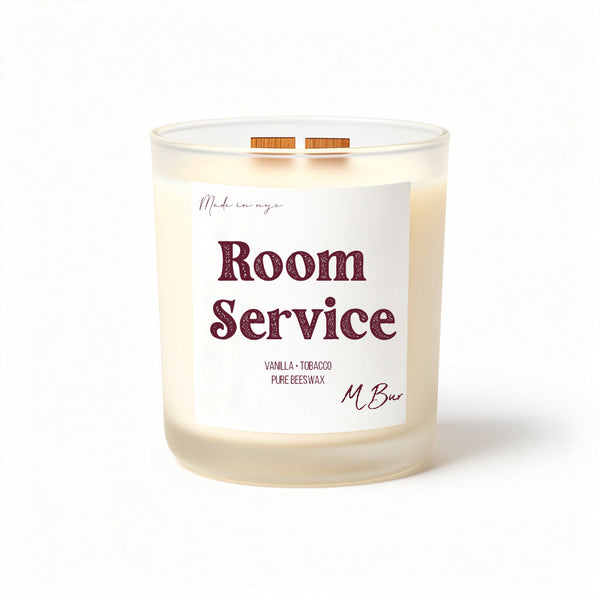
Choose the cleanest-burning candle you can. Paraffin is petroleum-based and puts out more soot when it burns. Beeswax burns clean, with no paraffin soot, and MBur uses phthalate-free fragrance and no chemical dyes. That keeps the air lighter for a room you share with a sensitive animal.
Wooden wicks help too. They burn steady, and MBur's are single-ingredient beeswax with an 80-hour burn on the largest size. If you want a calm, low-key scent for the room, our Wine Down beeswax candle leans soft and herbal with lavender, chamomile, sage, rosemary, camphor, cedar, and sandalwood. The 40-hour size runs $32, and the 80-hour size is $65.
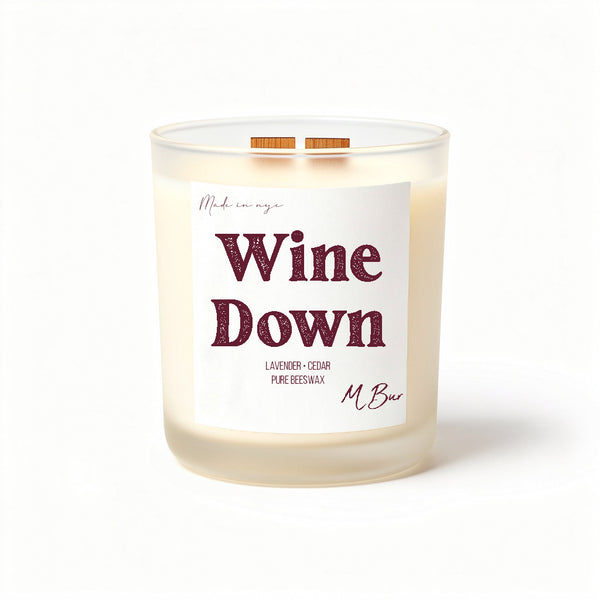
"Absolutely loved the Wine Down candle! The scent is so light and clean, not overpowering at all, which is exactly what I look for. A lot of other candles tend to give me headaches, but this one was a total game-changer." Nicole D.
That "light and clean" note matters here. A gentle throw in the room is far kinder to a snake's airways than a heavy, pushy fragrance.
How MBur beeswax compares to common candle waxes
If you keep a candle in a room with a reptile, wax type is the lever that matters most. Here is a plain look at the three you will see.
| Wax type | Source | Burn character | Room-with-a-reptile fit |
|---|---|---|---|
| Paraffin | Petroleum byproduct | More soot, releases VOCs | Poorest choice for shared air |
| Soy | Plant-based, often blended | Cleaner than paraffin, blends vary | Better, depends on the blend and fragrance |
| MBur beeswax | 100% beeswax, byproduct of honey | Clean burn, no paraffin soot, phthalate-free fragrance, no dyes, up to 80-hour burn | Best of these for a room you share, kept away from the tank |
None of these belong inside the enclosure. But for the room itself, clean-burning beeswax is the gentlest option on the list.
What actually keeps a ball python cozy (hint: not a candle)
Warmth is the real "cozy" your snake needs, and it has nothing to do with a flame. Ball pythons are ectothermic, so they rely on outside heat to run their bodies.
Give them a temperature gradient. A warm basking side around 88 to 92 degrees Fahrenheit, and a cool side near 76 to 80 degrees. One heat source is a common mistake. You want a gradient so the snake can choose.
Use proper equipment for the heat. Ceramic heat emitters, radiant heat panels, and deep heat projectors give lightless warmth at night. Hook any heat source to a thermostat so it never overheats.
Keep a steady day and night light cycle, roughly 12 hours on and 12 hours off. That is the setup that makes a ball python comfortable. The candle stays a room accessory, nothing more.

Frequently asked questions
Can I put any candle inside my ball python's enclosure?
No. Never place a candle inside or right against the tank. It is both a fire risk and a source of soot and fumes a snake cannot clear. If you want a fresh room, keep a clean-burning option from our pure beeswax candle collection on a shelf well away from the enclosure.
Are scented candles safe around ball pythons at all?
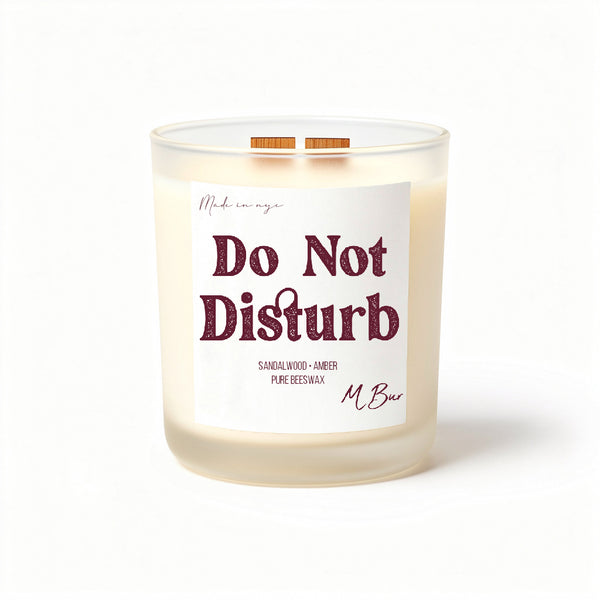
Reptiles are very sensitive to scents, and some are known to harm their airways. Keep any candle in a separate area of the room, choose the cleanest wax, and go gentle on the throw. A soft, low-key scent like our Do Not Disturb candle with bergamot and pear is easier on shared air than a heavy one. If your snake shows signs of respiratory stress, stop burning candles in that room and call an exotics vet.
What temperature does a ball python actually need?
Aim for a warm basking side of 88 to 92 degrees Fahrenheit and a cool side of 76 to 80 degrees. Build a gradient so your snake can move between them. Use a thermostat-controlled heat source, not a candle, for warmth.
Why does my ball python's room smell if the snake itself doesn't?
The smell is almost always the enclosure, not the animal. Old substrate, missed waste, and high humidity feed mold and odor. Clean the cause first, then a room candle just keeps things pleasant.
Should I talk to a vet before changing my snake's setup?
Yes, especially if your ball python has shown any breathing issues, appetite loss, or signs of illness. Follow your reptile vet's guidance on heating, humidity, and what belongs in the room. Your candle choices come second to their care plan.
The takeaway
There is no candle that belongs inside a ball python's tank, so the real move is a clean enclosure plus proper thermostat-controlled heat. Keep any candle across the room, and choose clean-burning beeswax to go easy on your snake's airways. For a soft, room-friendly scent, our Wine Down beeswax candle is a strong pick, with the 40-hour size at $32 and the 80-hour size at $65.
MBur's beeswax candles are single-ingredient, phthalate-free, wooden-wick, and handmade in New York City, and customers keep coming back for the clean burn. As Paige put it: "I won't buy other candles anymore, they're just that good."
Shop the Wine Down beeswax candle and keep your reptile room fresh the safe way.
Related reading

